Self-Guided Walking Tour of Nice (2026)
This website uses affiliate links which earn a small commission at no additional cost to you.
Nice is one of the most rewarding cities in the South of France to explore on foot, with elegant boulevards, colourful squares, and a coastline that seems to pull you from one viewpoint to the next. A self-guided walking tour of Nice lets you move at your own pace, pause for photos, and spend more time in the places that interest you most. From grand Belle Époque architecture to the lively streets of Vieux Nice, this route is a great way to experience the city's atmosphere beyond a quick stop.
This walk is designed to help you discover the best things to see in Nice, linking together major landmarks with smaller details that make the city memorable. Along the way, you can wander through historic alleys, browse local markets, admire churches and civic buildings, and enjoy sweeping Mediterranean views from higher ground. The route also gives you plenty of opportunities to stop for coffee, pick up snacks, or simply soak up the energy of the city.
A self-guided format is ideal in Nice because the city is compact, scenic, and easy to navigate, especially around the centre and waterfront. Whether you are visiting for a day, arriving on a cruise stop, or planning a longer stay on the Côte d'Azur, this walking tour offers a flexible introduction to the city's character, history, and everyday life. Wear comfortable shoes, bring water in warmer months, and leave extra time for spontaneous detours-you will almost certainly find a few.
Table of Contents
- How to Get to Nice
- How to Get Around the City
- A Short History of Nice
- Where to Stay in Nice
- Your Self-Guided Walking Tour of Nice
- Promenade des Anglais
- Opera de Nice
- Place du Palais de Justice
- Cours Saleya Markets
- Colline du Chateau
- Cimetiere du Chateau
- Place Garibaldi
- Place Saint-François
- Marché Saint-François
- Palais Lascaris
- Promenade du Paillon
- Place Rossetti
- Place Massena
- Cathédrale Sainte-Réparate
- Musée Masséna
- Palais de la Méditerranée
How to Get to Nice
By Air: Nice Côte d'Azur Airport is the main gateway to the city and one of the busiest airports in France outside Paris, with strong connections across Europe as well as seasonal and long-haul flights. The airport sits very close to the city centre, so onward travel is straightforward, with tram services, airport buses, taxis, and car hire all available. If you are staying in central Nice, the tram is often the easiest and most affordable option, while taxis are convenient if you are arriving late or carrying a lot of luggage. For the best deals and a seamless booking experience, check out these flights to Nice on Booking.com.
By Train: Nice is well connected by rail, making it an excellent destination if you are travelling from other parts of France or nearby countries. Nice-Ville station receives regular regional and long-distance services, including routes from Marseille, Cannes, Antibes, Monaco, and Paris, and rail travel is often one of the most comfortable ways to arrive without dealing with traffic. From the station, many central hotels and major sights are reachable on foot, and local buses and trams make it easy to continue your journey. You can use SNCF Connect to check schedules, compare routes, and purchase tickets for National (SNCF ) and regional trains (TER). For a more streamlined experience, we recommend using Omio, which allows you to easily compare prices, schedules, and book tickets for both National and Regional travel across all of Europe, all in one place.
By Car: Driving to Nice can be a good option if you are planning a wider Côte d'Azur road trip and want the flexibility to explore coastal towns and inland villages at your own pace. The city is connected by major roads and motorways, but traffic can be heavy, especially in summer and during peak hours, and parking in the centre can be limited or expensive. If you arrive by car, it is usually best to choose accommodation with parking or use a secure public car park, then explore the historic centre on foot. If you are looking to rent a car in France I recommend having a look at Discover Cars, first, as they compare prices and review multiple car rental agencies for you.
By Bus: Long-distance buses can be a budget-friendly way to reach Nice from other French cities and nearby European destinations, with services often arriving at central or well-connected stops. Travel times are usually longer than the train, but fares can be very competitive if booked in advance. Regional buses are also useful for arriving from places such as Monaco, Menton, Cannes, and other towns along the coast.
How to Get Around the City
Nice is an easy city to get around, especially in the centre where many of the main sights are within walking distance of each other. The tram network is efficient for moving between the airport, city centre, and surrounding districts, while local buses help cover areas beyond the tram lines. Walking is the best way to explore Vieux Nice and the seafront, but for longer distances you can also use taxis, rideshares, or rent a bike to follow the coast and reach different neighbourhoods more quickly.
A Short History of Nice
Ancient Nice: Greek Foundations and Roman Growth
Nice began as an ancient settlement known as Nikaia, founded by Greeks around the 4th century BCE, before later becoming part of the Roman world and developing as a trading centre. Over time, the high ground of Colline du Château (Castle Hill) became the strategic heart of the settlement, reflecting how defence and oversight shaped the city's earliest urban history. The hill remained central to Nice for centuries, and its long military importance helps explain why it still feels like a historical anchor in the city's story today.
Although most visitors now experience Castle Hill for its views and parkland, it preserves the memory of earlier fortified Nice. The later Cimetière du Château adds another layer to that timeline, because it was created in 1783 on the site of the former citadel, turning a former defensive zone into a place of remembrance. This shift from fortress to cemetery captures a broader pattern in Nice's history: old military spaces gradually becoming civic and cultural landscapes.
The Old Town's dense street network also reflects the long continuity of the medieval and early modern city that grew below the hill. Places such as Place Rossetti and the streets around today's Cathédrale Sainte-Réparate preserve the historic urban core where religious, commercial, and civic life overlapped for centuries. Even without tracing every archaeological phase, these spaces help you read the deep historical layering of Nice in a compact area.
Medieval Nice: From Provence to Savoy
In the medieval period, Nice passed through different political spheres, including the counts of Provence, before a major turning point in 1388 when it came under the House of Savoy. That transfer shaped the city's political and cultural trajectory for centuries, strengthening ties across the Alps and contributing to the Italianate influence still visible in the architecture and urban design of the historic centre.
This long Savoyard era is important for understanding why Nice’s built environment often feels distinct from many other French cities. The town developed with a strong Mediterranean and Piedmontese character, and later public spaces such as Place Garibaldi (created in the late 18th century) reflect that legacy in their formal layout, arcades, and façades. The square’s origins under the Kingdom of Sardinia/Savoy make it one of the clearest urban expressions of this period.
Religious life also expanded in ways that shaped the Old Town's appearance. The Cathédrale Sainte-Réparate, built in the second half of the 17th century and consecrated as a cathedral in 1699, stands as a key Baroque monument from this wider Savoyard-era cultural world. Its presence at Place Rossetti makes that square one of the most historically resonant places in Nice for understanding the city's early modern identity.
Baroque Nice: Noble Houses, Markets, and Old Town Life
By the 17th century, Nice was developing an urban culture expressed through Baroque churches, aristocratic residences, and busy public spaces. Palais Lascaris, built in 1648 and later transformed into a museum, is one of the best surviving examples of this period. It shows how elite families shaped the city's architecture, especially in Vieux Nice, where understated façades often hide richly decorated interiors.
At the same time, daily life in the historic centre revolved around market streets and squares that remain active today. Cours Saleya, now famous for its market atmosphere, developed as a major social and commercial space and later became closely associated with public life and festive traditions. Its continuity as a living market area is one reason it feels less like a preserved monument and more like a functioning historical space.
This combination of sacred architecture, noble residences, and market activity is what gives Old Nice its historical texture. A walk between Cathédrale Sainte-Réparate, Place Rossetti, Palais Lascaris, and Cours Saleya effectively passes through the social geography of Baroque Nice-religion, aristocratic power, and commerce concentrated within a compact urban core.
18th and 19th Century Nice: Resort Era and Urban Expansion
From the second half of the 18th century, Nice increasingly attracted winter visitors, especially from Britain, helping transform the city's economy and image. This long trend is closely tied to the later development of the Promenade des Anglais, which became the emblematic seafront promenade associated with Nice's rise as an international resort town. The promenade represents the point where local urban history and foreign tourism reshaped each other.
The city's political status also changed dramatically in the 19th century. After periods of French control during the Revolutionary and Napoleonic era, Nice returned to the Kingdom of Piedmont-Sardinia and was then ceded to France in 1860. That transition sits behind many later civic and urban developments, including the expansion of formal public squares and institutions in the growing modern city.
Place Masséna is a key symbol of this modernising phase: created in 1840, it was designed to connect older quarters with the newer resort-oriented city developing across the Paillon. In practical terms, it became a hinge between historic Nice and the expanding 19th-century urban fabric. Nearby, the evolution of parade routes from Cours Saleya to the Promenade des Anglais and later to Place Masséna also shows how public spectacle followed the city's changing centre of gravity.
Modern Nice: Civic Identity, Culture, and Public Memory
In the late 19th century, Nice continued to build institutions that reflected its role as a major urban centre. The Palais de Justice on Place du Palais de Justice was built between 1890 and 1892, and its prominent position in a busy square highlights the growing importance of civic administration and legal institutions in modern Nice. This area also sits close to older landmarks, making it a useful place to see how historical layers overlap in the city centre.
Cultural life also became more formalised and monumental. The site of today's Opéra de Nice had an earlier theatre in the 18th century, then a larger 19th-century opera house, before the devastating 1881 fire destroyed the theatre. The current opera building was rebuilt and inaugurated in 1885, making it both a cultural landmark and a monument to the city's resilience after disaster.
Even places of remembrance connect back to this civic history: at Cimetière du Château, a monument commemorates victims of the 1881 opera fire, linking Castle Hill’s older defensive past to modern public memory. Taken together, landmarks such as Castle Hill, Cours Saleya, Place Masséna, Place Garibaldi, the cathedral, Palais Lascaris, the opera, and the Palais de Justice show how Nice’s history is not a single era but a continuous layering of fortification, faith, trade, resort culture, and civic life.
Where to Stay in Nice
To make the most of visiting Nice and this walking tour, then you should consider staying overnight in the centre so you can start early, explore at a relaxed pace, and return easily after breaks. For the most convenient base, the best choice is the Old Town / Promenade edge around Cours Saleya and Place Masséna, where you can walk straight into many of the main sights. Good options here include Hôtel Beau Rivage and Hôtel Suisse, both well placed for the seafront and the historic core.
If you want a central base with easy access to shops, tram lines, and a slightly wider choice of restaurants while still being within walking distance of the route, stay around Place Masséna / Jean-Médecin / Carré d’Or. This area works very well for a self-guided walk because you can reach the Old Town quickly but also have excellent transport links for arrival and departure days. Strong options here include Best Western Plus Hôtel Massena Nice, Hôtel Aston La Scala, Hôtel Apollinaire Nice, and Hôtel Le Grimaldi by HappyCulture.
For a more classic Riviera feel, the Promenade des Anglais area is an excellent choice, especially if you want sea views and an easy evening stroll after finishing the walking tour. You will be a little more spread out than in the Old Town, but still close enough to walk into the centre, and this area is particularly appealing for couples or anyone wanting a more traditional hotel atmosphere. Two good choices are Hotel West End Nice and Hôtel Albert 1er.
If you are arriving by train, doing day trips, or want a more practical base with easier rates, consider the Nice-Ville station / upper Jean-Médecin area. It is less atmospheric than staying directly in the Old Town, but it is still walkable to the main route and very convenient for rail travel across the Côte d'Azur. A reliable option here is Hôtel 64 Nice, which suits travellers who want a central position between the station and the historic centre.
Your Self-Guided Walking Tour of Nice
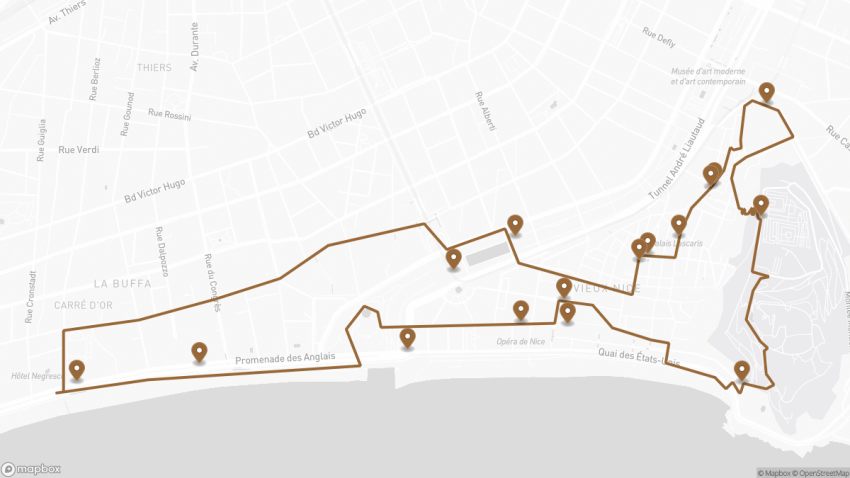
Discover Nice on foot with our walking tour map, which guides you between each stop as you explore the city at your own pace. As this is a self-guided walking tour, you are free to skip places and take coffee stops whenever you want.
1. Promenade des Anglais
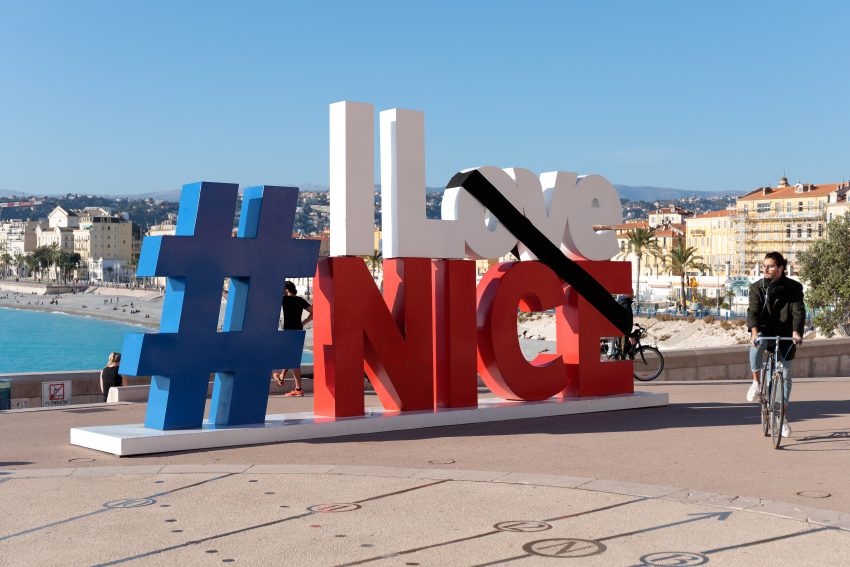
Promenade des Anglais is the iconic seafront boulevard of Nice, created in the 19th century as the city became a favourite winter retreat for British visitors. Its name reflects that connection: members of the English community were instrumental in funding and promoting the early promenade along the shoreline. What began as a more modest path gradually expanded into the grand waterfront avenue known today.
The promenade became central to the image of Nice during the Belle Époque and beyond, as hotels, villas, and public buildings rose along the coast. It represents the shift of Nice toward leisure, health tourism, and cosmopolitan resort culture. Over time, it has also become a civic space for celebrations, daily exercise, and public events, making it both a historic boulevard and a living part of the city.
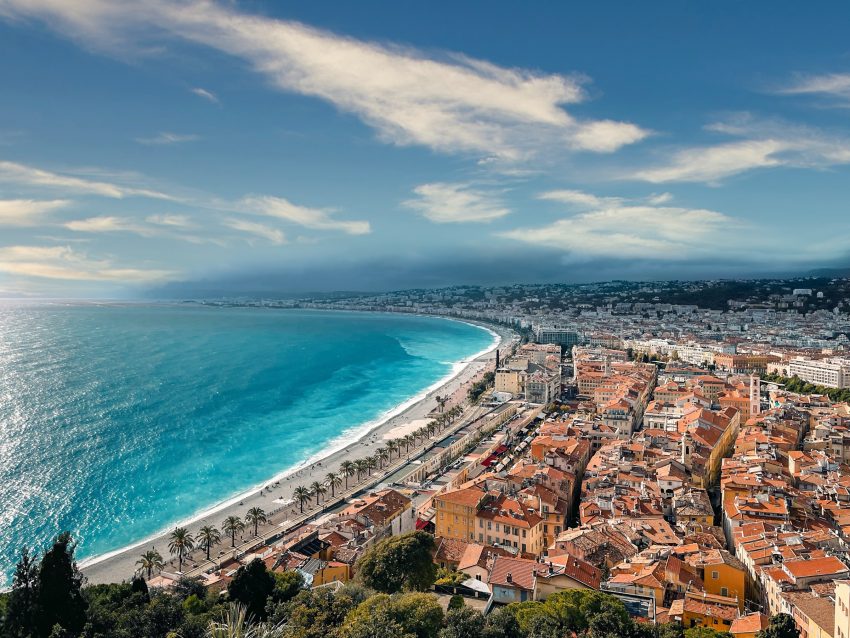
What to see includes the sweeping view of the Bay of Angels, the line of palm trees, and the changing perspectives along the pebble beach. Architectural highlights include grand seafront hotels and notable buildings facing the water. The appeal is not just individual monuments but the overall experience of the long curve of coast, the sea light, and the rhythm of local life along the promenade.
Location: Prom. des Anglais, Nice, France | Hours: 24 Hours. | Price: Free.

2. Opera de Nice
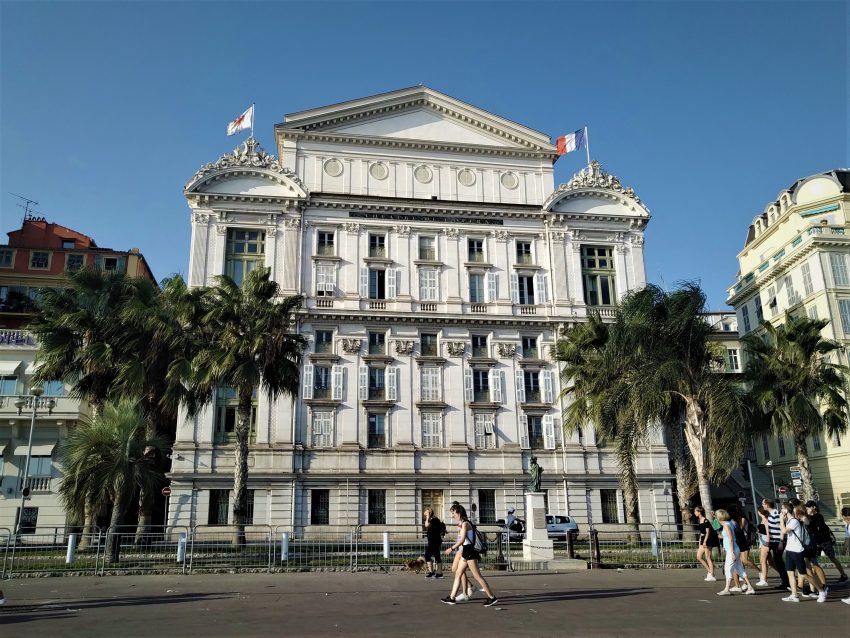
The Opera de Nice stands as one of the city’s key cultural landmarks, representing Nice’s emergence as a major artistic and winter-season destination in the 19th century. An earlier theatre existed on the site, but after a devastating fire in the late 19th century, the current opera house was rebuilt and reopened, reflecting the period’s ambition and elegance. Its history is tied to the era when Nice attracted European elites who expected high-level music and performance.
The building’s development mirrors the broader transformation of Nice from a regional port city into an international resort. Opera houses were symbols of prestige, and the city’s investment in such a venue signalled its place within European cultural circuits. Over the decades, the opera hosted operas, concerts, and ballets, becoming an important institution for both residents and visitors.
When there, take time to study the exterior and its refined ornamentation, especially how it fits into the surrounding streets near the sea and old town. If you can enter, the auditorium and decorative interior are the main highlights, with the classic theatrical design of tiers, stage, and ceiling details. Even from outside, the building is worth seeing as part of Nice’s grand 19th-century urban and cultural history.
Location: 4-6 Rue Saint-François de Paule, 06300 Nice, France | Hours: Tuesday – Saturday: 10:00–17:00. Closed on Sunday, Monday. | Price: Prices vary by show. | Website
3. Place du Palais de Justice
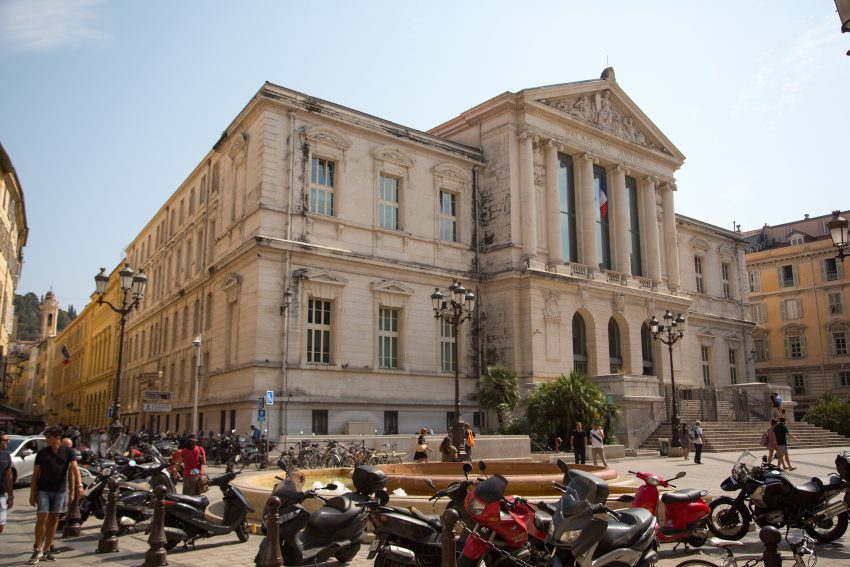
Place du Palais de Justice sits in the heart of Vieux Nice and reflects the civic life of the old city. The square takes its name from the Palais de Justice, the courthouse building that anchors the space and represents the administrative and legal authority that shaped urban life in Nice after its integration into France. Like many Mediterranean squares, it evolved as a multifunctional public space where official life and everyday activity overlap.
Historically, this part of the old town developed within a dense street pattern of religious buildings, homes, and civic institutions. The courthouse itself belongs to a later phase of urban modernization, when Nice expanded and formalized key institutions in the 18th and 19th centuries. The square around it became a natural gathering place, used for public movement, social encounters, and civic events.
When visiting, look at the courthouse façade and the architectural contrast between the formal public building and the surrounding old-town streets. The square is a good place to observe local life, with cafés and open space that make it easier to appreciate the rhythm of Vieux Nice. It is especially pleasant to pause here and notice how the city’s legal and social histories meet in one compact setting.
Location: Pl. du Palais de Justice, 06300 Nice, France | Hours: 24 Hours. | Price: Free.
4. Cours Saleya Markets
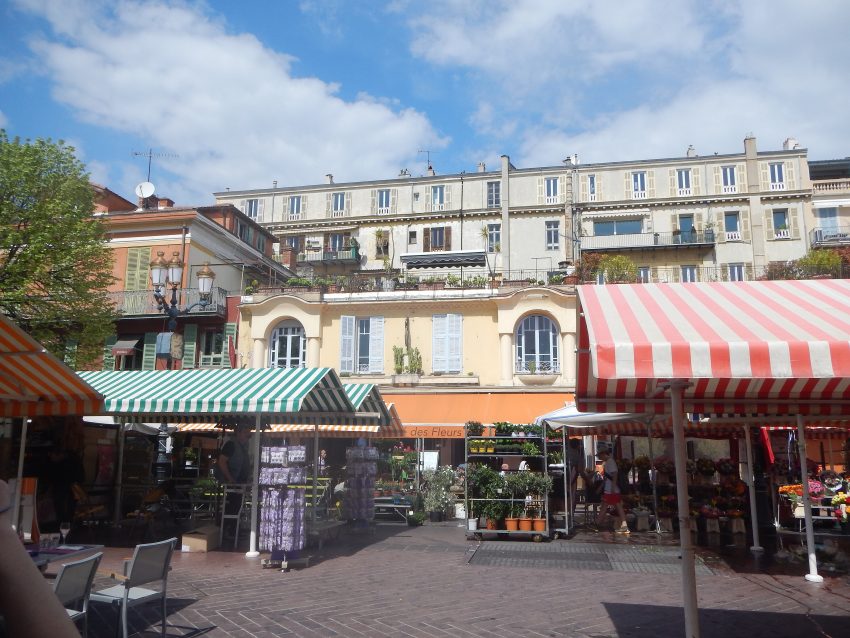
Cours Saleya is one of Nice’s most famous market streets, with roots in the commercial traditions of the old town. Historically, this area served as an important trading space close to the sea, where produce, flowers, and daily goods could be sold in a busy urban setting. Its location between Vieux Nice and the waterfront helped it become a central point for both local commerce and visiting merchants.
Over time, the market became part of Nice’s identity, especially as the city grew into a fashionable destination in the 18th and 19th centuries. While aristocratic visitors came for the mild climate, places like Cours Saleya preserved the everyday Mediterranean character of the city. The market’s continuity gives it historical significance beyond tourism, as it still reflects older patterns of food trade, seasonal produce, and public exchange.
What to see is the market itself, especially the flower stalls and fruit-and-vegetable displays that fill the space with colour and scent. The pastel façades and shutters lining the street add to the atmosphere, and there are many details worth noticing in the arcades and surrounding architecture. If you visit on a non-market day, the area still rewards a look for its layout, cafés, and old-town setting.
Location: Cr Saleya, 06300 Nice, France | Hours: Monday: 07:00–18:00. Tuesday: 06:00–17:30. Wednesday: 06:30–18:30. Thursday: 06:00–17:30. Friday: 06:00–17:30. Saturday: 06:30–18:30. Sunday: 06:30–13:30. | Price: Free.
5. Colline du Chateau
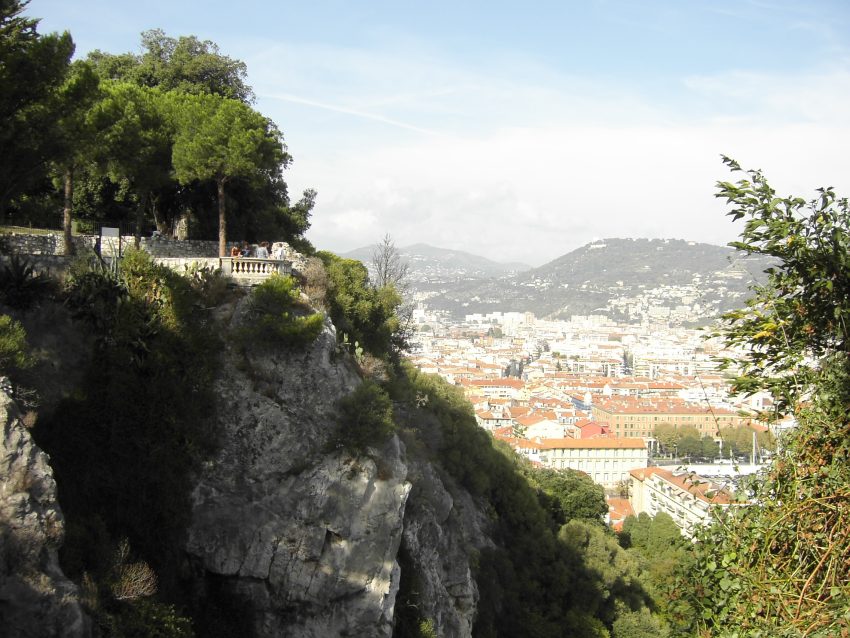
Colline du Chateau rises above Nice’s old town and harbour, and although no medieval castle survives today, the hill was once the city’s main defensive stronghold. Over centuries, fortifications were built here to control the coast and protect the settlement below. In 1706, during the War of the Spanish Succession, the citadel was largely destroyed on the orders of Louis XIV, leaving the hill without the fortress that gave it its name.
Even without the castle, the site remains one of the most historically important places in Nice because it shows how the city developed between sea, hill, and river. Archaeological traces and scattered remains hint at earlier occupations, while the terraced parkland reflects 19th-century urban landscaping, when many former military spaces across Europe were turned into public promenades and gardens. The hill became a place for residents and visitors to enjoy views rather than warfare.
What to see there now is the dramatic panorama over the Baie des Anges, the red-tiled roofs of Vieux Nice, and the port area. The artificial waterfall is a well-known feature, and the ruins and lookout points are worth lingering at, especially around sunset. You can also explore shaded paths, older stonework, and several viewpoints that each frame a different side of the city.
Location: 06300 Nice, France | Hours: (Summer) April 1 – October 31; Daily: 08:30–20:00. (Winter) November 1 – March 31; Daily: 08:30–18:00. | Price: Free. | Website
6. Cimetiere du Chateau
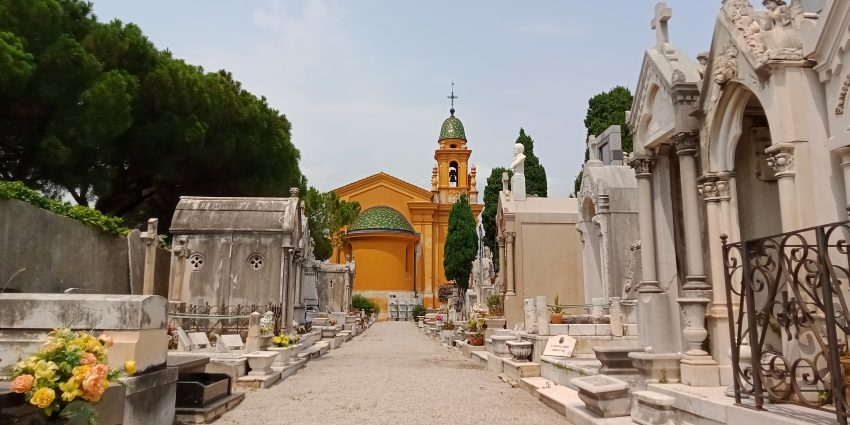
Cimetiere du Chateau occupies part of Castle Hill and is one of Nice’s most evocative historic cemeteries. It was established after the destruction of the old fortress area and became a prestigious burial place in the 19th century, when Nice was attracting foreign residents and winter visitors from across Europe. Its location above the city gave it both practical and symbolic appeal, combining seclusion, prominence, and extraordinary views.
The cemetery reflects the cosmopolitan history of Nice, with graves and monuments linked to local families as well as foreign communities who spent time in the city. Like many historic cemeteries, it also functions as an open-air record of artistic and social history, with funerary sculpture, inscriptions, and varying architectural styles. The site’s atmosphere is shaped by both memory and landscape.
What to see includes the tombs and mausoleums, many with intricate stonework and statuary, as well as the cypress-lined paths and viewpoints overlooking the sea and old town. The cemetery rewards a quiet, respectful visit, especially if you are interested in memorial art and local history. The combination of hilltop setting, silence, and panoramic scenery makes it one of the most distinctive places in Nice.
Location: All. François Aragon, 06300 Nice, France | Hours: (Summer) March 1 – October 31; Daily: 08:30–18:00. (Winter) November 1 – February 28; Daily: 08:30–17:00. | Price: Free. | Website
7. Place Garibaldi
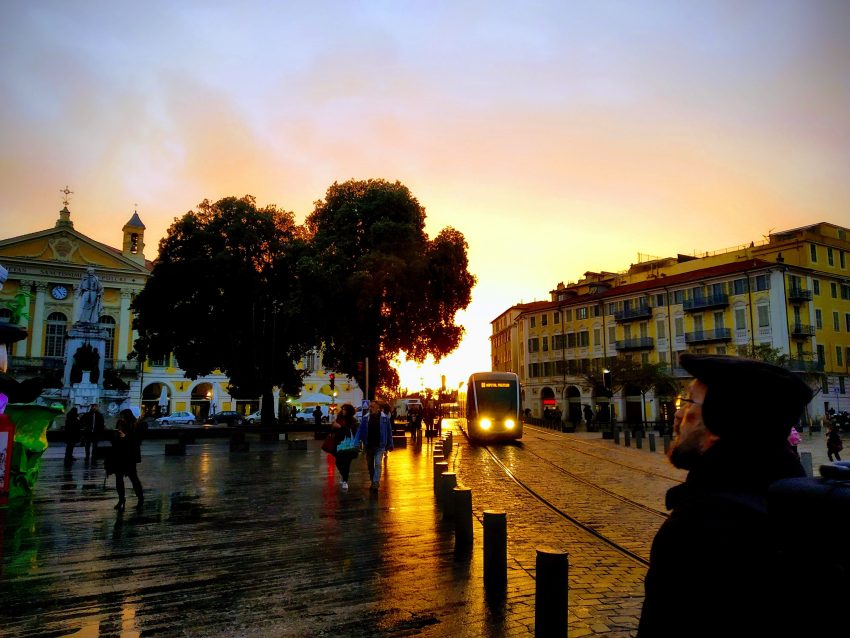
Place Garibaldi is one of Nice’s grandest squares and an important example of planned urban design from the late 18th century. Created during a period of modernization under the Kingdom of Sardinia, it predates much of the later French expansion and shows the strong Italian influence on Nice’s architecture and civic planning. The square was later named after Giuseppe Garibaldi, the Italian nationalist leader who was born in Nice.
Its long history links local identity with wider political developments in the region, especially the shifting relationship between Nice, Piedmont-Sardinia, and France. The arcaded façades and formal geometry made it a prestigious urban space from the beginning, intended for movement, commerce, and public life. Over time, it remained a central meeting point and a symbolic reference to Nice’s layered cultural heritage.
When visiting, look at the elegant arcades, trompe-l’oeil decorative effects on the façades, and the statue of Garibaldi at the centre. The square is also a good place to appreciate how the city transitions between the old town, the port district, and newer areas. Cafés and open space make it easy to sit and observe the architecture while taking in one of Nice’s most historically resonant public spaces.
Location: Pl. Garibaldi, 06300 Nice, France | Hours: 24 Hours. | Price: Free.
8. Place Saint-François
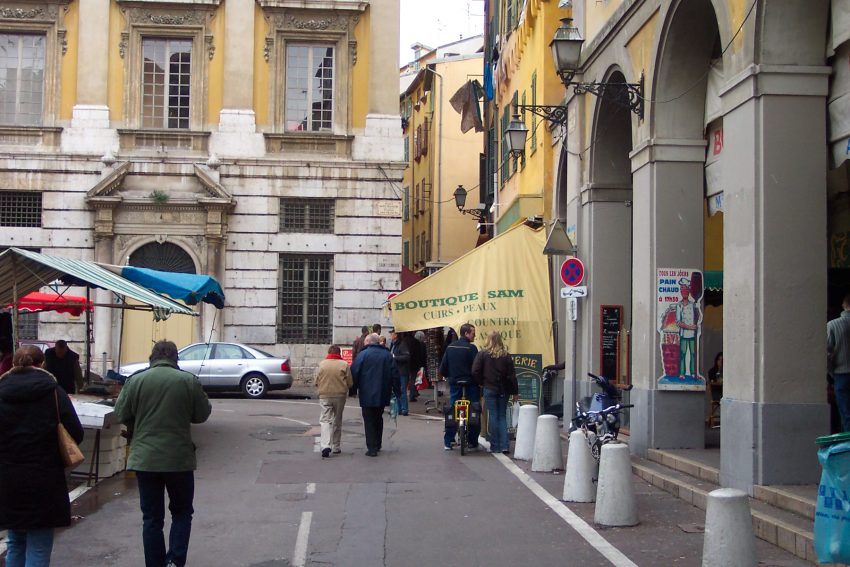
Place Saint-François is a historic square in Vieux Nice named after the Franciscan complex that once stood here, with origins going back to the 13th century. The area developed around the Franciscan church and convent, and although parts were lost or transformed over time, the square remains strongly linked to that religious and civic past.
The square is also notable for its civic architecture, especially the Palais Communal, a Baroque public building that served as the town hall until the 19th century. This gives Place Saint-François a layered identity: religious heritage, municipal history, and market life all overlap in one compact urban space. It is one of the better places in Nice to see how old institutions shaped the city’s street pattern and public squares.
What to see includes the Baroque façades around the square, the restored bell tower (Tour de l’Horloge / Saint-François tower area), and the fish market atmosphere in the mornings. The square is relatively small, but it has strong character and rewards slow observation. It is also a good place to notice the contrast between formal historic buildings and the everyday movement of local life.
Location: Pl. Saint-François, 06300 Nice, France | Hours: 24 Hours. | Price: Free.
9. Marché Saint-François
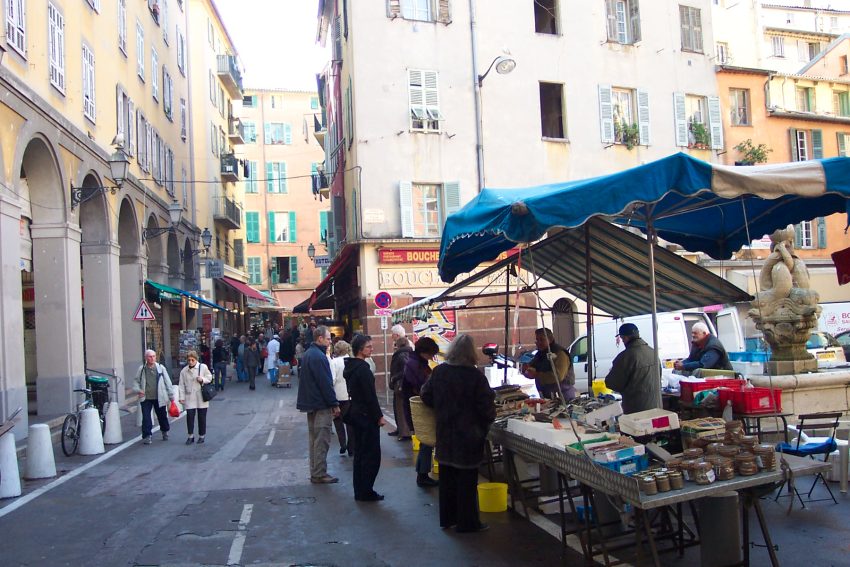
Marché Saint-François is the historic fish market held at Place Saint-François in the old town area of Nice. It is one of the city’s enduring market traditions, tied to Nice’s long maritime identity and to the working life of the nearby port. The market is still presented as a regular market event and remains closely associated with local seafood culture rather than a purely tourist display.
What makes it historically interesting is the way it preserves a more everyday side of Vieux Nice. While many visitors focus on the flower market at Cours Saleya, Saint-François reflects the fishing economy that helped shape local cuisine and daily routines. The square and surrounding streets retain a strong neighbourhood character, so the market feels rooted in local life.
What to see there is the atmosphere as much as the produce: rows of fresh fish, local sellers, and the morning activity around the square. It is best appreciated early in the day when stalls are active and the market feels most authentic. While you are there, also look at the surrounding historic buildings and the square itself, which adds context to the market experience.
Location: Cr Saleya, 06300 Nice, France | Hours: Tuesday – Sunday: 06:00–13:00. Closed on Monday. | Price: Free.
10. Palais Lascaris
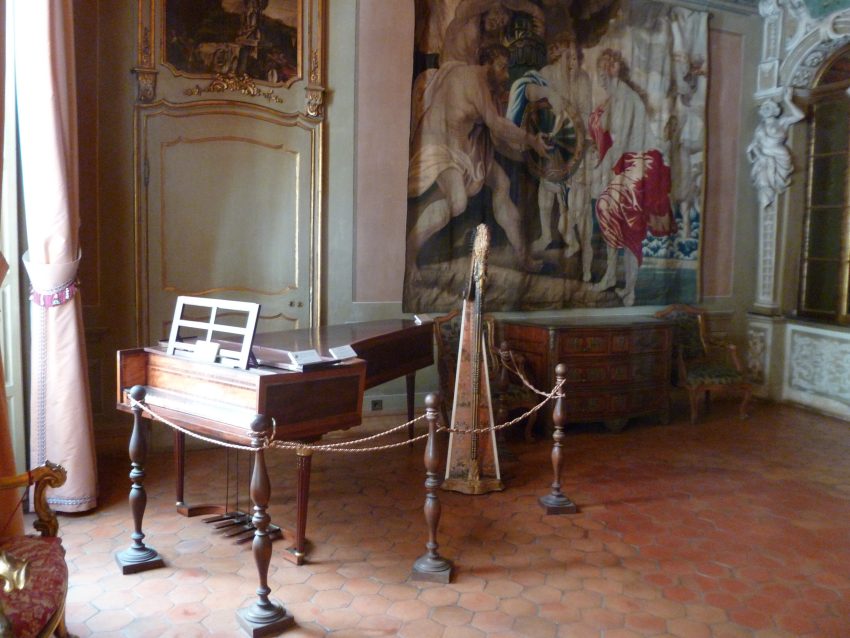
Palais Lascaris is one of the finest surviving aristocratic residences in Nice and an important example of Baroque domestic architecture. Built in the 17th century for the Lascaris-Vintimille family, a noble lineage with strong regional influence, the palace reflects the wealth and status of elites in the County of Nice. Its existence illustrates how noble families expressed power not only through titles and politics but through urban residences.
The palace later took on a museum role, preserving interiors and collections that offer insight into aristocratic life and artistic taste. It is particularly noted for its decorative rooms, painted ceilings, and historical furnishings, as well as its collection of musical instruments. As a heritage site, it helps bridge the gap between the city’s grand public spaces and the private worlds of its former ruling classes.
What to see includes the ornate staircase, stucco decoration, ceiling frescoes, and richly embellished reception rooms. The interiors are the main attraction, so it is worth moving slowly and paying attention to details rather than treating it as a quick stop. The palace’s location within the old town also adds to the experience, since you encounter it as part of the dense historic streetscape.
Location: 15 Rue Droite, 06300 Nice, France | Hours: Monday: 10:00–18:00. Tuesday: Closed. Wednesday: 10:00–18:00. Thursday: 10:00–18:00. Friday: 10:00–18:00. Saturday: 10:00–18:00. Sunday: 10:00–18:00. | Price: Adults: €5; Reduced (groups 10+): €4; Under 18: free. | Website
11. Promenade du Paillon
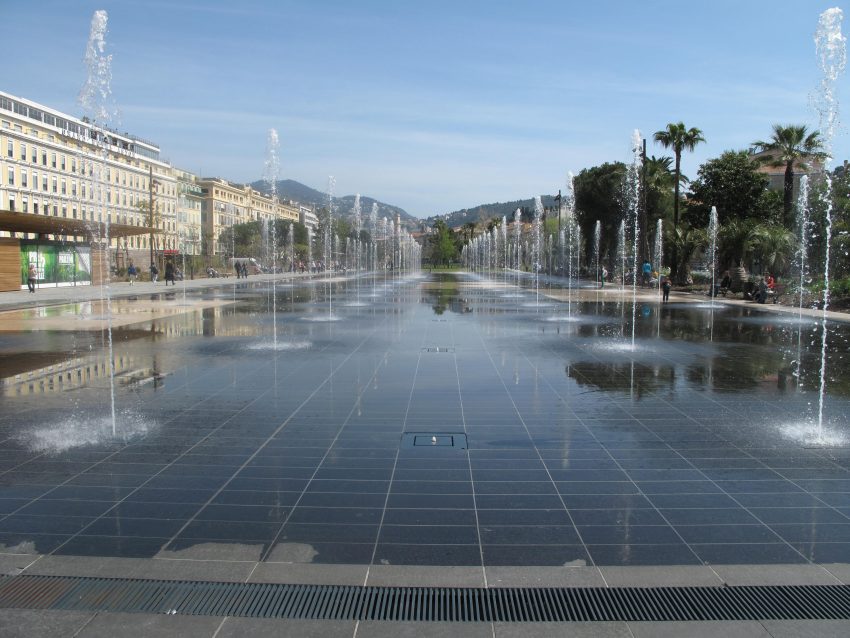
Promenade du Paillon is a major urban park in central Nice, created as a landscaped green corridor linking key parts of the city. It was inaugurated in 2013 and runs through the heart of Nice, connecting areas around MAMAC toward the seafront and crossing Place Masséna. Its creation reflects a modern phase of urban planning focused on public space, greenery, and pedestrian-friendly design.
Although it is a recent project compared with Nice’s older squares and churches, the Promenade du Paillon is historically significant in a contemporary sense because it reshaped the city centre and gave Nice a new civic landscape. The park’s design emphasizes botanical diversity and seasonal planting, showing how modern urban parks can be both environmental infrastructure and cultural destination.
What to see includes the long planted promenades, fountains and water features, broad lawns and pathways, and the way the park frames views toward surrounding architecture and major squares. It is especially good for seeing how old and new Nice meet in one continuous public space. If you explore it slowly, the transitions between planted sections, play areas, and open viewpoints are part of the appeal.
Location: Prom. du Paillon, 06000 Nice, France | Hours: (Summer) April 1 – September 30; Daily: 07:00–23:00. (Winter) October 1 – March 31; Daily: 07:00–21:00. | Price: Free. | Website
12. Place Rossetti
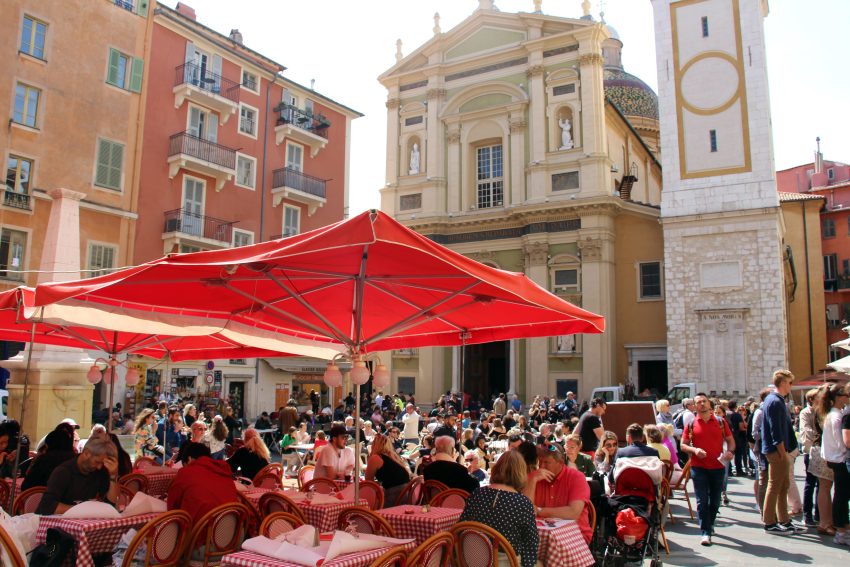
Place Rossetti is one of the most atmospheric squares in Vieux Nice and has long served as a social and religious focal point. Its significance comes largely from its relationship to Cathédrale Sainte-Réparate, which dominates the square and gives it a ceremonial presence. Historically, spaces like this were vital in Mediterranean cities, functioning as extensions of church, neighbourhood, and marketplace life.
The square developed within the medieval and early modern fabric of Nice, where irregular streets open suddenly into intimate public spaces. Over centuries, it became a place for gatherings, processions, and daily social life, shaped as much by its architecture as by the movement of people. Its enduring popularity reflects the way old-town squares preserve continuity even as the city around them changes.
When visiting, look up at the cathedral façade and dome, then take in the surrounding buildings with shutters and warm-toned façades. The square is compact but visually rich, with architectural layers and street activity that make it feel lively almost all day. It is a good place to pause and observe the character of Vieux Nice rather than rushing through.
Location: Pl. Rossetti, 06300 Nice, France | Hours: 24 Hours. | Price: Free.
13. Place Massena
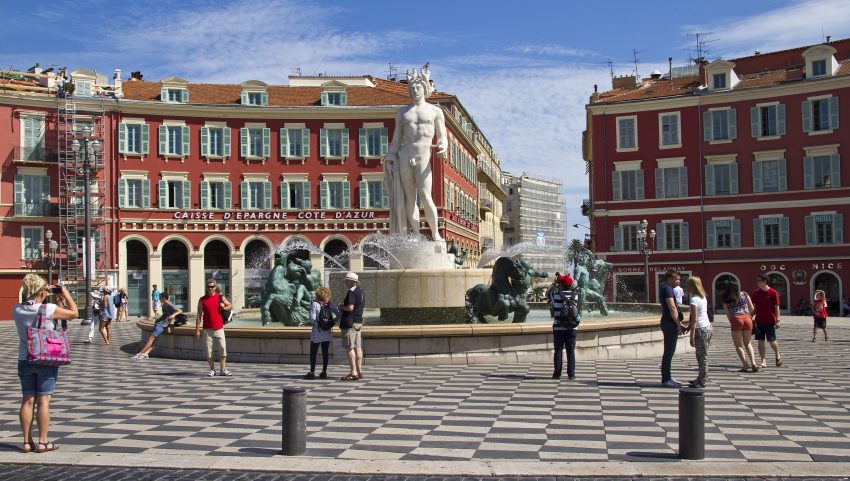
Place Massena is Nice’s principal central square and a product of 19th-century urban planning, created when the city expanded beyond the medieval fabric of the old town. It was designed to connect older Nice with newer districts, especially after political changes and modernization under French administration. Its broad scale and formal layout marked a clear contrast with the narrow streets of Vieux Nice.
The square’s architecture reflects this transition, with elegant red façades and arcaded buildings that create a unified civic space. Over time, Place Massena became the symbolic heart of the city, used for public gatherings, festivals, and major events. It has been redesigned and restored in modern times, but it retains its role as the key urban stage of Nice.
When visiting, look at the symmetry of the buildings, the paving patterns, and the fountains and public art that animate the space. The square is especially striking at night when lighting transforms the area. It is also a useful place to appreciate how Nice balances historic character with modern urban life, with tramlines, shopping streets, and old-town access all converging nearby.
Location: Pl. Massena, Nice, France | Hours: 24 Hours. | Price: Free.
14. Cathédrale Sainte-Réparate
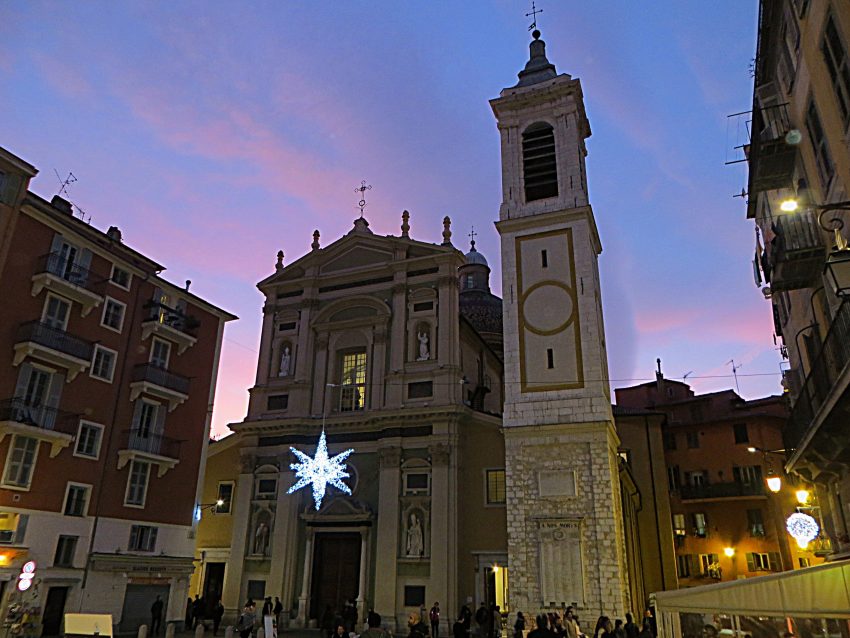
Cathédrale Sainte-Réparate is the cathedral of Nice’s old town and one of the most important religious buildings in the city. Dedicated to Saint Reparata, an early Christian martyr whose cult spread widely in the Mediterranean, the cathedral was developed in the 17th century in a Baroque style that reflected both local devotion and broader Italian artistic influence. Nice’s history between French and Italian spheres is strongly visible in the building’s design.
The cathedral was elevated in status as Nice’s ecclesiastical centre and expanded over time, with chapels and decorative elements added in later periods. Its richly ornamented interior and dome show how the Counter-Reformation era shaped church architecture, favouring grandeur, emotional impact, and elaborate decoration. In the dense street network of Vieux Nice, the cathedral stands out as a major spiritual and visual landmark.
What to see includes the Baroque façade, the dome tiled in colourful patterns, and the interior chapels with paintings and decorative work. The altar area and architectural detailing are particularly worth attention if you enjoy church interiors. The setting also matters: stepping into the cathedral from the lively square outside creates a strong contrast between the bustle of the old town and the quieter sacred space within.
Location: 3 Pl. Rossetti, 06300 Nice, France | Hours: Monday – Friday: 09:00–12:00 & 14:00–18:00. Saturday: 09:00–12:00 & 14:00–19:30. Sunday: 09:00–13:00 & 15:00–18:00. | Price: Free; donations appreciated. | Website
15. Musée Masséna
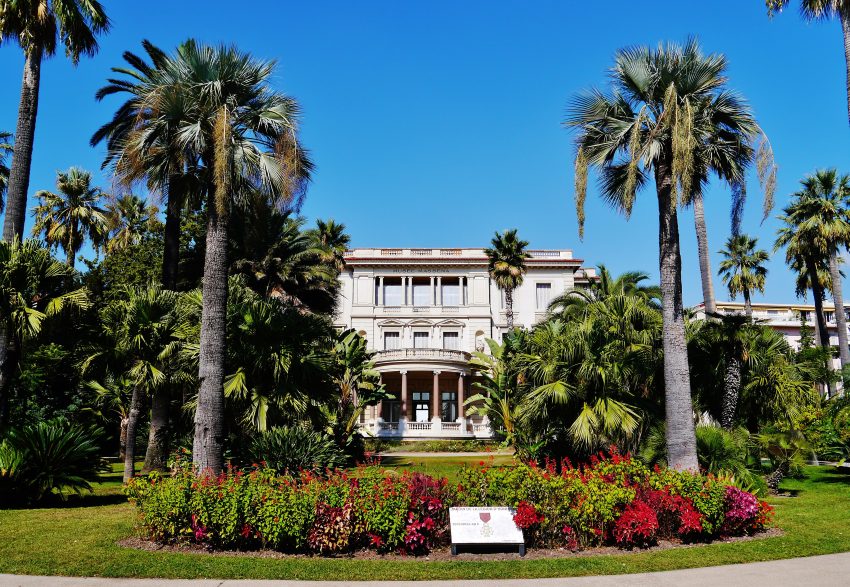
Musée Masséna (Villa Masséna) is housed in a Belle Époque villa on the Promenade des Anglais and is one of Nice’s key museums for understanding the city’s modern history. The museum focuses on the history and heritage of the Côte d’Azur, especially the period from Nice’s attachment to France through the Belle Époque era. The villa itself is part of the attraction, as it preserves the elegance of late-19th-century Riviera architecture.
Historically, the site is important because it connects the story of Nice as a Mediterranean city to its transformation into an international resort destination. The collections and exhibitions help explain how the Riviera developed culturally and artistically, while the villa setting evokes the social world of affluent seasonal residents. The museum’s identity is therefore both architectural and historical, rather than just object-based.
This is a must see if you want context for Nice beyond beaches and viewpoints. What to see includes the Belle Époque interiors, historical displays on Nice and the Riviera, and the villa’s garden setting, which is itself part of the experience. The combination of house museum, decorative detail, and city history makes it one of the most rewarding cultural stops in Nice.
Location: 65 Rue de France, 06000 Nice, France | Hours: (Summer) May 2 – October 31; Monday: 10:00–18:00; Tuesday: Closed; Wednesday – Sunday: 10:00–18:00. (Winter) November 1 – April 30; Monday: 11:00–18:00; Tuesday: Closed; Wednesday – Sunday: 11:00–18:00. | Price: Adults: €10; Reduced: €8; Under 18: free. | Website
16. Palais de la Méditerranée
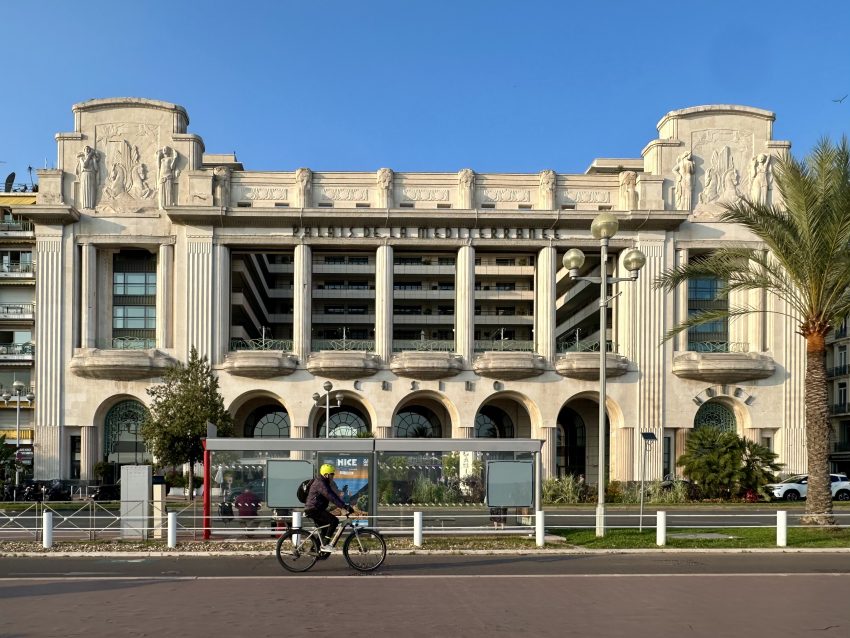
Palais de la Méditerranée is one of the best-known Art Deco landmarks on the Promenade des Anglais, originally created in 1929 as a luxury leisure complex. It was designed by Charles and Marcel Dalmas and opened as a glamorous venue with a casino, theatre, restaurants, and other entertainment spaces, reflecting the interwar prestige of Nice as a major Riviera destination.
The building’s history is marked by loss and preservation. Much of the original structure was demolished in 1990, but the principal façades were retained and protected, allowing the site to keep its iconic Art Deco identity even as it was rebuilt and modernized. This makes it a useful example of how Nice has balanced redevelopment with architectural heritage on its seafront.
What to see is the preserved façade facing the promenade, with its strong geometric lines and monumental Art Deco style. Even if you do not go inside, the exterior is the main historical feature and one of the easiest places to appreciate interwar glamour on the waterfront. It is especially striking when viewed as part of the broader architectural sequence along the Promenade des Anglais.
Location: 13 Prom. des Anglais, 06000 Nice, France | Hours: Monday – Thursday: 09:00–03:00. Friday – Saturday: 09:00–04:00. Sunday: 09:00–03:00. | Price: Check official website. | Website

Moira & Andy
Hey! We're Moira & Andy. From hiking the Camino to trips around Europe in Bert our campervan — we've been traveling together since retirement in 2020!
This website uses affiliate links which earn a small commission at no additional cost to you.
Walking Tour Summary
Distance: 5.5 km
Sites: 16
Walking Tour Map