Self-Guided Walking Tour of Melk (+ Maps!)
This website uses affiliate links which earn a small commission at no additional cost to you.
Melk is the kind of town that rewards slow walking: grand viewpoints, small lanes, and those “wait, stop here” photo moments that appear between the headline sights. This self-guided route is designed to feel simple and flexible, so you can focus on the atmosphere rather than constantly checking directions.
If you're looking for the best things to see in Melk, this walk strings the highlights together in a way that makes sense on foot, with natural pauses for coffee, viewpoints, and quick detours that don't derail the day. Think of it as a framework you can follow strictly, or treat like a menu.
You’ll also get the big advantage of a self-guided plan: no rigid timing. Linger longer where you love it, skip anything that doesn’t grab you, and build in as many café stops as you want without feeling like you’re “behind.”
How to get to Melk
By Air: The most convenient arrival airport for most travellers is Vienna International Airport (VIE), then continue onward by rail or road depending on your schedule and luggage. If you're arriving from further afield, you can also compare connections via other regional airports, but Vienna is usually the simplest for onward travel. For the best deals and a seamless booking experience, check out these flights to Melk on Booking.com.
By Train: Melk is well connected by Austrian rail, and arriving by train is often the easiest option if you're combining this stop with Vienna, Salzburg, or other Danube Valley bases. From the station, you can typically reach the core sightseeing area on foot or with a short local transfer, which makes train travel especially convenient for a walking-tour day. You can easily check timetables and book train tickets through the ÖBB (Austrian Federal Railways) website. However, for a smoother experience, we recommend using Omio, which simplifies the booking process and lets you compare routes, prices, and departure times all in one place.
By Car: Driving gives you flexibility if you’re exploring multiple Wachau-area stops in one day, or if you’re travelling with family and want to control timing. Plan for parking near the centre (or at your accommodation) and then switch to walking once you start the route, since the best parts of town are far more enjoyable on foot. If you are looking to rent a car in Austria I recommend having a look at Discover Cars, first, as they compare prices and review multiple car rental agencies for you.
How to get around the city: Melk is best experienced walking, and most visitors won't need anything more than comfortable shoes and a little pacing for gentle climbs. If you prefer to save energy for viewpoints and interiors, local taxis can help bridge short gaps, and buses are useful mainly for regional hops rather than moving between the central sights.
A Short History of Melk
Melk in the Early Middle Ages
Melk's story begins as a strategic settlement shaped by power, faith, and control of movement along the Danube. Early fortification and religious presence helped define the town's identity, laying the foundations for the landmark that still dominates the experience today: the abbey. The idea of Melk as a place you can see from afar-symbolic as well as practical-has roots in these early centuries.
Melk in the High Middle Ages
As the medieval period matured, Melk’s role as a religious centre became more visible and influential. The abbey’s status was not just spiritual; it shaped education, culture, and the local economy through landholdings, patronage, and the steady rhythm of pilgrimage and commerce. Even on a casual visit now, you can feel how the town’s layout and “pull” naturally orient towards the abbey precinct and its surrounding viewpoints.
Melk in the Baroque Era
The Baroque age left Melk with its most recognisable visual signature: grandeur, theatrical architecture, and a sense of staged arrival as you move through town towards the abbey. This is the era that explains much of what visitors come to see-ornate church spaces, dramatic façades, and carefully composed views. The abbey complex, in particular, reflects the confidence and cultural ambition of its time, turning Melk into a statement as much as a settlement.
Melk in the 19th Century and Modern Times
In more recent history, Melk’s identity has balanced local life with growing visitor interest, especially as Danube travel became more accessible and the Wachau region gained wider recognition. Preservation and tourism didn’t just “protect” what was already there-they also shaped how the town presents itself today, from restored streetscapes to curated visitor routes that emphasise viewpoints, heritage interiors, and the best photo angles. Many of the modern visitor experiences, including museum-style exhibits and organised access areas, are the result of this more contemporary phase.
Where to Stay in Melk
To make the most of visiting Melk and this walking tour, then you consider stay overnight at the centre. Staying close in means you can start early (before day-trippers arrive), take breaks whenever you want, and enjoy the town in the quieter evening hours when the streets feel more local.
If you want maximum convenience for the walking route, aim for the central area within easy walking distance of the main sights and riverside strolls. This is the best choice if you like stepping outside and immediately being “in it,” with cafés and viewpoints a short walk away. Good options to check include Hotel Stadt Melk and Wachau Hotel, which suit travellers who want simple logistics and a straightforward base.
For a calmer feel with quick access back into town, look at accommodation on the quieter edges where you can still walk in easily but enjoy a more relaxed pace at night. This works well if you’re travelling by car and want easier parking, or if you prefer a slightly less busy atmosphere while still keeping the tour walkable. Consider Pension Babenberger and Hotel Donauhof as practical choices to explore.
If you're turning Melk into a more romantic overnight or a slower Wachau-style stay, pick somewhere that emphasises comfort, views, or a more boutique feel, and plan on doing the walk at a leisurely pace with long breaks. This style of stay is ideal if your priority is ambience as much as sightseeing. Options worth considering include Hotel Restaurant zur Post and Pension Marillenhof.
Your Self-Guided Walking Tour of Melk
Explore Melk on foot with a walking tour map that guides you smoothly between each stop as you take in the town's standout sights and small details along the way. Because this is a self-guided walking tour, you're free to skip anything that doesn't interest you, take as many coffee breaks as you like, and stretch the route into a relaxed half-day or a full, unhurried day-entirely at your own pace.
1. Altes Posthaus
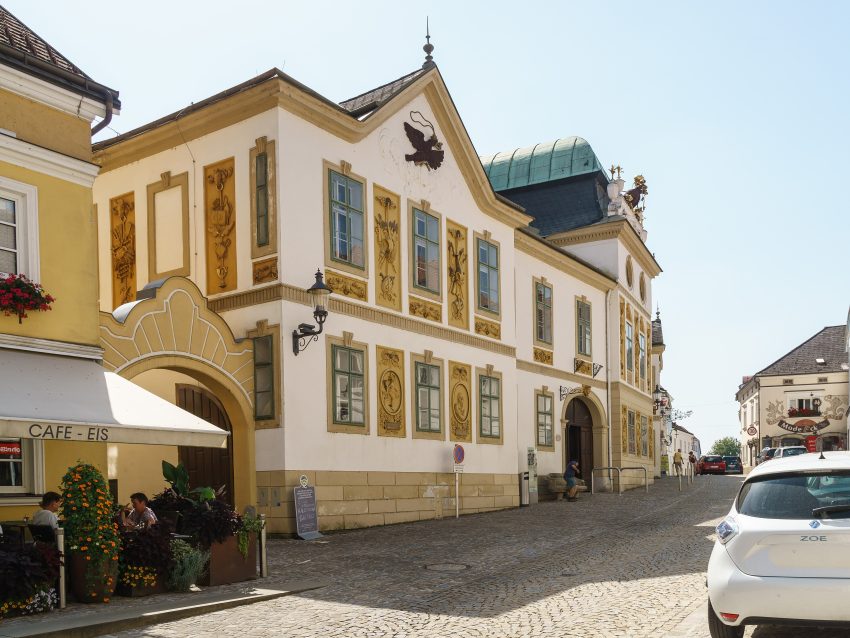
Melk’s Altes Posthaus is a striking late-18th-century former post building, erected in 1792. It represents a time when postal infrastructure was not only practical but also highly representational, projecting status through architecture.
Historically, it reflects the growth and organization of long-distance communication and transport networks, and the way prominent local figures invested in buildings that signaled their role in that system. Stylistically, it sits in the transition from late Baroque toward early Classicism.
What to see is primarily external. Study the facade composition, the ornamental details, and how the central massing and roofline are used to catch the eye. It’s worth viewing from multiple angles as you move along the street, because the building was designed to read differently depending on your approach.
Location: Linzer Str. 3, 3390 Melk, Austria | Hours: 24 Hours. | Price: Free.

2. Restaurant and Hotel Zur Post
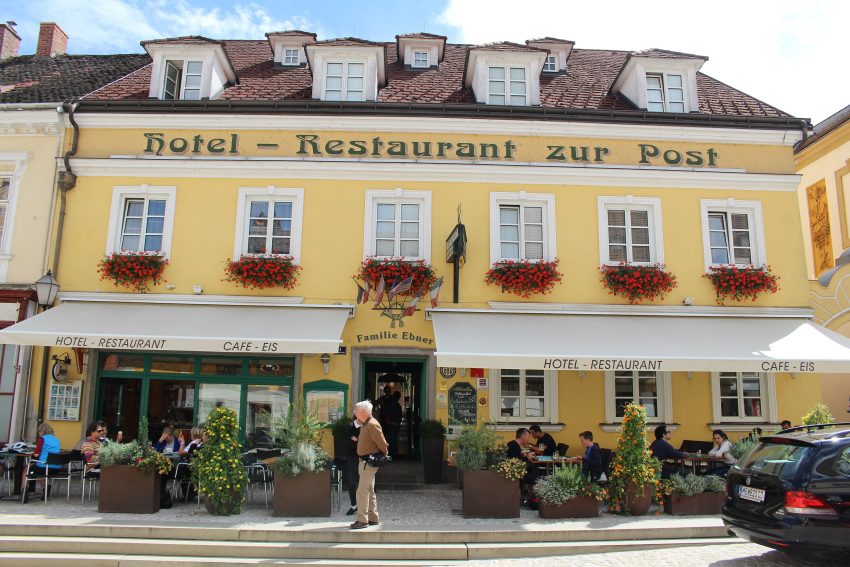
Zur Post is presented as a long-established, central inn-and-restaurant style business, combining accommodation and dining in the historic core of Melk. Its setting is part of its identity, tied to the town’s role as a stopover and visitor hub.
In terms of history, the clearest through-line is continuity of hospitality in a prominent location: places like this often evolve over time while keeping their core function, serving locals and travelers in the same urban context.
What to see (and do) here is largely experiential. Choose a spot that lets you appreciate the building’s character and the sense of being in the middle of town life, then notice how the interiors are arranged into distinct dining spaces. Even if you don’t stay overnight, it can be a useful anchor point for a meal break in the old center.
Location: Linzer Str. 1, 3390 Melk, Austria | Hours: Monday: Closed. Tuesday – Saturday: 11:30–14:00 & 14:00–18:00 & 18:00–21:00. Sunday: 11:30–15:00. | Price: Free. | Website
3. Hauptplatz
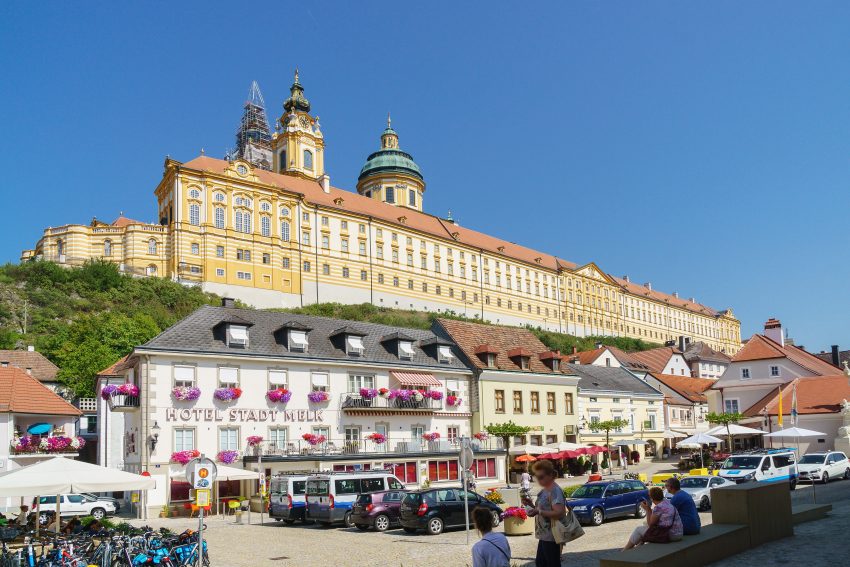
Melk’s Hauptplatz is the town’s historic market square, and it functioned for centuries as a weekly marketplace. Today it still reads as the civic “front room” of Melk, with a broad, open layout that makes the surrounding facades and monuments easy to take in.
Historically, the square’s identity is closely tied to trade and to the monastery’s influence on the town’s development. One of the key markers of that relationship is the prominent Nepomuk monument, commissioned by the abbey and set up as both a religious and public landmark.
When you’re there, look for the overall townscape first: the long sightlines across the square, the mix of burgher-town architecture, and the way streets feed into it from different angles. Then spend time with the details on the central monuments (especially the narrative reliefs) and the changing character of the buildings as you move from the open square into the tighter lanes nearby.
Location: Hauptpl., 3390 Melk, Austria | Hours: 24 Hours. | Price: Free.
4. St. Johannes Nepomuk Statue
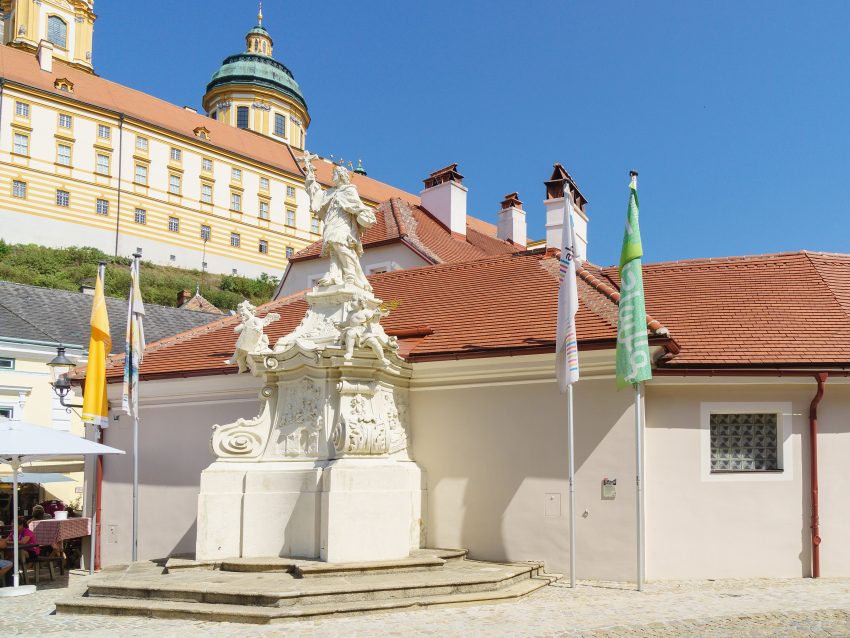
The St. Johannes Nepomuk statue on Melk’s main square is a high-Baroque monument dating to 1736. It reflects how prominently Nepomuk veneration spread through Danube towns, especially as a protector associated with bridges and waterways.
What makes this monument historically legible is the storytelling on its base: the relief panels depict episodes connected to the saint’s martyrdom tradition. It was designed to be “read” in scenes, in a very Baroque, didactic way.
On site, give it a slow circuit. Start with the overall composition (pose, drapery, and the dramatic high-Baroque silhouette), then move to the base reliefs and treat them like a sequence. It’s also worth stepping back toward the edge of the square so you can see how the monument was positioned to anchor the open space visually.
Location: Hauptstraße 2, 3390 Melk, Austria | Hours: 24 Hours. | Price: Free.
5. Mariä-Himmelfahrt-Kirche
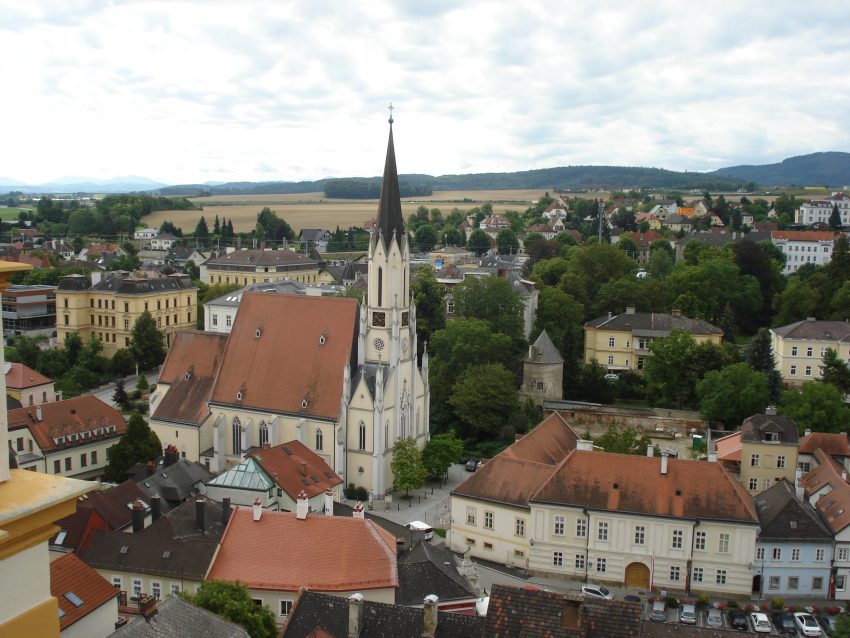
Melk’s Stadtpfarrkirche Mariä Himmelfahrt represents the town’s late-medieval church-building phase, with the church built up to 1481. Later, in 1693, it passed from the Diocese of Passau to Melk Abbey, underlining the abbey’s long role in local religious life.
Architecturally, it’s a three-aisled pillar basilica with a late-Gothic structure, most evident in the vaulting and the rhythm of the interior supports. The fabric is medieval, while many features visitors notice up close reflect later interventions and restorations.
When you visit, focus on the interior structure first: the sense of length through the nave and the vaulted ceiling forms. Then look for the layers of later history—major renovations in the 1990s help explain why parts of the church can feel both historic and comparatively refreshed.
Location: Kirchenpl. 10, 3390 Melk, Austria | Hours: Daily: 08:00–18:00. | Price: Free; donations appreciated. | Website
6. Hauptstraße
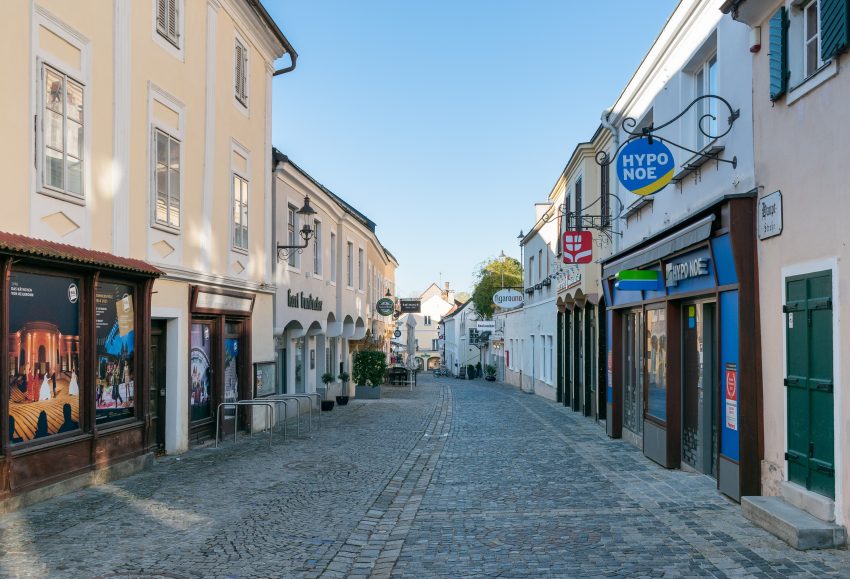
Melk’s Hauptstraße is historically significant as the town’s main commercial spine, where everyday urban life has been layered over centuries. It preserves the feel of a functioning old-town street rather than a single standalone monument.
Its interest lies in architectural details that hint at earlier periods of prosperity, including characteristic upper-floor elements and the way older building forms have been adapted for modern shops and cafés while retaining historic proportions.
When you’re there, look at the street at two levels. At ground level, focus on doorways, window surrounds, and shopfront rhythms; above, scan for projecting forms and continuous features that are easy to miss if you only look straight ahead. This is where Melk often feels most “lived-in historic.”
Location: Hauptstraße, 3390 Melk, Austria | Hours: 24 Hours. | Price: Free.
7. Town Hall
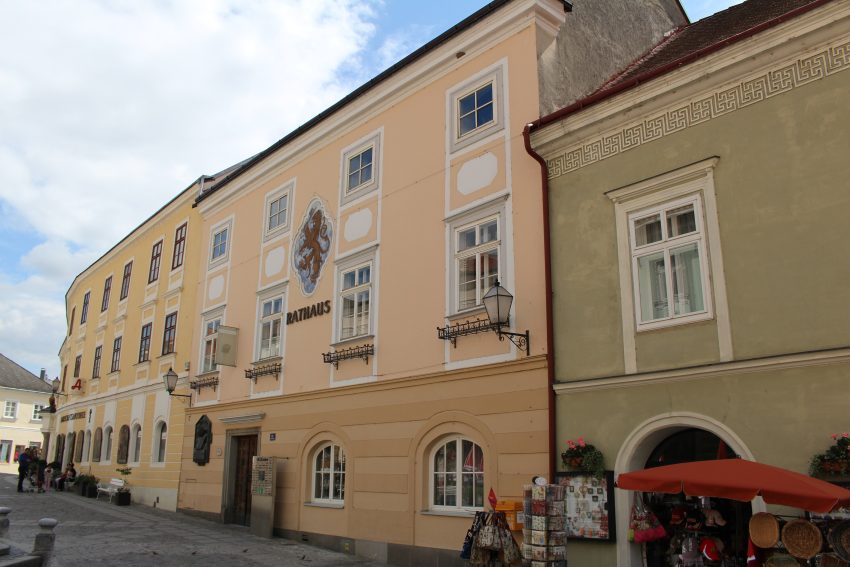
Melk’s Town Hall site is tied to medieval and early modern town life, with civic functions evolving over time. After destructive fires, the citizens were enabled to build a proper town hall in the late 16th century, marking a clear step in civic organization.
The building’s later appearance reflects rebuilding and re-facing after further damage, which is typical for town halls in historic Central European towns: the role remains stable while the architectural expression changes with each major intervention.
When you visit, take in the broader Rathausplatz context as well as the town hall itself. Look for civic symbols and pay attention to how the square feels more administrative and compact compared with the openness of the main market square. It’s a good place to read how governance and town identity were expressed in stone.
Location: Rathauspl. 11, 3390 Melk, Austria | Hours: Monday: 08:00–12:00 & 14:00–18:00. Tuesday: Closed. Wednesday: 08:00–12:00. Thursday: 08:00–12:00 & 13:30–15:00. Friday: 08:00–12:00. Saturday: Closed. Sunday: Closed. | Price: Free. | Website
8. Lebzelterhaus
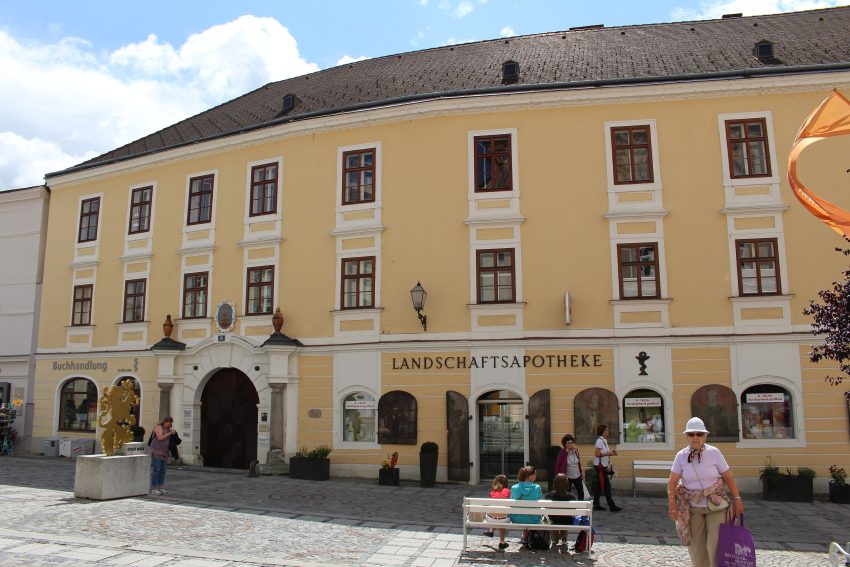
The Lebzelterhaus is linked to Melk’s early modern craft economy, associated with the “Lebzelter” trade known for honey cakes and spiced confections. Houses like this reflect how specialized urban trades shaped both livelihoods and the way buildings were remembered.
Historically, its significance lies in the overlap of home and work: pre-industrial production was often embedded in domestic space, and named houses could preserve the memory of those trades long after practices changed.
What to see is primarily the exterior character and any emblematic details that suggest its historic identity. Treat it as a small but telling fragment of 17th-century town life, where craft, commerce, and architecture are tightly interwoven.
Location: Abt Karl-Straße 27a, 3390 Melk, Austria | Hours: Monday – Friday: 08:00–18:00. Saturday: 08:00–12:00. Closed on Sunday. | Price: Check official website. | Website
9. Melk Abbey
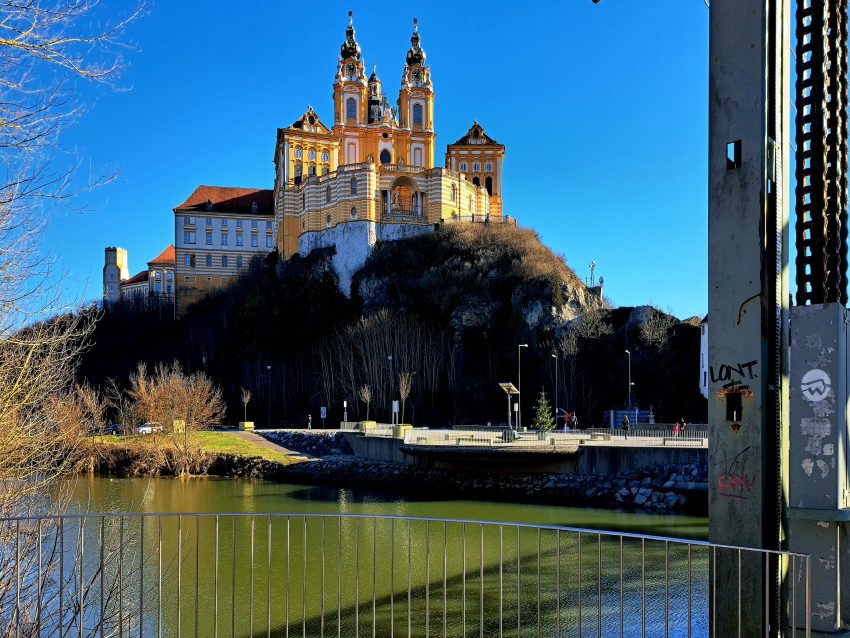
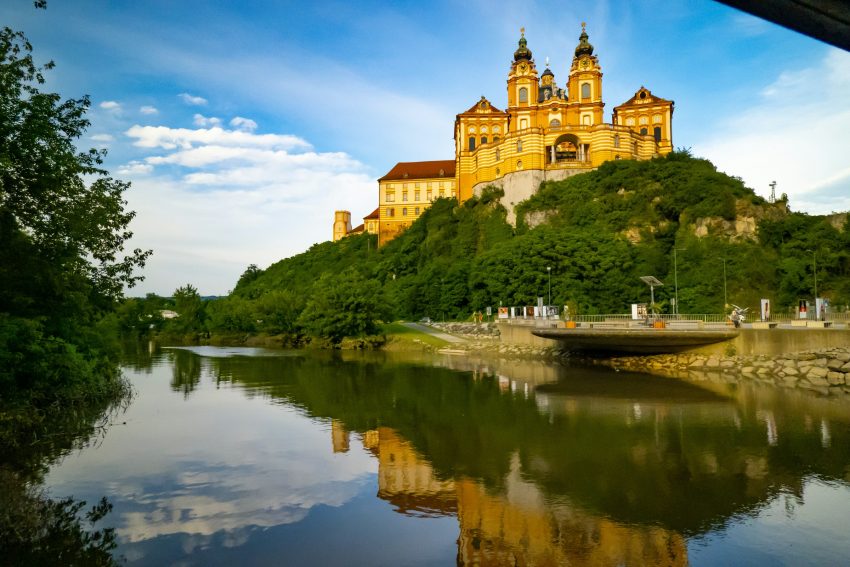
Melk Abbey is a Benedictine monastery founded in 1089 and became a major religious and intellectual center over time. Its long history includes periods of reform and influence that shaped monastic life in the region, helping explain why it remained such a dominant institution locally.
The vast complex visitors see today is largely Baroque in character, reflecting a major rebuilding phase in the early 18th century. The architecture was designed to project authority and confidence, pairing monumental scale with rich interior artistry.
What to see is extensive, but the core focus is consistent: the abbey church, the grand representative interiors, and the tradition of scholarship and collecting that underpins its cultural reputation. Prioritize the overall sequence of spaces—courtyards to church to key interior rooms—because the experience is designed around progression, not isolated highlights.
Location: Stiftsstr. 1, 3390 Melk, Austria | Hours: March 1 – March 27, 2026: Monday – Friday: Guided tours only at 11:00, 13:30 & 15:00; Saturday – Sunday: 10:00–16:30 (last admission 16:00). March 28 – November 1, 2026: March 28 – March 31 & November 1: 09:00–16:30 (last admission 16:00); April 1 – October 31: 09:00–17:30 (last admission 17:00). | Price: Adults: €16; Pupils & students (up to 27, with ID): €8; Family ticket (parents with child/ren up to 16): €32; Guided tour supplement: €4. | Website
10. Stiftspark
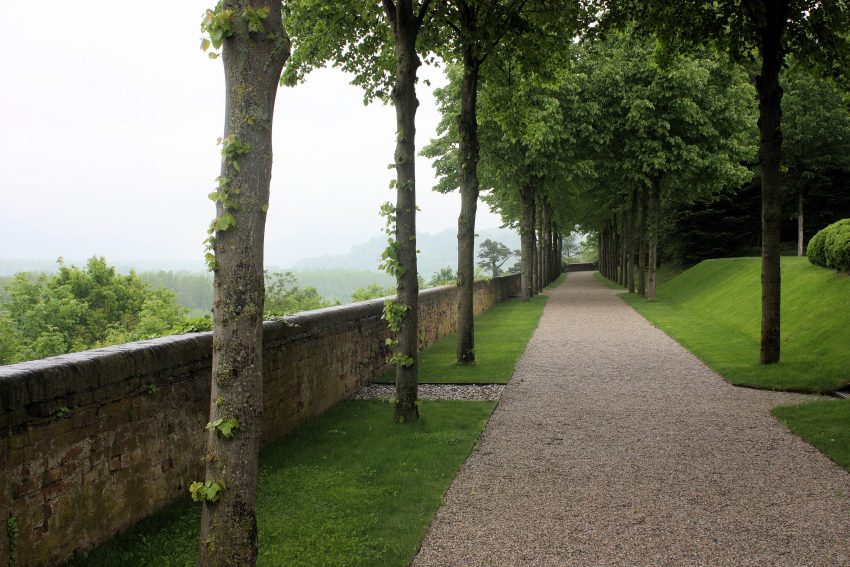
The Stiftspark is the landscaped abbey park belonging to Melk Abbey, shaped by a long, documented development that the abbey itself describes as around 250 years of park history. It’s presented as a designed cultural landscape where architecture, nature, and monastic life are meant to work together, rather than a purely “natural” green space.
Historically, what you see today is the result of later revitalisation and changing garden fashions: visitor information and regional tourism descriptions frame it as a revitalised garden complex that combines Baroque influences with elements associated with an English landscape garden. That blend is part of its character—the park isn’t a single-style showpiece, but a layered garden with different moods and design intentions.
When you’re there, look for the “set pieces” that make the park more than a walkable green area: the Baroque garden pavilion is specifically highlighted, including frescoes by Johann Wenzel Bergl, and the broader composition of formal vs. more naturalistic sections. Practically, the abbey also publishes separate visiting information for the Stiftspark, including seasonal opening windows and a standalone park ticket option.
Location: Abt-Berthold-Dietmayr-Straße 3, 3390 Melk, Austria | Hours: (Summer) March 28 – March 31 & October 25 – October 31: Daily: 09:00–17:00; April 1 – October 24: Daily: 09:00–18:00. | Price: Adults: €5.50; Pupils/Students: €4.00; Children (6–16): €1.50. | Website
11. Historisches Wetterhäuschen
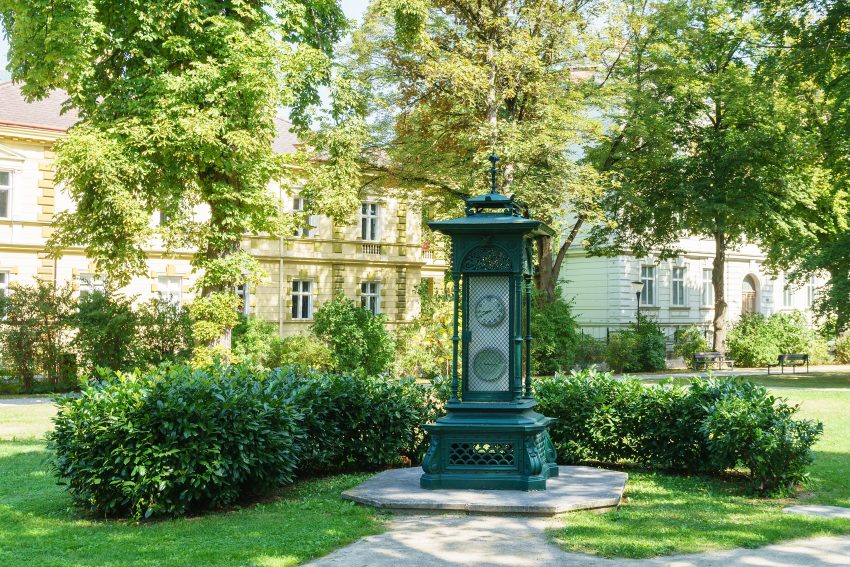
Melk’s historic weather house is closely associated with the creation of the Stadtpark in the late 19th century. It reflects the period’s taste for public parks that mixed leisure with decorative, practical installations intended to be used by visitors.
Its historical interest is also tied to the craft and engineering culture of the time: objects like this were designed as precise mechanisms housed in an attractive form, turning everyday information into a small civic display.
What to see here is mainly the object itself in its park setting. Treat it as a piece of late-19th-century public “street furniture” with a purpose—something meant to be consulted as well as admired—and take a moment to notice how it sits within the park’s original layout of paths and viewpoints.
Location: 3340 Waidhofen an der Ybbs, Austria | Hours: 24 Hours. | Price: Free.
12. Stadtpark
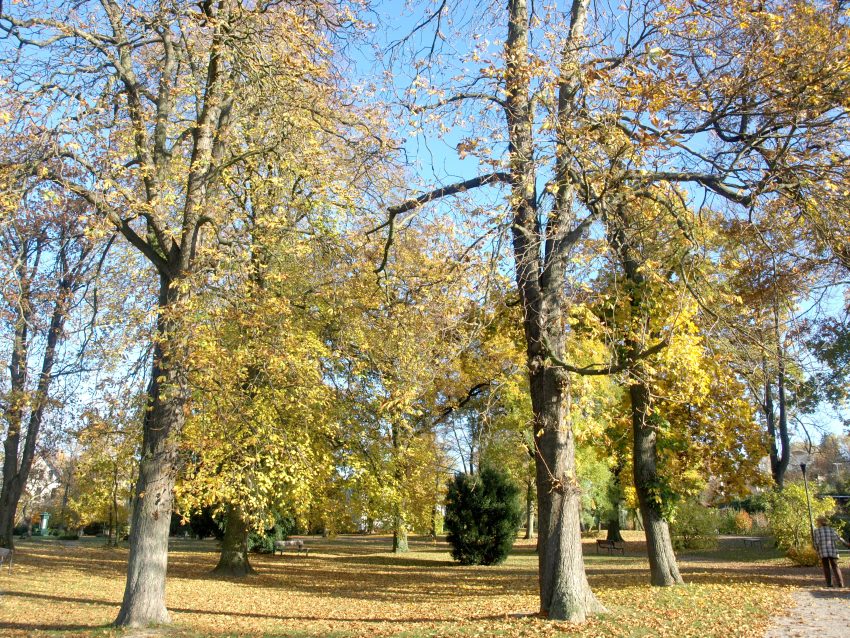
Melk’s Stadtpark is a classic small public park from the late 19th century, opened in 1886. It belongs to the era when towns invested in planned green spaces as part of civic pride, public health, and social life.
The park’s story is bound up with deliberate design rather than accidental greenery. Its original concept included structures and features intended to make it both pleasant and “modern” for its day, with points of interest placed along easy paths.
When you’re there, approach it like a compact historic landscape. Spend time on the main path loops and sightlines, then pick out surviving period elements and commemorative markers. It’s also a good place to pause and take in the calmer side of the town’s character away from the busiest streets.
Location: Abt Karl-Straße 4, 3390 Melk, Austria | Hours: 24 Hours. | Price: Free. | Website
13. Melk Lift Bridge
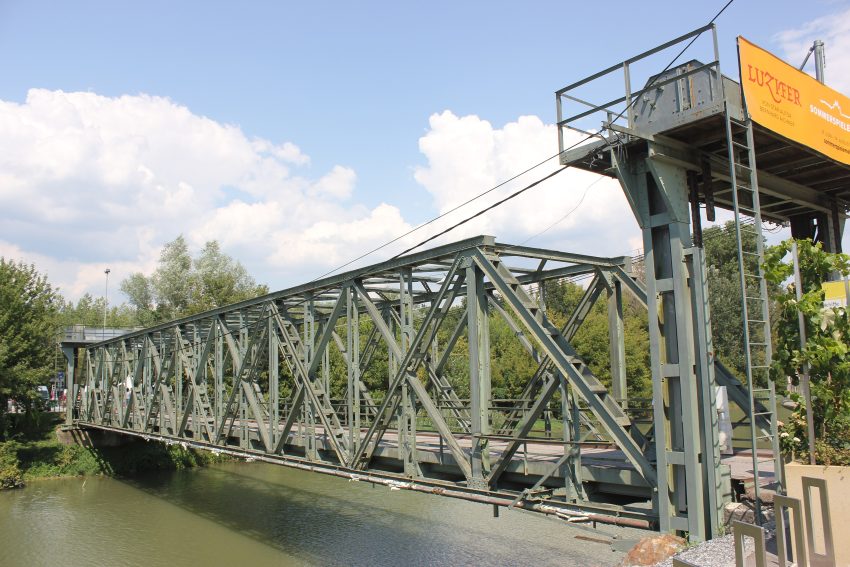
Melk’s “Lift Bridge” is the St. Leopold Bridge (St.-Leopold-Brücke), a movable crossing over the Melk arm of the Danube that was built in 1937 after earlier crossings proved vulnerable to flooding. Local descriptions tie the rise in importance of this crossing to the arrival of the Westbahn (Western Railway), noting that in 1897 a cable ferry and a pontoon bridge were used—only for the pontoon bridge to be destroyed repeatedly by high water.
The bridge’s lift mechanism is a core part of its story: sources state that the 123-ton bridge could be raised about three metres, originally using hoisting winches and manpower. The city also notes a later modernization: in 1952, the bridge was converted to electric operation.
What to see today is the bridge as both engineering and viewpoint. It’s highlighted as a connection between the old town and the riverside areas (including paths toward the Danube landing stages) and as a spot for photography thanks to a nearby modern observation platform. Practical visitor info also notes the bridge is used by pedestrians and cyclists for reaching the old town from the Danube-side moorings.
Location: St. Leopold Brücke, Rollfährestraße, 3390 Melk, Austria | Hours: 24 Hours | Price: Free

Moira & Andy
Hey! We're Moira & Andy. From hiking the Camino to trips around Europe in Bert our campervan — we've been traveling together since retirement in 2020!
This website uses affiliate links which earn a small commission at no additional cost to you.
Walking Tour Summary
Distance: 2.5 km
Sites: 13