Self-Guided Walking Tour of Innsbruck (+Maps!)
This website uses affiliate links which earn a small commission at no additional cost to you.
Innsbruck is made for wandering: a compact historic core, grand Habsburg-era architecture, and constant mountain views that keep pulling your eyes upward between stops. This self-guided route is designed to feel effortless, with logical turns that take you from lively squares to quiet streets, then back into the heart of the city again.
If you're searching for the best things to see in Innsbruck, walking is the simplest way to connect the dots. You'll move from headline sights to the smaller details people miss on quick visits-arcades, façades, river views, and little corners that explain why Innsbruck feels both Alpine and unmistakably imperial.
To make it easy, this guide is built around a walking tour map (and optional maps for tweaks and shortcuts), so you can focus on the fun part: setting your own rhythm. Pause for coffee whenever you want, skip anything that doesn’t grab you, and linger longer where the city clicks for you.
Table of Contents
- How to get to Innsbruck
- A Short History of Innsbruck
- Innsbruck in the Middle Ages: A River Crossing That Became a City
- Innsbruck in the Habsburg Era: Court Power, Ceremony, and Lasting Landmarks
- Innsbruck in the 19th Century: Modernisation, Tourism, and a Changing City
- Innsbruck in the 20th Century to Today: Winter Sports, Global Attention, and Alpine Identity
- Where to Stay in Innsbruck
- Your Self-Guided Walking Tour of Innsbruck
How to get to Innsbruck
By Air: Innsbruck Airport (INN) is the closest option and is usually the fastest for short trips, with a quick transfer into town once you land. If flight times or prices don't suit, Munich (MUC) and Zürich (ZRH) are common alternatives with frequent onward connections, then you finish the journey by rail or coach. Aim to arrive early if you want to start the walk the same day without rushing. For the best deals and a seamless booking experience, check out these flights to Innsbruck on Booking.com.
By Train: Innsbruck Hauptbahnhof is extremely well-connected, and arriving by rail is often the most relaxed way to enter the city because you step straight into a walkable centre. Long-distance and international services link Innsbruck with Vienna, Salzburg, Munich, Zürich, and northern Italy, and local routes make day trips easy if you're basing yourself nearby. Book ahead in peak seasons if you want the best fares. You can easily check timetables and book train tickets through the ÖBB (Austrian Federal Railways) website. However, for a smoother experience, we recommend using Omio, which simplifies the booking process and lets you compare routes, prices, and departure times all in one place.
By Car: Driving is straightforward via the Austrian motorway network, but the centre is much nicer on foot than behind a wheel. If you come by car, plan to park once (hotel garage or a central public car park) and leave it there until you depart-this walking tour works best when you’re not thinking about traffic, restrictions, or one-way streets. If you are looking to rent a car in Austria I recommend having a look at Discover Cars, first, as they compare prices and review multiple car rental agencies for you.
By Bus: Long-distance coaches can be good value and are useful when flights are expensive or trains are fully booked, especially from nearby regions. Services often terminate close to the main station area, which keeps your arrival simple and puts you within easy reach of central hotels and the start of the route.
How to get around the city: Innsbruck’s core is compact, so you can do most of this itinerary entirely on foot. When you want to save time, trams and buses are reliable for short hops (useful if you’re staying outside the centre or if the weather turns), and funiculars/cable cars make it easy to add a mountain-view detour without turning the day into a hike.
A Short History of Innsbruck
Innsbruck in the Middle Ages: A River Crossing That Became a City
Innsbruck’s story begins with what its name suggests: a bridge over the River Inn that turned a strategic crossing into a trading hub. As merchants and travellers funnelled through the valley routes, the town grew into a place where tolls, markets, and guild life shaped daily rhythms. That early commercial importance still echoes in the layout of the historic centre, where the most prominent streets and squares feel built for movement, exchange, and civic display.
Innsbruck in the Habsburg Era: Court Power, Ceremony, and Lasting Landmarks
Under Habsburg influence, Innsbruck became a stage for dynastic politics and court ceremony, and the architecture of the centre still carries that message. Imperial patronage helped transform the city's appearance-grand buildings and ornate details weren't just decoration, they were statements of authority and prestige. Sights associated with court life remain some of the most compelling stops today, because they turn history into something you can read in stonework, sculptures, and the city's sense of scale.
Innsbruck in the 19th Century: Modernisation, Tourism, and a Changing City
As travel became easier and the Alps drew visitors for scenery and fresh air, Innsbruck evolved from a regional centre into a destination in its own right. New transport links and a growing visitor economy changed how the city worked and how it presented itself, with public spaces, viewpoints, and cultural institutions gaining importance. The mix you feel today-historic lanes paired with a more modern city tempo-comes from this long period of adaptation.
Innsbruck in the 20th Century to Today: Winter Sports, Global Attention, and Alpine Identity
The 20th century put Innsbruck in the international spotlight through winter sports and major events, reinforcing the city's identity as both urban and Alpine. That attention helped shape infrastructure and the visitor experience, while the historic centre remained the emotional anchor of the city. What makes Innsbruck satisfying on a walking tour is exactly this layering: medieval foundations, imperial grandeur, and modern mountain-city confidence all within an easy stroll.
Where to Stay in Innsbruck
To make the most of visiting Innsbruck and this walking tour then you consider stay overnight at the centre. The Old Town/Innenstadt area is the most convenient base because you can start early, return for breaks, and head out again in the evening without planning transport. It's also where the atmosphere is strongest after day-trippers leave. Good central options include Hotel Goldener Adler for classic Old Town character and Hotel Das Innsbruck for a comfortable, walk-everywhere location near the river.
If you want immediate station access (especially for a quick one-night stay or early train departures), the Hauptbahnhof area is practical while still being an easy walk into the historic core. It’s ideal if you’re arriving late, leaving early, or carrying more luggage than you want to roll over cobbles. Consider ADLERS Hotel Innsbruck for skyline views and a very central-feeling base, or Boutique Hotel Zach for a smaller, quieter stay that still keeps you close to everything.
For a slightly calmer, local feel without losing walkability, Wilten is a strong choice-close enough to stroll into the centre, but with a more neighbourhood rhythm and plenty of everyday cafés. It also works well if you like dipping in and out of the busiest areas. Look at NALA individuellhotel for a boutique-style stay, or STAGE 12 Hotel by Penz if you want a stylish base that sits right on a central axis between modern shopping streets and the old lanes.
Your Self-Guided Walking Tour of Innsbruck
Discover Innsbruck on foot with our walking tour map guiding you between each stop as you explore its imperial sights, Old Town streets, and mountain-framed viewpoints. As this is a self guided walking tour, you are free to skip places, reverse the order, and take coffee stops whenever you want-treat the map as your guide, not your boss.
1. Triumphpforte
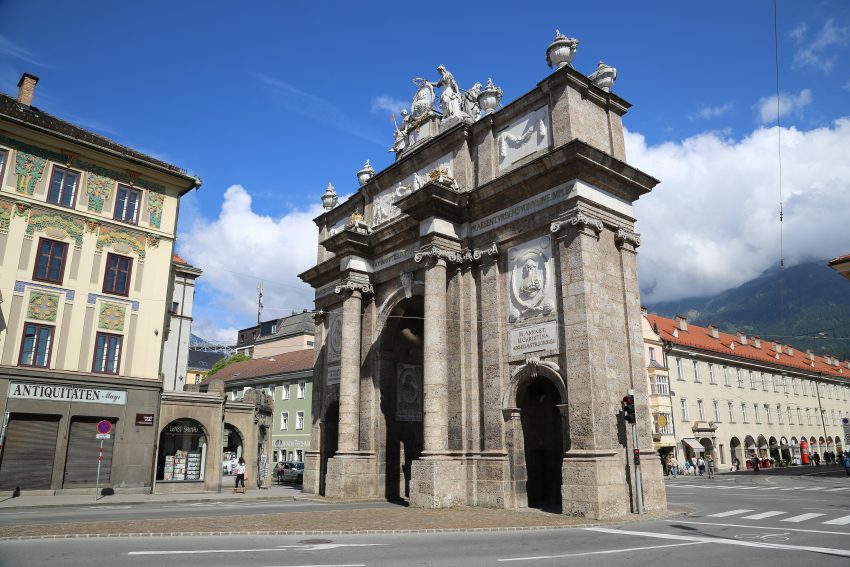
The Triumphpforte was commissioned in 1765 under Empress Maria Theresa to mark a major Habsburg family event in Innsbruck: the wedding celebrations for Archduke Leopold (later Emperor Leopold II). In a twist that shaped its symbolism, Maria Theresa’s husband, Francis Stephen, died shortly after the wedding, so the monument became both a celebration and a memorial.
When you’re there, look closely at the two main faces of the arch: one side is designed around the wedding theme, while the other leans into commemoration and mourning. That contrast is the whole point of the structure, and it’s easiest to appreciate if you take a moment to view it from both directions.
It also helps to know why it feels more permanent than many ceremonial arches: Innsbruck built it in stone (not as a temporary wooden festival structure), using local material and reusing stone from earlier city fortifications. Stand back far enough to read the relief details, then step in to examine the sculptural work and the overall proportions.
Location: Maria-Theresien-Straße, 6020 Innsbruck, Austria | Hours: 24 Hours. | Price: Free.

2. Maria-Theresien Strasse
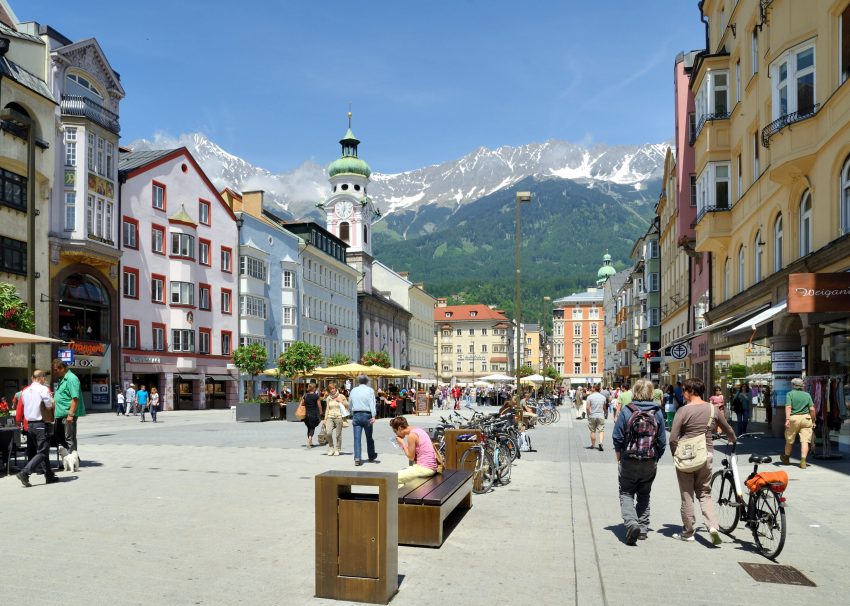
Maria-Theresien-Straße is Innsbruck’s central boulevard and one of the city’s key historic axes, linking major landmarks along a straight, ceremonial-feeling line through the centre. It’s the kind of street whose importance comes from what it connects and what has been placed along it over time.
The headline historic monument on the street is St. Anne’s Column (Annasäule), erected to commemorate Tyrol’s liberation from Bavarian troops after the events of 1703. The column and its statuary were conceived as a public statement of gratitude and identity, and it remains the street’s visual anchor.
For what to see, treat the street like an open-air sequence: the Annasäule in the middle, the city-centre architecture that lines the boulevard, and the sightline that runs down to the Triumphpforte at the southern end. If you want the “this is Innsbruck” feeling in one place, it’s often about standing mid-street and taking in that full alignment of monuments.
Location: Maria-Theresien-Straße, 6020 Innsbruck, Austria | Hours: 24 Hours. | Price: Free.
3. Marktplatz
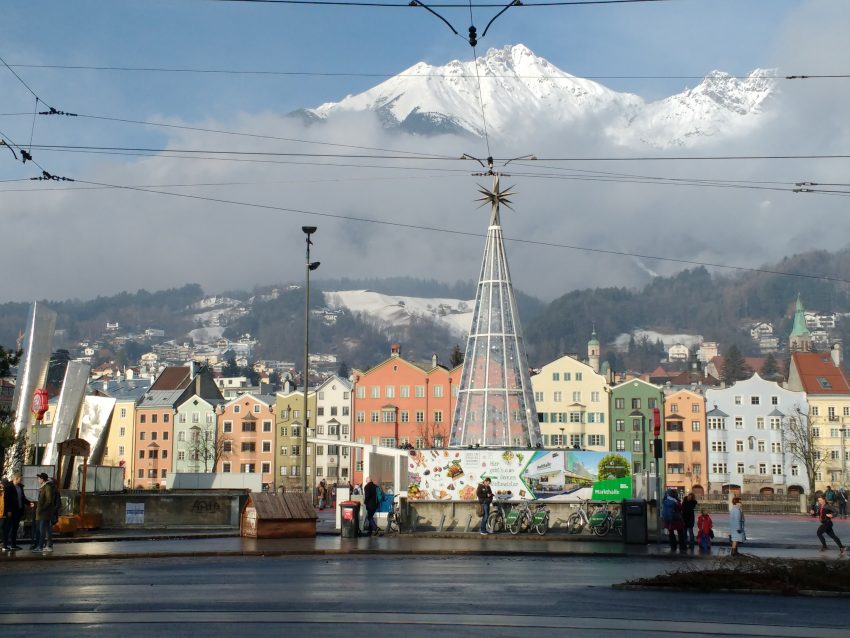
Marktplatz Innsbruck sits right on the Inn, at the edge of the Old Town, and it’s long been a practical “city-life” space rather than a single monument. The square’s role is tied to Innsbruck’s trading and provisioning traditions along the river corridor, with covered and open-air market activity in this part of town repeatedly referenced as a long-standing local habit.
One of the defining historic structures here is the Markthalle (Market Hall) next to the square. The market hall’s older section was built in 1913/14 as a storage and wholesale trading facility, supporting food supply and distribution at a time when secure provisioning mattered (including on the eve of World War I), while producer markets continued outdoors nearby.
What to see at Marktplatz is mainly about the setting and the atmosphere: the riverside viewpoint across to the colourful Mariahilf houses with the Nordkette mountains behind them is specifically noted as one of Innsbruck’s most popular photo spots. Pair that with a look inside the market hall if it’s open and lively (fresh produce, regional food stalls, and small bites), and you’ll get the best sense of why this square still feels like a working piece of the city rather than a staged landmark.
Location: Marktplatz, Innsbruck, Austria | Hours: 24 Hours | Price: Free | Website
4. Stadtturm
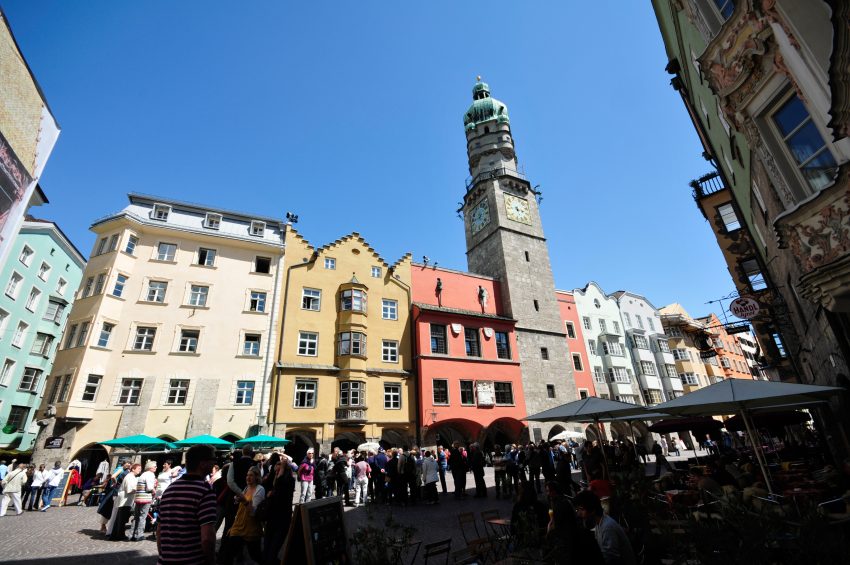
Innsbruck’s City Tower (Stadtturm) is a medieval civic structure built for practical surveillance and authority: guards watched for fire and other dangers for centuries, and parts of the tower also served as a prison. It’s a classic example of how “what to see” in old towns is often inseparable from how the city once functioned day to day.
The building’s history is best understood as municipal infrastructure rather than royal monumentality: a tower that literally kept the town safe and enforced order. That civic role is why it sits so naturally among the tightly packed historic buildings—this was working architecture, not an isolated showpiece.
Today, the main reason to go up is the viewing platform: you get a rooftop-level perspective over the Old Town and a clear sense of Innsbruck’s urban layout. Accounts consistently note the tower’s height (around 51 m) and that the observation deck is partway up, which explains why the view feels “in the city” rather than distant and panoramic.
Location: Herzog-Friedrich-Straße 21, 6020 Innsbruck, Austria | Hours: (Summer) June 1 – September 30; Daily: 10:00–20:00. (Winter) October 1 – May 31; Daily: 10:00–17:00. | Price: Adults: €4.50; Students/School pupils/Youth (up to 17): €3.00; Seniors (60+): €3.00; Children (6–15): €2.00; Family ticket (2 adults + children 6–15): €18.80. | Website
5. Goldenes Dachl
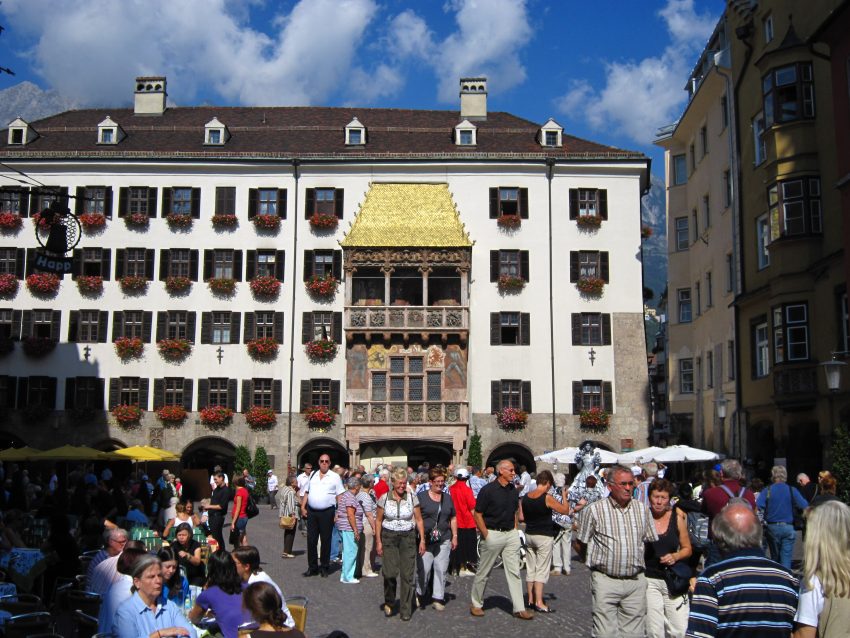
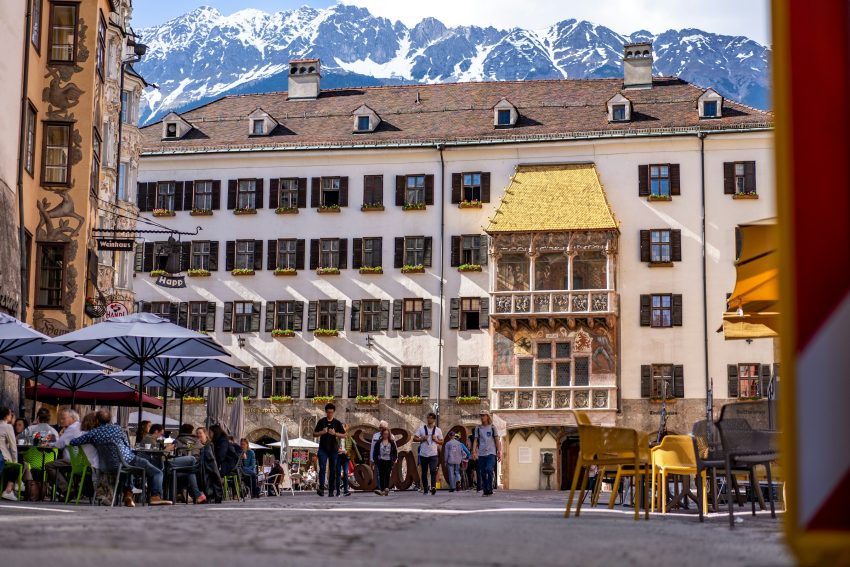
The Golden Roof (Goldenes Dachl) is Innsbruck’s signature late Gothic landmark, completed around 1500 under Emperor Maximilian I. Its defining feature is the roof of fire-gilded copper tiles—2,657 of them—created as a prestige statement tied to Maximilian’s court life and public display.
Historically, it functioned as a symbolic grandstand: Maximilian (and his wife, Bianca Maria Sforza) could appear on the balcony to watch festivities and events in the square below, turning architecture into stagecraft. That mix of personal commemoration and public messaging is why the building became a lasting icon rather than just a decorative façade.
What to see is in the detail: look up at the roofline to register the gilded tiles, then study the coats of arms and decorative programme around the oriel window. The surrounding Old Town context matters too, because the Golden Roof is designed to be seen in dialogue with the square and street life below it.
Location: Herzog-Friedrich-Straße 15, 6020 Innsbruck, Austria | Hours: (Summer) May – September; Daily: 10:00–17:00. (Winter) October – April; Tuesday – Sunday: 10:00–17:00. Closed on Monday. | Price: Standard: €6; Reduced: €3; Family ticket: €12.50; Children under 6: free. | Website
6. Dom zu St. Jakob
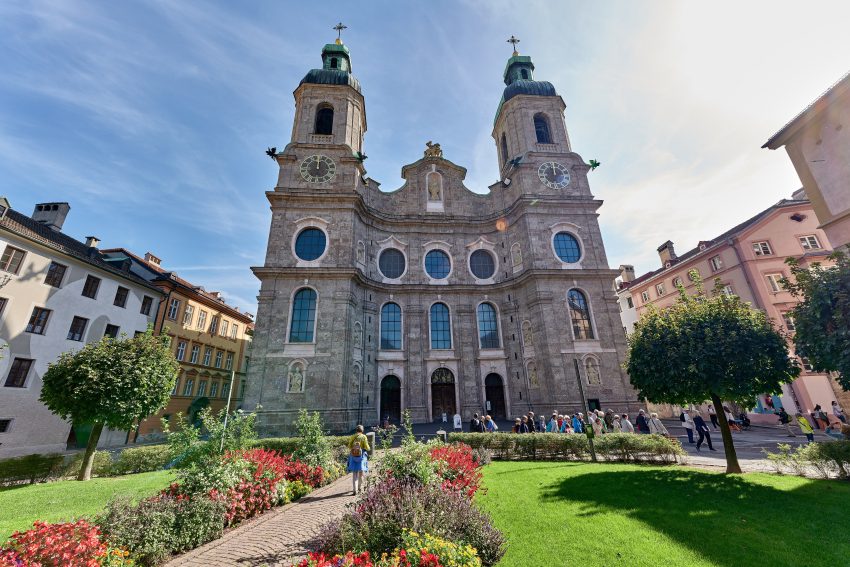
Innsbruck Cathedral (Dom zu St. Jakob) is a Baroque cathedral with a strong artistic identity, known especially for the revered Marian image Maria Hilf (Mary of Succor) by Lucas Cranach the Elder, dated to around 1530 and displayed above the high altar. That single artwork gives the cathedral a devotional importance that goes beyond its architecture.
Historically, the cathedral also ties into Habsburg-era religious and dynastic culture through major memorials, including the elaborate tomb of Archduke Maximilian III (dating from the early 17th century). In other words, it’s both a place of worship and a layered repository of Tyrolean and Habsburg memory.
What to see: start with the high altar and the Cranach painting, then move through the interior looking for the cathedral’s key monuments and the overall Baroque staging of space (altars, decoration, and sightlines). Even if you’re not focused on religious art, the cathedral repays slow looking because its highlights are concentrated and historically specific.
Location: Dompl. 6, 6020 Innsbruck, Austria | Hours: Monday – Saturday: 10:15–18:30. Sunday: 12:30–18:30. | Price: Free; donations appreciated. | Website
7. HofGarten
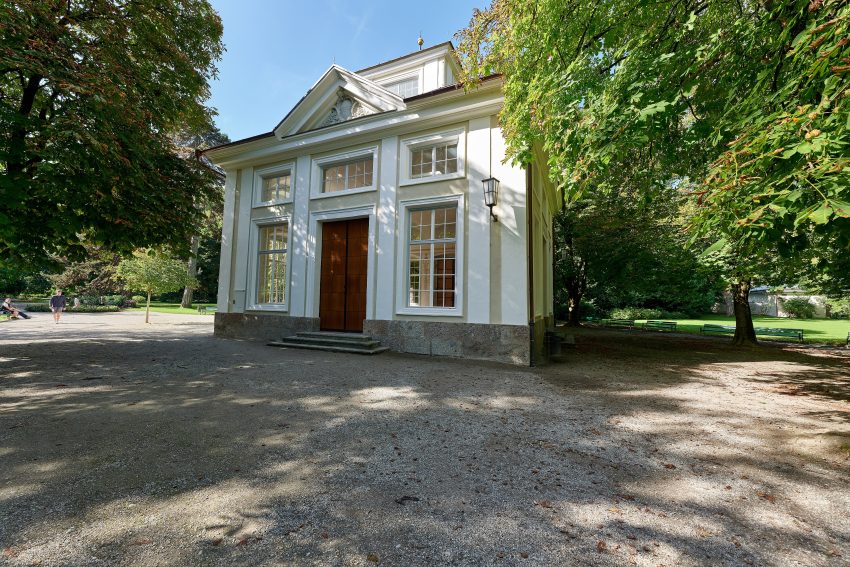
Innsbruck’s Hofgarten has unusually deep roots for a city-centre park: its origins are traced to early 15th-century land purchases under Duke Friedrich IV, and it evolved into a significant courtly garden space over subsequent centuries. It’s a place where Innsbruck’s political history shows up as landscape history—who controlled the city, and what style of “nature” they wanted to present.
A major transformation came in the 16th century under Archduke Ferdinand II, when the area was developed into an elaborate Renaissance garden, later shifting through formal French-style phases before being reworked into an English landscape garden from 1858. That sequence is visible in the park’s feel: less rigid geometry today, more flowing paths and a “designed naturalism.”
What to see now is the park as a living historic site: mature trees, water features, and garden structures, along with the sense of being on the edge of the former court world (close to the Hofburg). If you want something tangible to look for, sources note long continuity in the planting tradition and historic features within the grounds, which can turn a casual stroll into a more intentional visit.
Location: Kaiserjägerstraße, 6020 Innsbruck, Austria | Hours: 24 Hours. | Price: Free. | Website
8. Kaiserliche Hofburg
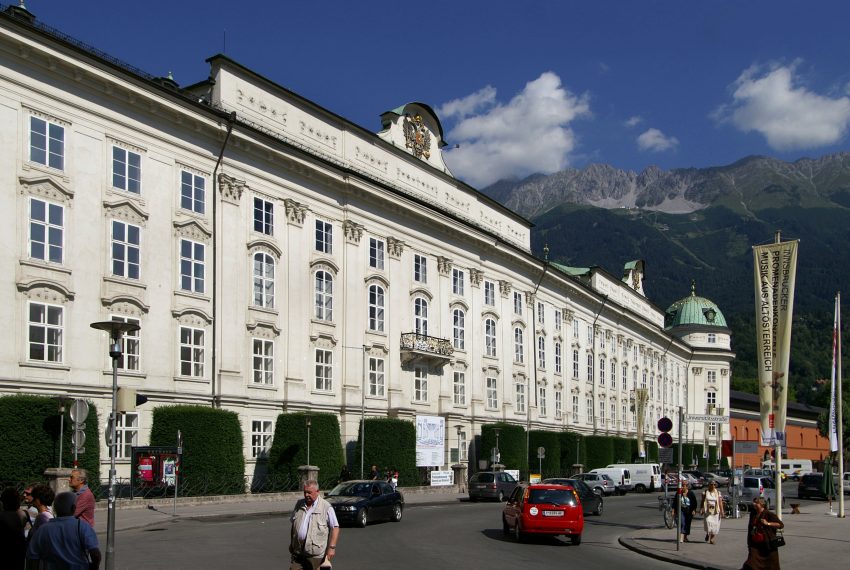
The Imperial Palace (Hofburg) in Innsbruck is one of the Habsburgs’ key residences outside Vienna, with layers that reflect centuries of expansion and changing taste. A defining chapter was Empress Maria Theresa’s 18th-century rebuilding programme, which reshaped the palace into a late Baroque statement and brought major artists into the project.
That Maria Theresa remodelling wasn’t just cosmetic: it was a deliberate political and cultural assertion, aligning Innsbruck’s court setting with Viennese styles and court expectations. The result is a palace that reads as both a historic residence and a carefully curated backdrop for dynastic presence in Tyrol.
When you’re there, the “what to see” is the palace experience as a whole: state rooms and Baroque interiors, the sense of procession through the building, and the proximity to other former court spaces nearby. If you’re interested in how Habsburg image-making worked, this is one of Innsbruck’s most direct case studies.
Location: Rennweg 1, 6020 Innsbruck, Austria | Hours: Daily: 09:00–17:00. | Price: Adults: €10.50; Concessions: €8.00; Under 19: free. Kombi ticket (Kaiserappartements + Maximilian1): €16.00. | Website
9. Hofkirche
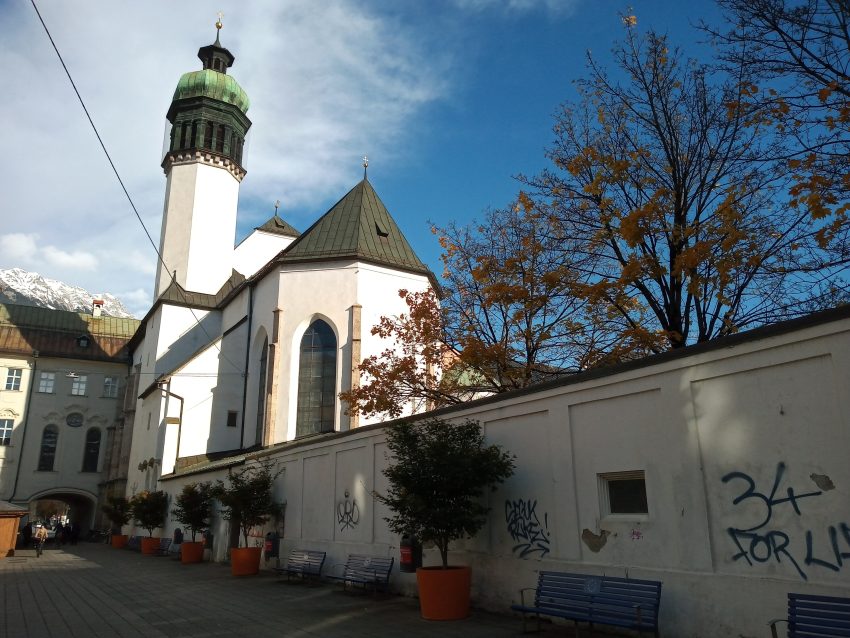
The Hofkirche (Court Church) was built in the mid-16th century under Emperor Ferdinand I as a memorial to his grandfather, Emperor Maximilian I. The centrepiece is Maximilian’s elaborate cenotaph (an empty tomb monument), which reflects how carefully the Habsburgs curated dynastic image and legacy.
Its most famous feature is the ring of larger-than-life bronze figures known as the Schwarze Mander (“Black Men”), though the group includes women as well. They were conceived as a surrounding court of ancestors, role models, and symbolic figures—part genealogy, part political theatre—turned into Renaissance sculpture on a grand scale.
What to see is very specific: spend time circling the monument slowly, taking in the individuality and finish of the bronze figures, then move in to study the narrative reliefs and the overall staging of the cenotaph within the church space. It’s one of the places in Innsbruck where “history” is not abstract—you can read it directly in metal and stone.
Location: Universitätsstraße 2, 6020 Innsbruck, Austria | Hours: Monday – Saturday: 09:00–17:00. Sunday: 12:30–17:00. | Price: Adults: €9; Reduced: €7; Under 19: free. | Website
10. Tiroler Volkskunstmuseum
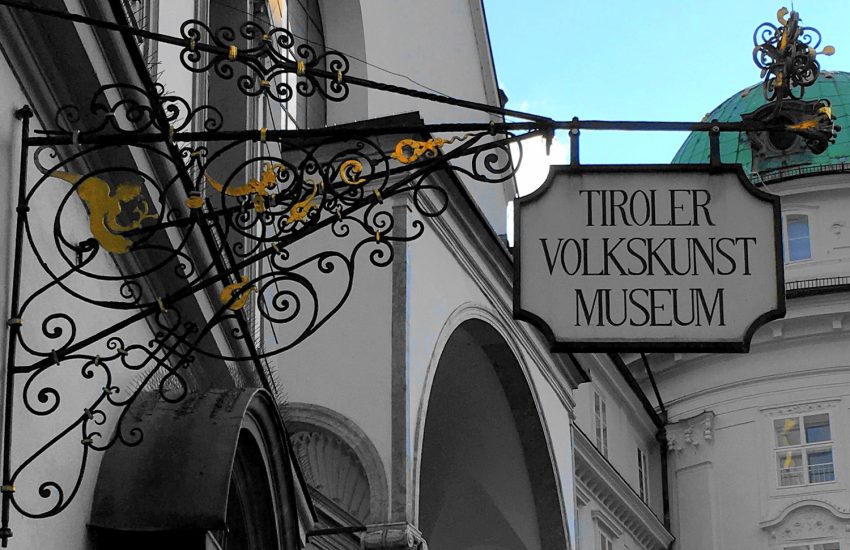
The Tiroler Volkskunstmuseum (Tyrolean Folk Art Museum) is housed in parts of a former Franciscan monastery complex, and its mission is rooted in documenting everyday Tyrolean life rather than imperial court culture. Over time, collections associated with folk art and craft traditions in Tyrol were brought together and placed in this setting, giving the museum an atmospheric “historical fabric” that suits its subject.
Historically, the strength of the museum is that it treats material culture seriously: traditional costumes, household objects, craftwork, furniture, and religious and secular folk art that reflect regional identity across Tyrol. This kind of collection is especially useful in Innsbruck, where the better-known headline sites can tilt strongly toward Habsburg power and spectacle.
When you visit, focus on the craftsmanship and the way rooms are staged to show how objects were used, not just displayed. Give yourself time for textiles, carved woodwork, and the vernacular furniture and interiors, because those sections are where the museum’s “how people actually lived” story becomes most vivid.
Location: Universitätsstraße 2, 6020 Innsbruck, Austria | Hours: Daily: 09:00–17:00. | Price: Adults: €9; Reduced: €7; Under 19: free. | Website
11. Tiroler Landesmuseum Ferdinandeum
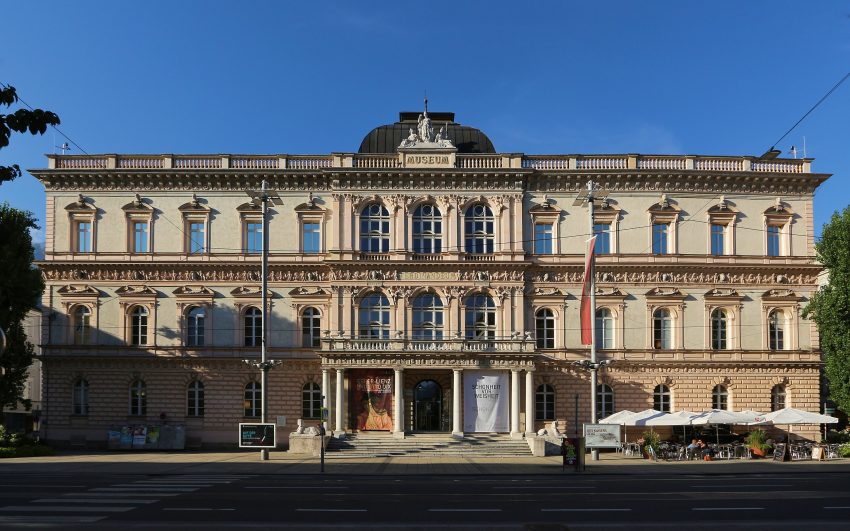
The Tiroler Landesmuseum Ferdinandeum (usually just “the Ferdinandeum”) is Innsbruck’s principal state museum for Tyrol, founded in 1823 as a learned-society museum and named after Archduke Ferdinand. Over time it became the central collecting institution for Tyrolean art, archaeology, history, and related fields, and today it sits within the wider Tiroler Landesmuseen group.
Historically, what makes it valuable is its breadth: it isn’t a single-theme museum, but a place that tries to tell Tyrol’s story through objects—fine art as well as material culture and scholarship. The museum’s own descriptions emphasise long arcs of European art history in its holdings (spanning roughly the medieval period through to around 1900), alongside recognised names you may already associate with the region’s cultural networks.
For what to see, the key is to prioritise whichever parts are currently accessible, because official visitor information notes the Ferdinandeum is under construction until 2028 and the Innsbruck tourism listing indicates it is closed until further notice due to renovation. If you find it open in a limited form, look for highlights from the older art and craft collections and any curated selection that presents the “Tyrol in context” narrative; if it’s closed, the Tiroler Landesmuseen site is the most reliable place to confirm what’s available and what alternative venues within the museum network are operating.
Location: Museumstraße 15, 6020 Innsbruck, Austria | Hours: Check official website. | Price: Check official website. | Website
12. Eduard-Wallnöfer-Platz
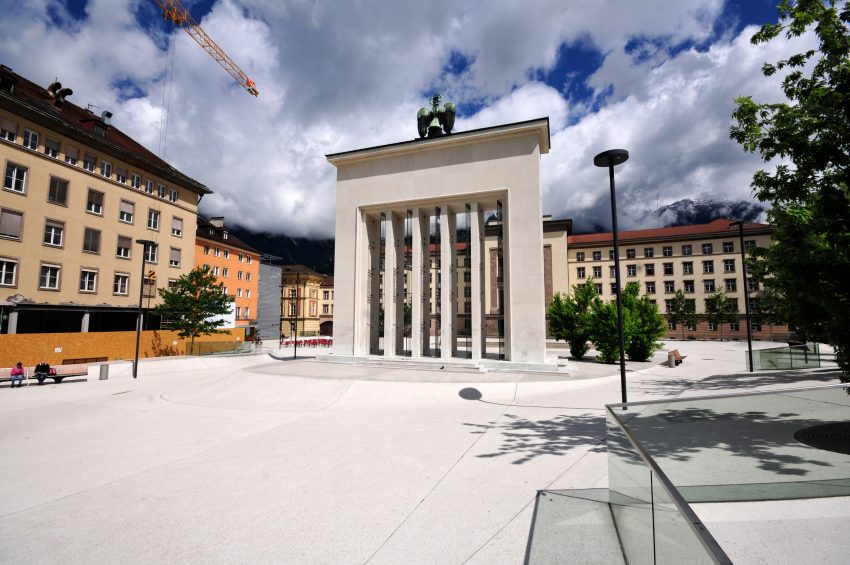
Eduard-Wallnöfer-Platz (often discussed together with Landhausplatz) is Innsbruck’s major government-facing square, defined by the Tiroler Landhaus and the complex historical layers around it. The square’s modern identity is tied to post-war civic life and later rethinking of how public space should work in the city centre.
Historically, the site has carried heavy symbolism: sources discussing the square highlight how the area has been read through the lens of 20th-century politics and memory culture, including monuments connected to liberation and the period of National Socialism, which is part of why redesign debates became so charged.
What to see today is less about a single “must-photograph” façade and more about the square as an urban composition: the broad open surface, the framing government buildings, and the memorial elements that still anchor the space. It’s a good spot to pause and read the place as a piece of Innsbruck’s civic history rather than just a pass-through plaza.
Location: Eduard-Wallnöfer-Platz, 6020 Innsbruck, Austria | Hours: 24 Hours. | Price: Free.

Moira & Andy
Hey! We're Moira & Andy. From hiking the Camino to trips around Europe in Bert our campervan — we've been traveling together since retirement in 2020!
This website uses affiliate links which earn a small commission at no additional cost to you.
Walking Tour Summary
Distance: 2.5 km
Sites: 12