Self-Guided Walking Tour of Dubrovnik (+Maps!)
This website uses affiliate links which earn a small commission at no additional cost to you.
Dubrovnik is the kind of city that rewards slow travel: stone streets that feel polished by centuries, sea air drifting over terracotta roofs, and a compact Old Town where major landmarks sit minutes apart. If you like exploring independently, a self-guided route is one of the best ways to connect the dots between the city's iconic highlights without feeling rushed.
This guide is designed to help you see the best things to see in Dubrovnik while keeping the day practical and enjoyable. You'll move in a natural loop through the Old Town, pausing at key churches and palaces, the city's most photographed squares, and a few places that add emotional depth to the story of Dubrovnik beyond the postcard views.
Because it’s self-guided, you can shape the route around your energy and interests: start early for quieter streets, linger over a long lunch on Stradun’s side lanes, or tack on the cable car when the light is best. The maps make it simple to follow, but the pace is entirely yours.
Table of Contents
- How to Get to Dubrovnik
- A Short History of Dubrovnik
- Dubrovnik’s Early Roots and the Birth of a Maritime City
- Dubrovnik’s Republic Era and the Golden Age of Diplomacy
- Dubrovnik’s Faith, Civic Life, and Monumental Building
- Dubrovnik and the 1667 Earthquake: Destruction and Rebuilding
- Dubrovnik in the Modern Era and the Impact of Conflict
- Dubrovnik Today: Heritage, Views, and a City Built to Be Walked
- Where to Stay in Dubrovnik
- Your Self-Guided Walking Tour of Dubrovnik
How to Get to Dubrovnik
By Air: Dubrovnik Airport (DBV) is the main gateway, with regular seasonal and year-round links to major European cities. From the airport, you can reach the city by airport shuttle bus to the main bus station/Old Town area, taxi, or pre-booked transfer; allow extra time in peak summer when roads get congested. For the best deals and a seamless booking experience, check out these flights to Dubrovnik on Booking.com.
By Train: Dubrovnik does not have its own train station, so rail travel usually means arriving by train to another city (often Split or further inland) and continuing by coach or car. If you prefer rail for the long leg, pairing it with a bus connection is the most realistic approach, and it can still be comfortable if you book earlier in high season. Train schedules and bookings can be found on Omio.
By Car: Driving in gives you flexibility for day trips and coastal stops, but parking near the Old Town is limited and expensive, especially in summer. Aim to park outside the historic core and walk or use local transport into the centre; also be mindful of border procedures if your route crosses into Bosnia and Herzegovina.
By Bus: Intercity buses are frequent along the Adriatic corridor, and for many travellers they’re the simplest way to arrive if you’re coming from nearby cities. Services can sell out in peak months, so booking ahead is sensible, particularly for weekend travel.
How to get around the city: The Old Town is best explored on foot, and this walking tour is designed for exactly that-comfortable shoes help because the limestone can be slick. For areas outside the walls, local buses are reliable and taxis/ride-hailing can save time on hills; the cable car is also a scenic “transport option” in its own right when you want altitude fast.
A Short History of Dubrovnik
Dubrovnik’s Early Roots and the Birth of a Maritime City
Dubrovnik’s story begins with communities seeking safety and opportunity along the Adriatic, gradually forming a city shaped by the sea and fortified survival. Over time, defensive gateways like Pile Gate evolved into symbols of controlled access and civic identity, reflecting how security and trade were always intertwined in Dubrovnik’s growth.
Dubrovnik’s Republic Era and the Golden Age of Diplomacy
During its centuries as a powerful city-state, Dubrovnik built wealth through maritime trade and remarkable diplomacy, balancing larger empires while protecting its autonomy. The refined civic architecture you see today-especially around Luža Square, Sponza Palace, and the Rector's Palace-echoes that era's emphasis on administration, law, and public ceremony, where buildings weren't just beautiful, they were instruments of government.
Dubrovnik’s Faith, Civic Life, and Monumental Building
As the city prospered, religious and civic structures expanded in scale and ambition, creating a dense concentration of landmarks within the walls. Sites like Saint Blaise's Church (devotion and identity), Dubrovnik Cathedral and Treasury (status and patronage), and monastic complexes such as the Franciscan and Dominican monasteries reflect the way belief, education, and community services were woven into everyday life.
Dubrovnik and the 1667 Earthquake: Destruction and Rebuilding
A catastrophic earthquake in 1667 reshaped Dubrovnik physically and psychologically, damaging large parts of the city and forcing a major rebuilding effort. The Old Town's cohesive look today-its consistent stone façades and harmonious streetscapes along Stradun-owes a great deal to reconstruction choices made after this disaster, when resilience became part of the city's architectural identity.
Dubrovnik in the Modern Era and the Impact of Conflict
In the late 20th century, Dubrovnik endured the shock of wartime damage, an experience now remembered and interpreted through places such as War Photo Limited. That layer of history adds depth to the grandeur of the palaces and churches: you're not only seeing monuments from a golden age, but a city that has repeatedly had to protect, restore, and reassert its cultural heritage.
Dubrovnik Today: Heritage, Views, and a City Built to Be Walked
Modern Dubrovnik balances living-city energy with intense visitor demand, and the Old Town remains the focal point for first-time exploration. The Dubrovnik Cable Car has become a defining modern attraction for sweeping perspectives-helping you understand the city's geography, walls, and coastline in a single ascent-while the streets below continue to tell the layered story on foot.
Where to Stay in Dubrovnik
To make the most of visiting Dubrovnik and this walking tour then you consider stay overnight at the centre. Inside (or right beside) the Old Town walls is the most convenient base for an early start at Pile Gate, quick returns for breaks, and easy evenings after the crowds thin-look for smaller heritage-style hotels and well-located boutique stays such as The Pucic Palace, St. Joseph’s, and Hilton Imperial Dubrovnik.
If you want a little more space and calmer nights while staying walkable, Ploče (east of the Old Town) is ideal: you’re close enough to stroll in for sunrise photos and still have terraces and viewpoints for downtime. This area suits travellers who want comfort plus fast access to the route, with options like Hotel Excelsior Dubrovnik, Villa Dubrovnik, and Hotel Kompas Dubrovnik.
For a resort feel and excellent facilities, Lapad is a strong choice, especially if you plan beach time alongside sightseeing-local buses and taxis make it straightforward to reach the Old Town while giving you a more relaxed base. Consider Hotel Lapad, Royal Princess Hotel, and Rixos Premium Dubrovnik for a comfortable stay that still keeps the walking tour within easy reach.
Your Self-Guided Walking Tour of Dubrovnik
Discover Dubrovnik on foot with a walking tour map that guides you from one landmark to the next as you explore the Old Town's stone streets, grand civic buildings, and historic religious sites. This route is designed to flow naturally from the main entrance at Pile Gate through the city's most atmospheric streets and squares, with plenty of chances to pause for photos, shade, and a quick drink on a quiet side lane.
As this is a self-guided walking tour, you’re free to skip places, swap the order, and take coffee stops whenever you want-think of the map as a framework rather than a strict timetable. If you’re travelling in summer, an earlier start makes a noticeable difference, and if you’re visiting in shoulder season you can take your time with museums and interiors without feeling squeezed by crowds.
Your main stops include Pile Gate, Fort Bokar, Large Onofrio's Fountain, Saint Saviour's Church, Franciscan Monastery & Museum, Stradun Street, War Photo Limited, Sponza Palace, Luža Square, Saint Blaise's Church, Saint Ignatius Church, Dubrovnik Cathedral and Treasury, Rector's Palace, Dominican Monastery and Museum, and finally the Dubrovnik Cable Car for a panoramic finish that puts the whole day into perspective.
1. Pile Gate
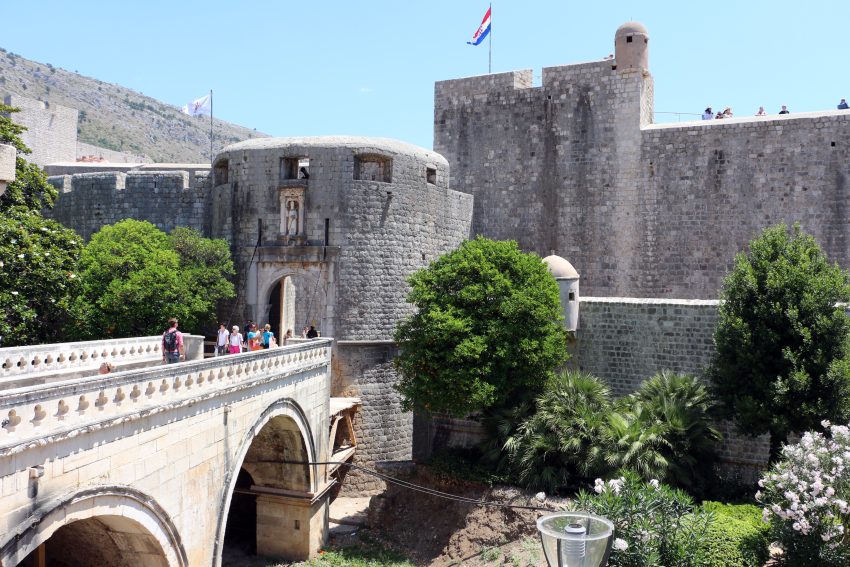
Pile Gate is the best-known western entrance into Dubrovnik’s Old Town, created as part of the city’s defensive system in the 16th century. The monumental outer gate was built in 1537, with a stone bridge leading over what was once a defensive ditch. As you approach, you can read the space like a piece of fortification engineering: layered gates, controlled choke points, and sightlines back to the walls and nearby forts. It was designed to manage both everyday movement and sudden threats, which mattered for a maritime republic that lived by trade and diplomacy. On site, look for the sculptural details around the entrance and take a moment to see how the gate aligns with Stradun beyond. Just inside the gate you’re immediately in one of the most historically dense parts of the city, with major monuments clustered within a few minutes’ walk.
Location: Dubrovačke Gradske Zidine, 20000, Grad, Dubrovnik, Croatia | Hours: 24 Hours. | Price: Free.

2. Fort Bokar
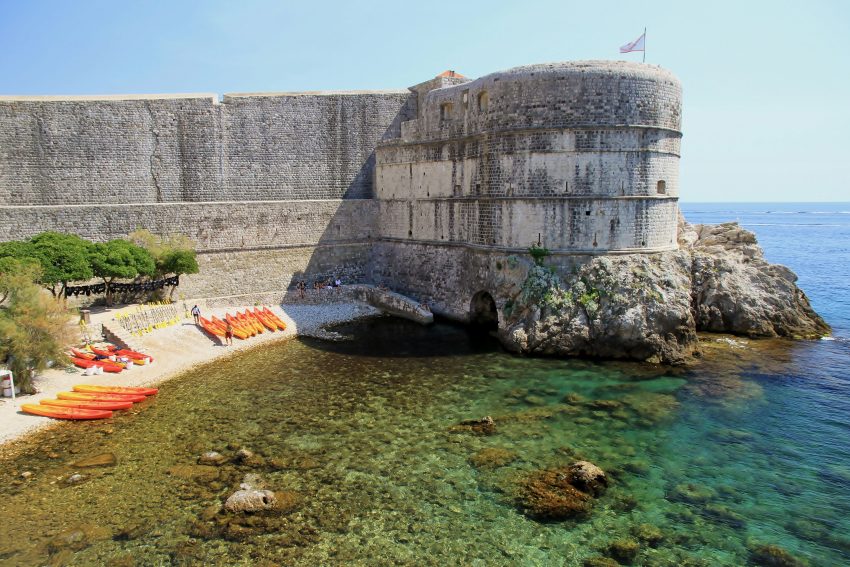
Fort Bokar was built to defend the vulnerable western approach to Dubrovnik, closely tied to the protection of Pile Gate. Construction began in 1461, designed by the Florentine architect Michelozzo, and the fort was later strengthened into the form you see today. Architecturally, it’s a classic example of casemated fortification: low, thick, and shaped to absorb and return artillery fire. Its position, projecting from the line of the walls, makes it easy to understand why it became a key defensive node on this side of the city. When you’re there, focus on the geometry: the curved seaward face, the embrasures, and the way the fort locks into the wall system. The setting above the rocks and sea also makes the defensive logic feel very immediate, even without any interpretation panels.
Location: Od Puća 20, 20000, Dubrovnik, Croatia | Hours: Daily: 08:00–18:30. | Price: Included with Dubrovnik City Walls ticket or Dubrovnik Pass. | Website
3. Large Onofrio's Fountain
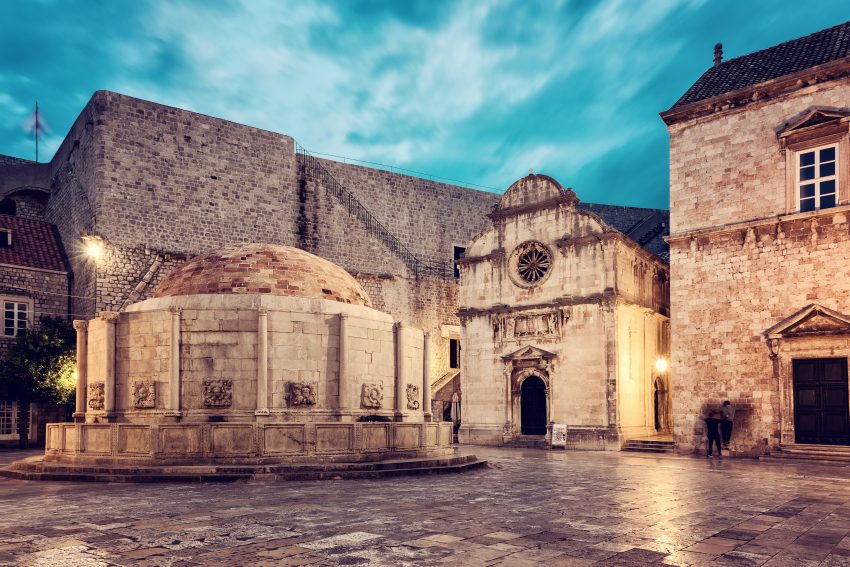
Large Onofrio’s Fountain was built as the Old Town’s showpiece endpoint for a major 15th-century water-supply project. It was designed by Onofrio della Cava and constructed in the late 1430s–1440, connected to an aqueduct that carried water into the city from outside. Historically, it represents civic infrastructure made monumental: reliable fresh water was essential for a dense walled city, especially in siege conditions. The fountain’s design also signals Dubrovnik’s early Renaissance ambitions, blending practical engineering with public display. What to look for up close is the polygonal form and the carved stone water spouts (maskerons) arranged around the fountain. It’s still a natural gathering point, and it helps you read Stradun as a planned civic axis rather than just a scenic street.
Location: Poljana Paska Miličevića 2000, 20000, Dubrovnik, Croatia | Hours: 24 Hours. | Price: Free.
4. Saint Saviour's Church
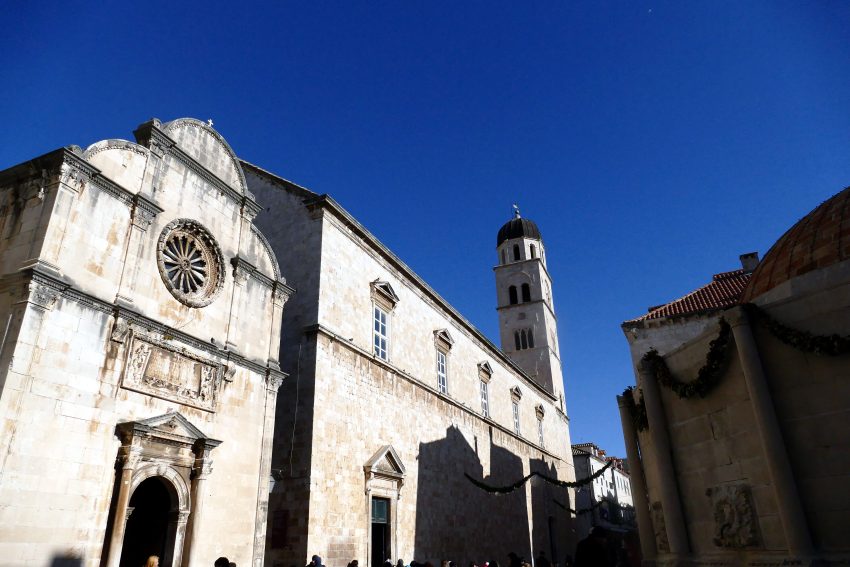
Saint Saviour’s Church is a small Renaissance-era votive church commissioned after a damaging earthquake in 1520. Construction began that year and was completed in 1528, intended as a public act of gratitude and devotion. Its historical value is sharpened by survival: while much of Dubrovnik was devastated by later disasters, Saint Saviour’s remained intact through the catastrophic 1667 earthquake. That makes it one of the clearest “before and after” reference points for understanding how the city rebuilt over time. On site, pay attention to the façade and the restrained Renaissance styling, then step inside to see the compact single-nave space and Gothic touches like pointed window forms. It’s small enough to miss if you rush, but it rewards a slower look precisely because it’s so well preserved.
Location: Poljana Paska Miličevića, 20000, Dubrovnik, Croatia | Hours: Check official website. | Price: Free; donations appreciated.
5. Franciscan Monastery & Museum
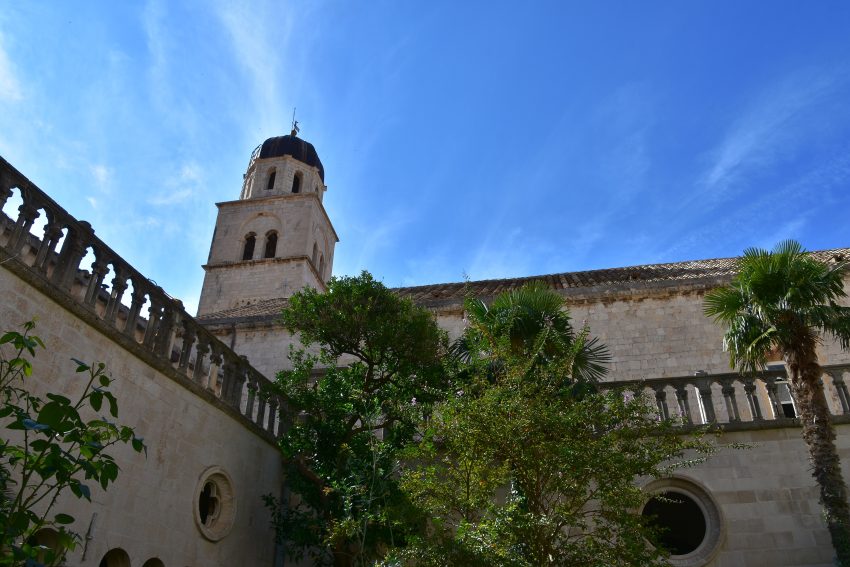
The Franciscan Monastery complex is closely associated with Dubrovnik’s intellectual and medical history, most famously through its pharmacy. The Franciscan pharmacy has operated continuously since 1317, making it one of Europe’s oldest functioning pharmacies. That continuity matters because it reflects how monasteries served as practical service institutions, not only religious ones. Over centuries, the pharmacy’s role expanded beyond the monastery as the city grew and citizens relied on its preparations and knowledge. When you visit, the key “what to see” points are the historic pharmacy spaces and the museum displays connected to the monastery’s long life. Even if you’re not deeply interested in medicine, the material culture—containers, instruments, and the sense of continuity—makes the history very tangible.
Location: Stradun 30, 20000, Dubrovnik, Croatia | Hours: (Summer) Daily: 09:00–18:00. (Winter) Daily: 09:00–14:00; Closed on Sunday. | Price: Adults: €8; Adults (groups 10+): €6; Pupils/Students: €4; Children (up to 7): free; Free with Dubrovnik Pass. | Website
6. Stradun Street
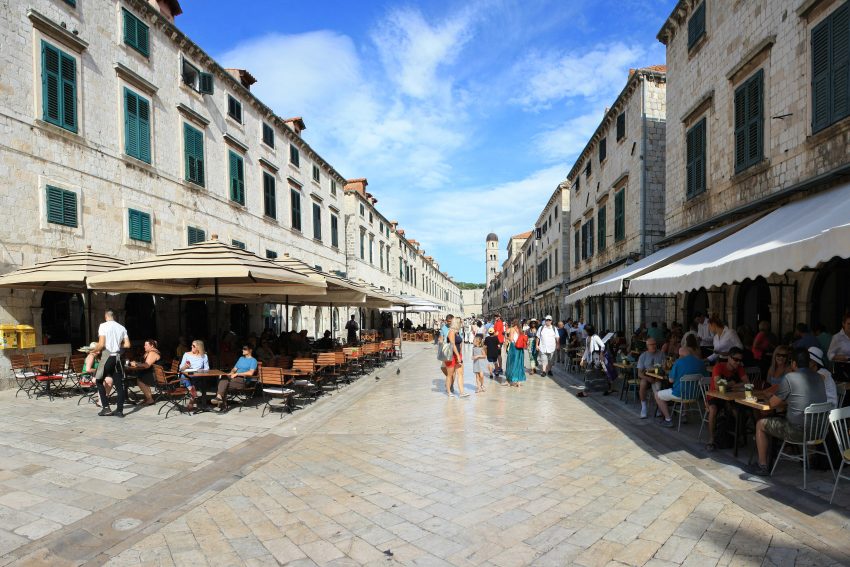
Stradun (also known as Placa) is Dubrovnik’s main street, a limestone-paved axis running through the Old Town. The ground beneath it was once a channel separating earlier settlements, later reclaimed, and Stradun became the city’s central thoroughfare in the medieval period. Much of what you see today was shaped by rebuilding after the 1667 earthquake, when Dubrovnik imposed rules that produced the famously uniform stone façades along the street. That post-disaster rebuilding gives Stradun a “planned” look that’s unusual for a medieval core, and it’s a big part of why the street feels so coherent. What to notice on the ground is the way the street connects major civic and religious landmarks at both ends, including the 15th-century fountains. Also look at the rhythm of the shopfronts and arches: they’re a visual record of how commerce and urban life were designed to function.
Location: Stradun, 20000, Dubrovnik, Croatia | Hours: 24 Hours. | Price: Free.
7. Sponza Palace
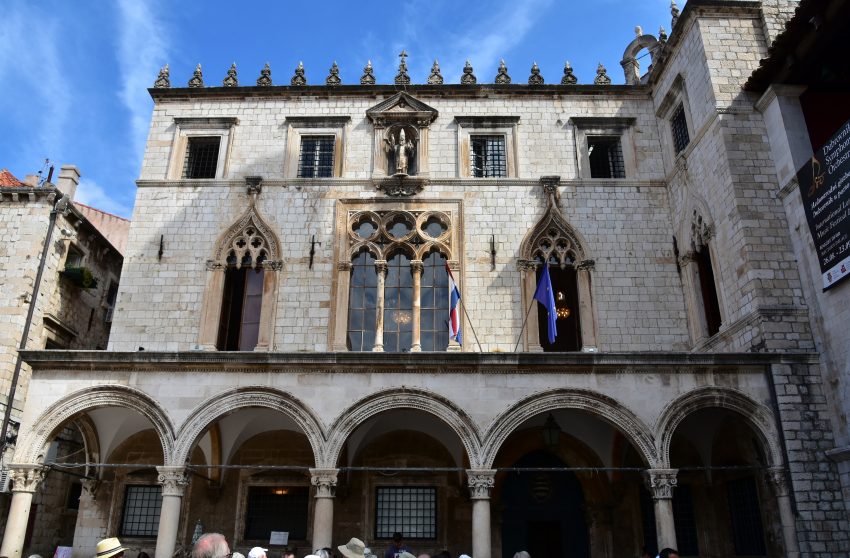
Sponza Palace is a major 16th-century civic building created in a mixed Gothic–Renaissance style, built between 1516 and 1522. Historically, it served core public functions over time, including operating as a customs house (the alternative name Divona is linked to customs), alongside other administrative and financial roles. One reason it stands out historically is that it survived the 1667 earthquake without major damage, which is not true of many buildings around it. Today it houses the State Archives, with holdings that reach back centuries, reinforcing its longstanding role as an institutional centre. On site, focus on the courtyard and the arcaded atrium, where the craftsmanship and the building’s public character are easiest to read. Also look for the way Sponza sits in the civic heart of the Old Town, directly facing Luža Square, where ceremonies and public life concentrate.
Location: Stradun 2, 20000, Dubrovnik, Croatia | Hours: Monday – Saturday: 09:00–21:00. Sunday: 09:00–15:00. | Price: Check official website. | Website
8. Luža Square
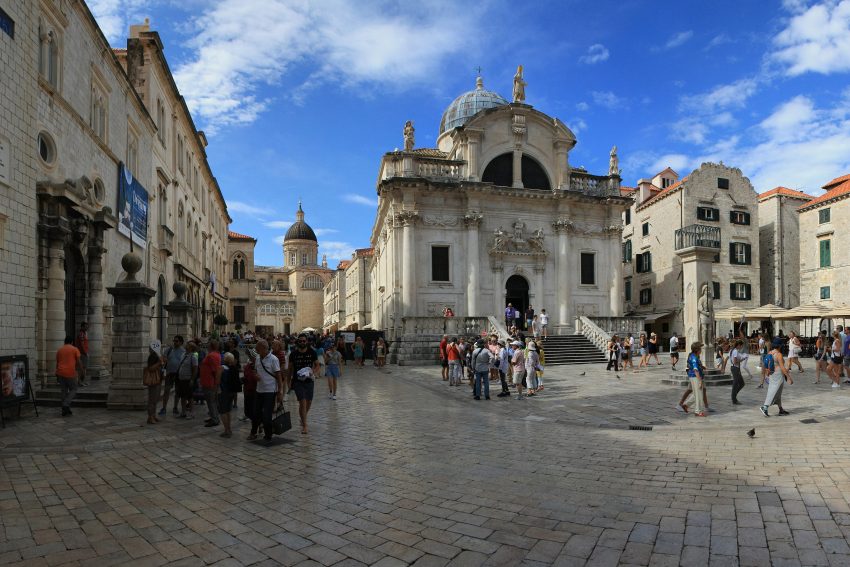
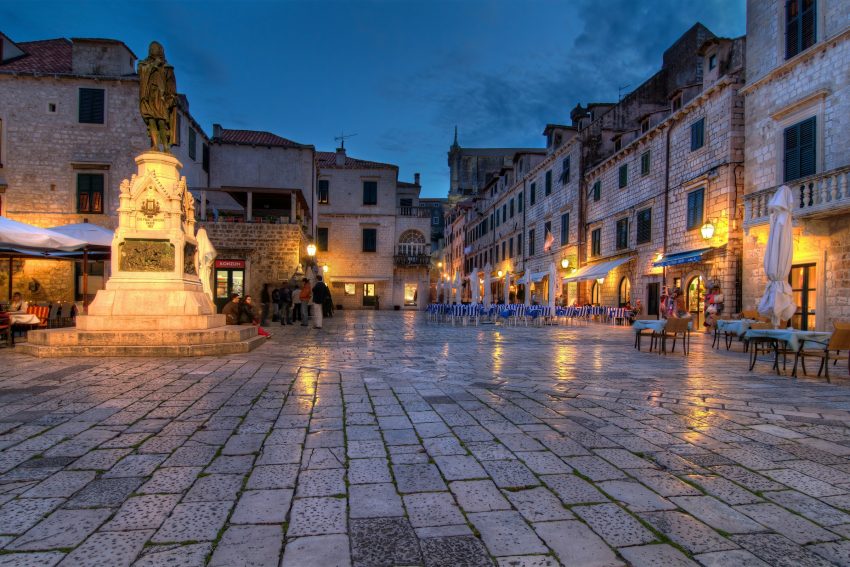
Luža Square sits at the eastern end of Stradun and functions as one of Dubrovnik’s main civic nodes, surrounded by key public buildings and landmarks. It’s closely tied to the city’s ceremonial identity, with monuments that were meant to be seen and used in public life, not hidden inside institutions. A central historic marker here is Orlando’s Column, erected in 1418, which became a symbol of civic liberty and public proclamations. Nearby, the City Bell Tower anchors the square’s skyline, with the clock and bell tradition reinforcing Luža as a timekeeping and gathering point for the community. When you’re in the square, look at the spatial relationships: Sponza Palace, the bell tower, and the column create a dense “civic stage.” Even a short pause here helps you understand how Dubrovnik displayed authority, law, and identity in the open air.
Location: Luža ul., 20000, Dubrovnik, Croatia | Hours: 24 Hours. | Price: Free.
9. Saint Blaise's Church
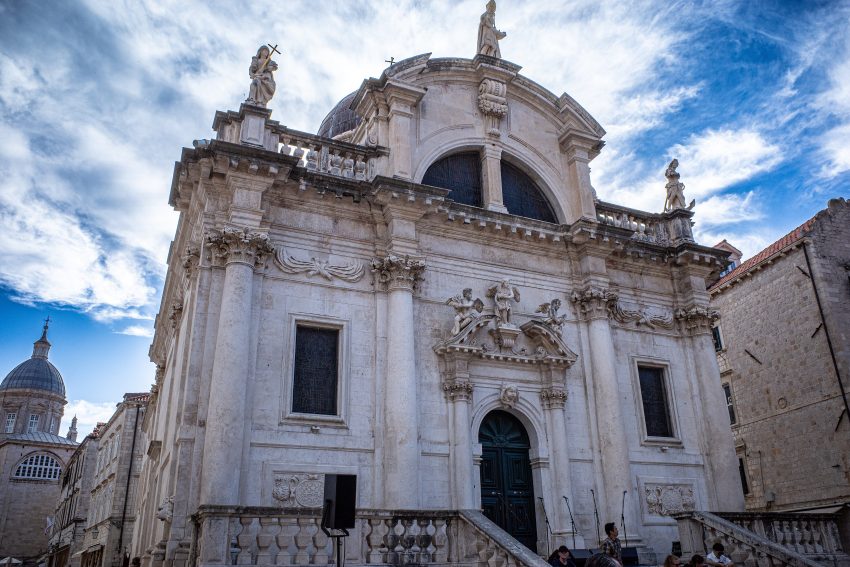
Saint Blaise’s Church is one of Dubrovnik’s defining Baroque monuments, dedicated to the city’s patron saint (St Vlaho). The current church was dedicated in 1715 and was constructed after an earlier church on the site, linking it to Dubrovnik’s long religious and civic continuity. Historically, devotion to Saint Blaise is tightly woven into Dubrovnik’s identity, particularly in the era of the Republic of Ragusa. The church’s prominent placement and monumental design underline that this was never just a parish building—it was a civic statement as well. When you visit, spend time with the façade and the sculptural details, then step inside to see how the Baroque interior is used to frame the saint’s cult and the city’s self-image. It’s also worth looking back toward Stradun from the church area to see how the religious centre is staged within Dubrovnik’s main public axis.
Location: Rkt. crkva sv. Vlaha, Luža ul. 2, 20000, Dubrovnik, Croatia | Hours: Monday – Sunday: 08:00–16:00. | Price: Free; donations appreciated.
10. Saint Ignatius Church
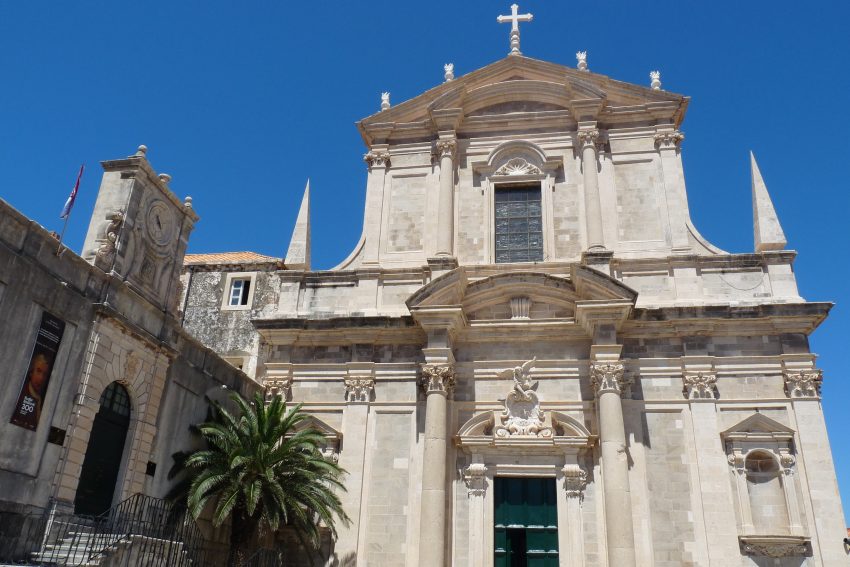
The Church of Saint Ignatius is Dubrovnik’s Jesuit church, a Baroque landmark connected to the wider Jesuit presence and educational ambitions in the city. It was completed in the early 18th century and formed part of a broader Jesuit complex that included a college. Its history is tied to the Jesuits’ role in shaping Catholic education and Baroque religious culture across Europe, with Dubrovnik participating in that wider movement. The timing also places it in the post-earthquake era when parts of the city were being reshaped and re-articulated through new architecture and institutions. On site, the main draw is the Baroque architectural language—proportions, ornament, and the overall theatricality typical of Jesuit churches. Give yourself enough time inside to take in the interior as a single designed experience rather than a series of details.
Location: Poljana Ruđera Boškovića 7, 20000, Dubrovnik, Croatia | Hours: Monday: 18:00. Tuesday: 18:00. Wednesday: 18:00. Thursday: 18:00. Friday: 18:00. Saturday: 18:00. Sunday: 08:00 & 11:00 & 18:00. | Price: Free; donations appreciated. | Website
11. Dubrovnik Cathedral and Treasury
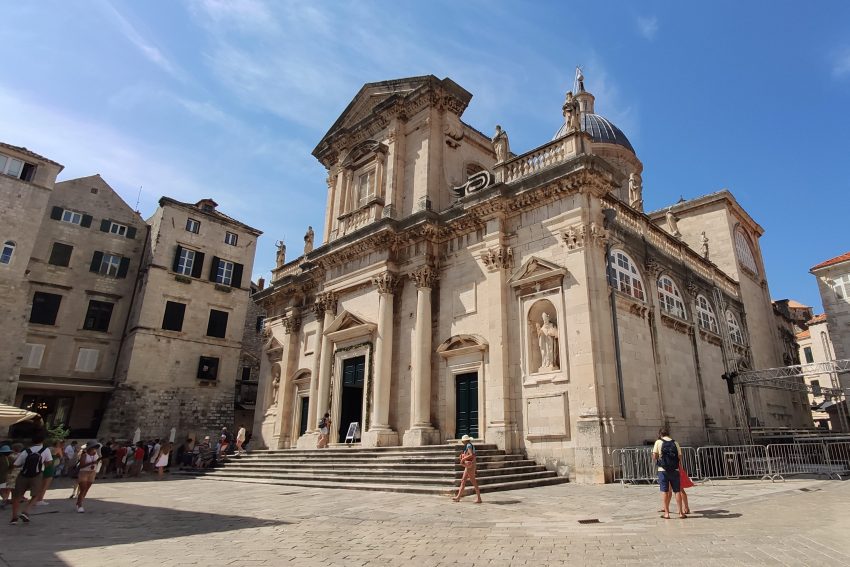
Dubrovnik Cathedral is closely associated with the 1667 earthquake, which destroyed much of the city and reshaped its architectural history. The cathedral site has deep continuity, but the present building is understood in the context of rebuilding after that disaster. The Treasury is one of the cathedral’s most historically important elements, reflecting Dubrovnik’s connections across the Mediterranean through donations, craft, and relic traditions. The treasury holds a large collection of reliquaries and saintly relics dating across many centuries, including prominent relics of Saint Blaise. When you visit, approach it in two layers: first, the cathedral space itself as a product of reconstruction and resilience, and then the treasury as a concentrated archive of faith, diplomacy, and wealth. Move slowly through the displays, because the value here is cumulative—materials, workmanship, and provenance.
Location: Ul. kneza Damjana Jude 1, 20000, Dubrovnik, Croatia | Hours: (Summer) April 4 – November 1; Monday – Saturday: 09:00–17:00. Sunday: 11:00–17:00. (Winter) Monday – Saturday: 10:00–12:00 & 15:00–17:00. Sunday: 11:00–12:00 & 15:00–17:00. | Price: Cathedral: Free; Treasury: small fee (buy on site). | Website
12. Rector's Palace
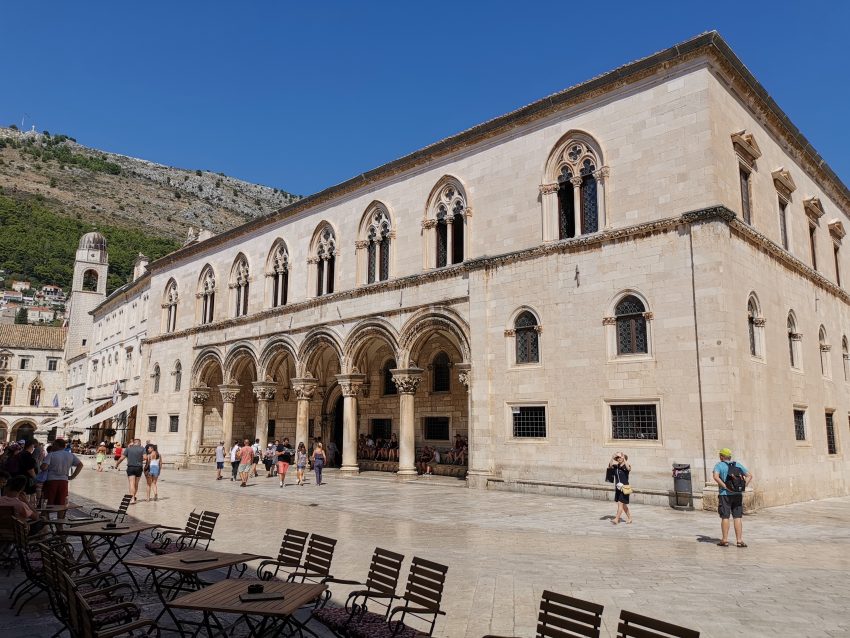
Rector’s Palace was the seat of Dubrovnik’s government during the Republic of Ragusa, serving as the Rector’s residence and the administrative centre for state affairs. The building embodies layered history, with Gothic foundations and later Renaissance and Baroque elements reflecting repeated rebuilding after disasters. The palace’s history includes dramatic interruptions: fire in the 15th century, a gunpowder explosion, and damage from major earthquakes, each prompting reconstruction and stylistic change. That process left the palace with its distinctive blend of architectural languages rather than a single “pure” style. Today, what to see is both structural and curatorial: the courtyard/atrium and the formal spaces that still read as a seat of authority, alongside museum displays focused on Dubrovnik’s cultural and political past. Pay attention to how the building is arranged to control movement and visibility—architecture serving government.
Location: Ul. Pred Dvorom 3, 20000, Dubrovnik, Croatia | Hours: (Summer) April 1 – October 31; Daily: 09:00–18:00. (Winter) November 1 – March 31; Tuesday – Sunday: 09:00–16:00. Closed on Monday. | Price: Adults: €15; Schoolchildren & students: €8; Family (up to 2 adults with children aged 14 or younger): €35. | Website
13. Dominican Monastery and Museum
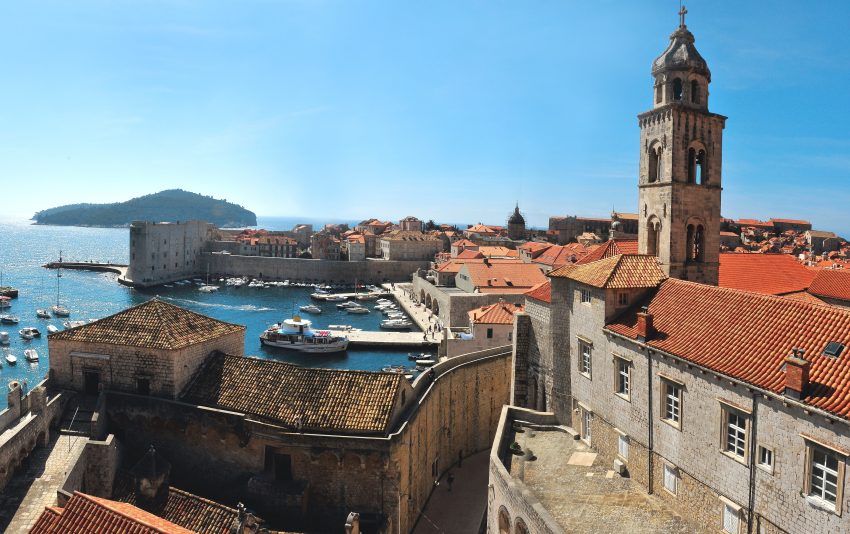
The Dominican Monastery complex has roots in the early 13th century, developed with support from Dubrovnik’s authorities and integrated into the city’s defensive edge. Its strategic placement near the walls is not accidental—it reflects how religious institutions could also serve the city’s practical and geopolitical needs. Over time, the monastery accumulated architectural layers (Romanesque, Gothic, Renaissance, and later additions), and it also absorbed the shocks that reshaped Dubrovnik, including restoration after the 1667 earthquake. That long timeline is part of what makes the site feel like a living cross-section of the city’s history. When you visit, focus on the cloister and the museum collections, which are widely regarded as the highlights. The calm of the internal spaces is also part of the experience—stepping away from the busiest streets makes it easier to notice craftsmanship, stonework, and the monastery’s defensive logic at the perimeter.
Location: Ul. Svetog Dominika 4, 20000, Dubrovnik, Croatia | Hours: (Summer) May 1 – October 31; Daily: 09:00–18:00. | Price: Check official website. | Website
14. Dubrovnik Cable Car
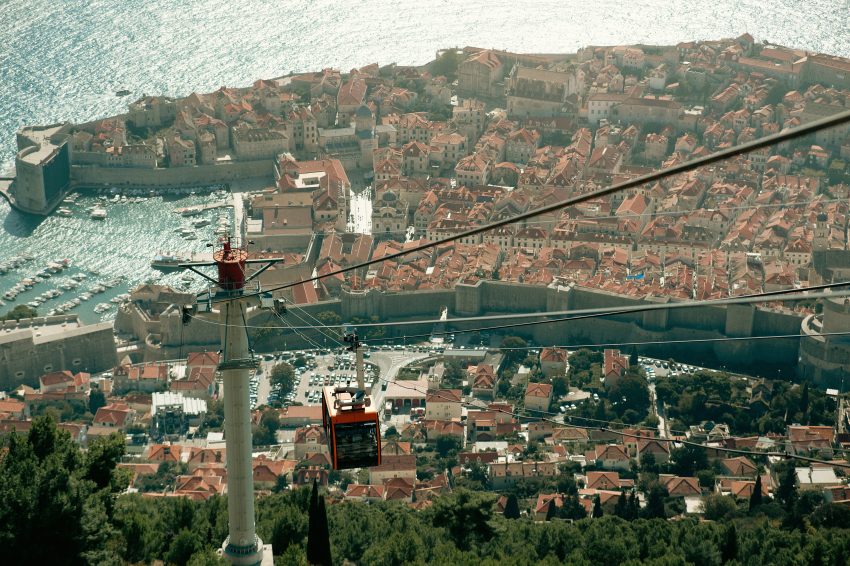
Dubrovnik’s cable car is a modern layer of the city’s visitor infrastructure, originally built in 1969 to connect the city with the top of Mount Srđ. It was later destroyed during the Croatian War of Independence, and restored and reopened in 2010. The history matters because Srđ isn’t only a viewpoint—it’s a strategic hill with 19th-century military history visible in the landscape, which helps explain why the area has long been associated with defence and surveillance. The cable car effectively turns that strategic geography into an accessible, public panorama. What to see is straightforward but memorable: the changing perspective on the walls, the Old Town’s grid and rooftops, and the wider Adriatic setting as you rise. If you linger at the top, you’ll get the best sense of Dubrovnik’s relationship to terrain—how the city’s compact form and fortifications make sense only when seen from above.
Location: Ul. Kralja Petra Krešimira IV. 10A, 20000, Dubrovnik, Croatia | Hours: January: Closed. February: Closed. March: Closed. April: 09:00–21:00. May 1 – 14: 09:00–22:00. May 15 – 31: 09:00–23:30. June: 09:00–24:00. July: 09:00–24:00. August: 09:00–24:00. September 1 – 14: 09:00–24:00. September 15 – 30: 09:00–23:00. October 1 – 20: 09:00–21:00. October 21 – 31: 09:00–20:00. November: 09:00–17:00. December: Closed. | Price: Adults: €30 (round-trip) or €17 (one-way). Children (4–12): €8 (round-trip) or €5 (one-way). Under 4: free. | Website

Moira & Andy
Hey! We're Moira & Andy. From hiking the Camino to trips around Europe in Bert our campervan — we've been traveling together since retirement in 2020!
This website uses affiliate links which earn a small commission at no additional cost to you.
Walking Tour Summary
Distance: 3 km
Sites: 14