Self-Guided Walking Tour of Colmar (2026)
This website uses affiliate links which earn a small commission at no additional cost to you.
Colmar is one of those towns that feels made for walking. With its cobbled lanes, pastel half-timbered houses, flower-filled canals, and compact historic centre, it is easy to explore on foot without needing public transport or a strict schedule. A self-guided walking tour lets you slow down, take in the details, and enjoy the city's atmosphere between major sights as well as the quieter corners that many visitors miss.
This route is designed to help you discover the best things to see in Colmar while giving you the freedom to explore at your own pace. You can stop for coffee in a traditional square, browse local shops, step inside churches and museums, or simply wander along the canals taking photos. Whether you are visiting for a few hours or a full day, walking is the best way to understand Colmar's character and charm.
Along the way, you can expect a mix of historic landmarks, postcard-perfect streets, and local touches that make the town feel lived-in rather than just scenic. From grand civic buildings to storybook neighbourhoods and market areas, this self-guided walk offers a balanced introduction to Colmar for first-time visitors and a relaxed way to revisit favourite spots if you have been before.
How to Get to Colmar
By Air: Colmar does not have a major international airport, so most visitors arrive via nearby airports and then continue overland. The most convenient options are typically EuroAirport Basel Mulhouse Freiburg, Strasbourg Airport, and airports in the wider region such as Zurich for longer-haul connections. From any of these, you can continue to Colmar by train, shuttle, hire car, or a combination of transport depending on your arrival time and budget. If you are planning a wider Alsace trip, flying into one city and leaving from another can also work well. For the best deals and a seamless booking experience, check out these flights to Colmar on Booking.com.
By Train: Travelling to Colmar by train is one of the easiest and most comfortable options, especially if you are already in France or arriving from a nearby European city. Colmar station has good rail connections within Alsace, including links via Strasbourg, and onward connections to larger French cities through the national rail network. The station is within easy reach of the historic centre, so once you arrive you can usually continue on foot, by local bus, or by a short taxi ride depending on where you are staying. You can use SNCF Connect to check schedules, compare routes, and purchase tickets for National (SNCF ) and regional trains (TER). For a more streamlined experience, we recommend using Omio, which allows you to easily compare prices, schedules, and book tickets for both National and Regional travel across all of Europe, all in one place.
By Car: Driving to Colmar is a practical choice if you want flexibility, especially for exploring nearby villages, vineyards, and scenic routes across the Alsace region. Roads in the area are generally straightforward, and having a car makes it easier to combine Colmar with stops in places like Eguisheim, Riquewihr, or Kaysersberg. Parking is usually easier on the edge of the old town than in the centre itself, so it is worth checking your hotel's parking options in advance. Long-distance bus services can also be an alternative for budget travellers, though they are usually less convenient than trains for direct access to the centre. If you are looking to rent a car in France I recommend having a look at Discover Cars, first, as they compare prices and review multiple car rental agencies for you.
A Short History of Colmar
Early Colmar: Religious Foundations and the Medieval Town
Colmar began as a small settlement that grew in importance during the early Middle Ages, with its development closely tied to religious institutions and regional trade. Monastic communities helped shape the town's early identity, and the site of today's Musée d'Unterlinden reflects that deep ecclesiastical past, as the museum occupies a former convent. As Colmar expanded, it developed the pattern of streets, market spaces, and parish buildings that would define its historic core for centuries.
By the High Middle Ages, Colmar had become a prosperous urban centre with growing civic confidence. Churches such as the Dominicans' church and the great church of Saint-Martin point to the town's religious and social importance during this period. These buildings were not only places of worship but also markers of wealth, patronage, and urban identity, showing how Colmar's citizens invested in monumental architecture as the town matured.
The medieval street network that survives in areas such as Rue des Marchands, Grand Rue, and the wider Old Town reflects this era of growth. Commercial activity, craft production, and local trade all helped shape the city’s character, while squares and market spaces became the setting for both daily life and public authority. Much of what visitors now experience as Colmar’s historic charm was first established in these medieval centuries.
Colmar in the Late Middle Ages and Renaissance: Trade, Wealth, and Civic Pride
From the late medieval period into the Renaissance, Colmar flourished through trade and artisanal activity, and this prosperity can still be read in its houses and civic buildings. Merchant families and local elites invested in richly decorated homes, with buildings such as Maison Pfister and Maison des Têtes showing the confidence and sophistication of the town in this period. Their ornamentation reflects not only wealth but also a desire to display status and cultural ambition in a very public way.
Civic and commercial life was equally important in shaping the townscape. The Ancienne Douane, or Old Custom House, stands as a reminder of Colmar’s role in regulating goods and commerce, while surrounding squares served as gathering points for buying, selling, and administration. These spaces helped bind together the economic and political life of the town, reinforcing Colmar’s position as a place of business as well as beauty.
This was also a time when Colmar’s urban identity became more refined and recognisable. The combination of religious buildings, merchant houses, and active market streets created a dense and visually rich centre that still defines the city today. Walking through places like Place de la Cathédrale and the surrounding lanes gives a clear sense of how late medieval and Renaissance prosperity shaped Colmar’s lasting architectural personality.
Colmar from the Early Modern Period to the 19th Century: Change, Continuity, and Urban Life
Like many historic towns, Colmar passed through periods of political and social change in the early modern era, but its built environment retained strong continuity. Religious institutions evolved, civic priorities shifted, and commercial life adapted, yet the historic centre remained a focal point of daily activity. Buildings were reused, updated, and maintained, allowing older medieval and Renaissance structures to remain part of a living town rather than becoming isolated monuments.
Markets continued to play a central role in urban life, and the tradition survives in places such as the Covered Market area, which reflects Colmar’s long-standing connection to trade in food and local produce. The waterways and trading quarters, including what is now known as Little Venice and the Fishmongers’ Wharf, also preserve the memory of practical working districts that were once essential to the local economy. These areas were shaped by commerce first, and their beauty today comes partly from that functional history.
During the 18th and 19th centuries, Colmar continued to evolve while preserving much of its older urban fabric. Streets, squares, and churches remained central to civic identity, and the town's historic architecture increasingly came to be seen as a heritage asset as well as a backdrop to everyday life. This balance between continuity and adaptation is one reason Colmar's centre feels so layered, with traces of different centuries still visible in close proximity.
Modern Colmar: Preservation, Heritage, and Cultural Identity
In the modern period, Colmar's historic buildings and districts became central to its cultural identity, with preservation efforts helping protect the character of the Old Town. Instead of being swept away by large-scale redevelopment, many of its historic streets and facades were conserved, allowing places like Rue des Marchands, Grand Rue, and the Tanner's District to remain vivid expressions of the city's past. This has given Colmar a rare sense of architectural continuity that visitors can experience on foot.
Museums and restored monuments have also played a major role in interpreting the city's history. The Musée d'Unterlinden, in particular, connects Colmar's religious and artistic heritage with its modern cultural life, while churches such as Saint-Martin and the Dominicans' church continue to anchor the historic centre visually and historically. These sites help tell the story of Colmar not as a frozen postcard, but as a city shaped by centuries of faith, trade, craftsmanship, and civic ambition.
Today, Colmar’s appeal comes from the way its history remains embedded in everyday urban space. Squares such as Place des Six Montagnes Noires, historic market areas, canalside quarters, and landmark buildings all contribute to a cityscape that feels both intimate and historically rich. The result is a place where medieval origins, Renaissance prosperity, and modern preservation all meet in a coherent and deeply walkable historic centre.
Where to Stay in Colmar
To make the most of visiting Colmar and this walking tour, then you should consider staying overnight in or very close to the centre. The biggest advantage is that you can start early, explore the Old Town before day-trippers arrive, and return to your room easily for a break before heading back out in the evening. If you want the most atmospheric base, the streets around Petite Venise and the historic core are usually the best fit for a self-guided walk.
For the most postcard-perfect setting, stay around Petite Venise and the old centre where you can walk straight onto the canalside lanes and historic streets. Hôtel Le Maréchal is a classic choice in the Little Venice area for a more characterful stay, while Le Colombier puts you right in the heart of the historic quarter with excellent access to the main walking route. Hôtel Saint-Martin is another strong option if you want to stay directly in the old centre and be close to the key sights from the start of your walk.
If you want central convenience with easier road access, look at the area around the edge of the historic centre and near Champ de Mars. L'Esquisse Hôtel & Spa Colmar works well if you want an upscale stay near the park and within easy walking distance of Little Venice and the old streets, while ibis Styles Colmar Centre is a practical mid-range option in a very good location for a walking-focused visit. Novotel Suites Colmar Centre is especially useful if you want more space, are travelling as a family, or prefer a modern hotel just outside the busiest lanes but still close on foot.
For a good balance of value and walkability, the station-side and northern edge of the centre are worth considering, especially if you are arriving by train or plan day trips. Grand Hôtel Bristol is ideal for rail arrivals and still manageable on foot to the Old Town, while Mercure Colmar Centre Unterlinden suits travellers who want to be near the museum area and just outside the busiest streets. If you are keeping costs lower, ibis budget Colmar Centre Ville and ibis Colmar Centre are both useful bases for a walking tour without needing to stay deep inside the old centre.
If you are driving and want easier parking, the outskirts can be a sensible option, though you will trade atmosphere for convenience and will usually need to drive or use local transport into the centre before starting your walk. Maison Turenne is a good compromise because it is close to Petite Venise while still being easier to reach by car, and greet Hotel Colmar can work well for a budget-conscious road trip stop. For travellers prioritising parking and road access over being walkable to the tour start, B&B HOTEL Colmar Liberté 4 étoiles is another practical base on the outskirts.
Self-Guided Walking Tour of Colmar
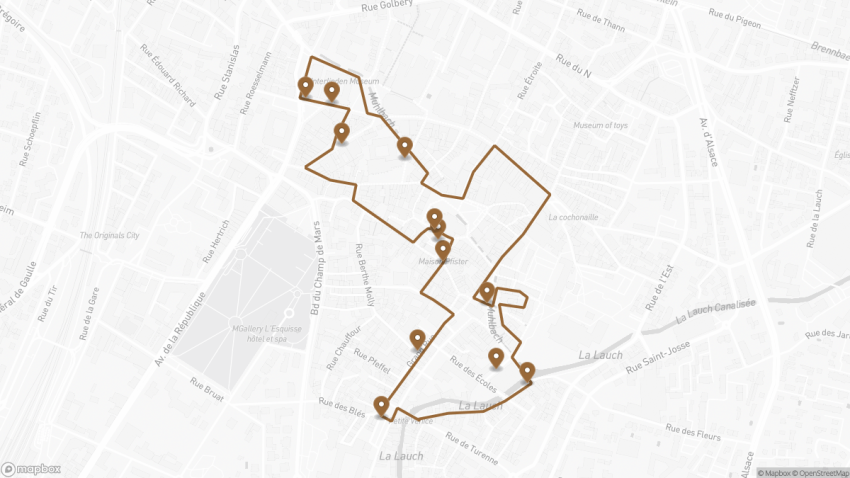
Discover Colmar on foot with our self-guided walking tour map, which leads you from one stop to the next as you explore the city at your own pace. Along the way, you can take in its historic streets, canalside corners, and landmark sights while enjoying the freedom to pause whenever something catches your eye. Because this is a self-guided walking tour, you can easily skip stops, linger longer at your favourites, and take coffee breaks whenever you want.
1. Little Venice and Fishmongers’ Wharf (Petite Venise)
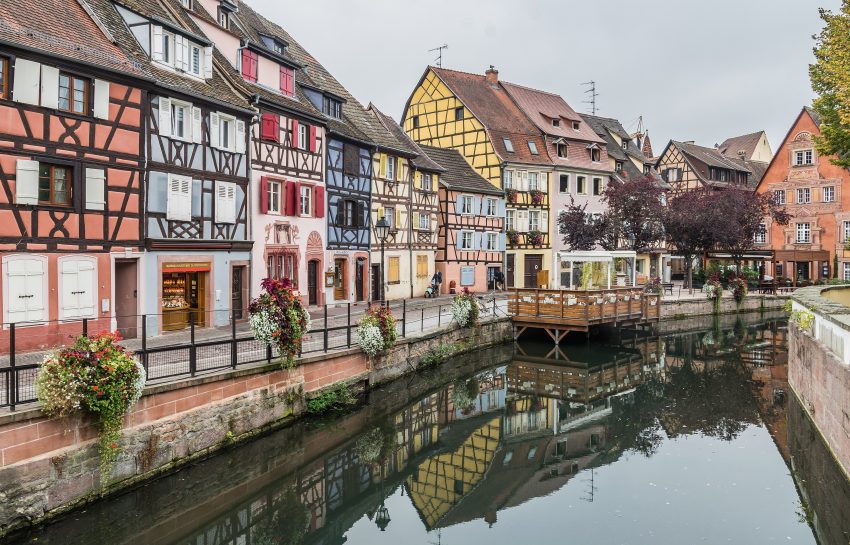
Petite Venise is one of Colmar’s most picturesque districts, centered on canals and lined with colorful historic houses. The area developed as a working neighborhood, and its waterways were tied to trade and craft activity rather than tourism. Fishmongers’ Wharf points to this practical past, when the canal-side location supported transport and commerce linked to food markets and local livelihoods.
Today, the district is best known for its canals, bridges, flower-lined edges, and rows of traditional Alsatian houses reflected in the water. What makes it especially appealing is the combination of everyday urban scale and postcard beauty: narrow streets, half-timbered façades, and waterside views all packed into a compact area. The old commercial identity is still visible if you look past the scenic presentation.
What to see here is mainly the ensemble rather than a single building. Walk the bridges, look along the canal axes, and notice how the houses meet the water. Boat rides are popular, but even from the quays and small crossings you can appreciate the district’s character and imagine how this now-famous quarter once functioned as a practical, working edge of the old town.
Location: 25 Quai de la Poissonnerie, 68000 Colmar, France | Hours: 24 Hours. | Price: Free. | Website

2. Place des Six Montagnes Noires
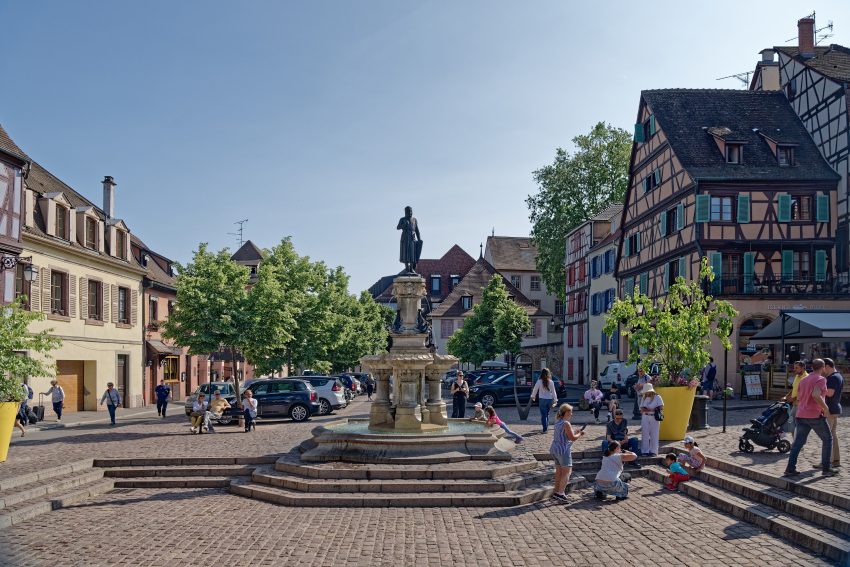
Place des Six Montagnes Noires is a historic square in Colmar that takes its name from a former inn sign, a reminder of how urban places often preserve fragments of local commercial history in their names. The square developed as part of the dense fabric of the old town, where inns, merchants, and civic movement shaped neighborhood identity. Even when specific functions changed, the place-name retained a link to Colmar’s earlier urban life.
The square is known for its attractive setting and surrounding historic buildings, making it a good example of the intimate urban spaces that define Colmar. Rather than monumental scale, it offers a more human-scale experience, where façades, corners, and street connections create visual interest. It is also close to some of the city’s best-known areas, which makes it a natural point to linger and observe.
When visiting, pay attention to the layers of architecture around the square and the way the streets open into it. It is the kind of place that reveals Colmar’s charm through proportions and atmosphere rather than a single headline monument. Cafés or nearby activity often add life to the space, but the real appeal is how it preserves the feel of a historic Alsatian town center.
Location: Pl. des 6 Montagnes Noires, 68000 Colmar, France | Hours: 24 Hours. | Price: Free.
3. Grand Rue
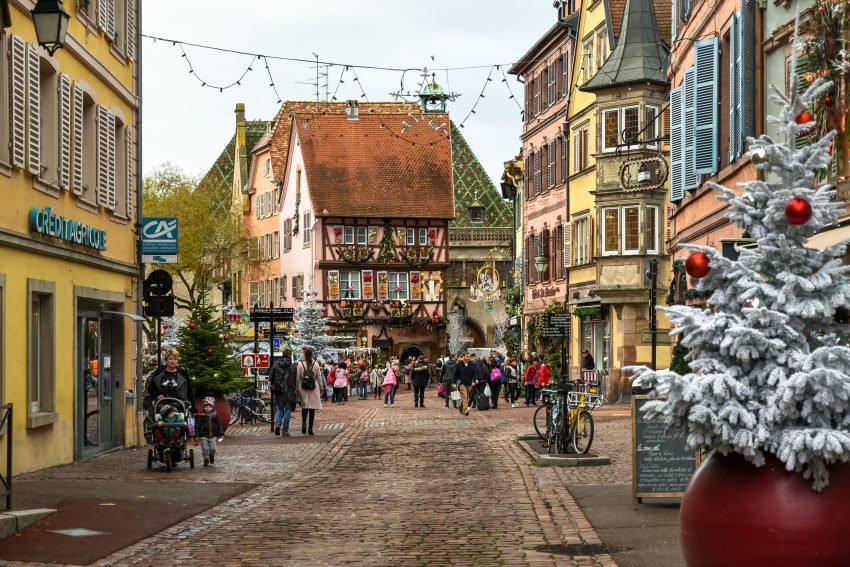
Grand Rue is one of Colmar’s main historic streets and has long served as an important urban artery through the old town. Streets like this were central to medieval and early modern civic life, concentrating trade, movement, and public interaction. In Colmar, Grand Rue reflects the city’s development as a commercial center, linking significant buildings and squares within a compact but busy urban core.
What to see along Grand Rue is the sequence of historic façades, shopfronts, and architectural details that reveal different periods of the city’s growth. Some buildings show timber-framed traditions, while others reflect later stone-fronted or renovated styles. The street is not just a route between sights; it is itself part of the historic experience, showing how Colmar’s built fabric evolved while remaining active.
A good visit here means slowing down and looking above eye level. Many of the most interesting features are on upper façades, windows, roofs, and carved elements that are easy to miss if you only focus on shops and crowds. Grand Rue also helps orient you within the center, as it connects several major areas and gives a strong sense of the city’s scale and rhythm.
Location: Grand Rue, 68000 Colmar, France | Hours: 24 Hours. | Price: Free.
4. Old Town & Rue des Marchands
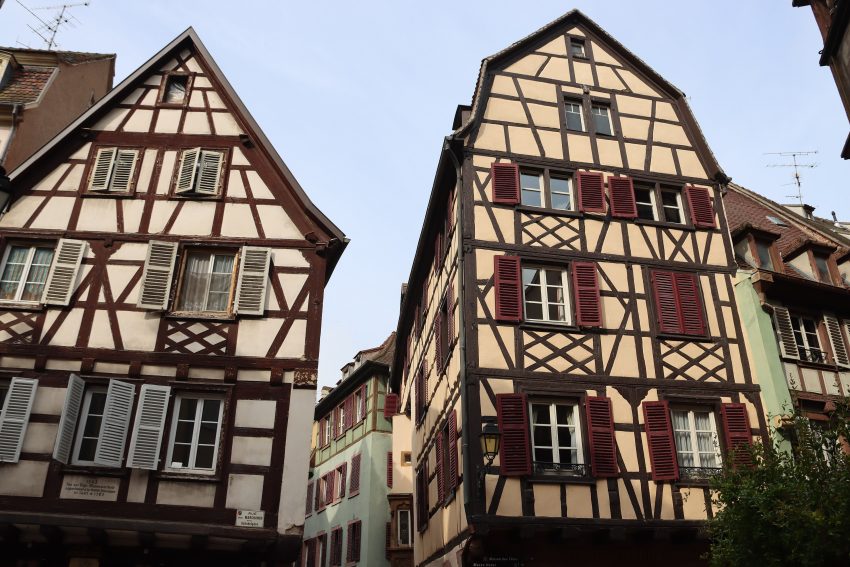
Colmar’s Old Town is the historic heart of the city, shaped by centuries of religious, commercial, and domestic life. Its streets preserve a remarkable concentration of medieval and Renaissance architecture, making it one of the best-preserved urban centers in Alsace. Rue des Marchands, as its name suggests, was closely linked to merchant activity and remains one of the most characteristic streets for understanding Colmar’s trading past.
Rue des Marchands is lined with notable historic houses, decorative façades, and architectural details that reflect the wealth and ambition of merchant families. This is where some of Colmar’s best-known buildings stand, and the street gives a strong impression of how commerce and prestige were expressed through urban housing. In the wider Old Town, the mix of squares, churches, civic buildings, and canals shows how compact and interconnected the city’s historic functions were.
What to see here is the overall streetscape as much as individual landmarks. Look for carved signs, timber framing, painted surfaces, and irregular medieval street alignments that create changing views at every turn. The area rewards unhurried exploration, because the most memorable details are often small architectural features and unexpected corners rather than only the major named monuments.
Location: 11 Rue des Marchands, 68000 Colmar, France | Hours: 24 Hours. | Price: Free.
5. Place de la Cathédrale
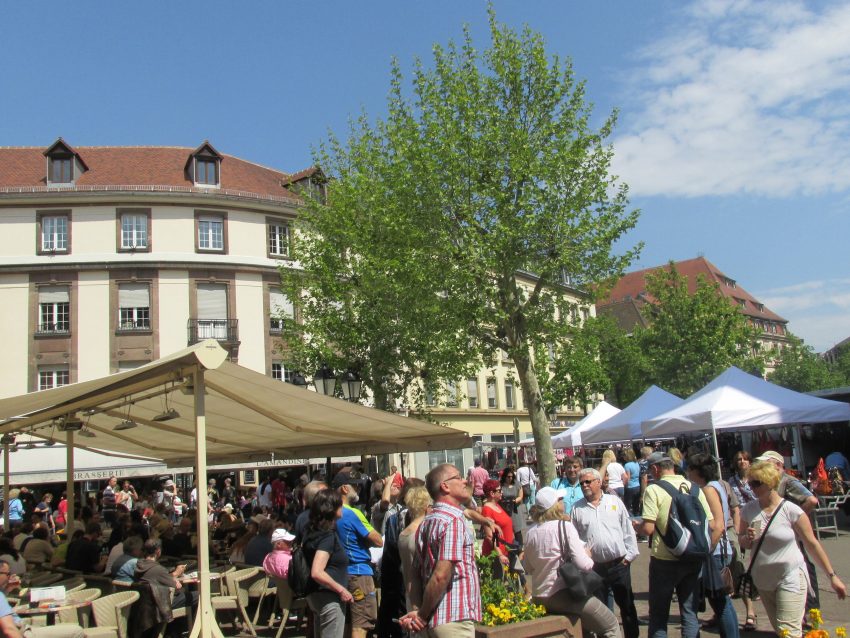
Place de la Cathédrale is the square associated with Saint-Martin Church and one of the key historic gathering spaces in central Colmar. Like many church squares in medieval and early modern towns, it developed as a civic and social zone where religious, commercial, and public life overlapped. Over time, the square became framed by historic buildings that reinforce the sense of Colmar as a compact, architecturally rich city.
The main thing to see here is the relationship between the open square and the church façade. The space allows you to step back and appreciate the scale of Saint-Martin in a way that is difficult from the narrower surrounding lanes. The surrounding buildings, with their Alsatian forms and historic character, also contribute to the square’s appeal and make it a good place to absorb the texture of the old town.
A visit is less about a single monument and more about urban atmosphere. It is a useful place to pause, look up, and take in architectural details that are easy to miss while moving through the streets. If you visit at different times of day, the changing light on the church stonework gives the square a different mood, especially when façades begin to glow in late afternoon.
Location: Pl. de la Cathédrale, 68000 Colmar, France | Hours: 24 Hours. | Price: Free. | Website
6. Église Saint-Martin
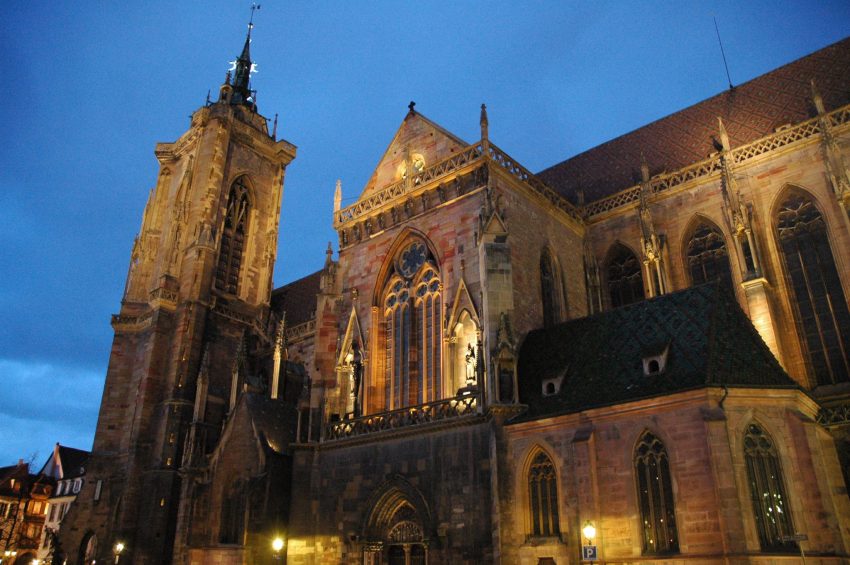
Saint-Martin is often referred to as Colmar’s cathedral, although technically it is a collegiate church rather than a cathedral. Built mainly between the 13th and 14th centuries, it is the city’s principal church and a major example of Gothic architecture in Alsace. Its scale and prominence reflect Colmar’s medieval importance, while later repairs and restorations show how the building was maintained and adapted across centuries.
The exterior is especially impressive, with a richly detailed portal, a tall roof, and strong masonry that dominates the surrounding streets. The church’s tower and façade details reveal both local craftsmanship and broader Gothic influences from the Rhine region. Inside, visitors can see a spacious nave, stained glass, chapels, and sculptural details that reflect the long religious life of the building.
When visiting, start outside and walk around the church to appreciate its mass and different elevations before entering. Inside, look for contrasts between grand architectural lines and smaller devotional details in chapels and side altars. Because it sits at the heart of the old center, Saint-Martin also works as a visual anchor for understanding Colmar’s medieval street layout and civic development.
Location: 18 Pl. de la Cathédrale, 68000 Colmar, France | Hours: Monday – Saturday: 08:00–18:45. Sunday: 10:00–19:00. | Price: Free; donations appreciated.
7. Maison des Têtes
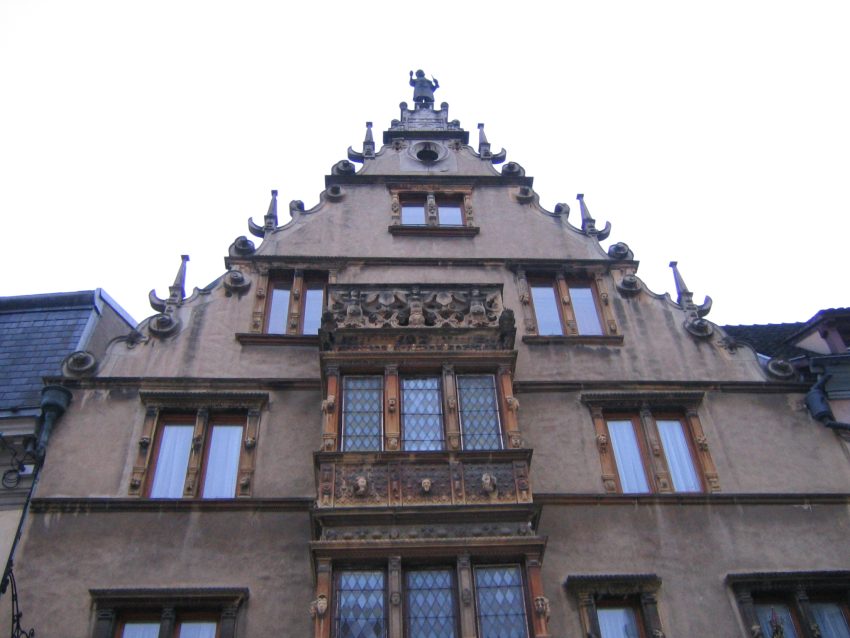
Maison des Têtes, or the House of Heads, is one of Colmar’s most distinctive Renaissance-era mansions. Built in the early 17th century for a wealthy merchant family, it reflects the prosperity of Colmar at a time when trade and civic ambition shaped the city’s architecture. Its name comes from the many carved faces decorating the façade, a theatrical and highly decorative feature that makes the building stand out even in a town full of beautiful historic houses.
The building’s façade is the main attraction, with dozens of sculpted heads and ornamental details that reward careful viewing. It is a great example of how elite townhouses in Alsace combined function, status, and artistic display. The roofline and upper architectural details are also worth noticing, especially the decorative elements that show the transition from late Gothic traditions to Renaissance tastes in the region.
When you visit, spend time looking at the stonework from different angles rather than just taking a quick photo from the street. The carvings become more interesting the longer you study them, as the expressions and forms vary. Depending on current use and access, the interior may not always be fully open for sightseeing, but even from outside it is one of Colmar’s most memorable historic façades and a strong symbol of the city’s merchant-era wealth.
Location: 19 Rue des Têtes, 68000 Colmar, France | Hours: Daily: Open 24 hours. | Price: Free (to view the exterior). | Website
8. Musée Unterlinden
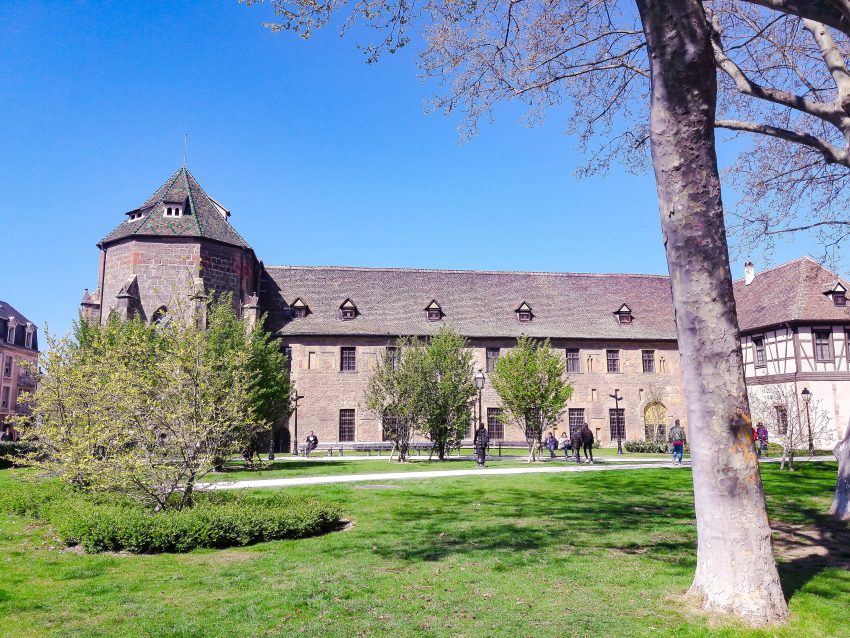
Musée Unterlinden is one of Colmar’s most important cultural landmarks, both for its collections and for the building itself. It is housed in a former 13th-century Dominican convent, which gives the museum a layered atmosphere: medieval cloister spaces, ecclesiastical architecture, and modern gallery additions all coexist in one complex. Over time, the museum grew from a regional collection into an internationally known institution, especially because it preserves major works tied to Alsace’s religious and artistic heritage.
The museum is most famous for the Isenheim Altarpiece, Matthias Grünewald’s dramatic masterpiece, which is the main reason many visitors come to Colmar. Seeing it in person is very different from seeing reproductions, as the scale, intense color, and emotional detail are striking up close. Beyond that, the collection spans medieval sculpture, Renaissance painting, decorative arts, and archaeological material, helping place Colmar within the wider history of the Upper Rhine region.
When visiting, take time to look beyond the headline works. The cloister itself is worth slow exploration, with its arcades and quiet courtyards creating a strong sense of place. The museum also includes modern and contemporary art sections, so the visit becomes more than a medieval highlight reel. If you move through the galleries in sequence, you get a clearer sense of how Colmar’s artistic identity developed across centuries.
Location: Pl. des Unterlinden, 68000 Colmar, France | Hours: Wednesday – Monday: 09:00–18:00. Tuesday: Closed. December 24 & December 31: 09:00–16:00. Closed on January 1, May 1, November 1, December 25. | Price: Adults: €14; Reduced: €12; Ages 12–17 & students under 30: €9; Under 12: free; Audioguide: €3 per person. | Website
9. Theatre Municipal
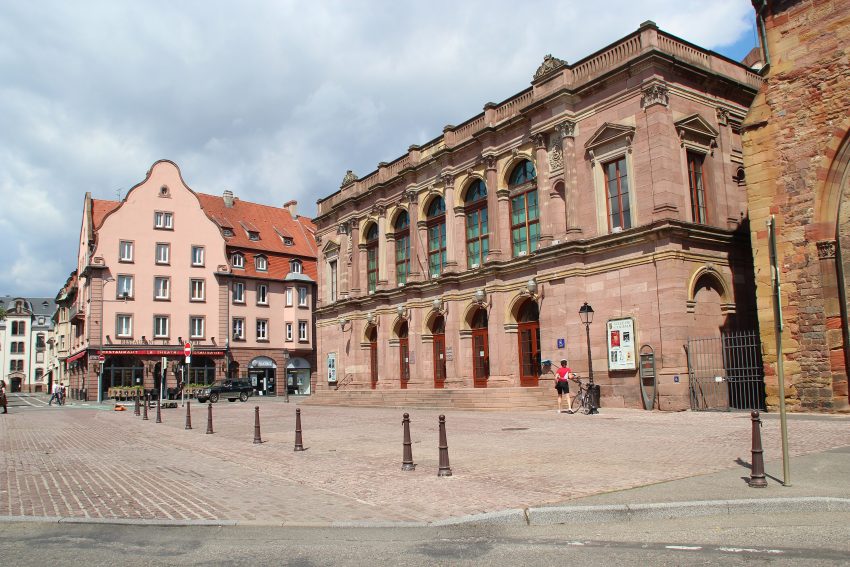
Théâtre Municipal in Colmar is one of the city’s key cultural institutions, representing the shift from medieval and mercantile Colmar to a more modern civic identity shaped by public culture and the performing arts. Built in the 19th century, it reflects a period when many European towns invested in formal theatres as symbols of civic pride, education, and refinement. In Colmar, the theatre became an important venue for drama, music, and public events, linking local life to wider artistic currents in Alsace and beyond.
Architecturally, the building is worth seeing for its formal façade and the sense of ceremony that traditional municipal theatres were designed to create. Even before entering, you can usually spot the symmetry and decorative details that mark it out as a civic building rather than a private venue. Inside, where access is possible, the main interest is the auditorium space itself, with its stage, seating layout, and period character that evoke the experience of attending performances in an earlier era.
When visiting, it is best to look at both the building and its role in the city. If you can attend a performance, you will get the fullest sense of the theatre as a living cultural space rather than just a historic structure. Even from the outside, it adds another layer to Colmar’s identity, showing that the city’s heritage is not only about churches, merchant houses, and canals, but also about its long-standing civic and artistic life.
Location: 3 Rue des Unterlinden, 68000 Colmar, France | Hours: Tuesday – Friday: 10:00–13:00. Saturday: Closed. Sunday: Closed. Closed on Monday. | Price: Prices vary by show. | Website
10. Couvent des Dominicains de Colmar
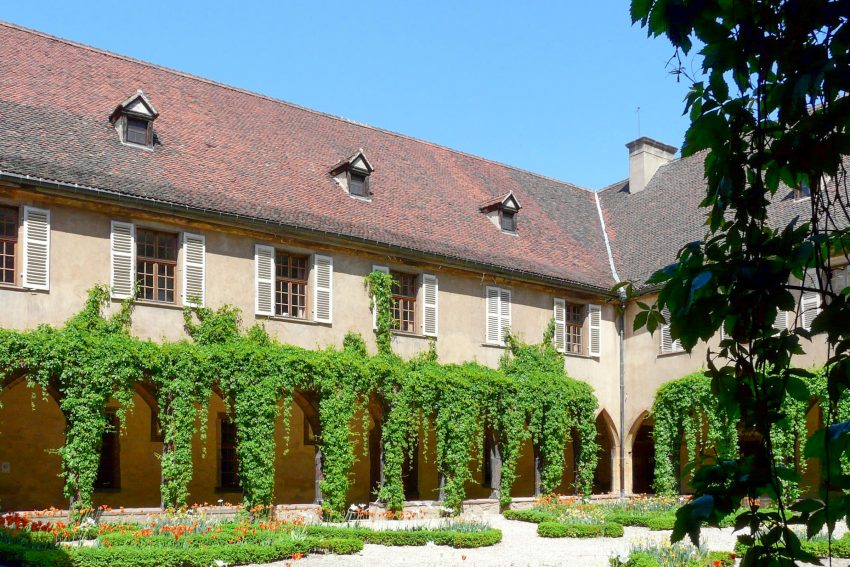
The Dominican Church in Colmar was founded in the 13th century as part of the Dominican convent complex and is one of the city’s major Gothic religious monuments. Like many mendicant churches, it was designed to support preaching and urban religious life rather than purely monastic seclusion. Over the centuries, the church’s role changed with political and religious upheavals in Alsace, but it remained an important part of Colmar’s spiritual and artistic history.
Its greatest treasure is Martin Schongauer’s Madonna in the Rose Garden, a late Gothic masterpiece that gives the church exceptional artistic significance. The painting is one of the highlights of Colmar and connects the site directly to one of the region’s most important artists. Architecturally, visitors will notice the long interior volume, ribbed vaulting, and the restrained but elegant Gothic lines typical of a preaching church.
What to see here is a combination of art and atmosphere. The Schongauer painting is the obvious focal point, but the church interior itself deserves attention for its proportions and light. If concerts or cultural events are being held, the building can feel quite different again, showing how historic sacred spaces in Colmar continue to serve the city in evolving ways.
Location: 3 Pl. des Dominicains, 68000 Colmar, France | Hours: Monday: 13:00–18:00. Tuesday: 13:00–18:00. Wednesday: 10:00–18:00. Thursday: 13:00–18:00. Friday: 13:00–18:00. Saturday: 10:00–18:00. Sunday: Closed. | Price: Free. | Website
11. Ancienne Douane
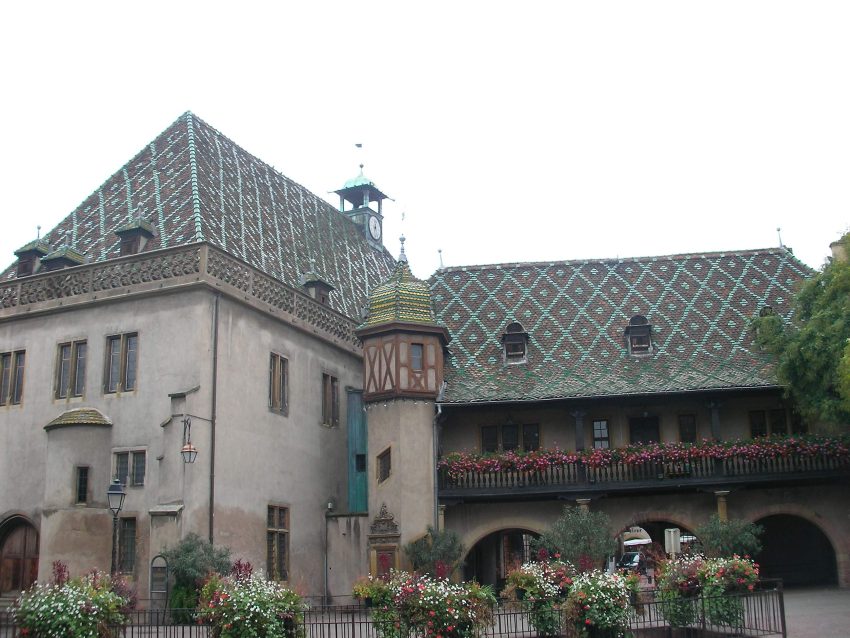
The Ancienne Douane, or Old Custom House, is one of Colmar’s most important secular historic buildings. Dating mainly from the 15th century, it served as a customs and commercial building, reflecting the city’s role in regional trade. In a prosperous Alsatian town positioned within major exchange networks, such a building was central to regulating goods, taxes, and market activity.
Architecturally, the building has a strong civic character, with a long roofline, arcaded sections, and decorative elements that show both practical function and urban pride. It sits in a prominent part of the old town and helps illustrate how commerce shaped Colmar’s built environment just as much as religion did. The structure’s scale makes it stand out among surrounding houses and gives a sense of institutional authority.
What to see here includes the exterior details and the broader setting around the building. It often feels most rewarding when viewed as part of the square and surrounding streetscape, where you can imagine merchants, officials, and goods moving through the area. If there is a market or seasonal event nearby, that can add another layer, echoing the building’s historic commercial role.
Location: Koïfhus, Pl. de l'Ancienne Douane, 68000 Colmar, France | Hours: 24 Hours. | Price: Free. | Website
12. Marché Couvert
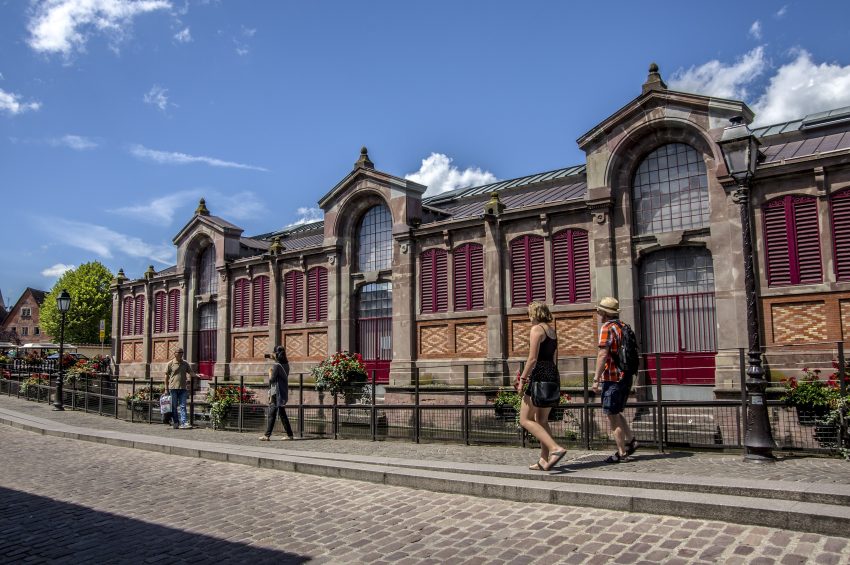
Colmar’s Covered Market was built in the 19th century, a later addition to the city’s historic landscape but an important one for understanding everyday urban life. It reflects the era when many European towns constructed permanent indoor markets to improve sanitation, organization, and food distribution. In Colmar, the market also benefited from its location near the waterways that supported local trade and provisioning.
The building itself is worth seeing for its market-hall architecture and practical design, which contrasts with the medieval and Renaissance structures elsewhere in the center. Inside, it functions as a lively food market, giving visitors a more local and contemporary experience of Colmar. This makes it not just a monument but a working part of the city, tied to regional produce and Alsatian culinary traditions.
When visiting, look at both the architecture and the stalls. It is a good place to see local food culture in a more grounded way than in purely tourist-facing areas. The surroundings near the canals also add to the atmosphere, and the market pairs well with nearby waterside streets if you want to understand how trade, food, and urban geography connect in Colmar.
Location: 13 Rue des Écoles, 68000 Colmar, France | Hours: Tuesday – Thursday: 08:00–18:00. Friday: 08:00–19:00. Saturday: 08:00–17:00. Sunday: 10:00–14:00. Closed on Monday. | Price: Free. | Website

Moira & Andy
Hey! We're Moira & Andy. From hiking the Camino to trips around Europe in Bert our campervan — we've been traveling together since retirement in 2020!
This website uses affiliate links which earn a small commission at no additional cost to you.
Walking Tour Summary
Distance: 3 km
Sites: 12
Walking Tour Map