Self-Guided Walking Tour of Belgrade (+ Maps!)
This website uses affiliate links which earn a small commission at no additional cost to you.
Belgrade is a city that rewards slow exploration: grand boulevards and compact lanes, riverside promenades and hilltop viewpoints, and a mix of imperial-era architecture alongside bold 20th-century layers. This route is designed to keep the walking straightforward while still letting you feel how the city changes from street to street.
Along the way you’ll hit the best things to see in Belgrade, from the historic core and its landmark squares to the neighbourhood streets where the cafés stay busy well into the evening. Expect a blend of headline sights and smaller details that make the city feel lived-in: courtyards, local bakeries, and pockets of greenery that appear just when you want a breather.
Because it’s self-guided, you can shape the day around your energy. Start early for quieter streets, linger longer where you’re enjoying the atmosphere, and build in breaks whenever you want-Belgrade is at its best when you give yourself time to stop, snack, and people-watch.
Table of Contents
- How to get to Belgrade
- A Short History of Belgrade
- Belgrade in Roman Singidunum and the early frontier centuries
- Belgrade under medieval powers and the long contest for the fortress
- Belgrade in the Ottoman–Habsburg tug-of-war and an urban culture of reinvention
- Belgrade in the 19th century and the making of a modern capital city
- Belgrade in the 20th century: wars, rebuilding, and the bold modern cityscape
- Belgrade today: nightlife energy, creative neighbourhoods, and heritage you can still read on foot
- Where to Stay in Belgrade
- Your Self-Guided Walking Tour of Belgrade
How to get to Belgrade
By Air: Most travellers arrive via Belgrade Nikola Tesla Airport (BEG). The simplest budget option is public transport into the centre, including the A1 minibus route to Slavija Square and city bus services that run into central Belgrade, while taxis and pre-booked transfers are the easiest door-to-door choice if you’re arriving late or travelling with luggage. For the best deals and a seamless booking experience, check out these flights to Belgrade on Booking.com.
By Train: International and regional services use Beograd Centar (often called Prokop), which has replaced the old main station for most passenger traffic. From there you’ll typically continue by taxi, bus, or (depending on your destination) a combination of city transport and a short walk, as the station sits slightly away from the most tourist-focused streets. Train schedules and bookings can be found on Omio.
By Car: Driving into Belgrade is straightforward on the map but can be slow in practice, with congestion at peak times and parking in the centre often being the main challenge. If you’re staying overnight, prioritise accommodation with secure parking, and consider leaving the car parked while you do the walking tour-central neighbourhoods are far easier on foot than by car.
How to get around the city: The central districts are very walkable, and that’s the point of this itinerary, but it helps to know you can stitch the day together with public transport when needed. Trams, buses, and taxis make it easy to hop between neighbourhood edges (especially if you’re staying in New Belgrade or Zemun), and airport and intercity bus services also connect into the city network when you’re arriving or leaving.
A Short History of Belgrade
Belgrade in Roman Singidunum and the early frontier centuries
Belgrade’s earliest big chapter is as Singidunum, a Roman settlement and military point tied to river routes and frontier strategy. Even though the most obvious Roman layers aren’t what you “see” first today, that logic-control of crossings, commanding viewpoints, and defensive positioning-sets up the city’s long-term identity. The fortress zone that later becomes the Belgrade Fortress and Kalemegdan is rooted in the same advantage: a place worth holding, rebuilding, and fighting over.
Belgrade under medieval powers and the long contest for the fortress
Through the medieval period, Belgrade repeatedly changed hands as regional powers rose and fell, and the city’s built environment became increasingly shaped by defence and reconstruction. The story isn’t a smooth timeline; it’s closer to a pattern of fortifying, damaging, and rebuilding. That’s why the fortress and its surrounding parkland feel like more than a scenic viewpoint-this is the “hinge” of Belgrade’s history, influencing where later neighbourhoods spread and why certain routes still funnel toward the citadel.
Belgrade in the Ottoman-Habsburg tug-of-war and an urban culture of reinvention
From the early modern era onward, Belgrade became a frontline city in the shifting boundary between Ottoman and Habsburg influence, and that constant pressure left cultural and architectural echoes. Different planning ideas, building styles, and street patterns filtered into the city over time, helping explain why Belgrade can feel stylistically mixed even within short walking distances. Areas around the historic core are particularly shaped by this layered past, where “what survived” often matters as much as “what was built.”
Belgrade in the 19th century and the making of a modern capital city
As Serbia’s autonomy expanded and the city modernised, Belgrade gained the civic buildings, institutions, and boulevards that many visitors associate with a European capital. This is when prominent streets and central squares start to feel deliberately “planned” for public life-promenades, culture, and administration. The centre becomes more readable for travellers: key routes connect major landmarks, and the city’s public spaces begin to operate as stages for daily life, celebration, and politics.
Belgrade in the 20th century: wars, rebuilding, and the bold modern cityscape
The 20th century brought destruction and renewal, with the city repeatedly reshaped by war and then by ambitious building programmes. One of the most visible outcomes is the contrast between the older central districts and the modernist scale of New Belgrade across the river-an urban statement of a different era and ideology. That contrast is part of what makes sightseeing in Belgrade so distinctive: within one day you can move between fortress walls, elegant civic streets, and big modern blocks that reflect the city’s more recent history.
Belgrade today: nightlife energy, creative neighbourhoods, and heritage you can still read on foot
Modern Belgrade is often experienced through its atmosphere-busy café culture, late-night energy, and a sense of creative churn-yet the historical layers remain visible in the way the city is organised. The fortress and rivers still define movement and viewpoints; the central streets still gather the city’s civic life; and newer districts show how Belgrade kept expanding and reinventing itself. A walking day here isn’t just sightseeing-it’s reading a city that has had to adapt, repeatedly, and learned how to keep going.
Where to Stay in Belgrade
To make the most of visiting Belgrade and this walking tour then you consider stay overnight at the centre. The most convenient base is Stari Grad (Old Town) and nearby Dorćol, where you can step out and be on the main pedestrian streets, squares, and river viewpoints within minutes. Good options here include Hotel Moskva, Square Nine Hotel Belgrade, Courtyard by Marriott Belgrade City Center, and Mama Shelter Belgrade.
If you want to stay close to the centre but prefer a slightly calmer, more residential feel, look toward Vračar and the broader inner-city areas just beyond the busiest walking streets. These locations still work well for the tour (often a quick walk or short ride to the start) and can feel more local in the evenings. Consider Hilton Belgrade or Metropol Palace Belgrade as strong, comfortable bases with easy access back into the core.
For modern comfort, business-class hotels, and easier car access, New Belgrade is practical-especially if you’re arriving by car or want quick links to the airport-then you can cross over for the walking day and return to a quieter, more spacious district at night. Options include Hyatt Regency Belgrade, IN Hotel Belgrade, and Falkensteiner Hotel Belgrade (Zijin Hotel Belgrade). If you want boutique style while still being central, Boutique Hotel Townhouse 27 is also a reliable pick for an easy walk-in/walk-out stay.
Your Self-Guided Walking Tour of Belgrade
Discover Belgrade on foot with our walking tour map guiding you between each stop as you explore its fortress viewpoints, lively pedestrian streets, riverside scenes, and the layered neighbourhoods that give the city its character. As this is a self guided walking tour, you are free to skip places, change the order, and take coffee stops whenever you want-treat the route as a framework and let the day unfold at your pace.
1. Cathedral of Saint Sava
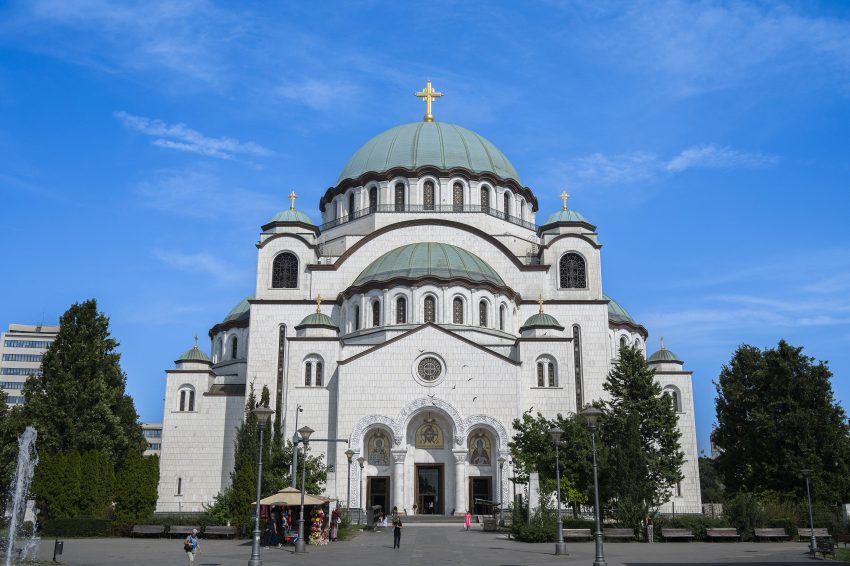
The Cathedral of Saint Sava (Temple of Saint Sava) is one of Belgrade’s defining modern monuments, built on the Vračar plateau, a site associated with Saint Sava’s legacy in Serbian history. Construction began in 1935, stalled during World War II, and then remained blocked for decades under the post-war communist government before resuming in the 1980s. The exterior was completed in 2004, and the interior has been progressively finished since then.
Architecturally, it’s designed in a Neo-Byzantine style that deliberately echoes the great domed churches of the medieval Orthodox world. The scale is the first thing that hits you: a vast central dome, monumental entrances, and a cavernous interior that feels more like a civic statement than a parish church. It’s also a place loaded with national symbolism, not just a religious site.
Inside, focus on the sheer height and volume, the developing mosaic work, and the way the light plays across the pale stone and gilded surfaces. In the crypt level, you’ll often find a different atmosphere—quieter, more intimate, and visually rich. Outside, the plateau gives you good city views and a clear sense of how deliberately the building was positioned as a landmark.
Location: Krušedolska 2a, Beograd 11000, Serbia | Hours: Daily: 08:00–20:00. | Price: Free; donations appreciated.

2. Nikola Tesla Museum
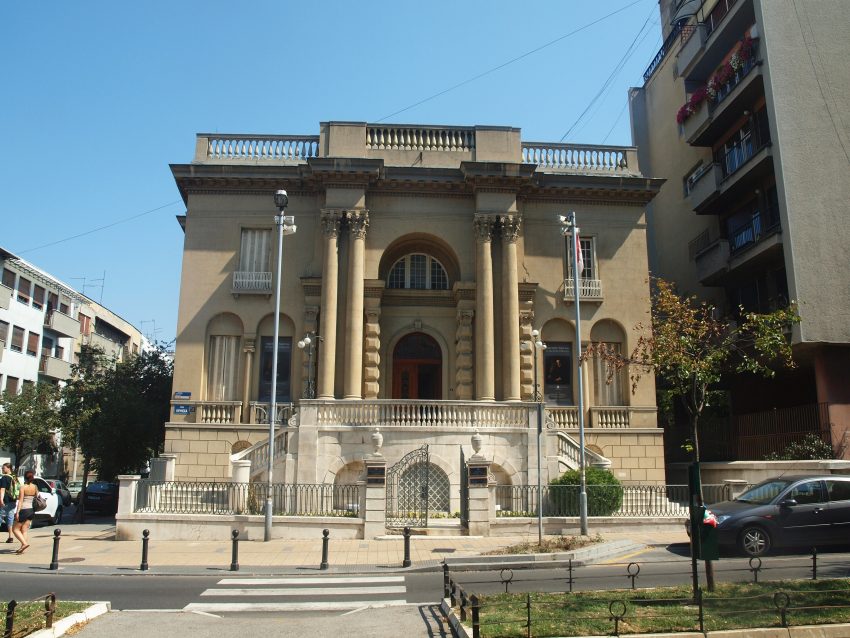
The Nikola Tesla Museum in Belgrade was established in 1952 to preserve and present the personal legacy of Nikola Tesla, one of the most influential figures in the history of electricity and modern technology. The museum’s core collections include Tesla’s original documents, photographs, plans, and technical items, making it less of a “general science museum” and more of a curated archive with select highlights on display. Tesla’s ashes, brought to Belgrade in 1957, are also part of the permanent exhibition.
Historically, what makes this museum unusual is that it acts as both a memorial and a research-grade repository. Tesla spent much of his life abroad, but the museum represents Serbia’s commitment to safeguarding his intellectual heritage in one place. It’s a small museum physically, but the material it holds is globally significant.
When you visit, expect a compact exhibition space that rewards attention to detail: original letters and sketches, interpretive displays about his inventions, and demonstrations (depending on programming) that help you connect ideas to physical phenomena. Look for the dedicated display of the urn, and spend time with the documents that show how Tesla thought, not just what he built. If you’re interested in the “human” Tesla, the photographs and personal effects often land hardest.
Location: Krunska 51, Beograd 11111, Serbia | Hours: Monday: 10:00–18:00. Tuesday – Sunday: 10:00–20:00. | Price: Single ticket (guided tour in English): 800 RSD; Single ticket (guided tour in Serbian): 400 RSD; Group (10+): 500 RSD (English) / 250 RSD (Serbian). Cash in Serbian dinars only. | Website
3. St. Mark’s Church
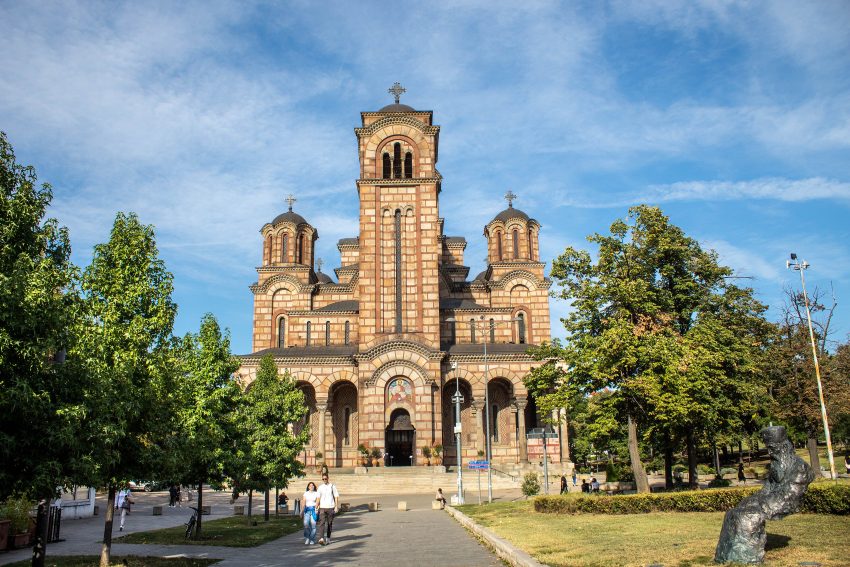
St. Mark’s Church sits in Tašmajdan Park and reflects the interwar era’s interest in reviving medieval Serbian-Byzantine aesthetics in a modern capital. It was built between 1931 and 1940 on the site of an older church from the 1830s, and its story is closely tied to Belgrade’s turbulent 20th century. The building’s completion and later consecration mark a period where religious architecture had to survive political upheaval as much as engineering challenges.
The church’s exterior is imposing—broad massing, a dominant central dome, and striped stonework that reads as both historicist and distinctly Belgrade. It’s also significant as a place of memory: you’re not just looking at a church, but a civic landmark with layers of national and cultural meaning embedded in its fabric. The setting in the park makes it feel like part of the city’s everyday rhythm rather than a secluded sanctuary.
Inside, give your eyes time to adjust and then look for the iconostasis and the later mosaic work that gradually shaped the interior character. The scale is generous, so even when it’s busy you can usually find quiet corners to take in the space. Outside, the park context matters: walk around the building to appreciate the proportions, then take a few minutes among the trees and paths that frame it so well.
Location: Bulevar kralja Aleksandra 17, Beograd, Serbia | Hours: Daily: 07:00–19:00. | Price: Free; donations appreciated. | Website
4. Skupština
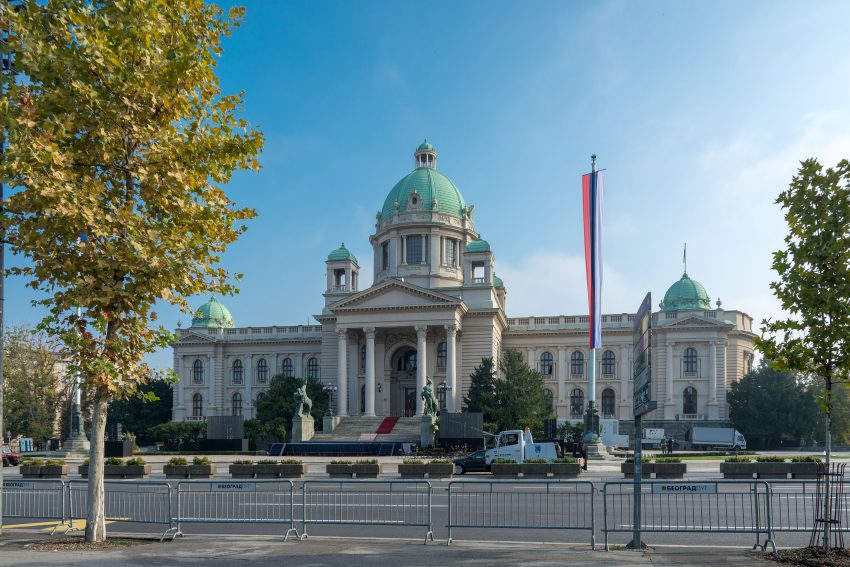
Skupština, the House of the National Assembly, is one of Belgrade’s most symbolically charged public buildings, conceived as Serbia’s representative parliamentary seat in the early 20th century. Construction began in 1907 and the building was completed in 1936, reflecting a long, complex period that included war and major political change. The architectural language is monumental and academic, designed to project authority and permanence.
Its history is inseparable from the state’s modern trajectory—shifts from kingdom to Yugoslav frameworks and later to the contemporary Serbian state are all part of the building’s institutional life. Even if you only view it from outside, it’s a useful “reading” of how capitals use architecture to communicate legitimacy. The location on Nikola Pašić Square reinforces that role, with other state buildings nearby.
What to see is primarily the façade: the grand stair approach, the formal symmetry, and the sculptural details that turn it into a statement piece rather than just an office block. If access is possible during your visit, the interior spaces (when open) are where the ceremonial aspect becomes clearer. Even without going in, the square and viewpoints around it let you frame the building the way it was intended—front-on, with scale and procession.
Location: Trg Nikole Pašića 13, Beograd 11000, Serbia | Hours: Monday – Friday: 09:00–14:30. Saturday: Check official website. Sunday: Closed. | Price: Check official website. | Website
5. Skadarlija Street
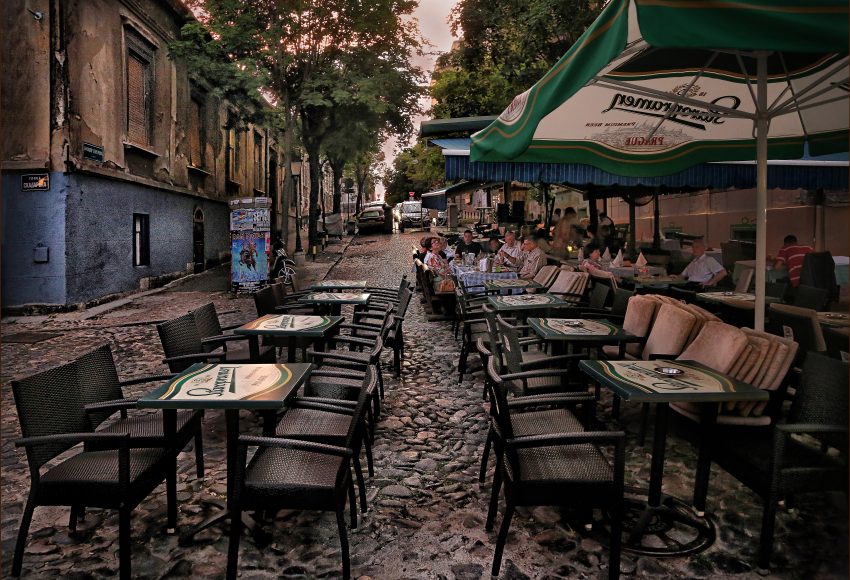
Skadarlija developed its reputation as Belgrade’s bohemian quarter in the late 19th and early 20th centuries, when writers, actors, and artists made its taverns and cafés their social headquarters. A key moment in that shift came after 1901, when the demolition of a famous inn elsewhere in the city pushed many cultural figures toward Skadarlija’s venues. Over time, it became less a single street and more a symbol of a certain Belgrade temperament—informal, artistic, and proudly local.
Historically, Skadarlija is important because it shows how “cultural districts” can form organically through habit and patronage rather than planning. The neighborhood’s identity is tied to the tradition of the kafana: places where performance, conversation, and nightlife mix in a distinctly Balkan way. That heritage is why it still carries a sense of continuity even as tourism has grown.
When you’re there, look beyond the main restaurant frontages and pay attention to the street’s texture: older façades, small details, and the way the lane bends and narrows. If there’s live traditional music, it’s part of the area’s long performance culture, not just background noise. The best experience often comes from slowing down—taking in the atmosphere, then stepping into one or two long-established venues to see how the old “salon” function survives today.
Location: Skadarlija, Belgrade, Serbia | Hours: 24 Hours. | Price: Free.
6. National Theatre
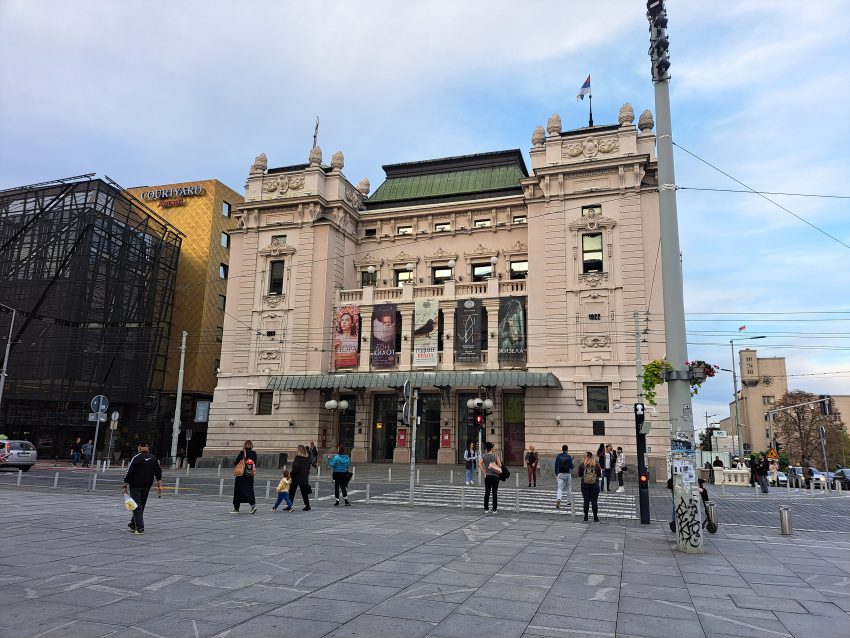
The National Theatre in Belgrade was established in 1868, at a time when Serbia was building major cultural institutions as part of a broader national modernization. The theatre’s early history is closely linked to Prince Mihailo Obrenović’s support for creating a permanent stage for Serbian cultural life, and the building opened in 1869. Its position on Republic Square is not accidental—it helped shape the square itself into a civic and cultural center.
Over the decades, the theatre has been renovated multiple times, reflecting both the wear of history and the need to keep a 19th-century institution technically current. It has long been a flagship venue for drama, opera, and ballet, and it carries the prestige (and expectations) that come with that role. The building is also a cultural marker: it’s where “high culture” became visibly anchored in the city’s everyday geography.
What to see starts with the exterior: stand back on the square to appreciate how it anchors the open space and frames the surrounding institutions. If you can get inside, the interior is where the theatre’s identity really comes alive—auditorium proportions, stagecraft infrastructure, and the ceremonial feel of a major national venue. Even if you don’t attend a performance, checking what’s on and how the theatre presents itself tells you a lot about contemporary Belgrade’s cultural priorities.
Location: Francuska 3, Beograd 11000, Serbia | Hours: Monday – Saturday: 11:00–15:00 & 17:00–Showtime. Sunday: 17:00–Showtime. | Price: From 300 RSD (varies by show and seating category). | Website
7. National Museum
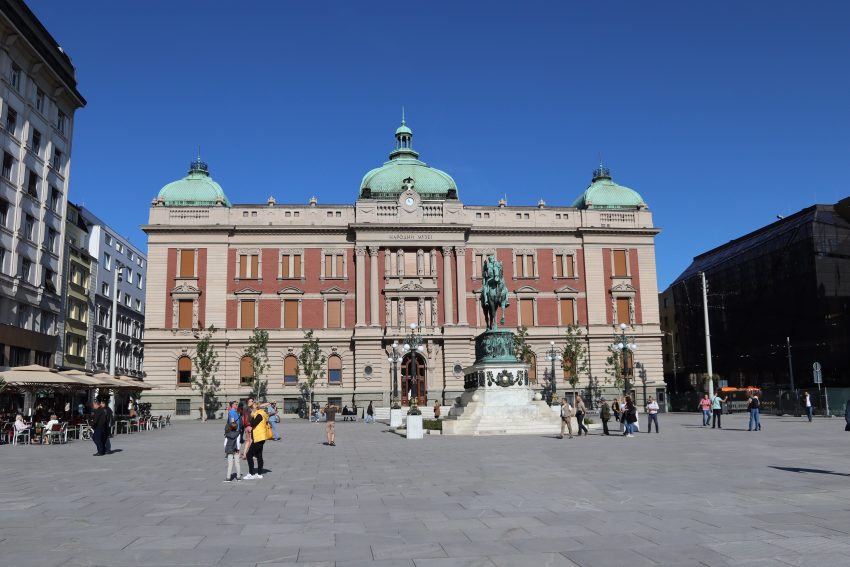
The National Museum of Serbia is the country’s oldest and largest museum, founded in 1844, and it occupies a prominent position on Republic Square. The main building itself dates to 1902–1903, originally built for a major financial institution before becoming a museum home later in the 20th century. In the 21st century, the museum’s long closure for reconstruction became a national talking point, and it reopened in 2018.
Historically, the museum matters because it functions as a concentrated narrative of Serbian and regional heritage—art, archaeology, and historical objects under one roof. Its location also carries weight: the museum sits at a civic crossroads, facing the square’s public life rather than hiding away as a specialist institution. That visibility reinforces its role as a “national memory” space.
When you visit, focus on the permanent highlights first, then use temporary exhibitions to understand what the institution is prioritizing now. The building’s own architecture is part of the experience—grand rooms, formal circulation, and a sense of early 20th-century confidence. Outside, it’s worth stepping back into Republic Square afterward; the museum makes more sense when you see how it dialogues with the theatre and the square’s monuments.
Location: Trg republike 1а, Beograd 104303, Serbia | Hours: Tuesday: 10:00–18:00. Wednesday: 10:00–18:00. Thursday: 12:00–20:00. Friday: 10:00–18:00. Saturday: 12:00–20:00. Sunday: 10:00–18:00. Closed on Monday. | Price: Permanent exhibition: 300 RSD; Thematic exhibition: 500 RSD; Permanent + thematic: 600 RSD; Sundays: free entry. | Website
8. Republic Square
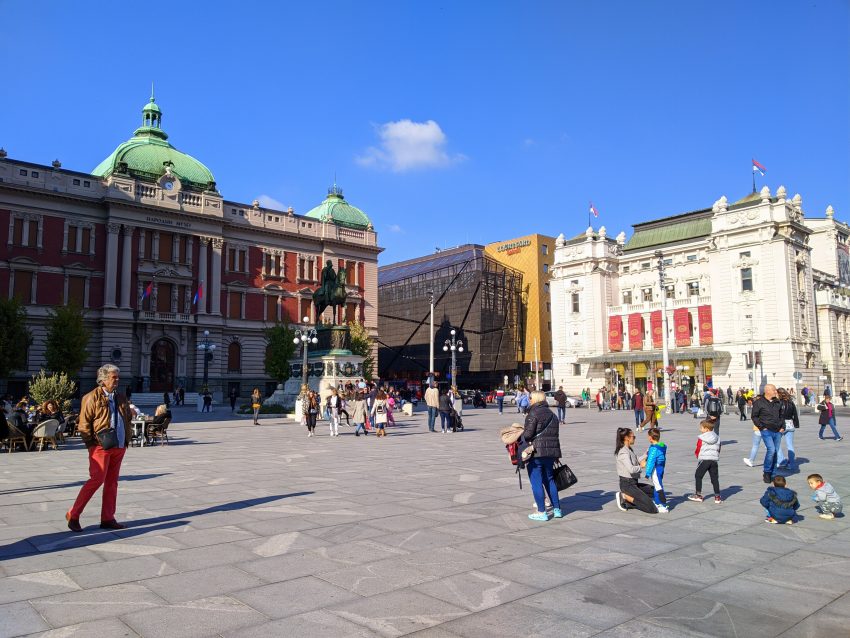
Republic Square is one of Belgrade’s central public spaces, shaped decisively in the 1860s as the city moved away from Ottoman-era fortifications and toward a modern European-style civic core. A crucial turning point was the demolition of the Stambol Gate in 1866, which removed a major physical barrier and opened the area for redevelopment. The National Theatre’s construction soon after helped define the square’s cultural identity.
The square’s history is therefore both urban and political: it represents the shift from fortified city-edge to open civic stage. Over time, it became Belgrade’s default meeting point and a space for public gatherings, celebrations, and protests—exactly what major central squares tend to become. Its meaning comes as much from what happens there as from what stands there.
What to see is a set of anchors rather than a single attraction: the National Theatre façade, the National Museum, and the equestrian monument to Prince Mihailo at the center. The monument (erected in 1882) is the classic rendezvous spot, and it’s worth circling it to take in the reliefs and overall composition. Sit for a few minutes and watch the square work as a living room for the city—it’s one of the quickest ways to get a feel for Belgrade.
Location: Trg republike 3, Beograd 11000, Serbia | Hours: 24 Hours. | Price: Free.
9. Prince Michael Street
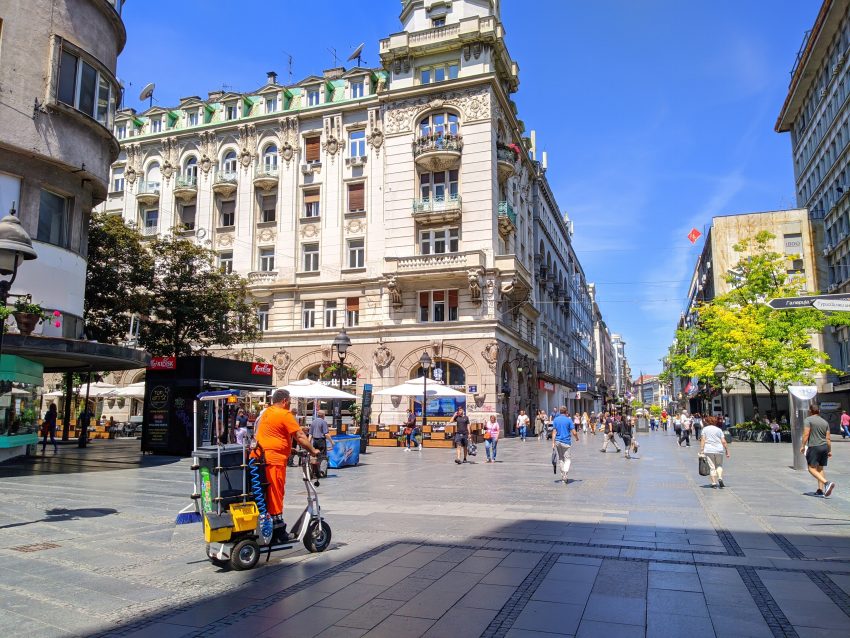
Prince Michael Street (Knez Mihailova) is Belgrade’s most famous pedestrian boulevard and a protected cultural-historical area, strongly shaped by late 19th-century urban development. Named for Prince Mihailo Obrenović III, it contains many buildings and mansions from the 1870s onward, reflecting the city’s push toward a modern European capital identity. Its evolution from a set of smaller lanes into a unified, prestigious street mirrors Belgrade’s broader transformation in the same period.
Historically, the street’s importance is not just commercial—it’s symbolic of the city’s “new center,” linking key urban nodes and making public life visible. Over time, it became a place where institutions, cafés, and shops coexisted in a corridor that locals use daily. That everyday centrality is part of its cultural value: it’s not a museum piece, it’s a working artery.
When you’re there, look up as much as you look straight ahead: façades, details, and the rhythm of historic buildings are easy to miss if you focus only on storefronts. It’s also a good place to notice Belgrade’s institutional presence—cultural institutes and landmark buildings sit among retail in a way that feels very city-center European. Walk it at different times if you can; the atmosphere shifts from daytime bustle to evening promenade, and both feel authentic.
Location: Trg republike, Beograd 11000, Serbia | Hours: 24 Hours. | Price: Free.
10. Kalemegdan Park
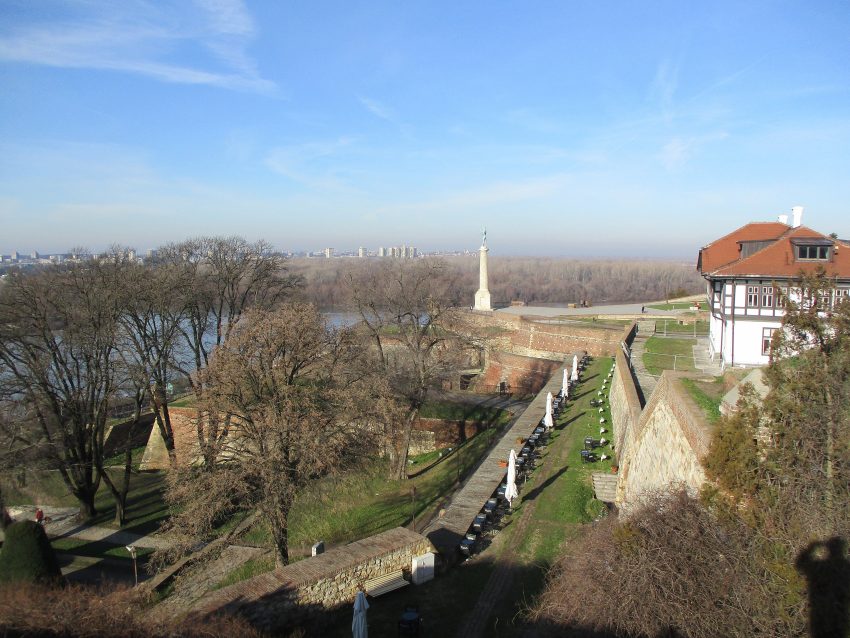
Kalemegdan Park and the Belgrade Fortress form the city’s most dramatic historical landscape, occupying the ridge above the confluence of the Sava and Danube. The site’s strategic value goes back millennia, with layers that include Roman Singidunum, medieval fortifications, and later Ottoman and Habsburg periods shaping what you see today. The name “Kalemegdan” itself derives from Turkish words meaning “fortress” and “field,” reflecting the long Ottoman presence in the city’s history.
Historically, this is Belgrade in compressed form: a place repeatedly fought over, rebuilt, and repurposed because controlling this high ground meant controlling the rivers and the region’s movement. The fortress has endured sieges and bombardments, including heavy damage during World War I, and it has shifted from a purely military space into a public park and heritage site. That transition—from battleground to promenade—is part of what makes it compelling.
What to see depends on how you pace it, but start with viewpoints: the river panoramas explain instantly why the site mattered. Then move through the fortress gates, walls, and terraces, noticing how different sections feel as you pass from open parkland into more enclosed defensive architecture. The Military Museum and various monuments and scenic paths add variety, but the core experience is the combination of ancient stonework, layered history, and the city spread out below.
Location: Kalemegdan bb, Beograd 11000, Serbia | Hours: 24 Hours. | Price: Free.
11. Cathedral of Saint Sava
The Cathedral of Saint Sava is a monumental Serbian Orthodox church built on the Vračar plateau, a site chosen for its strong historical symbolism tied to Saint Sava’s legacy. Construction started in 1935 after decades of planning, then stopped during World War II and remained stalled for much of the post-war period, before resuming in 1986. The dome was completed in 1989, and the exterior was later finished, while the interior has continued to be completed in phases. Architecturally, it is designed in a Neo-Byzantine idiom, deliberately referencing the great domed churches of the Eastern Christian world. Its scale is part of the point: it reads as a national landmark as much as a place of worship, with a vast central space intended to impress from the first step inside. The long construction timeline is also part of the experience, because you can see how different phases of work have shaped what visitors encounter today. When visiting, take time both outside and inside: the exterior massing and dome are best appreciated from the plateau, where you can step back for the full silhouette. Inside, look for the developing mosaic work and the strong vertical perspective under the dome, then consider going down into the crypt level if it is open, which often feels more intimate and visually concentrated. Even without detailed knowledge, the building’s sheer proportions and evolving interior decoration make it a standout stop in Belgrade.
Location: Krušedolska 2a, Beograd 11000, Serbia | Hours: Daily: 08:00–20:00. | Price: Free; donations appreciated.
12. Tašmajdan Park
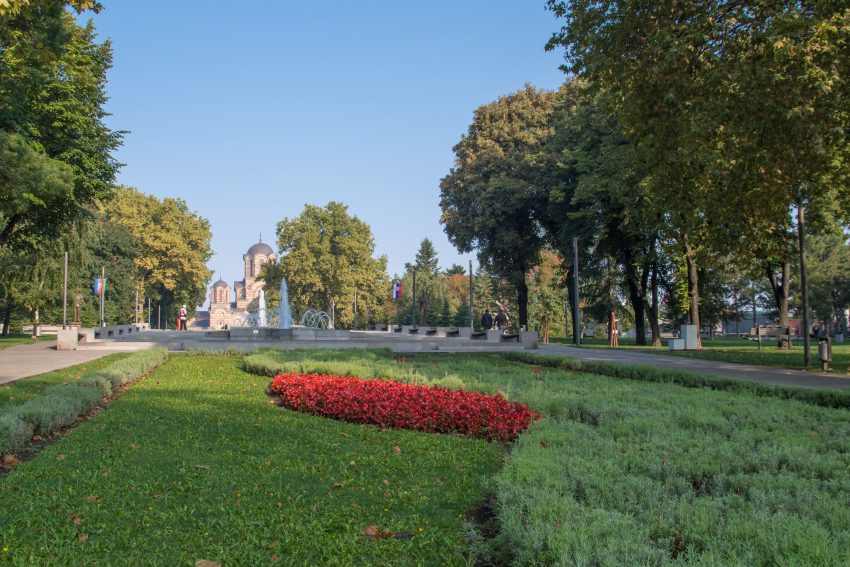
Tašmajdan Park sits in central Belgrade and takes its name from the Ottoman Turkish words for “stone” and “mine,” reflecting the area’s long history as a quarry. Romans extracted stone here for ancient Singidunum, and the quarry remained active through later periods, leaving a deep historical footprint beneath today’s lawns and paths. In modern form, the park was created in the mid-20th century and later reconstructed substantially in 2010–2011, with the wider area receiving heritage protection more recently. The park’s story is layered: it has been a place of infrastructure, ceremony, and public life rather than a purely decorative green space. It is also associated with major Belgrade institutions around its edges, and its 20th-century history includes wartime and late-20th-century trauma, which adds weight to what otherwise looks like a relaxed urban park. That mix of everyday recreation and historical depth is what makes Tašmajdan feel distinctly Belgrade. What to see is a combination of landmarks and atmosphere. Walk toward the churches on the park’s margins, including St. Mark’s Church and the nearby Russian Church of the Holy Trinity, then continue through the main paths to get a sense of the park’s scale and how locals use it. If you’re interested in the “hidden” Tašmajdan, note that parts of the area relate to old quarrying and geological layers that the city has recognized as a protected natural feature.
Location: Ilije Garašanina 26, Beograd 11000, Serbia | Hours: 24 Hours. | Price: Free.
13. Old Palace
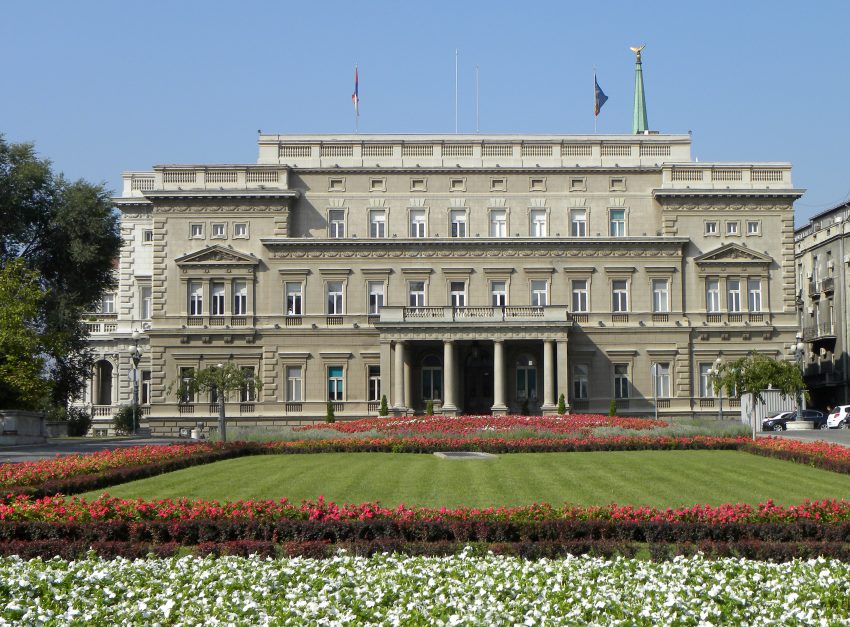
The Old Palace (Stari Dvor) was built in the 1880s as a royal residence and served as the seat of the Serbian royal family through major political transitions. It functioned as a royal residence from 1884 to 1922, associated first with the Obrenović dynasty and later the Karađorđević dynasty. Its position opposite the New Palace helps explain the area’s long-standing role as an administrative and ceremonial core of Belgrade. Historically, the building represents the period when Serbia’s monarchy was expressing statehood through architecture in a formal European style. The design is deliberately “official” in character, intended to project stability and prestige, and it has continued to play a civic role beyond its royal chapter. Today it functions as part of the city’s institutional landscape rather than a private palace, which is typical of former royal complexes in European capitals. When you visit, the main draw is the exterior and the setting within the broader palace complex. Approach it from the surrounding streets to appreciate the symmetry and the way it relates spatially to the New Palace across the road, then spend a few minutes in the nearby open areas to take in the “state axis” feel of the neighborhood. If public access is available during your visit, the interior spaces can add context, but even from outside you can read the building as a monument to Belgrade’s late-19th-century political ambitions.
Location: Dragoslava Jovanovića 2, Beograd 11000, Serbia | Hours: 24 Hours. | Price: Free.
14. Zeleni Venac Market
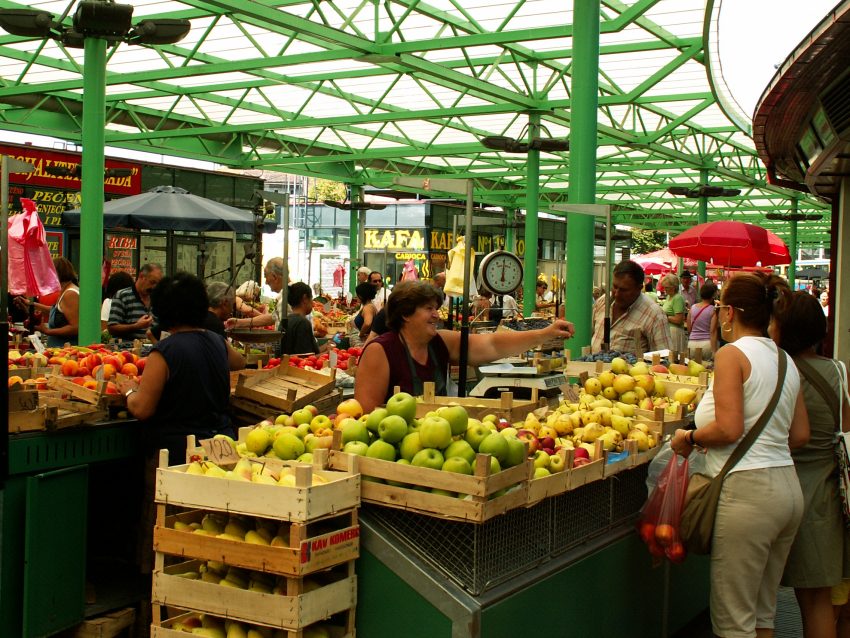
Zeleni Venac is one of Belgrade’s best-known markets and is widely described as the city’s oldest still-active green market, with origins traced back to the mid-19th century. The market complex as people recognize it today opened in 1926 and was considered highly modern for its time, with infrastructure such as running water and sewage systems. Its longevity and central role have earned it the nickname “Queen of the markets,” and it has been placed under state protection. Historically, Zeleni Venac is more than a place to buy produce; it’s part of how Belgrade organized daily life as the city grew and modernized. It was intended as a central market close to the core, and its development was also tied to the city’s efforts to regulate informal street selling in downtown areas. The surrounding transport links reinforced that role, turning it into a practical hub where commerce and movement meet. What to see is the market in motion: stalls stacked with seasonal fruit and vegetables, specialty foods, and the constant flow of locals shopping with purpose. Look for the distinctive rooflines and older structural details that hint at early-20th-century design, then step outside and notice how closely the market is woven into the city’s transit patterns. If you want a grounded, everyday Belgrade experience, this is one of the quickest ways to get it.
Location: Jug Bogdanova, Beograd 11000, Serbia | Hours: Daily: 06:00–19:00. | Price: Free. | Website
15. Residence of Princess Ljubica
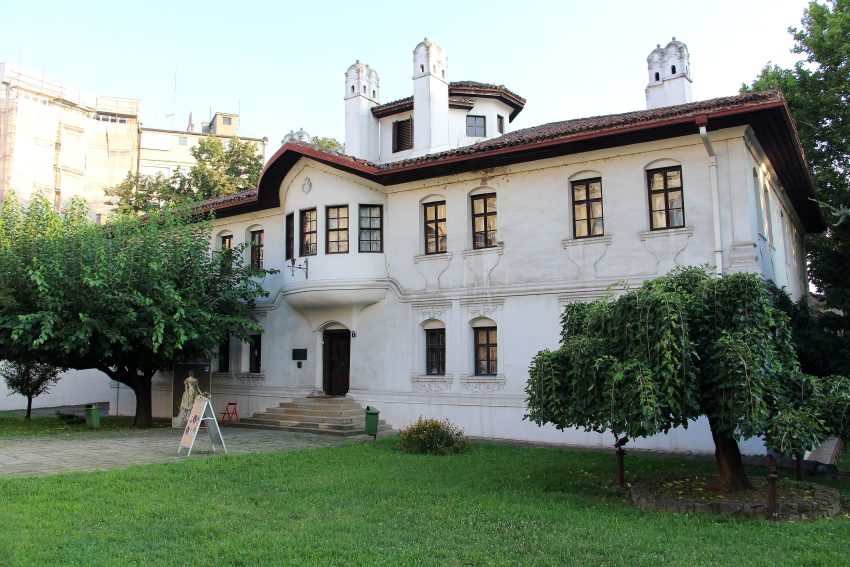
The Residence of Princess Ljubica is a significant surviving example of early-19th-century civil architecture in Belgrade, built in 1829–1830 under the supervision of Hadži-Neimar (Hadži Nikola Živković). It was commissioned by Prince Miloš Obrenović to serve both as a family home for Princess Ljubica and their sons and as a formal residence with courtly functions. The building is protected as a Monument of Culture of Exceptional Importance, reflecting its status in Serbia’s cultural heritage. Historically, the residence captures a transitional moment when Serbia was consolidating autonomy and projecting authority through architecture and urban presence. Its style and layout reflect a blend of local traditions and influences that were common in the region at the time, and its location in the older part of the city makes it feel connected to the Belgrade of the 1830s rather than the later grand boulevards. It also sits close to other major historic institutions, which helps place it within the political geography of early modern Serbia. When you visit, focus on the building as a lived-in historical object rather than just a façade. Pay attention to the proportions, internal room organization, and period details that reveal how elite residence and governance overlapped in that era. The surrounding streets and nearby landmarks in the old city core also reward a slow approach, because they help you understand why this residence mattered in Belgrade’s early-19th-century public life.
Location: Kneza Sime Markovića 8, Beograd 11000, Serbia | Hours: Tuesday: 10:00–17:00. Wednesday: 10:00–17:00. Thursday: 10:00–17:00. Friday: 10:00–18:00. Saturday: 10:00–17:00. Sunday: 10:00–14:00. Closed on Monday. | Price: Ticket: RSD 200; Special categories (pupils, students, unemployed and pensioners): RSD 100. | Website
16. Belgrade Zoo
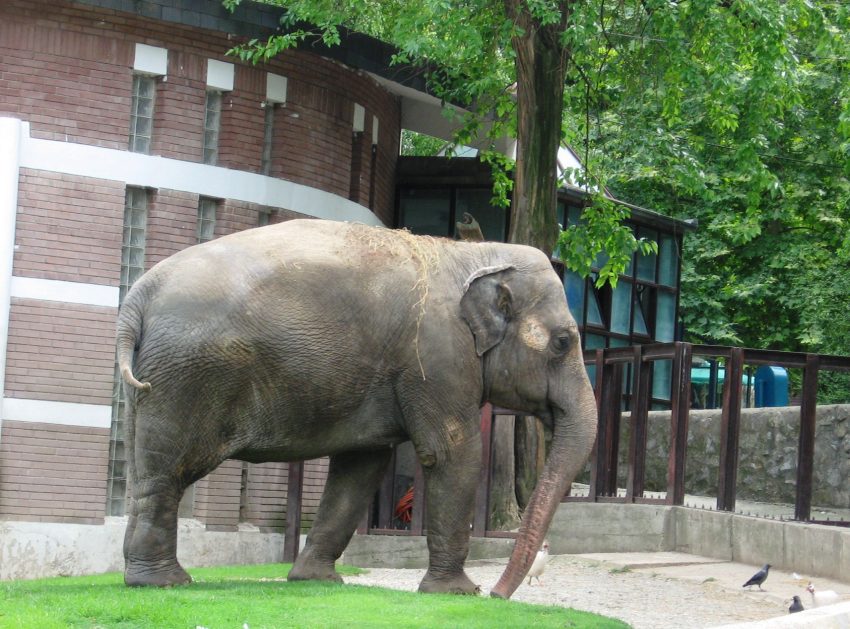
Belgrade Zoo, also known as the “Garden of Good Hope,” opened on 12 July 1936 and is located within the historic Kalemegdan area. It has endured a turbulent history, including severe damage during World War II, and later redevelopment and expansion as the city rebuilt. Today it remains one of Belgrade’s most visited attractions, with a large collection of species in a compact, central setting. The zoo’s historical interest is partly about place: it sits inside one of the most symbolically loaded landscapes in the city, where layers of fortress history surround a modern public institution. That contrast—animals and family outings framed by old ramparts and defensive walls—makes it feel different from many standalone zoos. Its nickname also hints at how it has functioned as a civic morale space, especially through difficult periods. What to see depends on your interests, but the setting is always part of the draw. Combine the animal enclosures with time spent noticing the fortification context and the views nearby, because the zoo is integrated into a broader heritage zone rather than isolated. If you prefer a shorter visit, pick a few key areas and then transition straight into Kalemegdan’s paths and viewpoints to round out the experience.
Location: Mali Kalemegdan 8, Belgrade 11000, Serbia Belgrade RS, Beograd 11000, Serbia | Hours: Daily: 09:00–18:00. | Price: Adults (15+): 700 RSD; Children (3–15): 500 RSD; Under 3: free. | Website
17. Nebojša Tower
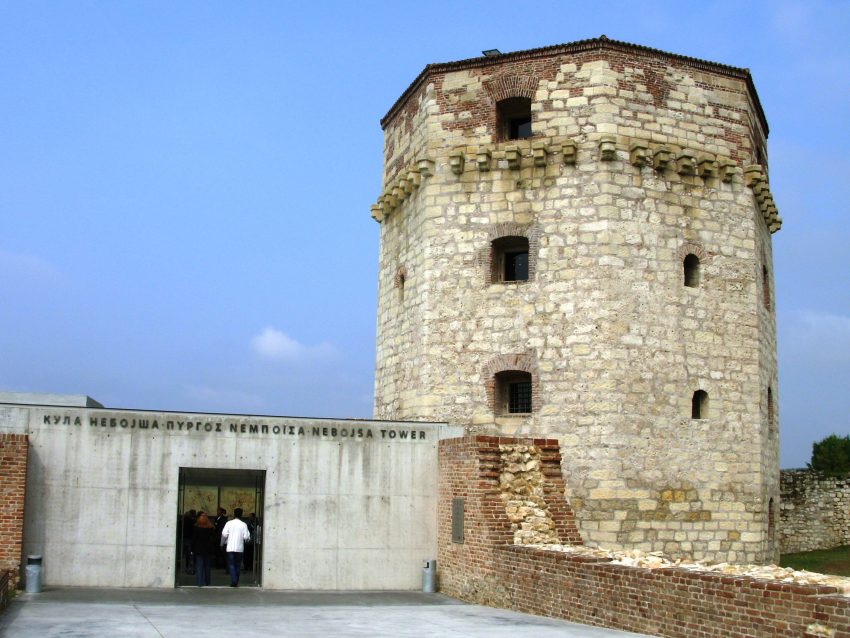
Nebojša Tower is the only surviving medieval tower of the Belgrade Fortress, built in the 15th century as an early artillery-era defensive structure near the river. Over time, it shifted from military purpose to imprisonment, serving as a dungeon in later periods. In 2010 it was adapted into a museum, giving the building a new public-facing role while preserving its stark historical character. Historically, the tower is valuable because it shows how fortifications evolved with gunpowder warfare, and how the same architecture could later be repurposed for control and confinement. Its river-edge position explains its original defensive logic: it was designed to protect approaches from both land and water. The modern museum conversion also reflects a broader trend of transforming former military structures into interpretive heritage spaces. When you visit, start outside to understand the tower’s profile and strategic placement near the confluence area, then go in for the museum narrative if it is open. Look for how the interior presentation uses the vertical structure—floor by floor—to tell different chapters of the tower’s life, from defense to imprisonment to modern revitalization. The surrounding fortress paths and river views help complete the picture, because Nebojša makes most sense when you see what it was built to guard.
Location: Nebojša, Bulevar vojvode Bojovića, Beograd 114412, Serbia | Hours: (Summer) April 15 – October 15; Wednesday – Sunday: 11:00–19:00. (Winter) October 15 – April 15; Wednesday – Sunday: 10:00–17:00. | Price: Single ticket: 200 RSD; Pupils, students, senior citizens: 100 RSD. | Website

Moira & Andy
Hey! We're Moira & Andy. From hiking the Camino to trips around Europe in Bert our campervan — we've been traveling together since retirement in 2020!
This website uses affiliate links which earn a small commission at no additional cost to you.
Walking Tour Summary
Distance: 10 km
Sites: 17