Belgrade, Serbia: The Ultimate Travel Guide 2026
The Complete Guide to Belgrade

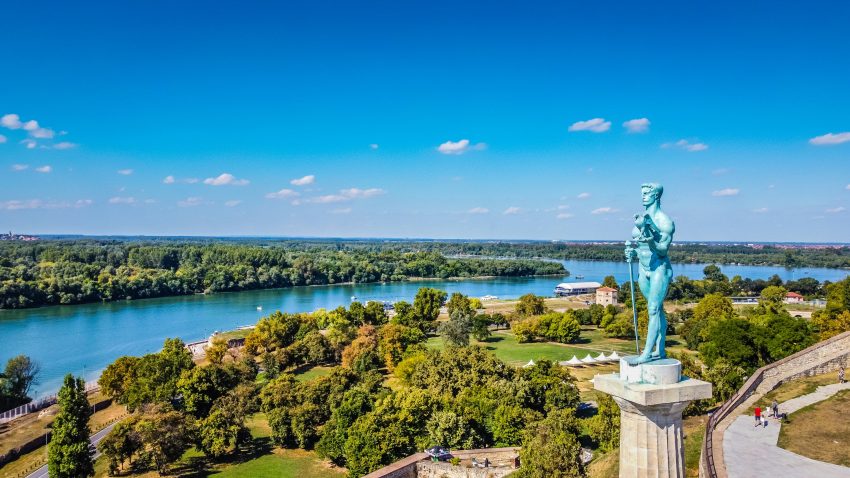
Belgrade is a lively riverside capital where café culture, nightlife, and big-city energy meet walkable neighborhoods and generous hospitality. Set at the confluence of the Danube and Sava in Southeast Europe's Balkans, it's a place where you can spend your mornings in leafy parks and your evenings in buzzing streets lined with bars, music venues, and late-night eateries. The city feels informal and welcoming, with plenty to do even if you're visiting for just a weekend.

A great way to experience Belgrade is to split your time between the historic core and the riverfront. Stroll through pedestrian streets, pop into galleries and design shops, then head toward the water for promenades, sunset views, and floating venues on the rivers. Food is a highlight: expect hearty Serbian classics, excellent bakeries, and a growing scene of modern bistros and specialty coffee.

Belgrade also works well as a base for short day trips, but you don't have to go far to fill your itinerary. Many of the city's best viewpoints, museums, markets, and nightlife districts sit close together, making it easy to explore on foot, by public transport, or via affordable taxis and ride-hailing. Whether you're into history, architecture, music, or simply soaking up atmosphere, Belgrade rewards curiosity and unhurried wandering.

History of Belgrade

Belgrade in Antiquity (Singidunum)

Belgrade’s earliest urban roots are commonly traced to the Roman period, when the settlement was known as Singidunum. Positioned on major river routes, it developed as a strategic military and trading point, with fortifications and infrastructure that anchored its early growth. Over time, the city’s role as a frontier stronghold shaped a pattern that would repeat for centuries: rebuilding, re-fortifying, and adapting to new rulers.

Belgrade in the Early Middle Ages

After the Roman era, Belgrade passed through shifting spheres of influence as new powers rose and fell across the region. The city’s fortifications remained central to its value, and control changed hands multiple times. This period laid the foundations for Belgrade’s later medieval identity, with the settlement evolving around defensive needs and river commerce.

Belgrade under Medieval Serbian Rule

Belgrade became especially significant in the late medieval period, when it emerged as a key stronghold and cultural center. Fortification works expanded, and the city’s prominence grew as regional politics intensified. The medieval legacy is most strongly felt in the enduring importance of the fortress area, which remained the city’s symbolic and strategic heart.

Belgrade in the Ottoman–Habsburg Frontier Era

For centuries, Belgrade stood at the edge of competing empires, and the city changed hands repeatedly between Ottoman and Habsburg forces. Each shift brought new administrative systems, architectural influences, and military upgrades. The result was a layered urban fabric—parts of which were repeatedly destroyed and rebuilt—reflecting the city’s role as a contested gateway.

Belgrade in the 19th Century: National Revival and Modernization

During the 19th century, Belgrade increasingly became a focal point of Serbian political life and state-building. Institutions developed, urban planning advanced, and the city began to take on a more modern European character. Streets, public buildings, and civic spaces expanded as Belgrade transitioned from a fortress-oriented town into a growing capital.

Belgrade in the 20th Century: Wars, Reconstruction, and Growth

The 20th century brought dramatic upheavals, including major conflicts that caused extensive damage and loss. Belgrade underwent repeated reconstruction and rapid urban expansion, with new neighborhoods and infrastructure reshaping the city. Postwar development introduced large-scale planning and modernist architecture, while cultural life continued to evolve.

Belgrade in the 21st Century: Contemporary City and Cultural Scene

In recent decades, Belgrade has continued to transform through redevelopment, new cultural venues, and a dynamic hospitality and nightlife scene. The city’s identity today blends historic layers with contemporary creativity, reflected in revitalized districts, festivals, and an increasingly international profile.

Moira & Andy
Moira & Andy

Hey! We're Moira & Andy. From hiking the Camino to trips around Europe in Bert our campervan — we've been traveling together since retirement in 2020!

Read our full story here

Visiting Belgrade for the first time and wondering what are the top places to see in the city? In this complete guide, I share the best things to do in Belgrade on the first visit. To help you plan your trip, I have also included an interactive map and practical tips for visiting!

This website uses affiliate links which earn a small commission at no additional cost to you.

35 Best places to See in Belgrade

This complete guide to Belgrade not only tells you about the very best sights and tourist attractions for first-time visitors to the city but also provide insights into a few of our personal favorite things to do.

This is a practical guide to visiting the best places to see in Belgrade and is filled with tips and info that should answer all your questions!

1. Old Palace
Old Palace
Old Palace
CC BY-SA 3.0 / Nemezis
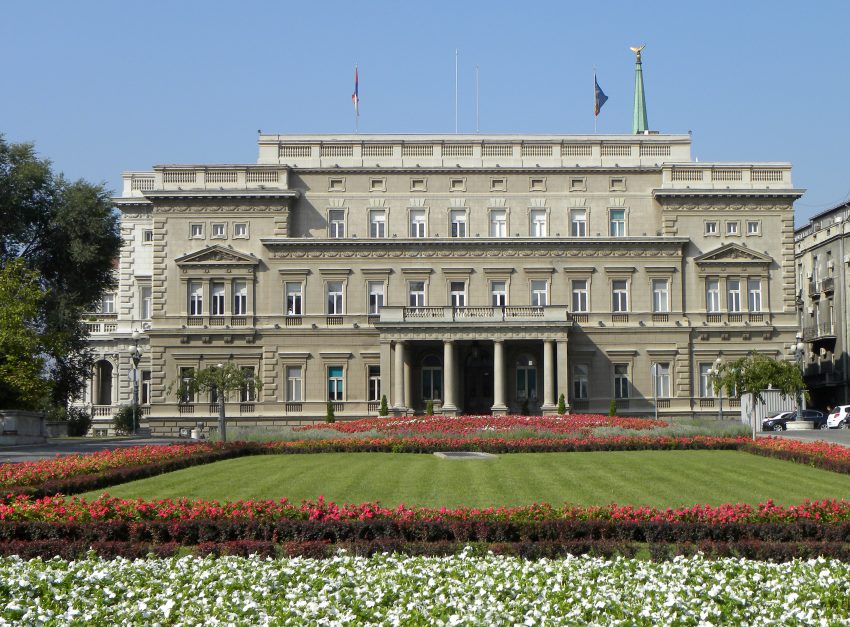
Belgrade’s Old Palace (Stari Dvor) is a late-19th-century royal residence built in 1882–1884 for Serbia’s ruling dynasties, now serving as the City Assembly. Set by Pioneers Park, it’s best appreciated from outside, where its academism-style symmetry reads clearly from multiple angles. Look for classical touches like caryatids, Doric columns, and balustraded balconies, plus the more ornate garden-facing façade with projecting balconies. The building sits on a near-square 40×40-meter footprint, originally organized around a central inner hall. Many visitors remember it most after dark, when the illumination sharpens the façade’s carved details.
Location: Dragoslava Jovanovića 2, Beograd 11000, Serbia | Hours: 24 Hours. | Price: Free. | Distance: 0.2km


Here is a complete selection of hotel options in Belgrade. Feel free to review each one and choose the stay that best suits your needs.

2. Zeleni Venac Market

Zeleni Venac Market
Zeleni Venac Market
CC BY-SA 4.0 / Jaimrsilva
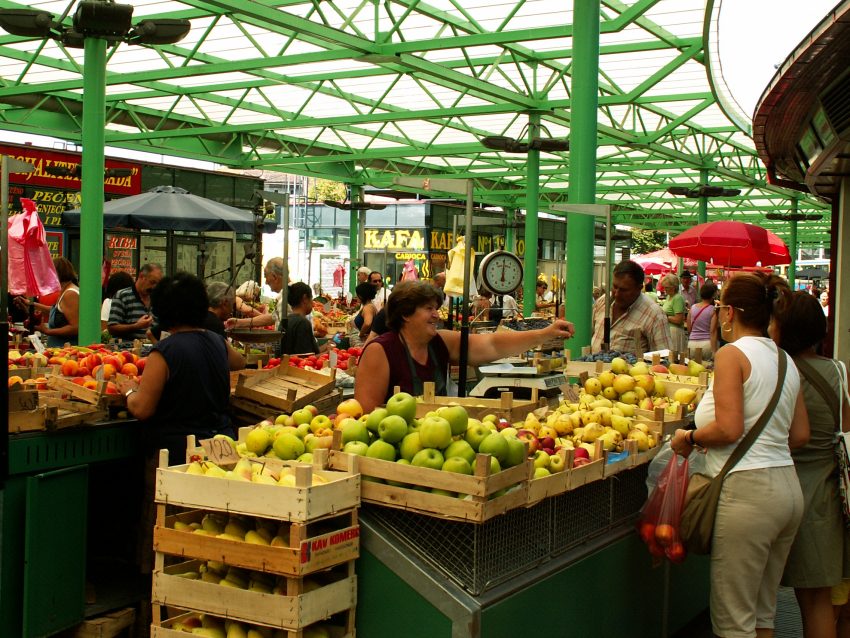
Zeleni Venac Market is Belgrade’s oldest working green market, a daily-shopping hub that has served the city since the early 19th century. Much of the experience is sensory and close-up: tight aisles, quick exchanges at the counter, and crates of just-delivered produce from nearby farms and villages. The market operates in a distinctive 1926 building that was renovated to keep its original look and is protected as a cultural landmark, with colorful details that stand out from typical market halls. Expect piles of seasonal fruit and vegetables alongside jars of pickles and other homemade foods, plus flowers, cheeses, deli goods, and small souvenirs. On Saturday mornings the pace noticeably quickens as vendors and locals crowd the stalls.
Location: Jug Bogdanova, Beograd 11000, Serbia | Hours: Daily: 06:00–19:00. | Price: Free. | Website | Distance: 0.3km

Traveling to a country with a different currency? Avoid ATM transaction fees and pay in local currency with a Wise Card. Having used it for over 5 years, we've saved loads on fees!

3. National Theatre

National Theatre
National Theatre
CC BY-SA 4.0 / Nter25
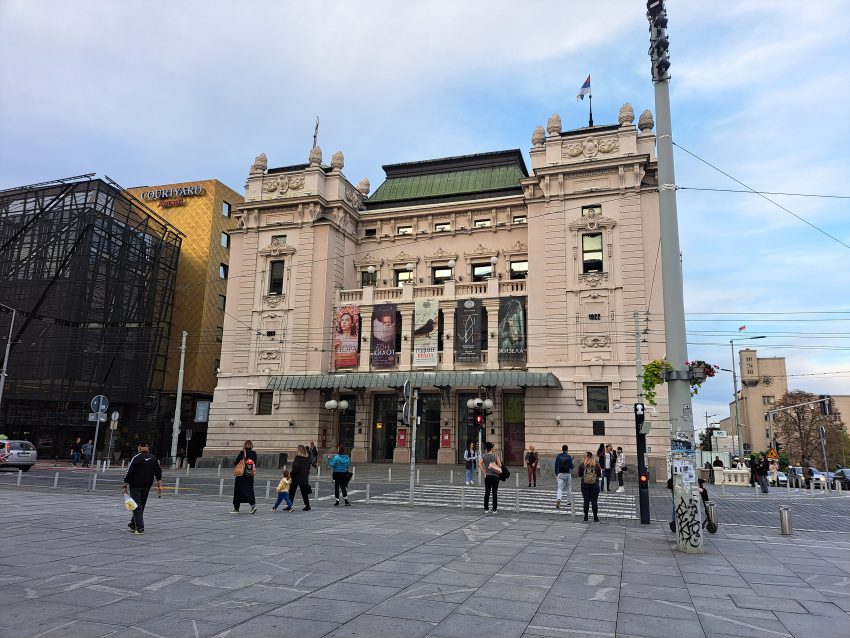
Belgrade’s National Theatre (Narodno pozorište) is the city’s main stage for drama, opera, and ballet, standing on Republic Square where an outer gate of the old Belgrade Fortress once stood. Its foundations were laid in 1868 after Prince Michael, impressed by a visiting troupe from Novi Sad, commissioned a permanent theatre here—though he didn’t live to see it finished. The building’s story is written in its repairs and rebuilds, from wartime damage to a major reopening in 1989, and it even kept performing daily during the 1999 NATO bombings. Inside, the Grand Hall spans three levels (219 seats plus balconies), while the Raša Plaović Stage (281 seats) suits smaller drama, and visitors often remember the ornate interiors and the glow of the façade at night.
Location: Francuska 3, Beograd 11000, Serbia | Hours: Monday – Saturday: 11:00–15:00 & 17:00–Showtime. Sunday: 17:00–Showtime. | Price: From 300 RSD (varies by show and seating category). | Website | Distance: 0.4km

Explore Belgrade at your own pace with our self-guided walking tour! Follow our curated route to discover must-see sights and local secrets that makes Belgrade one of the best places to visit in Serbia.

4. Skupština

Skupština
Skupština
CC BY-SA 3.0 / Nikolai Karaneschev
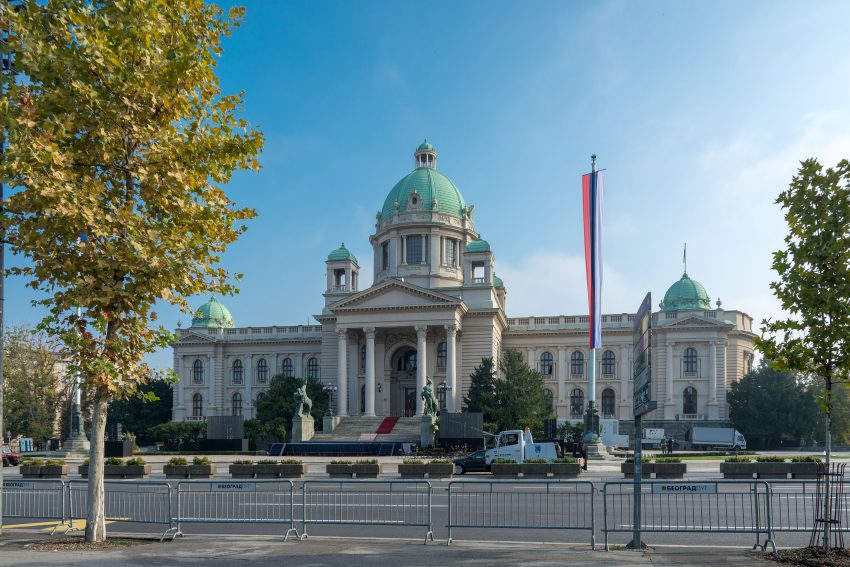
Skupština is Serbia’s National Assembly building on Nikola Pašić Square, a grand domed seat of parliament that still functions as the country’s lawmaking stage. Built on plans begun in 1907 and finished externally by 1939, it blends a formal, Baroque-tinged façade with a broad forecourt where the two front statues often become the main photo foreground. Inside, Russian architect Nikolai Krasnov designed the décor in extraordinary detail—he even worked in watercolors—filling four levels and mezzanines with 100 offices, committee rooms, and large and small debating chambers. Visitors usually remember the floodlit exterior after dark, sometimes alongside temporary barricades during sessions or protests.
Location: Trg Nikole Pašića 13, Beograd 11000, Serbia | Hours: Monday – Friday: 09:00–14:30. Saturday: Check official website. Sunday: Closed. | Price: Check official website. | Website | Distance: 0.4km

5. Republic Square
Republic Square
Republic Square
CC BY-SA 1.0 / Imeao
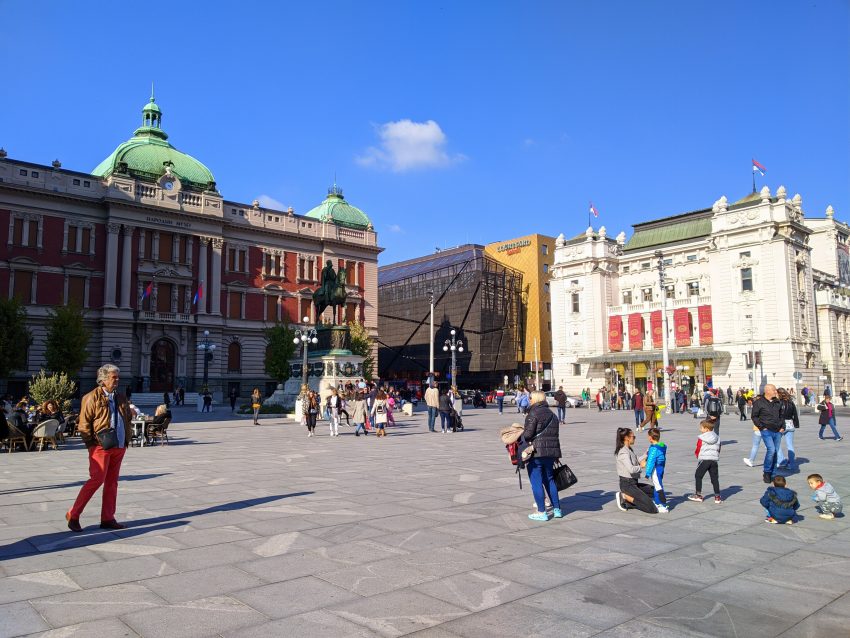
Republic Square (Trg Republike) is Belgrade’s central civic square, where the Old Town meets the pedestrian flow toward Knez Mihailova and the city’s main transit lines. The space is anchored by the 1882 equestrian statue of Prince Mihailo Obrenović III, sculpted by Enrico Pazzi; locals still use it as the default meeting point. The monument commemorates the prince’s push to drive Ottoman forces out, with his outstretched hand famously pointing toward Constantinople. The square’s edges are defined by heavyweight cultural buildings—the National Theatre and the National Museum—so you feel both everyday bustle and a formal, public-stage atmosphere. Even when crowded, many visitors remember it as a calm place to sit and watch the city’s rhythm.
Location: Trg republike 3, Beograd 11000, Serbia | Hours: 24 Hours. | Price: Free. | Distance: 0.4km

6. Skadarlija Street
Skadarlija Street
Skadarlija Street
CC BY-SA 4.0 / Dani Lavi 0007
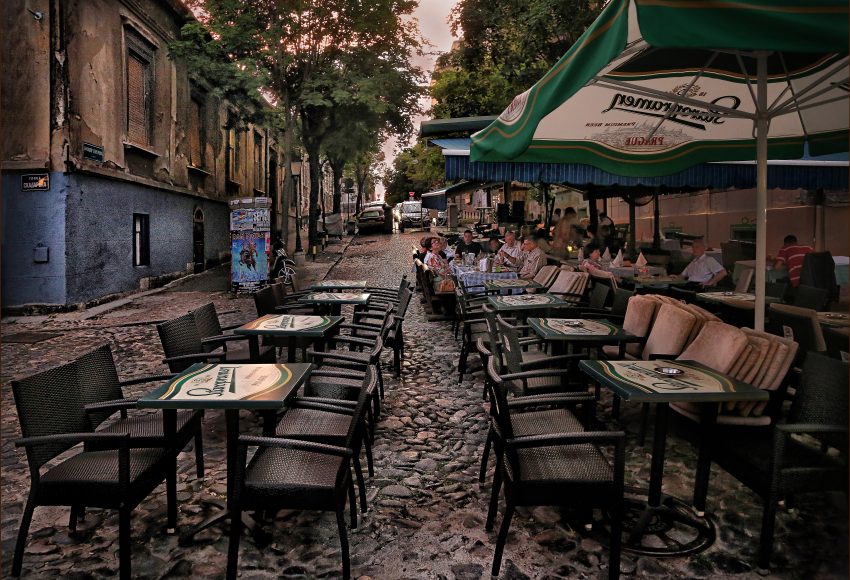
Skadarlija Street is a 400‑meter, pedestrian cobblestone lane in Belgrade’s Old Town, known as the city’s bohemian dining strip and a living snapshot of kafana culture. It runs downhill from just below Republic Square toward Dušanova Street, with restaurant terraces, small hotels, and art galleries pressed close to the stones. Musicians often wander between tables in traditional dress, playing tamburica-style tunes that spill into the street and set the pace for long, unhurried meals. The area began as an 18th‑century “Gypsy Quarter,” and even today locals argue over changes—especially the recent resurfacing with imported Greek cobbles that altered the original look. Expect a relaxed, down-to-earth evening scene with pivo and roštilj.
Location: Skadarlija, Belgrade, Serbia | Hours: 24 Hours. | Price: Free. | Distance: 0.5km

7. Prince Michael Street
Prince Michael Street
CC BY-SA 1.0 / Imeao
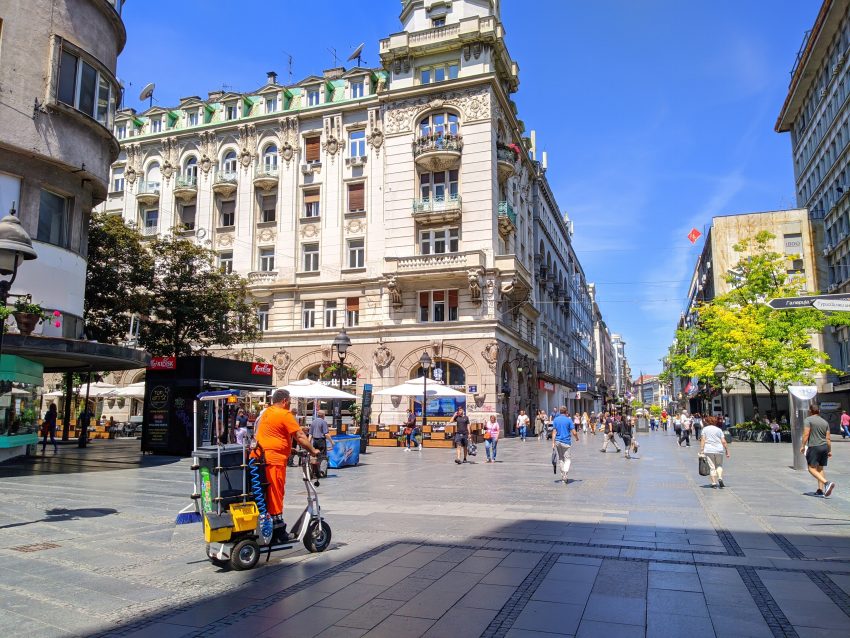
Prince Michael Street (Knez Mihailova) is Belgrade’s central pedestrian promenade and shopping corridor, following the line of the Roman Singidunum street plan—excavations for newer buildings like the Rajićeva mall revealed antique and late-antique foundations and even nearby Roman-era graves. As you walk, you’ll pass late-1800s townhouses built for wealthy residents, with a mix of styles such as the Renaissance-influenced Marko Stojanović house, now used by the Academy of Fine Arts. At No. 35, the Serbian Academy of Sciences and Arts (completed in 1924) contains galleries and a bookstore. Cafés spill into the street; Ruski Car at No. 38 sits in a 1926 Art Deco building.
Location: Trg republike, Beograd 11000, Serbia | Hours: 24 Hours. | Price: Free. | Distance: 0.5km

8. National Museum
National Museum
National Museum
CC BY-SA 2.0 / Rico van Manen
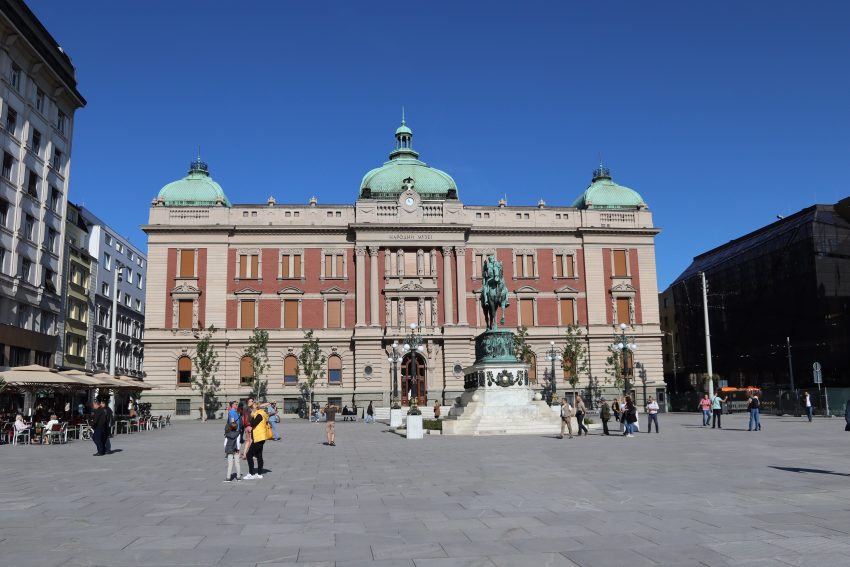
Belgrade’s National Museum on Republic Square is Serbia’s largest and oldest museum, founded in 1844 and reopened after a full rebuild in 2018 in a building that first opened in 1952. Inside, more than 400,000 objects are organized into dozens of collections—archaeology, numismatics, history, and art—so you can follow a clear timeline from Paleolithic finds through Roman material and into modern eras. Visitors tend to remember the spacious galleries and the way the story of this part of Europe is laid out step by step, with English labels that make browsing easy. The art rooms add surprises, with works by artists such as Picasso, Monet, Renoir, Degas, and Cézanne alongside Serbian masters.
Location: Trg republike 1а, Beograd 104303, Serbia | Hours: Tuesday: 10:00–18:00. Wednesday: 10:00–18:00. Thursday: 12:00–20:00. Friday: 10:00–18:00. Saturday: 12:00–20:00. Sunday: 10:00–18:00. Closed on Monday. | Price: Permanent exhibition: 300 RSD; Thematic exhibition: 500 RSD; Permanent + thematic: 600 RSD; Sundays: free entry. | Website | Distance: 0.5km

9. St. Mark's Church
St. Mark’s Church
St. Mark’s Church
CC BY-SA 4.0 / Kec_foto
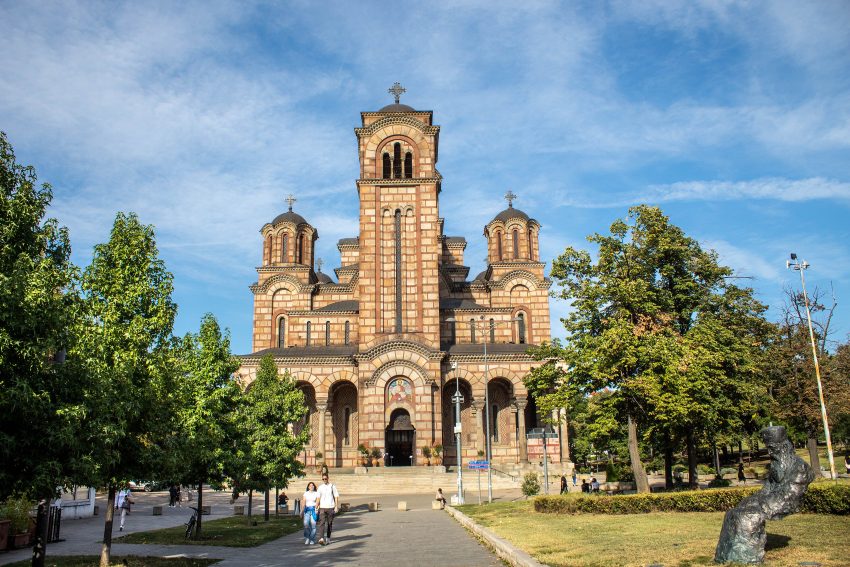
St. Mark’s Church (Crkva Svetog Marka) is a Serbian Orthodox church in Belgrade’s Tašmajdan Park, near the National Assembly, built in a Byzantine-inspired style and largely finished by 1940. It stands on the site of an 1835 wooden church that once sat within a cemetery and held the graves of King Alexander Obrenović I and Queen Draga, killed in the 1903 May Coup. Bombing in 1941 disrupted completion, yet services continued, and the church was consecrated in 1948. Inside, look for the vast Venetian-glass mosaic “Mother of God, Larger than Heaven,” spanning about 130 square meters. Outside, the 2017 park redesign replaced paving with greener terraces and granite slabs, creating a calm, spacious setting.
Location: Bulevar kralja Aleksandra 17, Beograd, Serbia | Hours: Daily: 07:00–19:00. | Price: Free; donations appreciated. | Website | Distance: 0.6km

10. Tašmajdan Park
Tašmajdan Park
Tašmajdan Park
CC BY-SA 3.0 / Nikolai Karaneschev
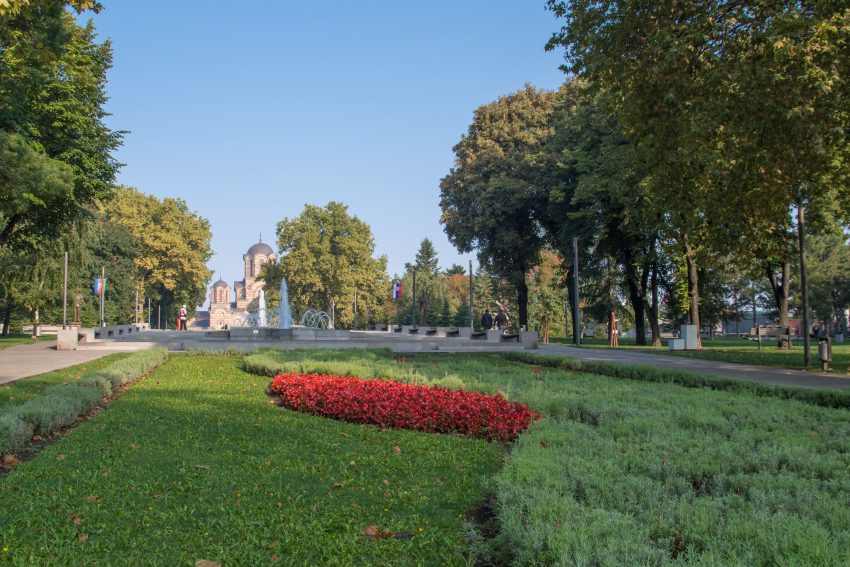
Tašmajdan Park is a central Belgrade green space set at the crossroads of busy boulevards, where the city’s pace softens into shaded paths, benches, and everyday people-watching. Beneath the lawns lies an older Belgrade: the area began as a stone quarry worked since Roman times, and its name comes from Turkish words for “stone” and “mine.” The quarry’s underground spaces were later used as military storage, and local memory also ties the site to the burning of Saint Sava’s relics. Today, visitors notice the Church of Saint Mark on the park’s edge, the small Russian church behind it, chess tables, playgrounds, and the 2018 monument to Patriarch Pavle.
Location: Ilije Garašanina 26, Beograd 11000, Serbia | Hours: 24 Hours. | Price: Free. | Distance: 0.8km

11. Residence of Princess Ljubica
Residence of Princess Ljubica
CC BY-SA 2.0 / Fred Romero
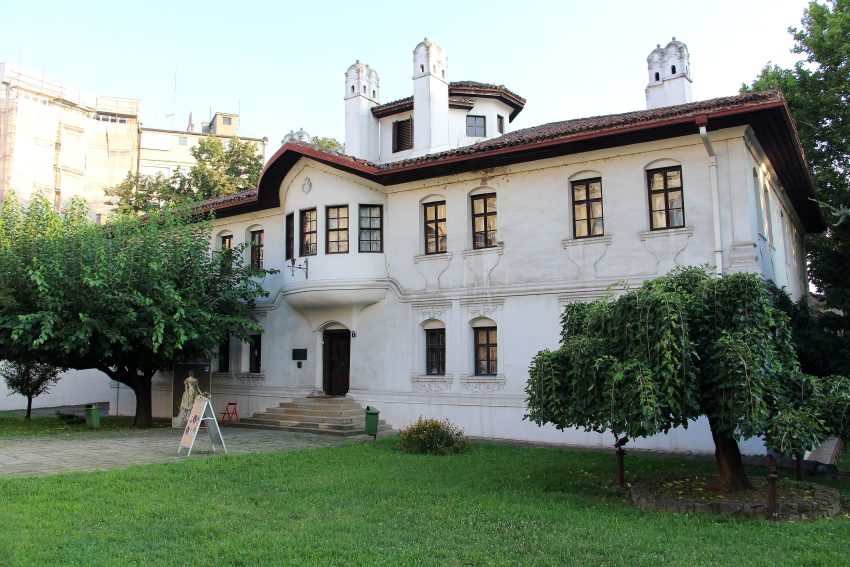
The Residence of Princess Ljubica in Belgrade is an early-19th-century palace-house museum, protected as a Monument of Culture of Exceptional Importance, that captures Serbia’s shift from Ottoman-influenced traditions toward European civic style. Built in 1829–1830 for Prince Miloš Obrenović’s family and overseen by Hadži Nikola Živković, it reads like a lesson in transitional architecture as you move through its rooms. Visitors notice the Serbian-Balkan urban-house form: a rectangular plan, three levels including a vaulted basement, and upper floors combining brickwork with bondruk timber framing. Inside, a central hall organizes the space, with divanhanas for conversation and smoking, while outside a four-sloped roof, an octagonal dome, and multiple chimneys punctuate the silhouette.
Location: Kneza Sime Markovića 8, Beograd 11000, Serbia | Hours: Tuesday: 10:00–17:00. Wednesday: 10:00–17:00. Thursday: 10:00–17:00. Friday: 10:00–18:00. Saturday: 10:00–17:00. Sunday: 10:00–14:00. Closed on Monday. | Price: Ticket: RSD 200; Special categories (pupils, students, unemployed and pensioners): RSD 100. | Website | Distance: 0.9km

12. Kalemegdan Park
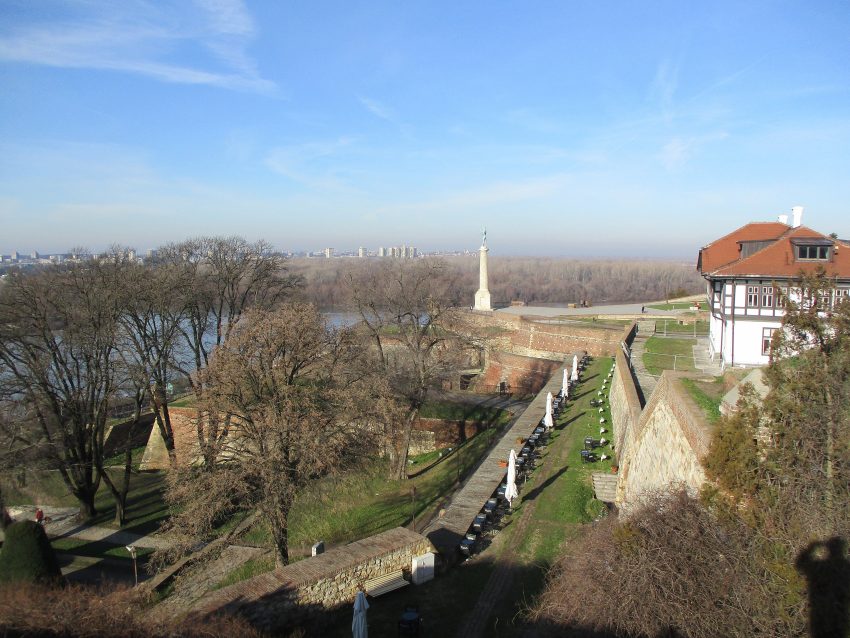
Kalemegdan Park
Kalemegdan Park
CC BY-SA 4.0 / August Dominus
Kalemegdan Park is Belgrade’s hilltop green belt wrapped around the Belgrade Fortress, set above the meeting point of the Sava and Danube. Once a buffer field inside the fortress defenses, it’s now split into Great and Little Kalemegdan, with broad promenades, lawns, and 3,424 trees spanning about 80 species. In Great Kalemegdan you’ll pass geometric walkways and museum buildings, while Little Kalemegdan edges the city with an art pavilion and a rare Ferris wheel first installed in 1964. The most memorable moments come on the ramparts and terraces, where the rivers open out below and the wind makes the height feel real.
Location: Kalemegdan bb, Beograd 11000, Serbia | Hours: 24 Hours. | Price: Free. | Distance: 1.1km

13. Nikola Tesla Museum
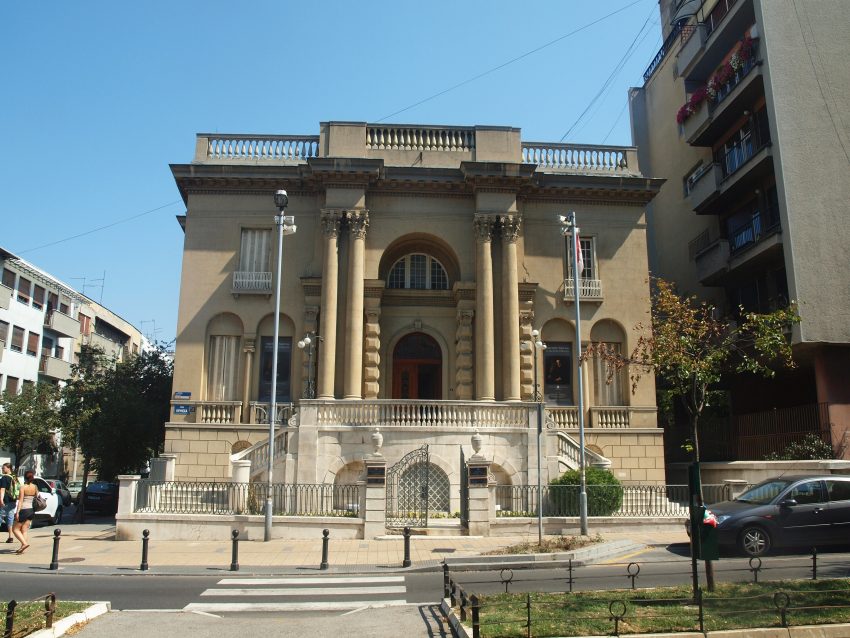
Nikola Tesla Museum
Nikola Tesla Museum
CC BY-SA 3.0 / Rburg87
Belgrade’s Nikola Tesla Museum is a compact science museum housed in a 1927 villa, dedicated to Tesla’s life and work and preserving his personal legacy. It matters not just for the story of alternating-current power and communications, but for the scale of its archive—over 160,000 original documents, alongside technical devices, photographs, and books. Visits begin with a short film and then move through rooms of artifacts before ending with live demonstrations that make Tesla’s ideas feel physical rather than abstract. One of the most memorable details is Tesla’s gilded spherical urn, where his remains are kept. Reviews often note the small size and occasional waiting between hourly tour start times.
Location: Krunska 51, Beograd 11111, Serbia | Hours: Monday: 10:00–18:00. Tuesday – Sunday: 10:00–20:00. | Price: Single ticket (guided tour in English): 800 RSD; Single ticket (guided tour in Serbian): 400 RSD; Group (10+): 500 RSD (English) / 250 RSD (Serbian). Cash in Serbian dinars only. | Website | Distance: 1.1km

14. Bajrakli Mosque
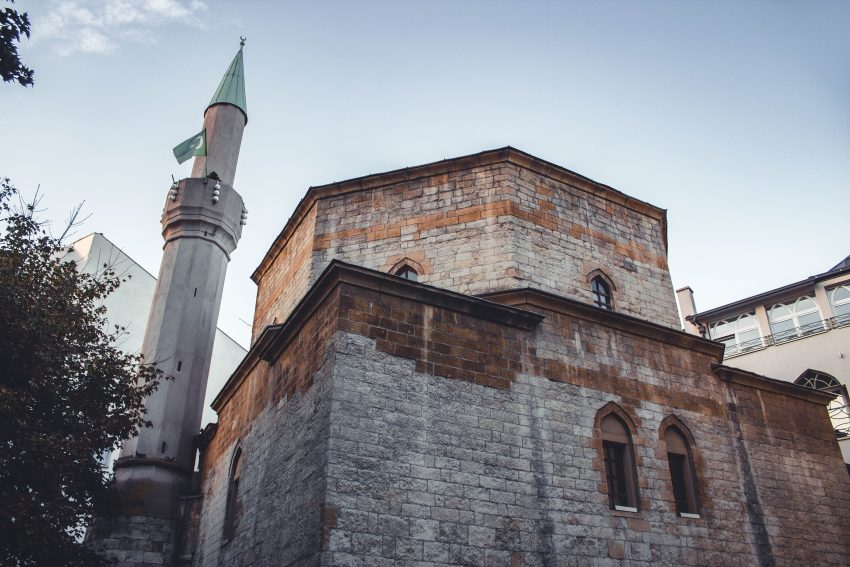
Bajrakli Mosque
Bajrakli Mosque
CC BY-SA 4.0 / Kec_foto
Bajrakli Mosque in Belgrade’s Dorćol (on Gospodar Jevremova Street) is the city’s only active mosque, a rare survivor from the Ottoman period, built around 1575 when hundreds of mosques stood here. The compact, single-story cube is topped by an octagonal dome, with a slender minaret on the northwest corner where the call to prayer traditionally sounded. Inside, visitors notice a quiet, spare prayer hall enlivened by carved panels with Arabic calligraphy, Quranic verses, and restrained floral-geometric motifs rather than lavish ornament. It was briefly turned into a Catholic church during Austrian rule (1717–1739) before returning to Islamic worship, and it remains a protected cultural monument today.
Location: Gospodar-Jevremova 11, Beograd 105402, Serbia | Hours: Check official website. | Price: Check official website. | Distance: 1.1km

15. Gallery of the Natural History Museum
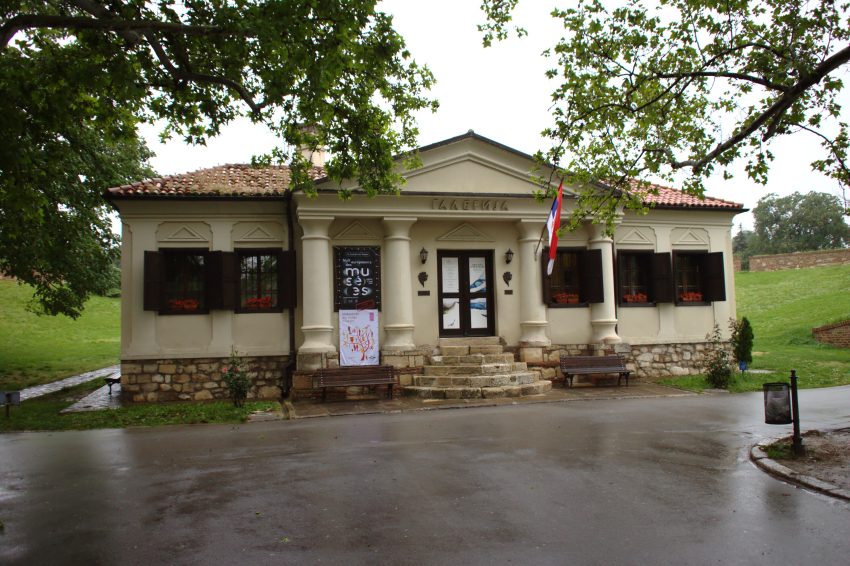
Gallery of the Natural History Museum
CC BY-SA 3.0 / Aktron
Inside Belgrade’s Kalemegdan Fortress complex, the Gallery of the Natural History Museum is the public-facing outpost of Serbia’s only natural history museum, founded in 1895 and recognized as a cultural institution of national importance. It exists in part because the parent museum has long lacked a permanent building, so this small venue keeps its science and collections visible through changing exhibitions. Displays often zoom in on biodiversity with specimen cases and clear thematic storytelling—visitors frequently encounter meticulous insect presentations numbering in the thousands, though some labels may not be in English. The museum’s scope spans geology and biology, shaped in its early years by botanist Josif Pančić and later expanded through a 1972 merger that added forestry-and-hunting collections.
Location: Mali Kalemegdan 5 Belgrade RS, Beograd 11000, Serbia | Hours: (Summer) Tuesday – Sunday: 10:00–21:00; (Winter) Tuesday – Sunday: 10:00–18:00. Closed on Monday. | Price: Adults: 300 RSD; Children (8+): 200 RSD; Family ticket: 350 RSD; Pensioners: 100 RSD. Free: children under 8, students (with ID), and visitors with disabilities with a companion; Thursday 10:00–12:00 free entry for individual visits. | Website | Distance: 1.3km

16. Belgrade Fortress
Belgrade Fortress
Belgrade Fortress
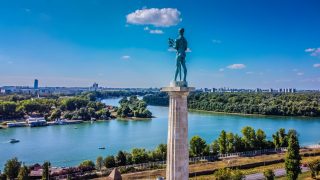
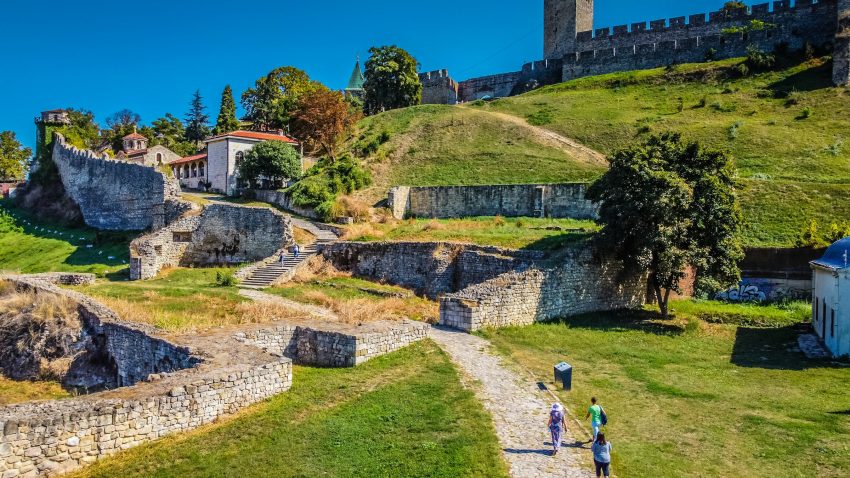
Belgrade Fortress (Kalemegdan) crowns the hill where the Sava meets the Danube, with ramparts and terraces that frame wide views toward Great War Island. It’s the city’s oldest quarter, with traces of a Roman fort built after 100 AD and later rebuilding under Emperor Justinian in 535. The complex mixes a citadel with Kalemegdan Park, so your walk shifts from shaded paths to stone walls, gates, and open overlooks. Look for memorable stops like the Victor statue, the Roman Well, Ruzica Church, and Despot Stefan Tower, plus Ottoman-era details such as Damad Ali Pasha’s turbe. Entry to the grounds is free.
Location: Belgrade 11000, Serbia | Hours: 24 Hours. | Price: Free. | Website | Distance: 1.4km

17. Belgrade Zoo
Belgrade Zoo
Belgrade Zoo
CC BY-SA 3.0 / Micki
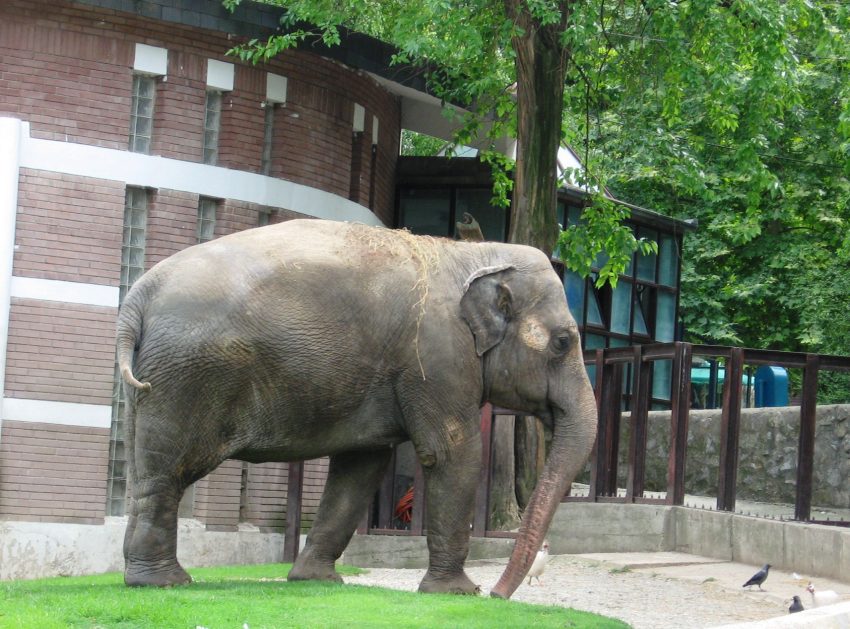
Belgrade Zoo is a central city zoo set inside Kalemegdan Park beside Belgrade Fortress, where the Sava and Danube meet, so your visit feels wrapped in greenery and stone ramparts. Founded in 1936, it covers about 7 hectares and keeps roughly 800 animals across around 210 species, making it Serbia’s largest zoological garden. Visitors often seek out the zoo’s signature white lions (introduced in 2005, with cubs born from 2008), along with white tigers and a white buffalo lineage. There’s also a walk-through petting area with animals like alpacas and pygmy goats, plus a Humboldt penguin habitat added in 2019. Reviews praise the unusual fortress setting and variety, though some travelers note concerns about enclosure conditions.
Location: Mali Kalemegdan 8, Belgrade 11000, Serbia Belgrade RS, Beograd 11000, Serbia | Hours: Daily: 09:00–18:00. | Price: Adults (15+): 700 RSD; Children (3–15): 500 RSD; Under 3: free. | Website | Distance: 1.5km

18. Cathedral of Saint Sava
Cathedral of Saint Sava
CC BY-SA 4.0 / Npps90
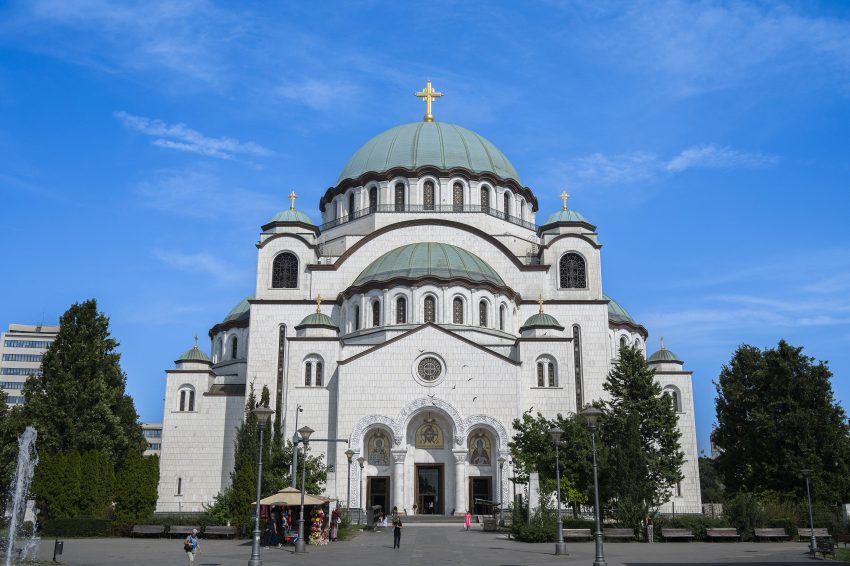
The Cathedral (Temple) of Saint Sava is a monumental Serbian Orthodox church rising on Belgrade’s Vračar plateau, built on the site where the Ottomans burned Saint Sava’s remains in 1594—an act that still shapes its national meaning. Planned from 1894 and begun in 1935, it endured long pauses under war and communist rule before momentum returned, famously marked by a 1985 liturgy attended by more than 100,000 people. Visitors feel the engineering drama in the vast dome: 39.5 meters across, about 4,000 tons, lifted into place in 1989 over 20 days using custom hydraulics. Inside, light pours through the dome and apses onto roughly 130,000 square feet of gold mosaics, leaving many people lingering in near-silence.
Location: Krušedolska 2a, Beograd 11000, Serbia | Hours: Daily: 08:00–20:00. | Price: Free; donations appreciated. | Distance: 1.7km

19. Nebojsa Tower
Nebojsa Tower
Nebojsa Tower
CC BY-SA 3.0 / Goldfinger
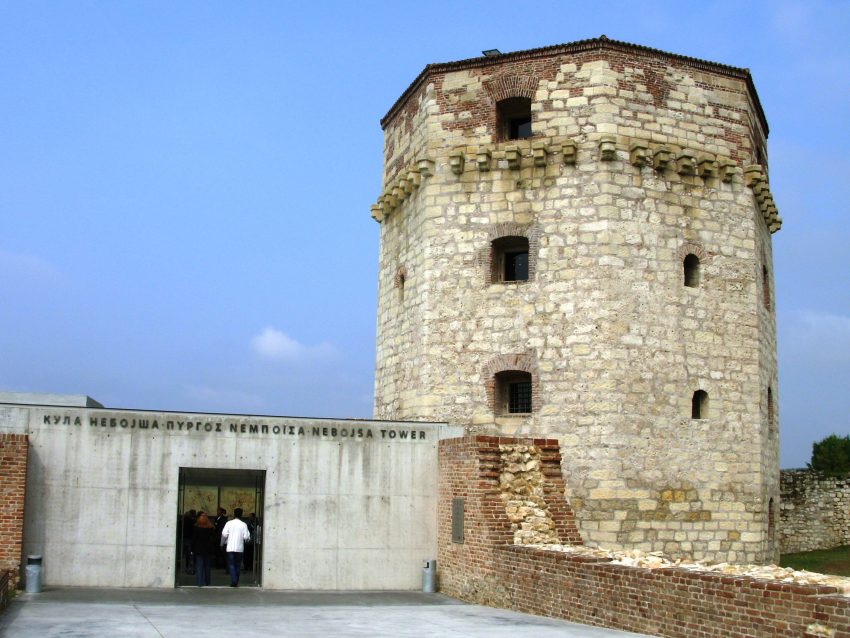
Nebojsa Tower is a stout 15th-century stone tower in the Lower Town of Belgrade Fortress, set close to the riverside where the Sava meets the Danube. Built by the Hungarians as a key defensive point, it later served as a dungeon under Ottoman rule, earning a grim reputation for imprisonments and executions. The tower’s layered past shows in its heavy masonry and narrow openings, and in the altered silhouette after Austrian reconstruction in 1739, when the upper section was lowered and a vaulted floor added. At its base, an arsenal once supported cannon casting, a detail that sharpens the sense of the fortress as a working military machine. Since 2010 it has functioned as a compact museum with exhibits and viewpoints.
Location: Nebojša, Bulevar vojvode Bojovića, Beograd 114412, Serbia | Hours: (Summer) April 15 – October 15; Wednesday – Sunday: 11:00–19:00. (Winter) October 15 – April 15; Wednesday – Sunday: 10:00–17:00. | Price: Single ticket: 200 RSD; Pupils, students, senior citizens: 100 RSD. | Website | Distance: 1.9km

20. Museum of Yugoslavia
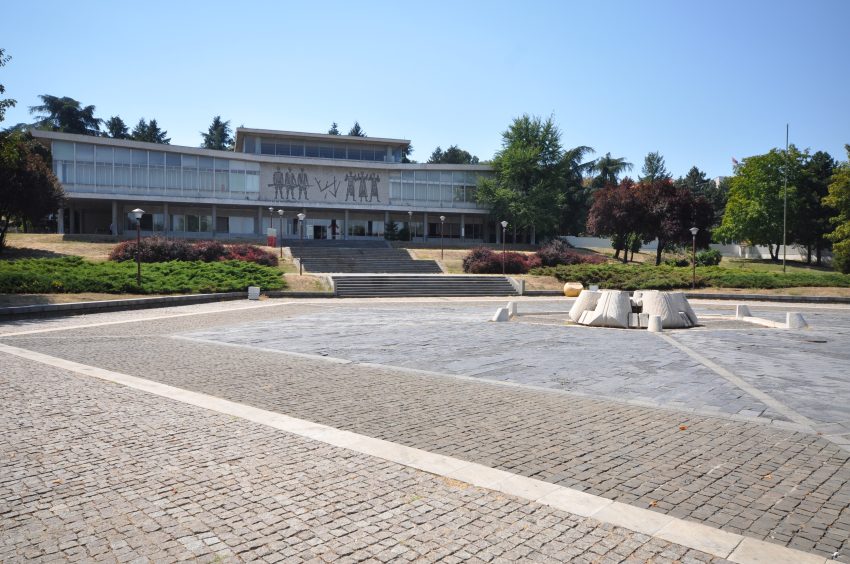
Museum of Yugoslavia
CC BY-SA 2.0 / Jorge Láscar
The Museum of Yugoslavia in Belgrade is a public history museum complex that interprets the Yugoslav idea—from the Kingdom period through Socialist Yugoslavia and its breakup—through material culture and memory. Founded in 1996 (and renamed in 2016), it spreads across three buildings—the 25 May Museum, the Old Museum, and the House of Flowers—set in a 3.2-hectare park. Most visitors begin at the House of Flowers, where Josip Broz Tito is buried, giving the visit the feel of both museum and memorial. Inside, you’ll see dense displays of diplomatic gifts and personal items tied to Tito, alongside exhibitions that frame 20th‑century politics and everyday life. With about 120,000 visitors a year, it’s also Serbia’s most visited museum.
Location: Михаила Мике Јанковића 6, Београд 11000, Serbia | Hours: Tuesday – Sunday: 10:00–18:00. Closed on Monday. | Price: Adults: RSD 800; Residents of Serbia: RSD 600; Students/pupils (Serbia residents): RSD 200; Students/pupils (with proof): RSD 200; Pensioners (Serbia residents): RSD 400. Free admission for select categories/dates (e.g., children under 10, persons with disabilities, first Thursday of each month). | Website | Distance: 2.8km

21. House of Flowers
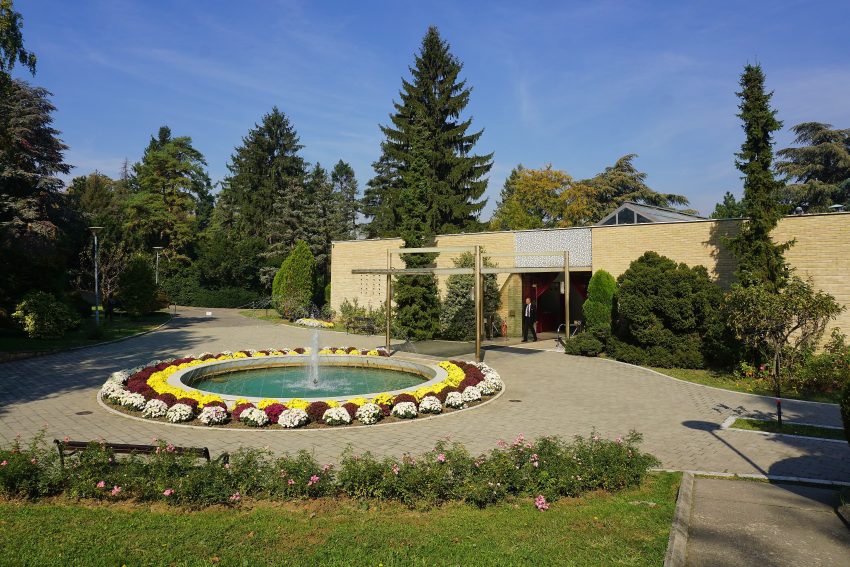
House of Flowers
House of Flowers
CC BY-SA 4.0 / Simon Legner
The House of Flowers (Kuća cveća) in Belgrade’s Dedinje district is a quiet mausoleum and museum within the Museum of Yugoslav History complex, where Josip Broz Tito (1892–1980) and his wife Jovanka Broz (1924–2013) are buried. Built in 1975 by architect Stjepan Kralj as Tito’s winter garden and auxiliary work space, the 902-square-meter building is arranged around a central former flower garden with two long corridors. Visitors notice the calm, greenhouse-like light and the terrace that looks out toward the city. Permanent displays include the post-1957 “Relays of Youth” batons, messages, photos, and rally ephemera, grounding the stillness in everyday artifacts of Yugoslavia’s political culture.
Location: Belgrade, Serbia | Hours: Tuesday – Sunday: 10:00–18:00. Closed on Monday. | Price: Regular price: RSD 800; Residents of the Republic of Serbia: RSD 600; Students and pupils: RSD 400; Students, pupils and pensioners who are residents of the Republic of Serbia: RSD 200. | Website | Distance: 3km

22. Ada Ciganlija Beach
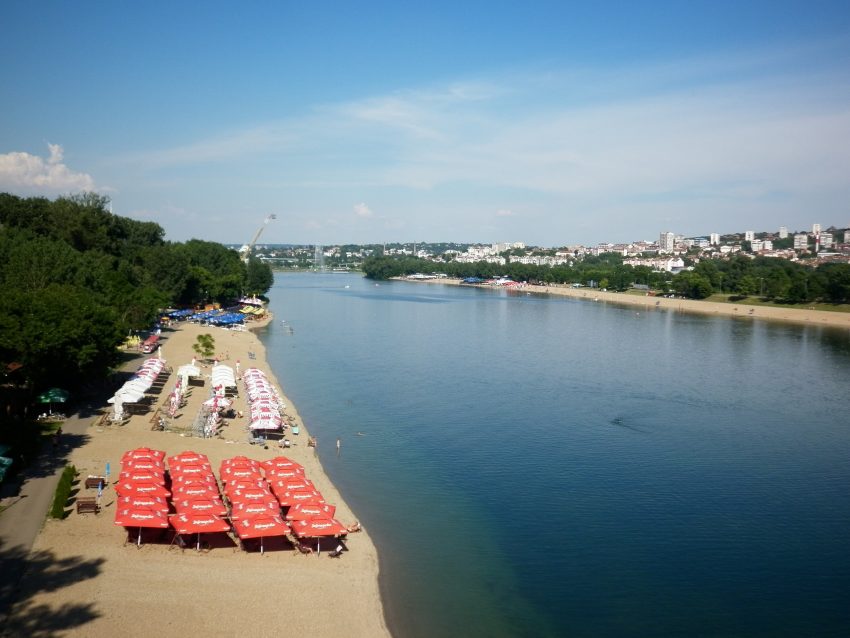
Ada Ciganlija Beach
Ada Ciganlija Beach
CC BY-SA 2.0 / Andrija12345678
Ada Ciganlija Beach is Belgrade’s “city sea”: a long beach and recreation zone wrapped around an elongated former island on the Sava, reshaped into a peninsula and protected as a public good since 1821. The main draw is the broad shoreline along Sava Lake—an artificial lake with clear, well-managed swimming areas—backed by dense deciduous woods, meadows, and a continuous loop path for cycling and running. Visitors notice how activity-focused it feels, with dozens of outdoor courts plus on-water sports like kayaking and windsurfing. Look for small surprises such as the night-lit lake fountain and the “Stone Town” sculpture group near the entrance, and keep an eye out for waterbirds and even deer in quieter stretches.
Location: Ada Ciganlija, ada ciganlija, Ada Ciganlija, Beograd 11000, Serbia | Hours: 24 Hours. | Price: Free. | Distance: 5km

23. Homeland Museum of Zemun
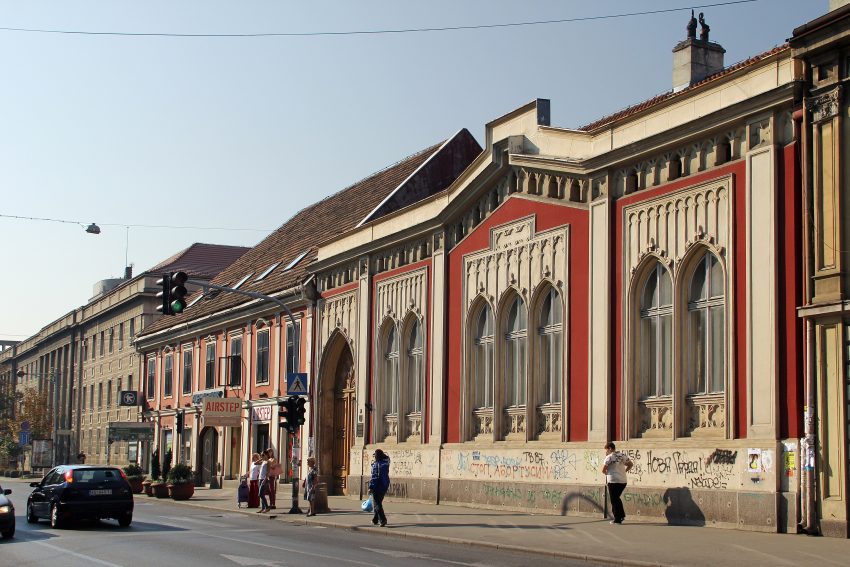
Homeland Museum of Zemun
CC BY-SA 4.0 / BrankaVV
The Homeland Museum of Zemun (Zavičajni muzej Zemuna) is a local-history museum in Belgrade’s Zemun district, housed in the Spirta House on Glavna Street. Founded in 1955 and moved here in 1971, it’s as much about the building as the displays: the 1848 townhouse is a protected cultural monument and the wider Belgrade area’s only preserved example of Gothic Revival, with distinctive neo-Gothic flourishes such as flamboyant window forms. Inside, the setting evokes a high-status merchant home—one of the first high-floored family houses in Zemun’s old core—grounding the neighborhood’s separate identity. Note that the museum has faced long closures since a 2002 reconstruction, with only occasional temporary exhibitions.
Location: Glavna 9, Beograd, Serbia | Hours: Check official website. | Price: Check official website. | Website | Distance: 5.1km

24. City Hall
City Hall
City Hall
CC BY-SA 3.0 / Nicolo
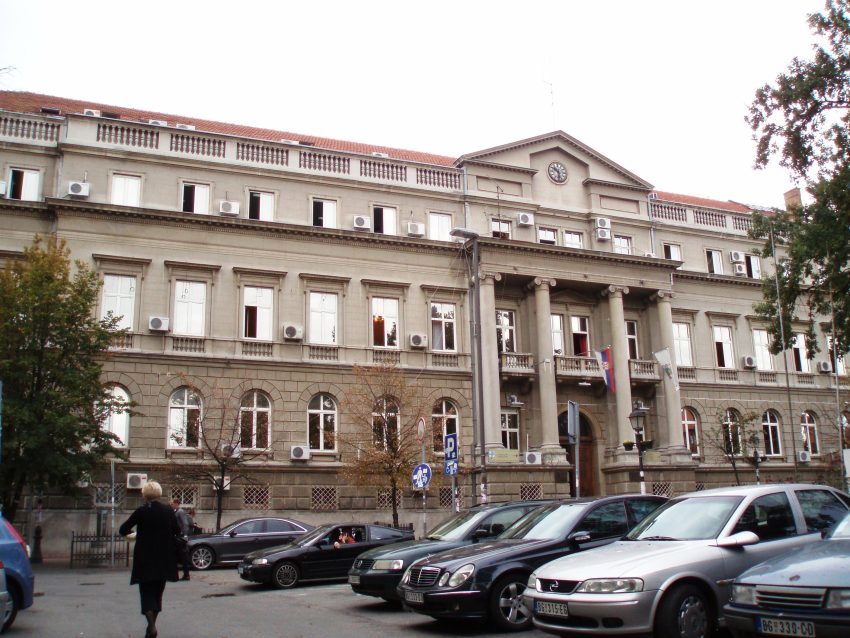
Belgrade’s City Hall in Zemun Opština is a three-story Neo-Classical administrative building dating to 1886, with a sturdy, formal presence that reflects late-19th-century civic ambition. It was heavily damaged in World War II, then carefully restored, including the addition of a new wing and extra architectural details that subtly shift its original symmetry. What visitors remember most is the contrast between its austere façade and the everyday energy below, as it looks out over the busy Zemun street market. In the city center, Belgrade’s City Hall is also associated with Stari Dvor (the Old Palace), where the ceremonial entrance and surrounding government ensemble give a quick sense of how public life is staged in the capital.
Location: Dragoslava Jovanovića 2, Beograd 11000, Serbia | Hours: Monday – Friday: 07:30–15:30. | Price: Free. | Website | Distance: 5.1km

25. Franciscan Monastery of Saint John the Baptist and Saint Anthony
Franciscan Monastery of Saint John the Baptist and Saint Anthony
CC BY-SA 4.0 / Andrija12345678
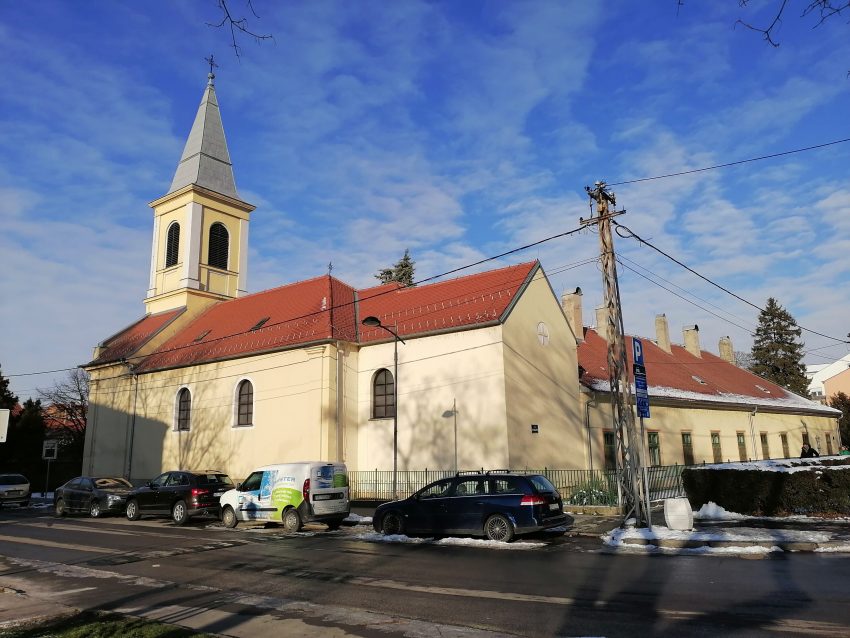
The Franciscan Monastery of Saint John the Baptist and Saint Anthony in Belgrade’s Zemun is the city’s only Franciscan monastery, founded in 1717 and still a working religious complex. Its story is one of survival: after repeated damage and burnings, it was substantially rebuilt in 1807, and a tower was added in 1838. Inside, visitors tend to remember the restrained, quiet atmosphere—simple sacred rooms and a courtyard that feels removed from traffic. Look for the Franciscan cross that has stood here since the 18th century, and note that the monastery and adjoining church are protected cultural monuments. With only a handful of Google reviews (4.5/5), it remains a low-key stop.
Location: Štrosmajerova 6, Beograd, Serbia | Hours: Check official website. | Price: Free; donations appreciated. | Distance: 5.2km

26. Beli Dvor
Beli Dvor
Beli Dvor
CC BY-SA 2.0 / Fred Romero
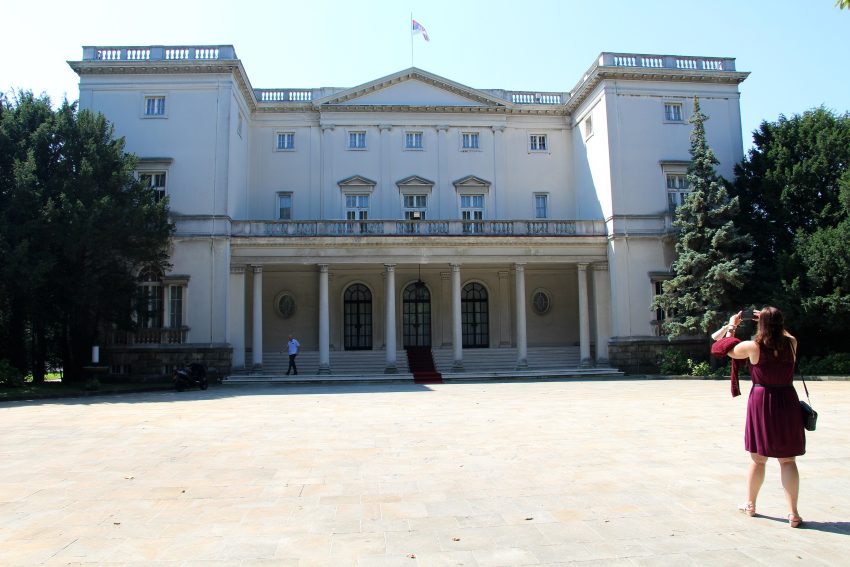
Beli Dvor (the White Palace) in Belgrade’s Dedinje Royal Compound is a neo-Palladian residence built for the Karađorđević dynasty and completed in 1937 under Prince Regent Paul, after King Alexander I’s assassination. Its white plaster façades, stone detailing, and Doric portico set a crisp, English-country-house tone inspired by estates like Ditchley Park. Inside, visitors remember the curated mix of English Georgian and 19th-century Russian antiques assembled by Maison Jansen, plus period rooms such as a Chippendale dining room and Louis XV/XVI-style salons. The library—said to hold around 35,000 books—adds a lived-in grandeur that feels more private than museum-like.
Location: The Royal Palace, Bulevar kneza Aleksandra Karađorđevića 96, Beograd 11040, Serbia | Hours: Check official website. | Price: 1,500 RSD (guided tour; may include transport). | Website | Distance: 5.2km

27. House with the Sundial
House with the Sundial
CC BY-SA 4.0 / BrankaVV
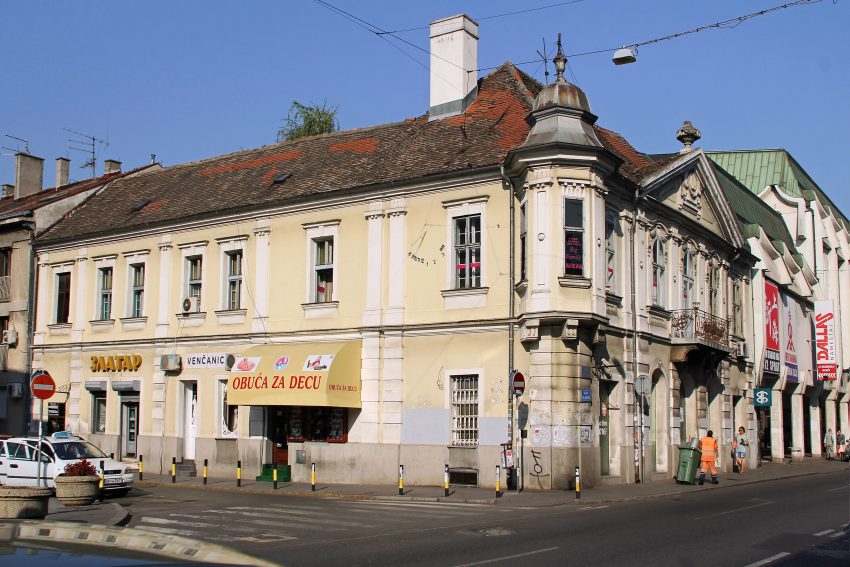
The House with the Sundial is a protected 19th-century corner mansion in Zemun, Belgrade, set where Glavna and Dubrovačka streets meet, and it’s remembered for the working sundial embedded on the Dubrovačka-facing facade. Built in 1823 and marked with the sun clock in 1828, the brick building mixes Classical lines with Baroque flourishes, including a small bell cupola and decorative plasterwork. The dial reads solar time for a short daily window—roughly 8 a.m. to 3 p.m.—and includes an unusual set of figures tied to Serbian astronomical lore. Look for the anchor crest, a nod to the founder’s maritime trade, and the prominent corner bay that makes it easy to spot.
Location: Cara Dušana 10, Beograd 11000, Serbia | Hours: 24 Hours. | Price: Free. | Distance: 5.3km

28. Gospodska Street
Gospodska Street
Gospodska Street
CC BY-SA 4.0 / Miomir Magdevski
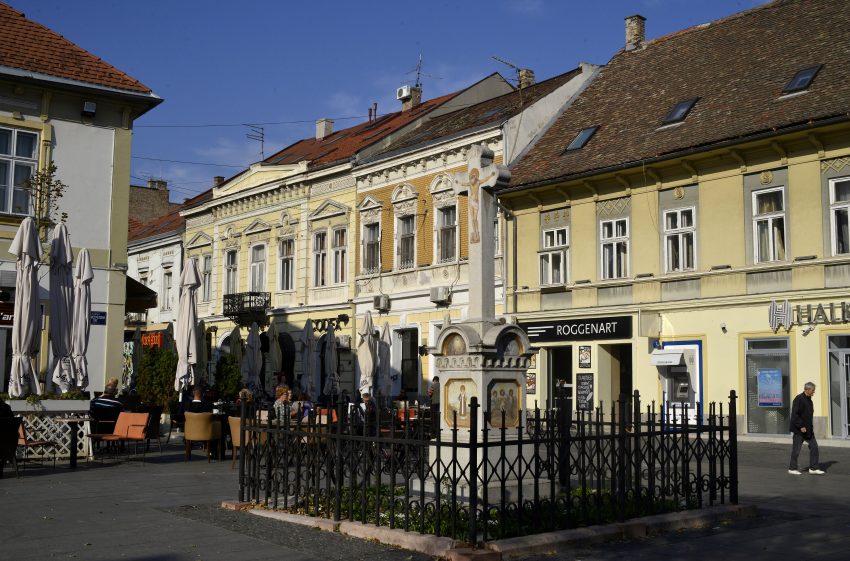
Gospodska Street is Zemun’s pedestrian shopping spine in Belgrade, a compact corridor where daily life plays out between boutiques, small shops, and tightly packed sidewalk cafés. What makes it matter is how clearly it shows Zemun’s Central European scale and mood, with historic façades and architectural monuments lining the walk. Pause by the Zavetni Cross, a victory memorial erected in 1863 by Lazar Urošević, which locals still pass as a familiar marker. The street also carries memories of the old Balkan Hotel, whose café and courtyard once hosted a Serbian reading room and drew writers like Petar Kočić. Come for coffee, pastries, and unhurried people-watching.
Location: Gospodska, Beograd, Serbia | Hours: 24 Hours. | Price: Free. | Distance: 5.3km

29. Veliki Trg and Market
Veliki Trg and Market
CC BY-SA 4.0 / Dekanski
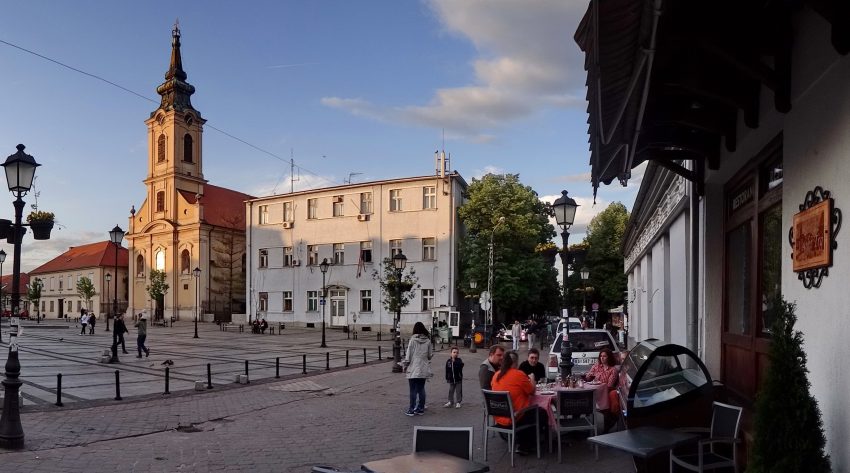
Veliki Trg and the Zemun Market are the neighborhood’s central square and open-air market, a long-running civic meeting point where shopping, coffee, and street life overlap. The square’s layout took shape in the late 1700s after a Catholic church was removed and new buildings such as the City School and parish offices went up, and today it still hosts outdoor film nights, music and art performances, and community gatherings. Around the edges, restaurants and cafés spill tables onto the paving, so it feels lived-in from morning to late evening. The restored market is known for affordable local produce—especially fruit, vegetables, and fish—and it also doubles as a flea market where you might spot odd 20th‑century finds.
Location: Gospodska 18, Beograd 11000, Serbia | Hours: Daily: 06:00–19:00. | Price: Free. | Distance: 5.3km

30. Catholic Church of the Assumption of the Blessed Virgin Mary
Catholic Church of the Assumption of the Blessed Virgin Mary
CC BY-SA 3.0 / Mister No
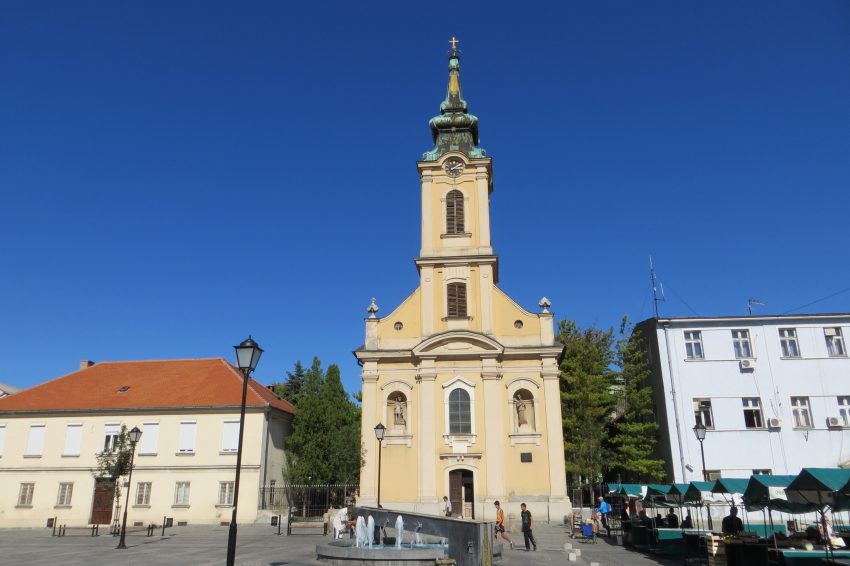
The Catholic Church of the Assumption of the Blessed Virgin Mary is a Roman Catholic parish church on Veliki Trg in Zemun, Belgrade, built in 1795 on the site of a former 16th-century mosque demolished in 1784 during Austro-Hungarian rule. Its Empire-and-Baroque mix and calm, symmetrical exterior make it easy to pick out from Zemun’s viewpoints, and it stands right beside the busy outdoor market. Inside, visitors remember the Baroque ebony statue of the Black Virgin, along with figures of Saints Peter and Paul, and the unusual east-facing altar. Near the church grows a thorny gleditsia tree brought from Jerusalem when the foundation stone was laid, a living symbol tied to the crown of thorns.
Location: Veliki trg 4, 11080, Beograd, Serbia | Hours: Sunday: 08:00–10:00 & 18:00–19:00. | Price: Free; donations appreciated. | Website | Distance: 5.3km

31. Saint Nicholas Church
Saint Nicholas Church
CC BY-SA 4.0 / Bascarevic
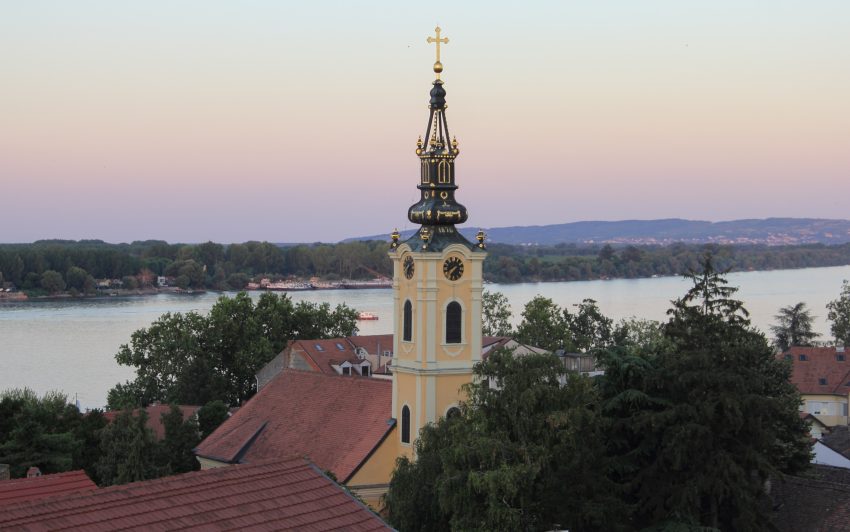
Saint Nicholas Church (Nikolajevska) is a Serbian Orthodox Baroque church in Zemun, Belgrade, and the oldest preserved sacred building in the wider Belgrade area. Built between 1745 and 1752 on the site of an earlier wooden temple, it’s a single-nave space with a barrel-vaulted ceiling and a rebuilt two-story belfry on the west side after an 1867 fire. Inside, visitors linger over the towering carved iconostasis by Aksentije Marković, with icons painted in 1762 by Dimitrije Bačević, plus murals by Živko Petrović and a treasury of 18th–19th century icons and relics. Many people describe the atmosphere as quietly restorative, more lived-in parish calm than spectacle.
Location: Vuka Karadžića 2, Beograd 11211, Serbia | Hours: Check official website. | Price: Free; donations appreciated. | Distance: 5.5km

32. Ičko's House
Ičko’s House
Ičko’s House
CC BY-SA 4.0 / BrankaVV
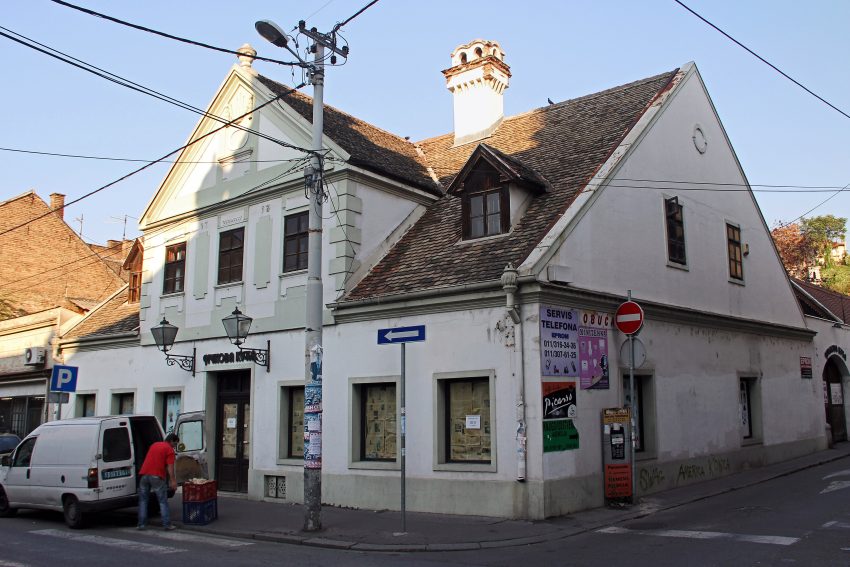
Ičko’s House is a protected cultural monument in Zemun, Belgrade, a late-18th-century townhouse built in 1793 on Bežanijska Street. Its Classical proportions are still easy to read from the street: a basement and ground floor topped by a steep gable roof with dormers, plus a partial upper level tucked beneath it. The building is named for Petar Ičko, a trader-diplomat who stayed here in 1802–1803 after fleeing Belgrade and later helped set the stage for the First Serbian Uprising. In its early life, the ground floor held the “Marko Kraljević” tavern, with living quarters above and a working yard behind. Revitalized in the 1980s, it’s now in everyday commercial use.
Location: Ičkova kuća, Beograd, Serbia | Hours: Check official website. | Price: Check official website. | Distance: 5.5km

33. White Bear Tavern
White Bear Tavern
White Bear Tavern
CC BY-SA 4.0 / Intermedichbo - Dr Milorad Dimić, Serbia
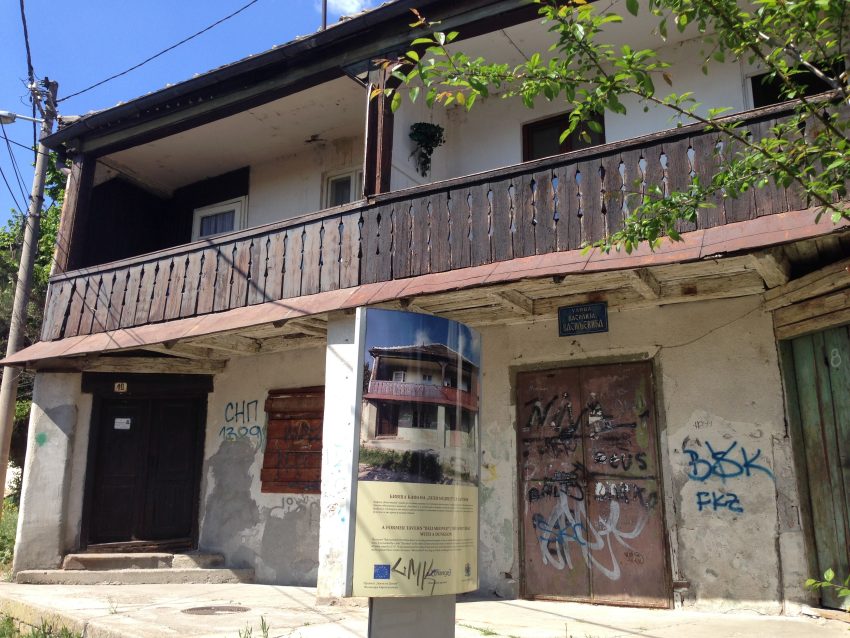
White Bear Tavern (Beli medved) in Belgrade’s Zemun district is a former kafana housed in what’s often cited as the city’s oldest surviving building outside the fortress, first recorded in 1658 by French traveler Michel Quiclet. Dating to the early 17th century Ottoman period, the modest one-story house preserves Balkan bondruk construction—timber framing packed with unbaked brick—now rare in Zemun’s old core. In 1717, Prince Eugene of Savoy reportedly stayed here while preparing for the siege of Belgrade, adding a striking footnote to its everyday inn-and-home past. Look for the timeworn façade and imagine the lagums below: underground corridors once cooled with Danube ice, one still used as a constant-temperature pantry. In 2023 it was declared a protected cultural monument.
Location: Belgrade, Serbia | Hours: Check official website. | Price: Free. | Distance: 5.6km

34. Gardoš Tower
Gardoš Tower
Gardoš Tower
CC BY-SA 4.0 / Petar Milošević
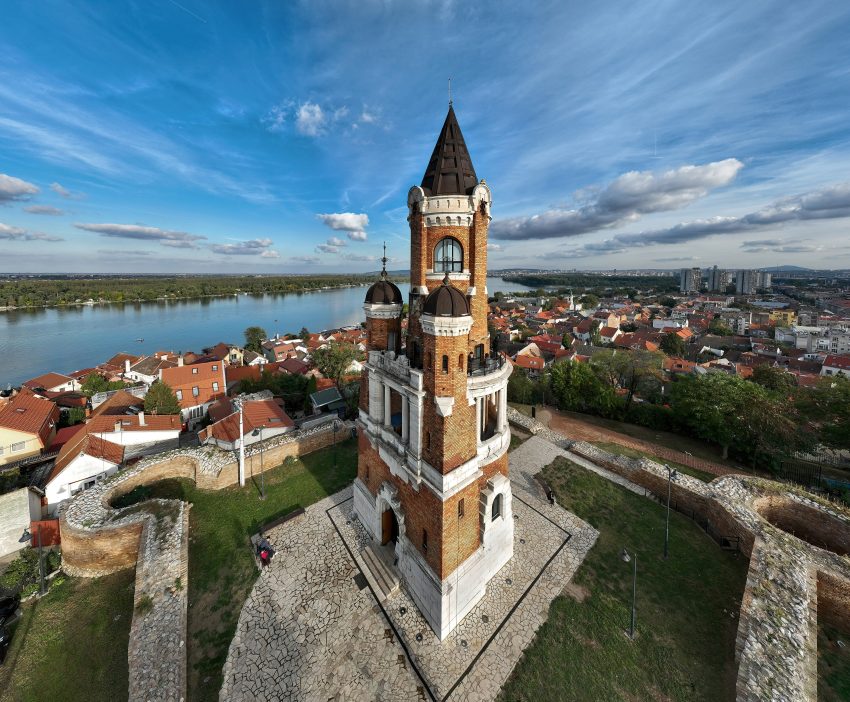
Gardoš Tower (the Millennium Tower) rises on Gardoš Hill above Zemun, a 36‑meter monument built in 1896 to mark 1,000 years of Hungarian settlement in the Pannonian plain. Set among the remnants of a medieval fortress, it was the southernmost of a wider Austro‑Hungarian millennium project, and its sturdy mix of sandstone and custom hollow bricks gives it a fortress-like feel. Inside, thick walls squeeze the interior from an 18‑meter base to a much tighter core as you climb. At the top, the reward is a broad sweep over the Danube, the quay, and Belgrade’s skyline. A lone surviving lion sculpture hints at the tower’s lost decorative program.
Location: Kula na Gardošu, Stairs, Beograd, Serbia | Hours: Daily: 09:00–18:00. | Price: Check official website. | Distance: 5.7km

35. Zemun Cemetery
Zemun Cemetery
Zemun Cemetery
CC BY-SA 1.0 / Александр Сигачёв
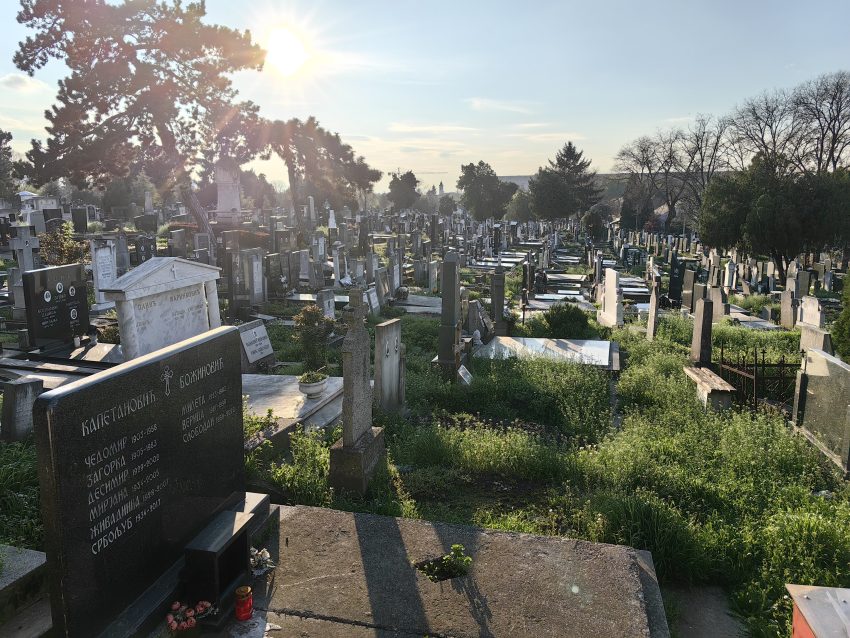
Zemun Cemetery is a working hillside cemetery in Belgrade’s Zemun district, protected as a cultural monument and shaped by the town’s borderland past under shifting empires. Established after 1717 in the Austrian period, it grew from a Catholic burial ground to include Orthodox plots and a Jewish cemetery in use since 1739, one of Serbia’s oldest. Walking its lanes feels like reading an open-air archive: inscriptions change by language and faith, and memorials range from simple votive stones to sculptural graves. Look for the endowment church of Saint Demetrios (1876), the Spirta family chapel (c. 1911), and a monument to Serbian soldiers from 1914–1918.
Location: Zemunsko Groblje, Sibinjanin Janka, Beograd, Serbia | Hours: (Summer) April 1 – September 30; (Winter) October 1 – March 31. (Summer) Daily: 07:00–19:00. (Winter) Daily: 07:00–18:00. | Price: Free. | Website | Distance: 5.8km

Best Day Trips from Belgrade

A day trip from Belgrade offers the perfect opportunity to escape the urban rhythm and discover the surrounding region's charm. Whether you're drawn to scenic countryside, historic villages, or cultural landmarks, the area around Belgrade provides a variety of easy-to-reach destinations ideal for a one-day itinerary.

1. Novi Sad
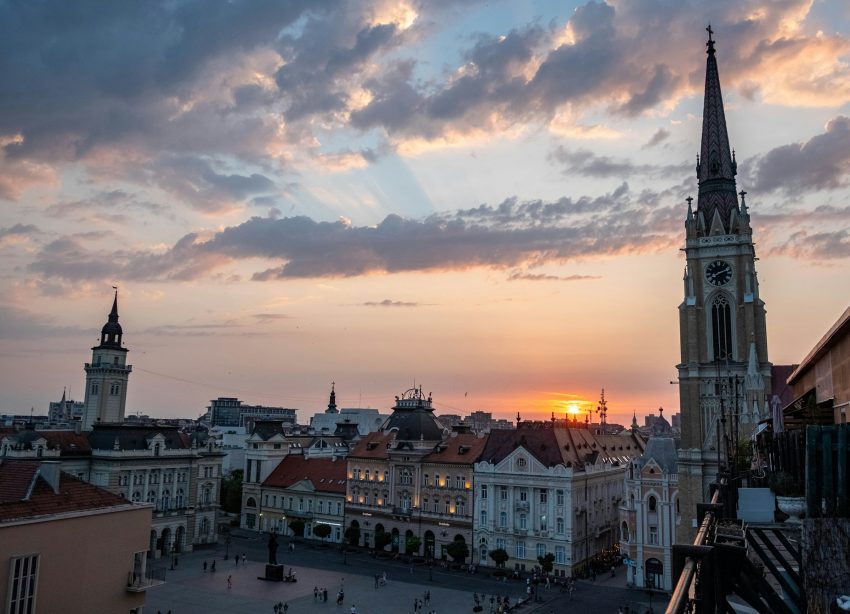
The Complete Guide to Novi Sad
Novi Sad is a relaxed, walkable city on the Danube in northern Serbia’s Vojvodina region, known for its café culture, riverfront promenades, and an easygoing pace that makes it ideal for a long weekend. The historic center is compact and lively, with pedestrian streets, pastel façades, and plenty of terraces for coffee, local wines, and hearty Vojvodina cuisine. It’s also…
Visiting Novi Sad
Powered by GetYourGuide

2. Golubac Fortress

Golubac Fortress
Golubac Fortress
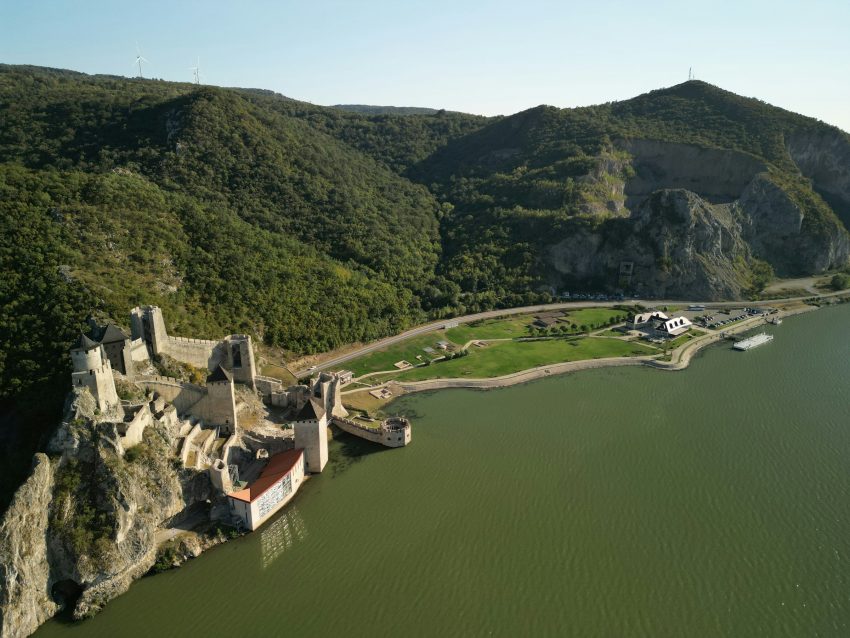
Golubac Fortress sits on the right bank of the Danube in eastern Serbia, dramatically placed where the river narrows and the landscape starts to feel wilder and more rugged. It is a restored medieval fortress with towers, walls, lookout points, and a visitor complex, and it is easily one of the best places to visit in this part of the…
Location: Golubac Fortress, Ридан, Golubac, Serbia | Hours: April: Tuesday – Sunday: 10:00–16:00. Closed on Mondays. | Price: Adult tickets start from 900 RSD; seniors 500 RSD; students and school groups 350 RSD; children aged 7 – 18 pay 250 RSD; children under 7 enter free. Ticket prices vary by visit type and access zone, and parking is included. | Website | Distance: 97.6km
Visiting Golubac Fortress
Powered by GetYourGuide

3. Manasija Monastery

Manasija Monastery
Manasija Monastery
CC BY-SA 4.0 / Ivanbuki
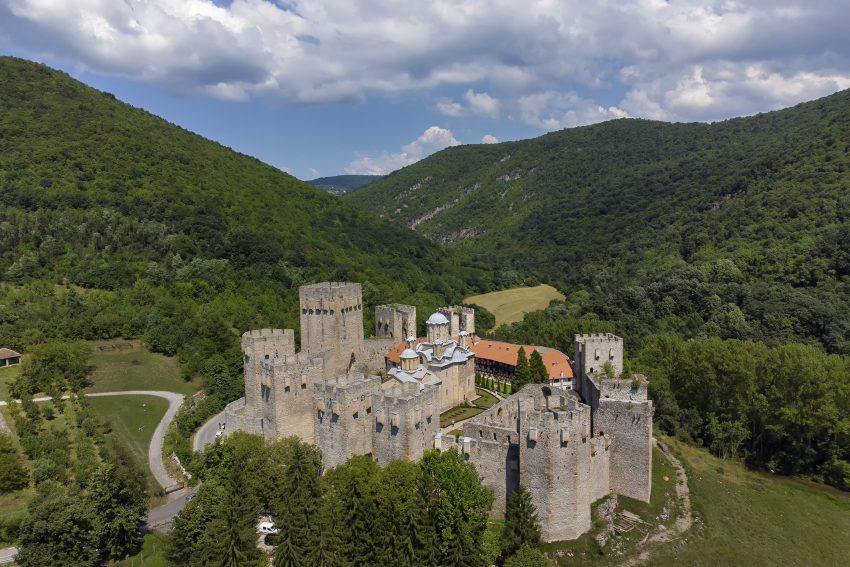
Manasija Monastery is one of the most impressive religious and historical sights in Serbia, set in the Resava gorge near Despotovac and wrapped in mighty stone walls that make it feel more like a fortress than a typical monastery. Founded by Despot Stefan Lazarević in the early 15th century, it is both a living Orthodox monastery and one of the…
Location: Manasija Monastery, Despota Stefana Lazarevića, Despotovac, Serbia | Hours: Daily: 09:00–18:00. | Price: Free. | Distance: 112.5km
Visiting Manasija Monastery
Powered by GetYourGuide

4. Zlatibor

Zlatibor Dobroselica Landscape
CC BY-SA 4.0 / Marko Randjic
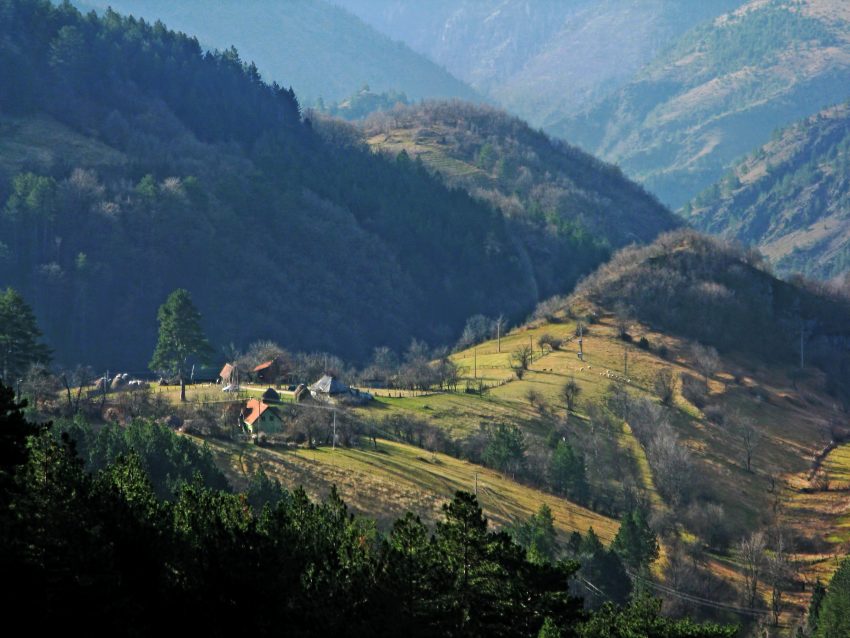
Zlatibor is not a single monument but a broad mountain resort area in western Serbia, known for its clean air, open meadows, pine-covered slopes, and easy mix of nature, leisure, and family attractions. It works well both as a relaxing base for a few slow days and as one of the best places to visit in Serbia if you want…
Location: Zlatibor, Serbia | Hours: Open year-round. | Price: Free to visit; individual attractions and activities charge separately. | Website | Distance: 134.8km
Visiting Zlatibor

Where to Stay in Belgrade

For first-time visitors, staying in Stari Grad (Old Town) puts you close to Knez Mihailova, Kalemegdan, museums, and many restaurants, making it easy to explore on foot day and night. A strong choice here is Courtyard by Marriott Belgrade City Center, which is central, reliable, and convenient for short stays where you want to maximize sightseeing time. Another well-located option is Hotel Moskva, a landmark property with classic character that suits travelers who want a sense of place right in the city’s core.

If you want a trendier, café-and-design focused base with great dining and nightlife nearby, Dorćol is ideal—still walkable to the center but with a more local, creative feel. Consider Mama Shelter Belgrade, which pairs a lively social atmosphere with an unbeatable central position, making it especially good for couples and friends who plan to be out late.

For a more polished business-and-riverfront vibe, New Belgrade (Novi Beograd) offers modern hotels, easier parking, and quick access to the airport, while still being a short ride from the old town. Hyatt Regency Belgrade is a dependable upscale option with strong amenities, and Crowne Plaza Belgrade works well if you want comfort, space, and straightforward transport links without being in the busiest streets.

Using the our Hotel and Accomodation map, you can compare hotels and short-term rental accommodations in Belgrade. Simply insert your travel dates and group size, and you’ll see the best deals for your stay.

Belgrade Accommodation Map

How to get to Belgrade

Getting to Belgrade by air

Nearest airports: Belgrade Nikola Tesla Airport (BEG) is the main gateway.

Airport to city: Use airport bus/shuttle services, city buses, or taxis/ride-hailing to reach central areas. Travel times vary by traffic, but the route is straightforward.

Getting to Belgrade by train

Main rail station area: Long-distance services use Belgrade’s central rail infrastructure, with connections that can vary by season and timetable.

Train operators (useful links): Serbian Railways (Srbija Voz): https://www.srbvoz.rs/en/ ; Hungarian Railways (MÁV): https://www.mavcsoport.hu/en ; Croatian Railways (HŽPP): https://www.hzpp.hr/en ; Austrian Federal Railways (ÖBB): https://www.oebb.at/en

Getting to Belgrade by Car

Driving routes: Belgrade is well connected by major highways, making it practical for road trips from neighboring countries. Expect heavier traffic at peak hours, and plan for paid parking or garage use in central districts.

Parking tips: Use public garages or designated parking zones, and check local payment rules and time limits to avoid fines.

Travelling around Belgrade

Public transport: Buses, trams, and trolleybuses cover most areas visitors use, and are generally the most efficient way to move between neighborhoods.

Taxis and ride-hailing: Widely available and useful at night or for point-to-point trips; confirm pricing practices before starting a ride.

On foot and by bike: Central areas are walkable, and riverside paths are great for cycling and long strolls, especially in warmer months.

More from this area