Self-Guided Walking Tour of Aarhus (2026)
This website uses affiliate links which earn a small commission at no additional cost to you.
Aarhus is compact, walkable, and layered: a city where medieval street patterns, a working harbor, and contemporary Danish design sit within an easy stroll of each other. This self-guided route is designed to give you a strong sense of place quickly, combining landmark highlights with small details that make the city feel lived-in-courtyards, side streets, and viewpoints that you might otherwise miss if you only hop between the headline attractions.
The walk naturally threads together the city’s main neighborhoods and “chapters,” so you can pace it to suit your day. You can do it as a single continuous loop, or break it into sections with a café stop, a museum visit, or time by the water. It’s particularly well suited to travelers who want structure without a guide-clear direction, but plenty of flexibility to linger when something catches your attention.
Most importantly, it focuses on the best things to see in Aarhus without turning the experience into a checklist. Expect a balanced mix of history, culture, and waterfront atmosphere, with opportunities to detour into galleries, markets, and local eateries along the way. By the end, you should feel you've seen the city's essentials and understood how Aarhus fits together, both on the map and in everyday life.
How to Get to Aarhus
By Air: Aarhus is served by Aarhus Airport (AAR), located northeast of the city, and Billund Airport (BLL), which often offers a wider range of international routes and can be a practical alternative for many travelers. From Aarhus Airport you typically connect onward by airport bus or a combination of bus and local transport into the city center, while from Billund you can reach Aarhus by direct coach services or by linking into the Danish rail network via nearby stations. If you are arriving from abroad, compare total travel time door-to-door (flight plus transfer), as a cheaper flight can sometimes mean a longer ground connection. For the best deals and a seamless booking experience, check out these flights to Aarhus on Booking.com.
By Train: Aarhus is one of Denmark's main rail hubs, with frequent services linking it to Copenhagen and major cities across Jutland, plus convenient connections from airports and border routes via interchange stations. Trains arrive at Aarhus H (Aarhus Central Station), which is walkable to much of the inner city and well connected to local buses and the light rail for onward travel. For planning and tickets, use DSB (Danish State Railways) and check Rejseplanen for door-to-door public transport routing across Denmark. Train schedules and bookings can be found on Omio.
By Car: Driving to Aarhus is straightforward via Denmark's motorway network, with good access from both northern and southern Jutland and clear signage into the city. The main consideration is parking: the center has controlled zones and paid facilities, so many visitors find it easiest to use central parking garages or park-and-ride options and then continue on foot or by public transport. If you are road-tripping, aim to arrive outside peak commuter hours and confirm your accommodation's parking arrangements in advance, as rules and fees can vary by area.
By Bus: Long-distance coaches can be a cost-effective way to reach Aarhus, particularly from other Danish cities and some cross-border routes, and they typically arrive close to the central station area for easy onward connections. Timetables and operators vary by season and route, so it is worth checking journey duration and luggage policies before booking, especially if you are traveling at weekends or during major events.
Where to Stay in Aarhus
To make the most of visiting Aarhus and this walking tour then you consider staying overnight in the centre. The most convenient base is the Latin Quarter and the core around the cathedral and main shopping streets, because you can step straight into the route, do early-morning sights before day-trippers arrive, and finish the day with restaurants and bars within easy walking distance. Good, walkable picks here include Boutique Hotel Villa Provence and Hotel Royal, both well placed for the historic streets and harbour edge, along with Radisson Blu Scandinavia Hotel, Aarhus for a classic full-service option close to the station and many of the city’s major sights.
If you want an easy arrival and departure with minimal logistics, the area around Aarhus Central Station and Rådhuspladsen is a practical choice that still keeps you within a short walk of the old town lanes, the waterfront, and museums. It's particularly strong if you are arriving by train or planning day trips, and it tends to suit travelers who value efficient access over maximum “old streets” atmosphere. Consider Comwell Aarhus for modern comfort near the station, or Scandic Aarhus City for a central base that makes it simple to start the walking tour in either direction.
For a quieter feel with a local, residential edge-while still staying close enough to walk or use quick public transport-look at Frederiksbjerg or the harbourfront/Aarhus Ø side, depending on whether you prefer leafy streets and cafés or newer waterfront architecture and views. Frederiksbjerg works well if you like a calmer evening scene and easy access to parks, while the waterfront suits travelers who want a more contemporary Aarhus feel and quick access back into the centre. Options worth considering include Wakeup Aarhus for a simpler, good-value base near the station and Frederiksbjerg, and CABINN Aarhus if you want a budget-friendly spot that keeps you close to both the centre and the harbour.
Your Self-Guided Walking Tour of Aarhus
Discover Aarhus on foot with our walking tour map guiding you between each stop as you explore its historic Latin Quarter, lively pedestrian streets, waterfront promenades, and landmark museums. This walking tour traces the city's evolution from a medieval cathedral town to one of Denmark's most creative cultural hubs, linking atmospheric old lanes, modern harbour architecture, and standout galleries and food halls, so you experience both the classic highlights and the local rhythms that make Aarhus such a rewarding city to walk.
1. Aarhus Custom House
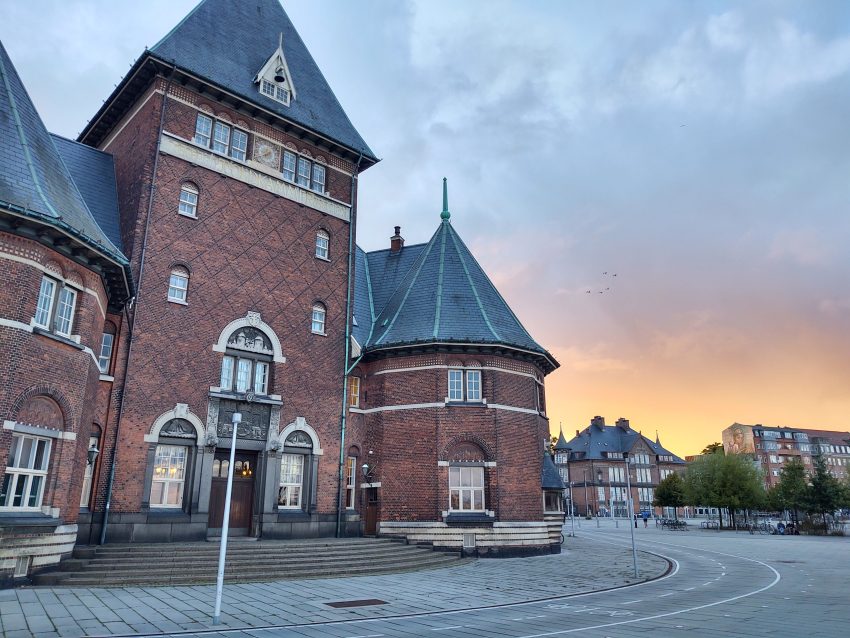
Aarhus Custom House, also known as the Told( T)oldboden, is a harbourfront landmark tied to the city’s maritime commerce and growth. Completed in 1898 and designed by Hack Kampmann, it reflects a period when Aarhus’s role as a port city demanded architectural confidence in state functions like customs and trade regulation.
Architecturally, the building is often singled out as one of Kampmann’s finest works in the city, with a richly composed historicist expression that stands out against the modern harbour district nearby. It represents the late 19th-century belief that public authority should look durable and highly crafted, even when the function is administrative.
What to see is the exterior: brickwork, massing, and the way it holds its presence at the waterfront. It is especially effective when viewed in context of the surrounding harbour transformation, where contemporary buildings and public spaces make the Custom House feel like a visible marker of the older port economy that shaped Aarhus.
Location: Toldboden, 8000 Aarhus, Denmark | Hours: 24 hours from outside | Price: Free to view from the street. | Website
2. KØN – Gender Museum Denmark
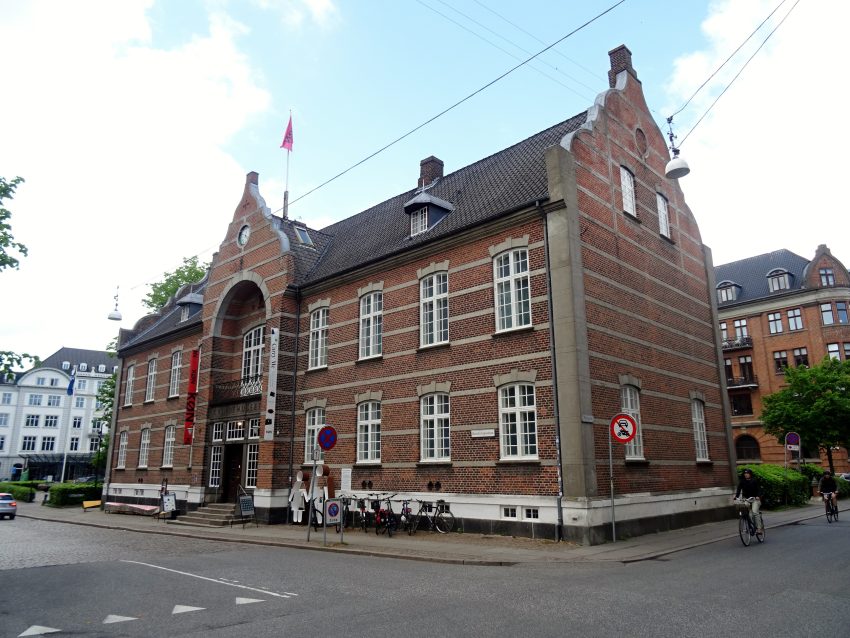
KØN is one of the few museums in the world dedicated specifically to the cultural history of gender, with a focus on how ideas about gender, the body, sexuality, and equality have shaped society over time. It is located in central Aarhus and occupies a historic civic building, which adds an institutional weight to a subject that is often treated as purely contemporary.
The museum began in 1982 as the Women’s Museum and later broadened its scope; the shift culminated in a name change to KØN in 2021, reflecting a mandate that extends beyond women’s history to gender more broadly. That background matters, because it explains why the museum combines classic social history with more provocative, debate-driven exhibition choices.
What to see depends on what is on, but the museum is designed for a structured visit across multiple floors, with both permanent and changing exhibitions plus a café. If you want a clear starting point, look for the permanent exhibition work that draws on the collection to show how gender norms are constructed and contested across themes like work, politics, the body, and activism.
Location: Domkirkepladsen 5, 8000 Aarhus, Denmark | Hours: Tuesday: 10:00–17:00. Wednesday: 10:00–18:00. Thursday – Saturday: 10:00–17:00. Bank holidays: 10:00–16:00. Closed on Monday & Sunday. Closed on bank holidays that fall on Sunday & Monday. Closed on December 23; December 31; January 1. | Price: Adults: DKK 125; Under 30: DKK 105; Retiree: DKK 105; Under 18: Free. | Website
3. The Occupation Museum

The Occupation Museum focuses on Aarhus during the German occupation of Denmark in the Second World War. It is set in a building that is part of the story: the former police station, which in the final years of the war served as Gestapo headquarters in the city. That setting gives the museum a gravity that is difficult to replicate elsewhere, because the spaces you move through are not reconstructed.
The museum’s narrative is deliberately local. It concentrates on how occupation played out in Aarhus, including resistance activity, sabotage, informants, and the pressures of everyday life under restrictions. In recent years it has also leaned more explicitly into the ethical dilemmas faced by ordinary people, rather than presenting the period as a simple binary of heroes and villains.
What to see is the preserved environment and the way it is interpreted: basement rooms and cells, period objects and documents, and the museum’s use of original spaces to explain interrogation, fear, and control. Take time to read the contextual material closely here; the power of the visit comes from how the building and the evidence reinforce each other.
Location: Mathilde Fibigers Have 2, 8000 Aarhus, Denmark | Hours: Monday: Closed Tuesday: Closed Wednesday: 1:00 – 5:00 PM Thursday: 1:00 – 5:00 PM Friday: 1:00 – 5:00 PM Saturday: 11:00 AM – 5:00 PM Sunday: 11:00 AM – 5:00 PM | Price: 75,00 DKK | Website

4. Hotel Royal
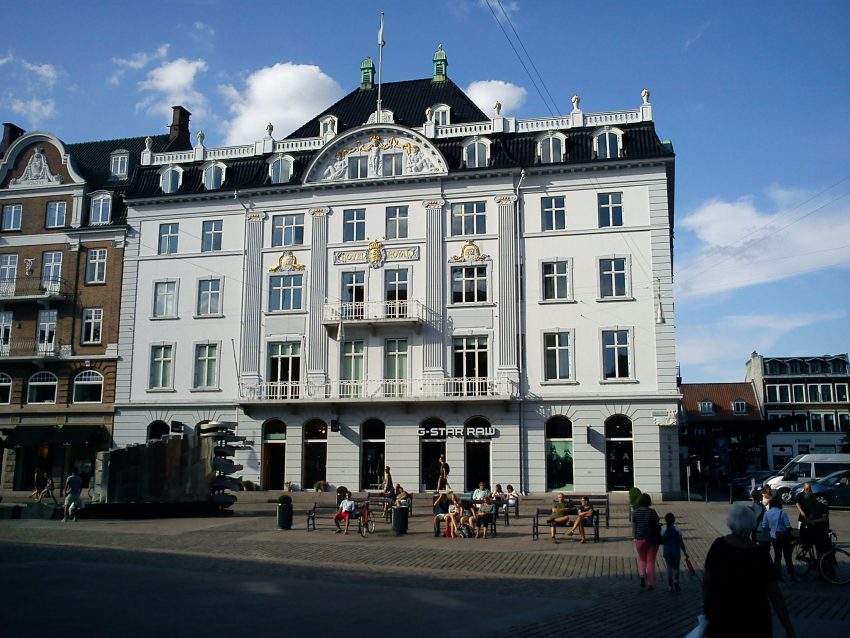
Hotel Royal is Aarhus’s oldest hotel, founded in 1838, and its location is part of its identity: it sits on Store Torv directly opposite Aarhus Cathedral. From the beginning it positioned itself as the city’s prestige address, linked to the square’s civic and ceremonial life rather than a peripheral traveller’s stop.
The hotel’s fabric reflects Aarhus’s growth through the 19th and early 20th centuries. It began as a luxury hotel created from existing buildings and was later expanded and reshaped, including major work around 1901 to 1902 that gave it much of the presence it has on the square today. This long, piecemeal evolution is typical of prominent city-centre hotels that have had to modernise without abandoning their historic status.
What to see is the setting and the details that signal continuity: the façade and corner presence on the square, the relationship to the cathedral opposite, and the interior atmosphere that trades on heritage rather than minimalism. Even if you are not staying overnight, it is worth pausing outside to read the hotel as part of the historic ensemble of Store Torv and Bispetorv.
Location: Store Torv 4, 8000 Aarhus, Denmark | Hours: Daily: Open 24 hours. | Price: Check official website. | Website
5. Aarhus Cathedral
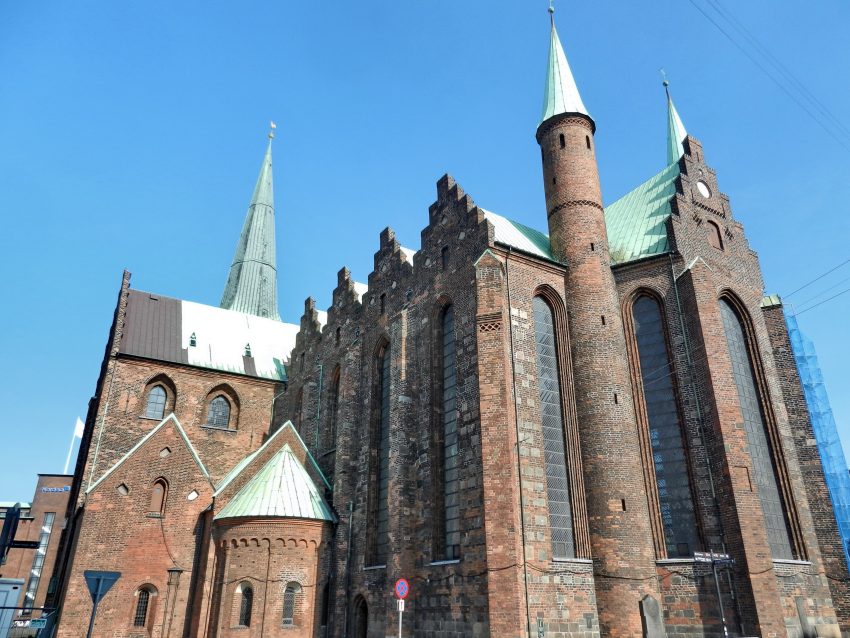
Aarhus Cathedral, dedicated to St Clement, began taking shape in the late 12th century and continued evolving into a major Gothic brick landmark, reflecting centuries of ambition, rebuilding, and stylistic change. Its scale and setting express Aarhus’s growth from a medieval town into a regional centre with a strong maritime identity, reinforced by the dedication to a patron saint associated with sailors.
Architecturally, the cathedral is famous for its length and height, and the long nave gives the interior a strong processional feel. The brickwork and the overall massing are part of the appeal: this is a building that reads clearly as a product of Northern European medieval construction, rather than a stone cathedral transplanted from elsewhere.
Inside, focus on the sense of distance and vertical emphasis created by the Gothic form, and take time to look closely at details that reveal different phases of building and restoration. If you enjoy reading buildings as historical documents, this is one of the best places in the city to see how long-term construction leaves visible traces.
Location: Store Torv, 8000 Aarhus, Denmark | Hours: Opening hours: (Summer) 01 May – 30 September: Monday: 09:30–16:00; Tuesday: 10:30–16:00; Wednesday – Saturday: 09:30–16:00. (Winter) 01 October – 30 April: Monday: 10:00–15:00; Tuesday: 10:30–15:00; Wednesday – Saturday: 10:00–15:00. Closed to visitors on Sunday and public holidays (open for worship only). | Price: Free to enter the cathedral; tower access is 20 DKK for adults and 5 DKK for children. | Website
6. Aarhus Theater
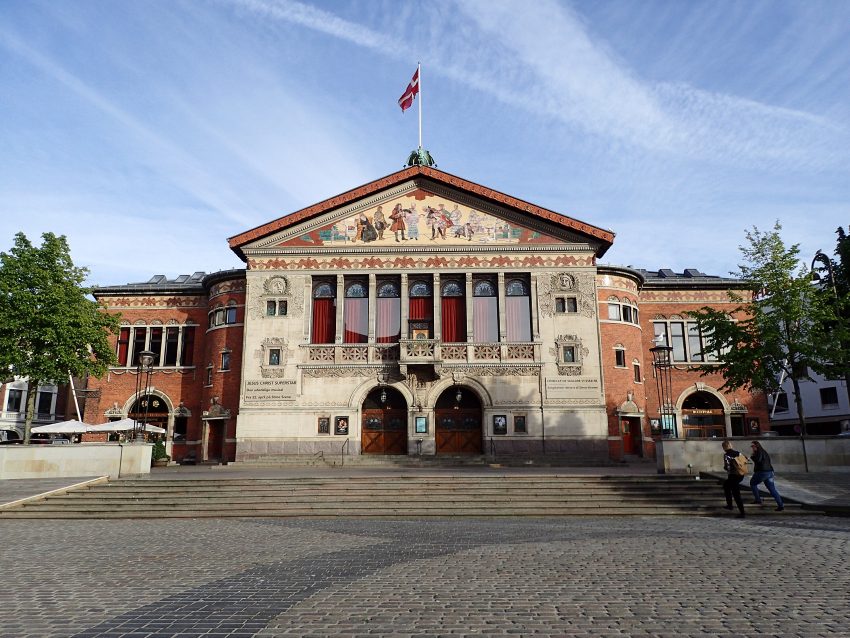
Aarhus Theater is the largest provincial theatre in Denmark and a major cultural institution with a building that is itself a work of art. The current theatre house was designed by Hack Kampmann, with construction beginning in 1898 and the building inaugurated on 15 September 1900, reflecting Aarhus’s late 19th-century confidence as Jutland’s growing urban centre.
The architectural style is Art Nouveau with national romantic emphasis on natural materials, and the interior was completed with artistic contributions including Karl Hansen-Reistrup and Hans Tegner. That combination makes the theatre more than a venue: it is a total cultural statement where decoration and function are designed to reinforce the experience of performance.
What to see includes the façade’s sculptural richness and, if you go inside, the atmosphere of the historic interiors where craftsmanship is part of the spectacle. Even if you are not attending a show, the building is worth lingering over because it expresses a specific moment when Aarhus invested in culture as a civic identity, not merely as entertainment.
Location: Teatergaden 1, 8000 Aarhus, Denmark | Hours: Opens around 1 hour before performances (varies by showtime). | Price: Varies (performances typically from 160–525 DKK; public guided tours typically 125 DKK on selected dates). | Website
7. Bispetorv
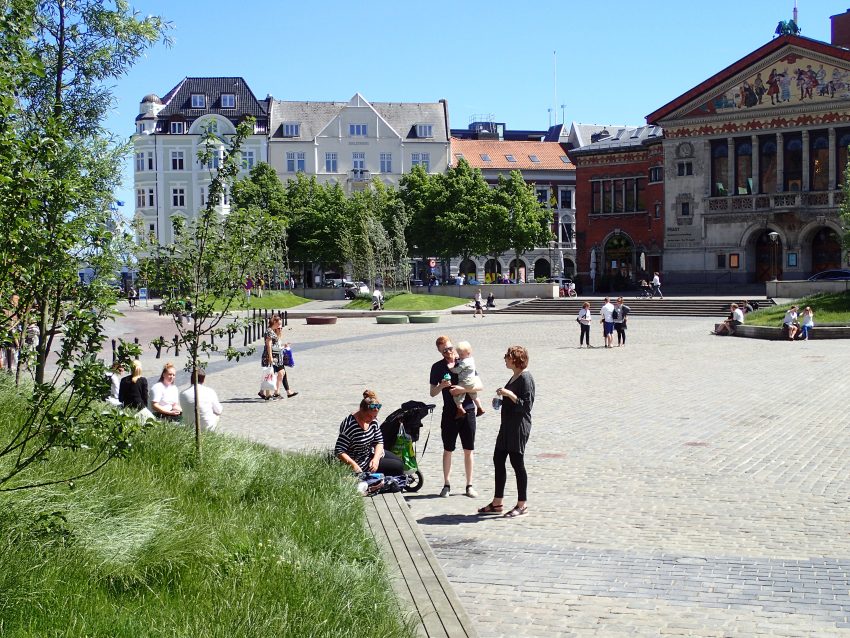
Bispetorv sits at the historic heart of Aarhus, directly beside the cathedral precinct, and it functions as a civic “forecourt” where the city’s medieval church history meets later urban life. The square’s name, Bishop’s Square, reflects the long relationship between this part of town and ecclesiastical authority, even as the surrounding buildings span very different periods.
The most prominent feature is the equestrian statue of King Christian X, which anchors the open space and gives the square its focal point. Around the edges, you are framed by some of Aarhus’s most recognisable institutions, including the cathedral and the theatre, which makes the square feel like a compressed introduction to the city’s cultural and historical core.
Look for how the square operates as a connector: it is not only a place to stand and admire façades, but also a threshold to nearby heritage sites, including the Viking Museum area close by. The best experience comes from slowing down and reading the “edges” of the space, because that is where the city’s layers are most visible.
Location: Bispetorvet, 8000 Aarhus, Denmark | Hours: 24 Hours | Price: Free
8. The Viking Museum
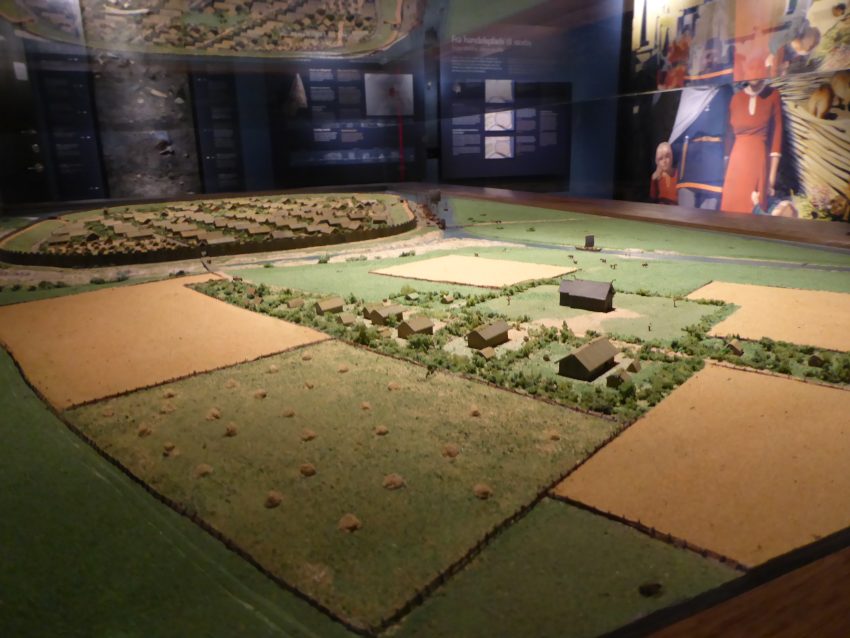
The Viking Museum in Aarhus is a small, in-situ underground museum in the city centre, set beneath the Nordea building at Skt. Clemens Torv. Its appeal is that you are not looking at Viking Age Aarhus in an abstract way; you are standing where parts of the settlement once existed, at roughly the same level below today’s streets. The museum is administered as part of Moesgaard Museum, which also helps explain its focus on archaeology and context rather than spectacle.
The museum grew out of archaeological excavations carried out in 1963–1964 during construction work on the site, with the museum established in 1968 to preserve and present what was uncovered. Those digs revealed traces of Viking Age structures and finds that speak to everyday life in early Aros, the Viking name associated with Aarhus. The museum has since been updated, including a renovation noted in the late 2000s, but its core identity remains the same: a small window into the earliest urban history of the city, anchored to the original ground.
What to see is the archaeological footprint and how it is interpreted for visitors. Look for the visible structural traces and the way the exhibition explains settlement life, trade, and the shape of the early town, often supported by models and selected artefacts or replicas that make the remains easier to “read.” Because the space is compact, the best approach is to slow down and focus on the story of place: how the modern square above relates to the Viking Age activity below, and how that continuity is still legible when you take the time to examine the details.
Location: Sankt Clemens Torv 6, 8000 Aarhus Centrum, Denmark | Hours: Monday – Friday: 10:15–18:00. Saturday – Sunday: 10:15–19:00. Closed on bank holidays. | Price: Adults: DKK 30; Under 18: Free. | Website
9. Vor Frue Kirke
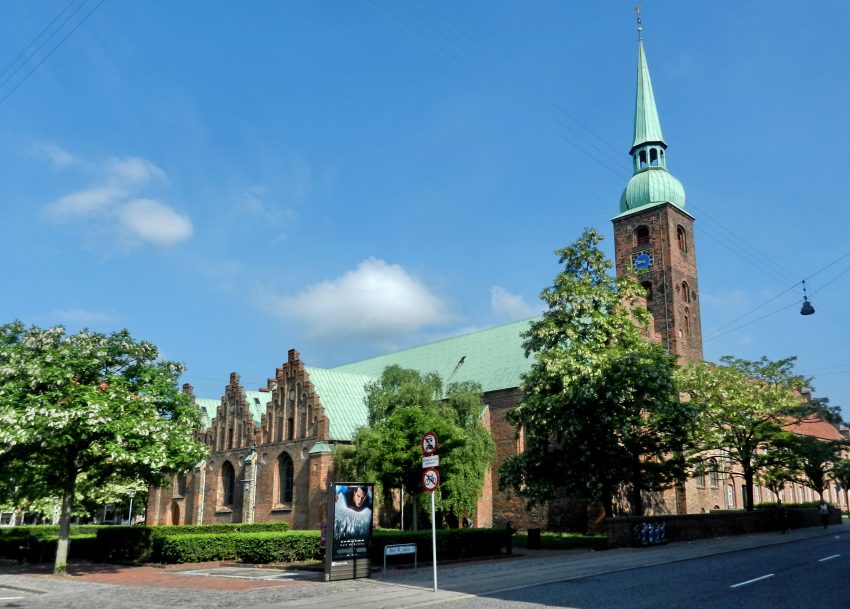
Vor Frue Kirke, the Church of Our Lady, is a layered religious site where the most remarkable feature is beneath your feet. The earliest stone crypt church dates to around 1060, making it one of the oldest surviving stone church structures in Scandinavia, while later expansions created the larger medieval church above.
The church’s medieval history includes the development of a Dominican priory established around 1240, with major building phases running through the late Middle Ages. After the Reformation, the surrounding former priory buildings were repurposed under royal decree for social welfare functions, reinforcing how church sites often anchored both spiritual and civic life.
What to see is the contrast between the main church and the crypt: the crypt’s small scale, heavy stone character, and sense of early medieval austerity feel radically different from the later brick structures above. If you want one “must-see” element, prioritise the crypt, because it turns the visit into a direct encounter with Aarhus’s earliest Christian building history.
Location: Frue Kirkeplads 3, 8000 Aarhus, Denmark | Hours: Monday – Friday: 10:00–16:00. Saturday: 10:00–14:00. Sunday: Closed. | Price: Free; donations appreciated. | Website
10. Møllestien
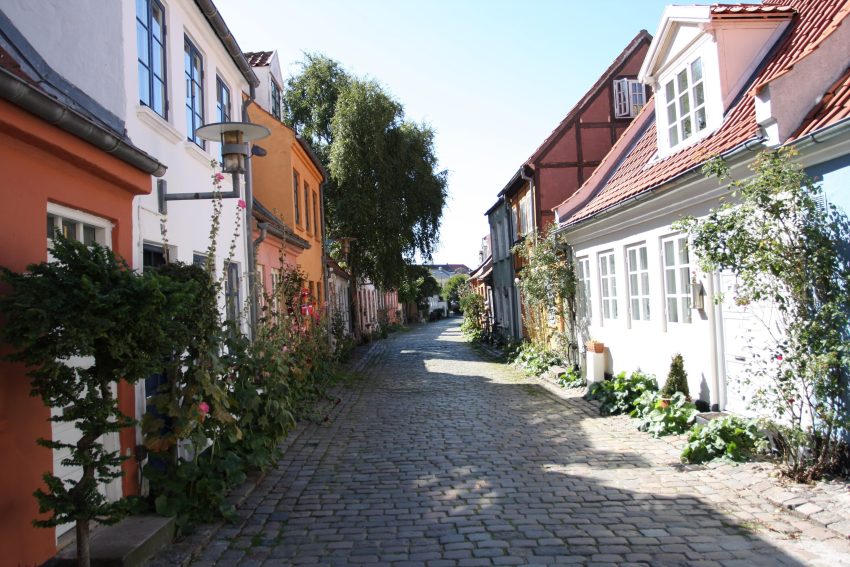
Møllestien is one of Aarhus’s most photogenic historic streets, known for small houses, cobblestones, and a scale that feels almost village-like in the middle of the city. The street has existed since before 1300, and its long continuity is part of its charm: it reads as an old route that the modern city grew around rather than replaced.
Most of the buildings you see today were constructed in the late 19th century, which explains the consistent small-house rhythm along the lane. The result is a streetscape that feels intimate and lived-in, with façades close to the pavement and details that reward careful looking rather than distant viewing.
What to see here is the street as a composition: repeating house forms, varied paint colours, and the way plants and seasonal growth soften the edges. Walk slowly and look for small differences—doors, windows, rooflines—because the pleasure of Møllestien comes from how many subtle variations exist within a very consistent scale.
Location: Møllestien, 8000 Aarhus, Denmark | Hours: 24 Hours | Price: Free
11. ARoS Aarhus Art Museum
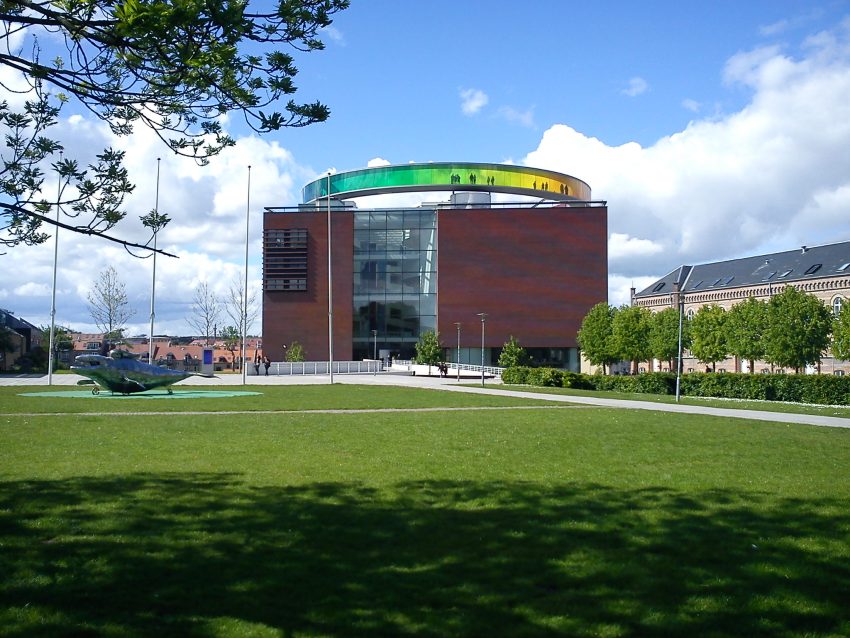
ARoS is Aarhus’s flagship art museum and one of the strongest examples of contemporary cultural architecture in the city. Although the institution dates back to the 19th century, the current museum building opened on 7 April 2004, designed by Schmidt Hammer Lassen as a ten-storey “art cube” with a dramatic central interior space.
The most famous feature is on the roof: Olafur Eliasson’s Your rainbow panorama, officially opened in May 2011, a circular walkway that reframes the city through coloured glass and makes the skyline part of the museum experience. This is not a decorative add-on; it is a defining piece of how ARoS links art, architecture, and the act of looking at Aarhus itself.
What to see depends on your time, but the building encourages a vertical journey: moving through galleries with changing light and perspective, then finishing with the rooftop panorama for a full “city plus art” conclusion. If you want one high-impact sequence, combine a focused gallery section with the rainbow walkway so the visit feels both substantive and unmistakably Aarhus.
Location: Aros Allé 2, 8000 Aarhus, Denmark | Hours: (Summer) 01 June – 30 September: Monday – Friday: 09:00–20:00. Saturday – Sunday: 09:00–17:00. (Winter) 01 October – 31 May: Tuesday – Friday: 10:00–20:00. Saturday – Sunday: 09:00–17:00. Closed on Monday. | Price: Adults €27. Under 31 years / Students €22. Children under 18 free. Groups (min. 20) €25. | Website
12. Aarhus City Hall
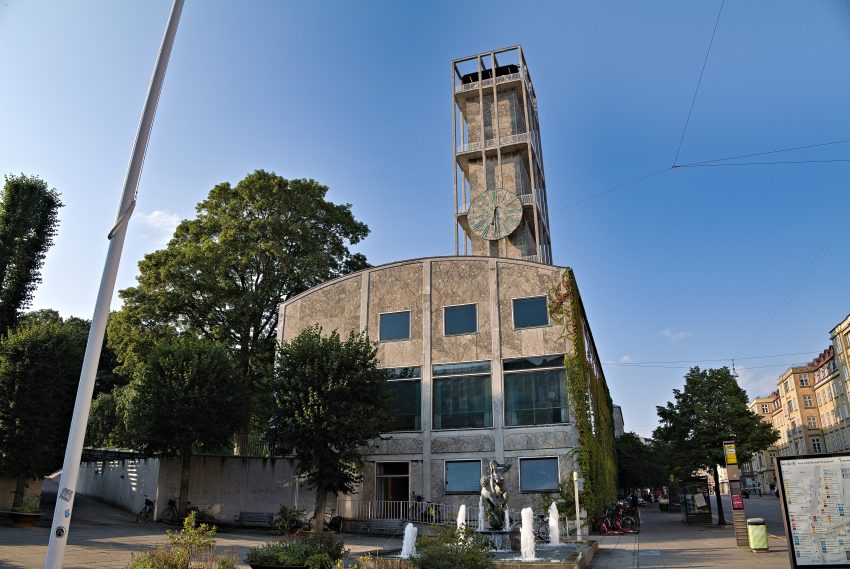
Aarhus City Hall is one of Denmark’s most important modern civic buildings, designed by Arne Jacobsen and Erik Møller and inaugurated on 2 June 1941. It represents a period when municipal architecture aimed to look forward, using functionalist clarity and carefully integrated design as a statement of civic confidence.
A key part of its story is that early plans did not include a tower; it was added later after strong public pressure for a more monumental civic symbol. The building is also known for its refined materials and detailing, including extensive marble cladding, which reinforces how “modern” here was meant to feel both restrained and prestigious.
What to see is the exterior composition—clean volumes, the tower’s authority, and the way the building sits in its urban park setting—then, if you go inside, the total-design approach where furnishings and interior elements were conceived as part of the same architectural language. Even from outside, it is a clear expression of Aarhus as a modern administrative city, not only a medieval one.
Location: Aarhus Rådhus, Rådhuspladsen 2, 8000 Aarhus, Denmark | Hours: Saturday: 09:30–11:00. Friday: 15:30–17:00. Friday (tower climb only): 15:30–16:00. In school holidays: Tuesday: 09:30–11:00. Closed on Sunday. | Price: Adults 125 DKK; children under 18 50 DKK (guided tour including tower). | Website
13. Salling Rooftop
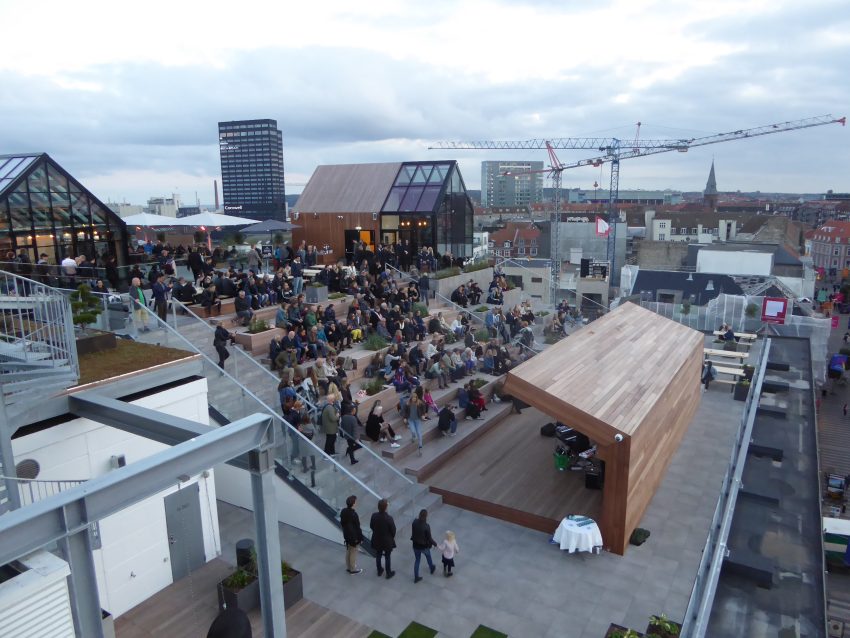
Salling Rooftop is a contemporary landmark that has quickly become one of the most popular viewpoints in Aarhus, opened on 25 August 2017 above the Salling department store. It is designed as a public rooftop environment rather than a simple observation deck, combining views with social space and a distinctive urban atmosphere.
The main draw is the panorama over the city centre—rooftops, church towers, and the broader harbour direction—framed in a way that helps you understand how compact Aarhus is. The design encourages lingering, and the mix of seating areas and themed rooftop zones makes the space feel curated rather than purely functional.
What to see is the experience of elevation itself: the skyline read, the shifting light over the city, and the way Aarhus’s landmarks align from above. If you are timing visits, late afternoon often gives the most dramatic city colour and shadow, and the rooftop’s layout makes it easy to move between viewpoints without feeling crowded into one spot.
Location: Søndergade 27, 8000 Aarhus, Denmark | Hours: Monday – Friday: 10:00–20:00. Saturday: 10:00–19:00. Sunday: 10:00–18:00. | Price: Free. | Website
14. Åboulevarden
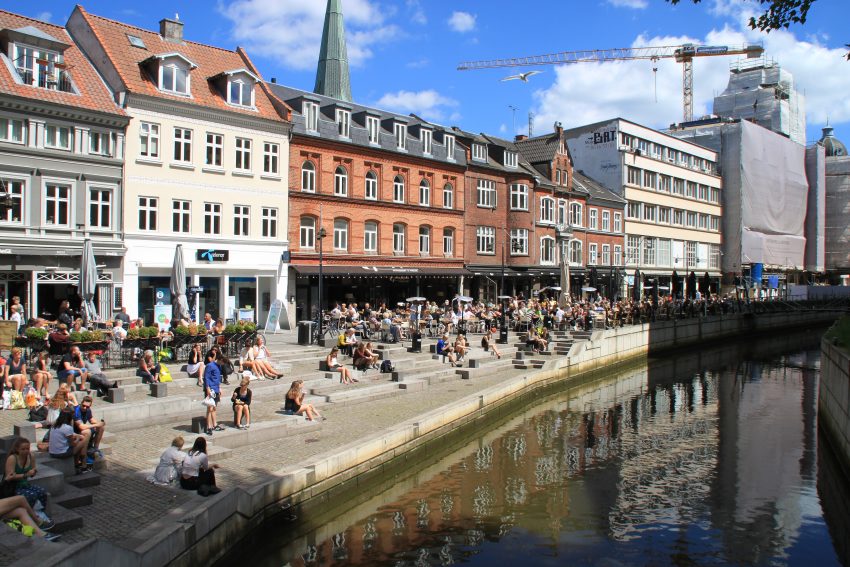
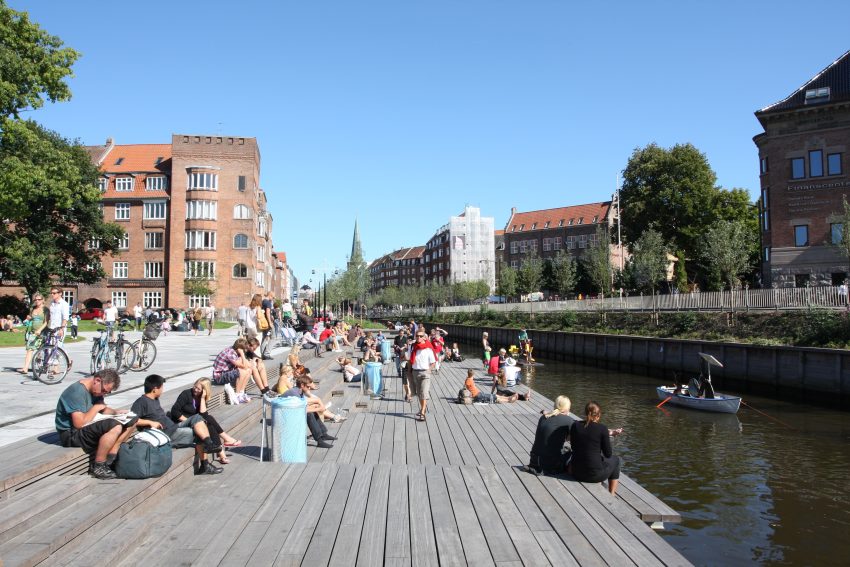
Åboulevarden runs alongside the Aarhus River and shows how the city has re-centred public life around the water. It is both a street and a promenade, with the river forming the spine that shapes movement, views, and the rhythm of cafés and restaurants along the edges.
The boulevard’s modern character is closely linked to a major urban transformation: after periods when the river was covered, work to open it again began in September 2005, and the last sections were finished in 2015. That long project changed the city centre’s feel, turning what had been traffic-dominated space into a more recreational waterfront setting.
What to notice is how the river splits the boulevard into distinct sides, with pedestrian-friendly stretches that make the water feel like a public room rather than a boundary. Spend a few minutes watching how the space is used—especially where paths widen—because the best “sight” here is the city’s relationship with the reopened river corridor.
Location: Åboulevarden, 8000 Aarhus, Denmark | Hours: 24 Hours | Price: Free | Website
15. Dokk1
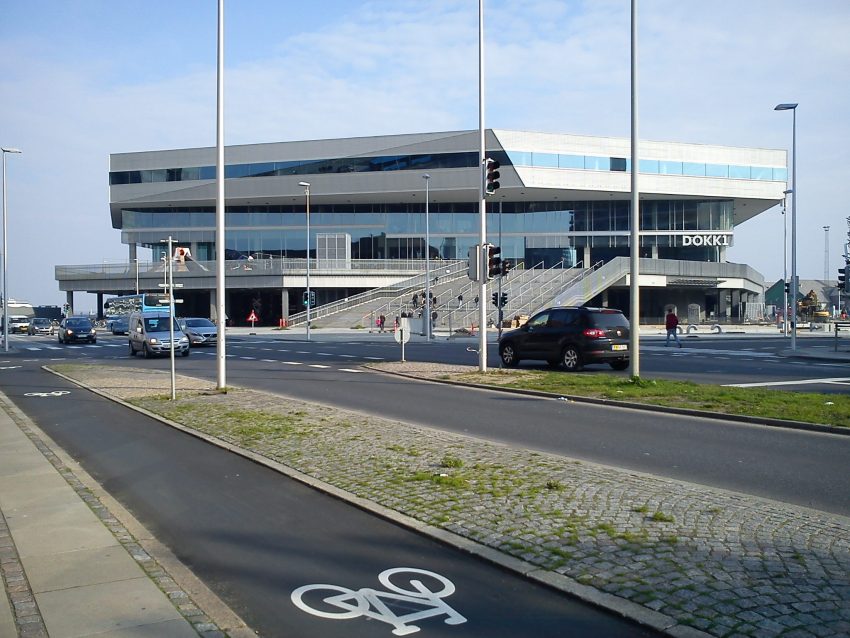
Dokk1 is Aarhus’s main library and a major civic hub on the waterfront at Hack Kampmanns Plads, created as part of the wider Urban Mediaspace Aarhus redevelopment that reshaped the harbour edge into a public-facing city centre. Designed by Schmidt Hammer Lassen Architects, construction began in 2011 and the building was inaugurated on 20 June 2015, marking one of the municipality’s largest modern construction projects and a clear statement about how the city wants public space to function in the 21st century.
What makes Dokk1 significant is the blend of functions under one roof. Beyond the library, it includes municipal citizen services, event and meeting spaces, and commercial areas, and it is tightly integrated with transport infrastructure, including a light rail connection and a large automated underground parking system. The result is a building that operates less like a quiet reading room and more like a working piece of city infrastructure, designed to pull people toward the harbour and keep them there.
What to see starts with the architecture and how it meets the public realm: broad steps, open terraces, and long sightlines that give you wide views of water and city. Inside, look for the building’s large, flexible interior zones that support studying, family areas, exhibitions, and events, then seek out the landmark artwork known as The Gong, a large tubular bell connected to Aarhus University Hospital that can be activated by new parents to mark a birth. Even if you do not spend long inside, Dokk1 is worth visiting as a viewpoint on modern Aarhus: civic design, harbour redevelopment, and public life all compressed into one place.
Location: Hack Kampmanns Plads 2, 8000 Aarhus Centrum, Denmark | Hours: Monday – Friday: 08:00–22:00. Saturday – Sunday: 10:00–16:00. Closed on public holidays. | Price: Free. | Website

Moira & Andy
Hey! We're Moira & Andy. From hiking the Camino to trips around Europe in Bert our campervan — we've been traveling together since retirement in 2020!
This website uses affiliate links which earn a small commission at no additional cost to you.
Walking Tour Summary
Distance: 3.5 km
Sites: 15