Villa Gregoriana, Tivoli
Roman Site in Tivoli
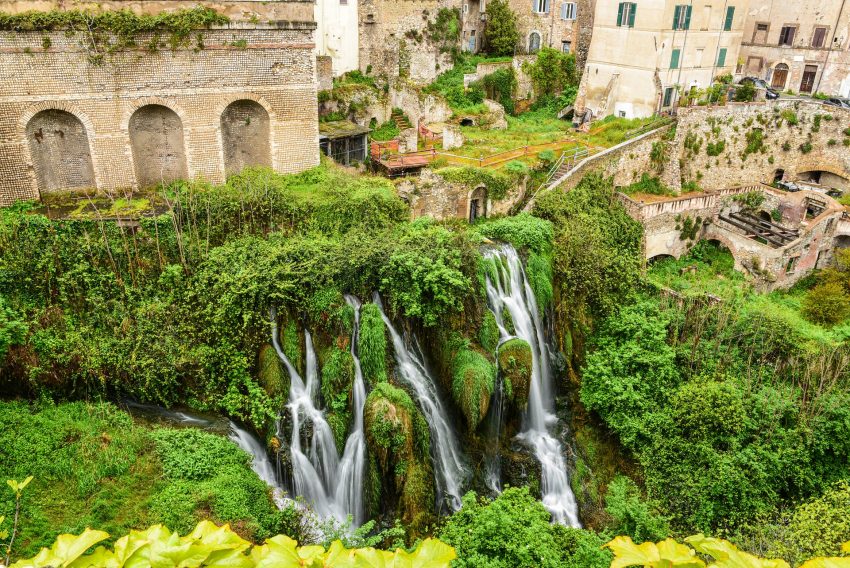
Villa Gregoriana is Tivoli's great “step-off-the-street-and-into-the-wild” moment: one minute you're near the historic centre, and the next you're walking into a steep gorge where the air cools, the cliffs close in, and the sound of water becomes the soundtrack. Enter just east of Piazza Rivarola and cross Ponte Gregoriana into a landscape of terraces, forested paths, and viewpoints that feel worlds away from the town's piazzas and palazzi.
What makes it special is the blend of nature and human ingenuity. Commissioned under Pope Gregory XVI in the 1830s, the park is built around the Traforo Gregoriano, the tunnel system that redirected the Aniene River to control floods and, in the process, created the showpiece waterfalls that define the visit. It's one of the top sights in Tivoli, and it's an easy highlight to weave into a walking tour of Tivoli when you want something more atmospheric than gardens and fountains.
Table of Contents
- History and Significance of the Villa Gregoriana
- Things to See and Do in the Villa Gregoriana
- How to Get to the Villa Gregoriana
- Practical Tips on Visiting the Villa Gregoriana
- Where to Stay Close to the Villa Gregoriana
- Is the Villa Gregoriana Worth Visiting?
- For Different Travelers
- FAQs for Visiting Villa Gregoriana
- Nearby Attractions to the Villa Gregoriana
History and Significance of the Villa Gregoriana
Villa Gregoriana is a Romantic-era response to a very practical problem: Tivoli's floods. In the early 19th century, engineers cut the Traforo Gregoriano, a double tunnel carved through Monte Catillo, to divert the Aniene River away from the town's vulnerable areas. The project turned flood control into spectacle, transforming redirected water into a cascading sequence that drops dramatically into the gorge.
Pope Gregory XVI commissioned the estate in 1835, and you can still feel that 19th-century “sublime nature” ambition in how the paths are laid out. The visit is staged like a narrative: you move between viewpoints and shaded corridors, with sudden reveals of white water and cliff walls, then climb toward classical ruins that give the landscape a timeless, almost theatrical frame.
Culturally, the park sits in Tivoli’s long tradition of attracting travellers, artists, and writers. Like Villa d’Este and Hadrian’s Villa, it became part of the town’s Grand Tour identity, but with a wilder edge-less formal beauty, more raw energy, mist, and echoing rock.
Things to See and Do in the Villa Gregoriana
The headline moment is the Grande Cascata, the tallest and most commanding waterfall in the park, plunging deep into the gorge in a sheer, thunderous drop. The best way to enjoy it is to pause at more than one terrace: upper viewpoints give you the full sweep and context, while mid-level platforms bring you closer to the force, spray, and sound.
Beyond the main falls, the joy of Villa Gregoriana is the variety packed into a relatively compact walk. Look out for the grottoes-especially the Grotto of Neptune and the Sirens' Grotto-where the damp air, mossy rock, and shifting light make the place feel almost otherworldly. In sections, the path hugs the cliff, and you'll catch glimpses of the old river course and the engineering that reshaped it.
The climb toward the two temples near the exit is worth doing even if you're mainly here for waterfalls. The zigzagging ascent gives you broader panoramas over Tivoli's rooftops and the surrounding hills, and it's the point where the visit shifts from “gorge adventure” to “classic Tivoli postcard,” with ancient silhouettes rising above greenery.
How to Get to the Villa Gregoriana
Most visitors arrive via Rome, with the closest airports being Rome Fiumicino (FCO) and Rome Ciampino (CIA). For the best deals and a seamless booking experience, check out these flights to Tivoli on Booking.com. From Rome, Tivoli is an easy day trip, and the park sits close enough to the centre that you can build a full itinerary on foot once you arrive.
Trains from Rome to Tivoli are one of the simplest options for independent travellers, and Tivoli station is a short walk from the park entrance.Use Omnio to easily compare schedules, book train tickets, and find the best prices all in one place for a hassle-free journey across Italy. If you prefer buses, there are frequent services to Tivoli from Rome, typically departing from major hubs, and they work well if you’re not tied to a rail schedule.
Driving is straightforward for flexibility-especially if you're combining Tivoli with Hadrian's Villa or the wider Lazio countryside-but parking in the historic centre can be the slow part, so aim for a car park and walk the final stretch to the entrance.If you are looking to rent a car in Italy I recommend having a look at Discover Cars, first, as they compare prices and review multiple car rental agencies for you.
Practical Tips on Visiting the Villa Gregoriana
- Entrance fee: Adults: €10; Children (6–18): €3; Children (0–5): Free.
- Opening hours: 22 February – 21 March: Daily: 09:30–17:00; 22 March – 29 June: Daily: 09:30–18:30; 30 June – 31 August: Daily: 09:00–19:00; 1 September – 5 October: Daily: 09:30–18:30; 6 October – 25 October: Daily: 09:30–18:00; 26 October – 9 November: Daily: 09:30–16:30; 10 November – 14 December: Daily: 09:30–16:00.
- Official website: https://fondoambiente.it/luoghi/parco-villa-gregoriana
- Best time to visit: Go in the morning for calmer paths and clearer viewpoints, or later afternoon for softer light and a more atmospheric gorge. After rain, the waterfalls are often at their most dramatic, but paths can be slick.
- How long to spend: Plan for 1.5-2.5 hours depending on how often you stop at viewpoints, plus extra time if you want a slower loop and plenty of photos.
- Accessibility: Expect steep slopes, steps, and uneven surfaces; it’s a beautiful walk, but not suitable for visitors with limited mobility or anyone uncomfortable with sustained inclines.
- Facilities: Bring water and wear grippy shoes; toilets and basic visitor services are limited compared to Tivoli’s major villa sites, so treat this as a “walk prepared” visit.
Where to Stay Close to the Villa Gregoriana
For a culture-heavy itinerary, base yourself in Tivoli's historic centre so you can walk to Villa Gregoriana, Villa d'Este, and the temples without relying on transport; if your priority is quick connections and a broader Rome-region itinerary, the Bagni di Tivoli area can be more practical for road access and commuting.
If you want an atmospheric, stay-in-the-story base near the gorge and the old town lanes, Residenze Gregoriane - Dimora d'Epoca is a strong pick for travellers who value character and a central location. For a well-reviewed, relaxed option that keeps you close to the historic centre while feeling a little more residential and quiet, B&B Il Giardino works very well. If you prefer a classic B&B set in the heart of town with easy walking access to Tivoli’s major sights, Palazzo Maggiore is another convenient base.
Is the Villa Gregoriana Worth Visiting?
Yes, especially if you want the “wild” side of Tivoli. The park delivers a rare combination of genuine natural drama and engineered history, and it feels completely different from Tivoli's more formal garden experiences.
It's also one of those places where the atmosphere does the work: mist in the gorge, sudden viewpoints, and the constant sound of moving water. If you enjoy scenic walks with real texture-cliffs, caves, ruins, and roaring falls-Villa Gregoriana is an easy recommendation.
What Other Travellers Say...

Villa Gregoriana, at Largo Sant'Angelo 1 in Tivoli, is a wooded park carved into a verdant gorge with winding paths that lead to caves, grottoes, dramatic waterfalls and visible Roman ruins; visitors describe an immersive, peaceful hike that involves descending steps into the canyon and climbing out the other side, with standout sights like the Neptune Cave, lush mossy rock, picturesque stone bridges and sweeping viewpoints — expect lots of walking so wear good shoes, and many recommend the paid entry and audio guide as worthwhile for the experience.


For Different Travelers
Families with Kids
Villa Gregoriana can be a memorable family stop if your kids enjoy adventure-style walks and dramatic nature, but it's best for families who are comfortable with steps and sustained slopes. Keep the pace slow, build in snack stops at viewpoints, and be ready to hold hands near wet rocks and railings where the path narrows.
If you’re travelling with a stroller, it’s likely to be frustrating, so a carrier is the more realistic option for babies and toddlers. For younger kids who tire easily, treat the visit as a “choose your highlight” walk: focus on one waterfall viewpoint and a shorter loop rather than pushing for every terrace.
Couples & Romantic Getaways
For couples, this is Tivoli at its most cinematic. The gorge setting and grottoes feel made for slow wandering, and the viewpoints give you plenty of natural “pause moments” without needing a planned itinerary.
Make it feel special by timing it for late afternoon, then finishing in the historic centre for an unhurried aperitivo. If you like travel experiences that feel immersive rather than curated, Villa Gregoriana is the kind of place that stays in your head long after the photos.
Budget Travelers
Villa Gregoriana is a strong-value stop because the experience is mostly about landscape and atmosphere rather than add-ons. Arrive by train or bus, bring water and snacks, and you can keep the day cost-effective while still ticking off one of Tivoli's most distinctive experiences.
If you are building a full day, combine it with free viewpoints and town wandering, then pick just one paid “villa” site to balance your budget. Tivoli is ideal for this style of travel because you can create a satisfying itinerary with a lot of walking and very little transport once you're there.
History Buffs
For history-focused travellers, the key is to read the landscape as an engineered solution, not just a scenic park. The Traforo Gregoriano and the river’s redirected course tell a story of 19th-century intervention, when flood control, civic planning, and Romantic aesthetics were deliberately fused into one visitor experience.
Pair Villa Gregoriana with Tivoli's temples and a short visit to the historic centre for context, and you'll get a satisfying arc: ancient Tivoli above, engineered Tivoli below, all stitched together by walking routes and viewpoints.
FAQs for Visiting Villa Gregoriana
Getting There
Tickets & Entry
Visiting Experience
Tours, Context & Itineraries
Photography
Accessibility & Facilities
Food & Breaks Nearby
Safety & Timing
Nearby Attractions to the Villa Gregoriana
- Villa d'Este: Tivoli's masterpiece of fountains and gardens, ideal for pairing with Villa Gregoriana to contrast formal design with wild gorge scenery.
- Hadrian's Villa (Villa Adriana): A vast imperial archaeological site with ruins and landscape scale that can easily fill half a day.
- Temple of Vesta and Temple of the Sibyl: Iconic cliff-top temples with panoramic views over the gorge and the surrounding countryside.
- Rocca Pia: A sturdy medieval fortress that adds a different architectural chapter to a Tivoli itinerary.
- Sanctuary of Hercules Victor: An impressive ancient complex that gives deeper context to Tivoli's importance in the Roman world.
The Villa Gregoriana appears in our Complete Guide to Visiting Tivoli!

Moira & Andy
Hey! We're Moira & Andy. From hiking the Camino to trips around Europe in Bert our campervan — we've been traveling together since retirement in 2020!
This website uses affiliate links which may earn a commission at no additional cost to you!
Planning Your Visit
22 February - 21 March: Daily: 09:30-17:00;
22 March - 29 June: Daily: 09:30-18:30;
30 June - 31 August: Daily: 09:00-19:00;
1 September - 5 October: Daily: 09:30-18:30;
6 October - 25 October: Daily: 09:30-18:00;
26 October - 9 November: Daily: 09:30-16:30;
10 November - 14 December: Daily: 09:30-16:00.
Adults: €10; Children (6-18): €3; Children (0-5): Free.
Nearby Attractions
- Tempio di Vesta and Tempio della Sibilla (0.2) km
Roman Site - Villa d'Este Gardens (0.5) km
Gardens - Rocca Pia (0.7) km
Castle - Sanctuary of Hercules Victor (0.8) km
Roman Site - Villa Adriana (Hadrian's Villa) (3.4) km
Roman Site - Santuario del Sacro Tugurio di Rivotorto (121.1) km
Religious Building - Mount Subasio (122.7) km
Park - Basilica di Santa Maria degli Angeli (122.8) km
Basilica - San Damiano (122.8) km
Church - Porta Nuova (123.4) km
City Gate