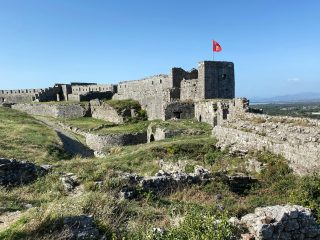
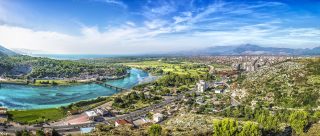
Via Egnatia, Durrës
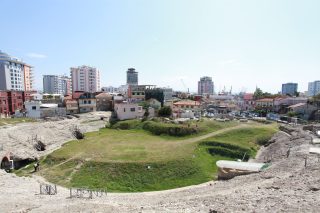
Ruins near Durrës
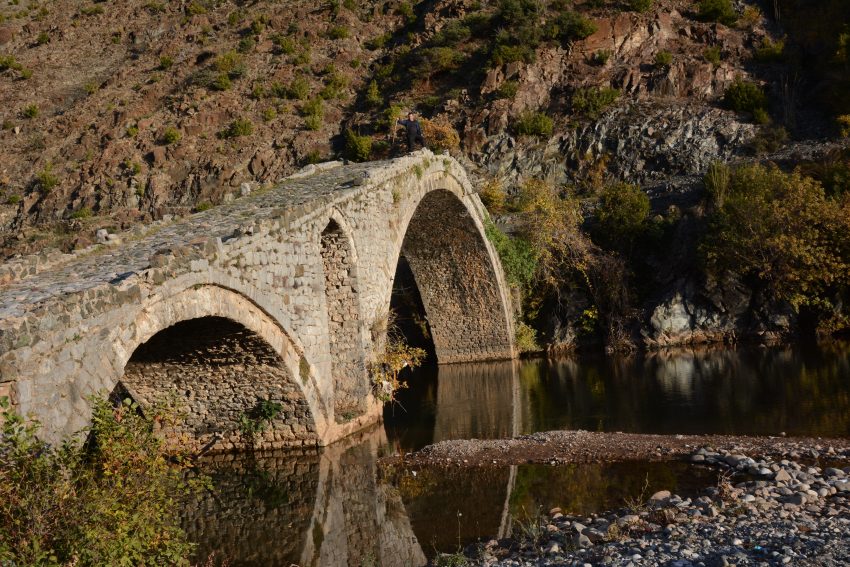
Via Egnatia in Durrës, Albania, is the western starting point of one of the Roman world's most important roads. It was not a single building or ruin, but a route that began at the old port city of Dyrrachium and ran east across the Balkans.
Visitors come here to understand how Durrës connected the Adriatic with the interior of the empire. What remains is partly visible in the city and more clearly followed farther inland, so the place appeals most to travelers who are interested in Roman infrastructure, ancient trade routes, and historic landscapes rather than a conventional monument.
History and Significance of Via Egnatia
The Via Egnatia was constructed in the 2nd century BC by the Romans to link the Adriatic coast with their eastern territories. It began at the port city of Dyrrachium (modern Durrës), one of the Roman Empire's most important gateways to the Balkans, and ran eastward through the mountains and valleys of the interior before reaching Thessaloniki and eventually Byzantium. Along this road marched Roman legions, caravans of merchants, and travelers heading toward the imperial heartlands.
The road's name comes from Gnaeus Egnatius, the Roman proconsul of Macedonia who ordered its construction. Engineered with precision, the Via Egnatia featured large stone slabs and milestones marking distances, much like the famed Via Appia in Italy. It was part of a vast network that connected Rome with Asia Minor and beyond, facilitating trade, communication, and governance across the empire. Even centuries after Rome's decline, the route retained its importance - serving Byzantine emperors, Ottoman traders, and medieval pilgrims alike.
Things to See and Do in Via Egnatia
While the full Via Egnatia spanned more than 1,100 kilometers, sections of it can still be traced in Albania, particularly near Durrës and Elbasan. Visitors in Durrës can start their exploration at the city's port area, where the road once began, before traveling inland to the modern town of Rrashbull or onward toward Elbasan, where remnants of the Roman paving stones are occasionally visible.
For those seeking a taste of adventure, walking a short segment of the old route offers a rewarding glimpse into Albania's layered past. The road winds through olive groves, small villages, and scenic hills, following roughly the same line that connected Durrës to Lake Ohrid in antiquity. It's an evocative experience - one of the things to do in Durrës for travelers interested in blending nature, history, and a sense of timeless journeying. The route also connects easily with other historical sites, making it often visited on walking tours of Durrës and its hinterland.
How to Get There
The starting point of the Via Egnatia is in central Durrës, near the old harbor area. From here, the original Roman route headed eastward toward Rrashbull and Elbasan. The first sections can be explored by car or on guided tours that follow the old road's direction. If you are looking to rent a car in Albania I recommend having a look at Discover Cars, first, as they compare prices and review multiple car rental agencies for you.
Elbasan, roughly 55 km from Durrës, makes a convenient day trip and offers some of the best-preserved remains of the Roman and Ottoman sections of the road. Buses run regularly between Durrës and Elbasan, or you can hire a private guide for a more in-depth exploration.
Practical Tips on Visiting Via Egnatia
- Best time to visit Via Egnatia: Spring and autumn for pleasant walking temperatures and clear skies.
- Entrance fee in Euros: Free.
- Opening hours: Open access throughout the route.
- Official website: None; local tourist offices in Durrës and Elbasan provide maps and directions.
- How long to spend: A few hours to a full day depending on how much of the route you explore.
- Accessibility: Varies; some rural sections are uneven and best suited for sturdy shoes or hiking gear.
- Facilities: Minimal; bring water and snacks.
- Photography tip: Capture the contrast of old Roman stones set against Albania’s rural landscapes.
- Guided tours: Available through local travel agencies focusing on cultural or hiking experiences.
- Nearby food options: Traditional eateries can be found in villages along the route and in Elbasan.
Is Via Egnatia Worth Visiting?
Yes. The Via Egnatia offers more than just an archaeological curiosity - it's a journey through time and terrain, connecting modern travelers with the spirit of the ancient world. Whether you walk a few meters in Durrës or follow the road deep into Albania's interior, you'll experience history underfoot in a way few other sites can provide. It's a powerful reminder of how Albania once stood at the crossroads of empires and ideas.
FAQs for Visiting Via Egnatia
The Via Egnatia appears in our Complete Guide to Visiting Durrës!

Moira & Andy
Hey! We're Moira & Andy. From hiking the Camino to trips around Europe in Bert our campervan — we've been traveling together since retirement in 2020!
This website uses affiliate links which may earn a commission at no additional cost to you!
Nearby Attractions
- Golen Beach (1.4) km
Beach - Venetian Tower (9.9) km
Tower - Aleksandër Moisiu’s House-Museum (10.1) km
Historic Building and Museum - Durrës Amphitheatre (10.2) km
Ruins - Sheshi Liria (10.2) km
Square - Durrës Great Mosque (10.3) km
Mosque - Durrës Castle (10.4) km
Castle - Byzantine Forum (10.4) km
Ruins - Durrës Archaeological Museum (10.5) km
Museum - Well of Tophane (10.5) km
Historic Site