Vestibule, Split
Courtyard, Historic Room and Historic Site in Split
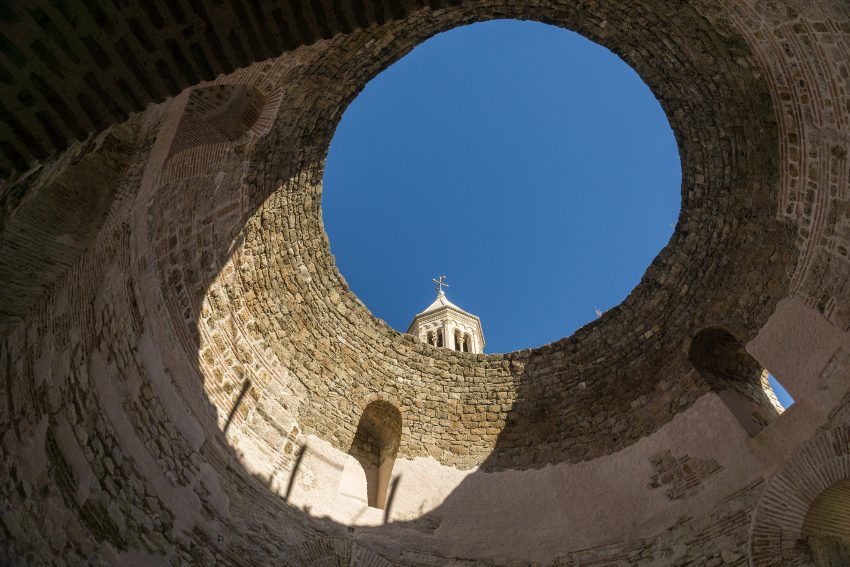
Tucked inside Diocletian's Palace in the heart of Split, the Vestibule is a circular Roman entrance hall that once served as the grand threshold to Emperor Diocletian's private apartments. Today it's one of the Old Town's most atmospheric “look up” moments: a stone drum of space that frames the sky like an oculus and makes even a quick stop feel cinematic.
Most visitors encounter the Vestibule naturally on a walking tour of the palace, linking the Peristyle (the palace's central courtyard) with the southern parts of the complex. It's also one of the best places in Split to pause for a minute, listen for a cappella singing, and get your bearings before exploring the palace lanes, basements, and waterfront.
Table of Contents
History and Significance of the Vestibule
The Vestibule was built as part of Diocletian's Palace, the late-Roman imperial complex constructed at the turn of the 4th century. In the palace's original layout, this space functioned as a formal antechamber: a controlled, ceremonial transition between the public grandeur of the Peristyle and the more private imperial areas beyond.
Architecturally, it’s significant because it compresses big Roman ideas into a compact footprint. The circular plan, the towering walls, and the open top create a powerful sense of verticality, while the stone surfaces amplify sound in a way that still surprises modern visitors.
Over centuries, as the palace transformed into a living neighborhood, the Vestibule remained a key passageway rather than a sealed “museum room.” That continuity is part of its charm: you're not just viewing a relic, you're walking through a space that has stayed woven into Split's daily urban life.
Things to See and Do in the Vestibule
First, do the obvious thing: stand near the center and look straight up. The open roof turns daylight into a spotlight, and the ring of stone above you makes the space feel larger than it is. If you visit when the sun is lower, the shadows can be especially dramatic.
Next, listen. The Vestibule is famous for its acoustics, and you may catch local klapa-style singing or other informal performances. Even without a performance, footsteps and conversation echo in a way that gives the space a distinct, almost theatrical presence.
Finally, use it as a connector in your palace walk. From here you can flow back to the Peristyle for photos, continue toward the southern sections of the palace, or build a short loop that includes the nearby cathedral area and the palace’s narrow streets.
How to Get to the Vestibule
The nearest airport is Split Airport (SPU), with the city center reachable by shuttle, taxi, or rideshare depending on your arrival time and season. For the best deals and a seamless booking experience, check out these flights to Split on Booking.com.
Split also has rail connections, and arriving by train puts you close to the central area so you can walk or take a short local ride to the Old Town. Train schedules and bookings can be found on Omio.
If you’re traveling by car, aim for a public garage outside the tight Old Town core and continue on foot, since the palace area is largely pedestrian and streets are narrow.
Practical Tips on Visiting the Vestibule
- Entrance fee: Free.
- Opening hours: 24 Hours.
- Best time to visit: Go early morning for quieter photos and a calmer feel, or come near dusk when the light and shadows inside the rotunda are at their most dramatic.
- How long to spend: Plan 10–20 minutes if you’re just stopping to look up and take photos; add time if you linger for singing or want to explore the surrounding palace lanes right after.
- Accessibility: The approach is mostly on foot through Old Town streets that can be uneven and crowded; take it slowly and expect some worn stone underfoot.
- Facilities: There are no dedicated facilities in the Vestibule itself, but you'll find plenty of cafés, restrooms (in nearby venues), and small shops within a few minutes' walk.
Where to Stay Close to the Vestibule
Base yourself inside Split Old Town (Diocletian's Palace area) for the easiest early-morning and late-evening visits without relying on transport.
Staying close to the Vestibule is all about convenience and atmosphere: you can step out before day-trippers arrive, return for a second look at golden hour, and keep your itinerary flexible. Here are five well-placed options that work for different styles and budgets.
Cornaro Hotel A polished, full-service choice near the palace edge, ideal if you want comfort, a strong breakfast, and an easy walk to the Vestibule without being in the noisiest lanes.
Hotel Vestibul Palace A standout for pure location and character, with the rare perk of being right in the palace fabric—perfect if you want to feel the history the moment you step outside.
Heritage Hotel Antique Split A boutique heritage stay just steps from major palace entrances, great for travelers who want a quieter base while still being extremely central.
Marmont Heritage Hotel A stylish, well-regarded option near the Riva promenade, ideal if you want quick access to waterfront dining and an easy stroll back into the palace lanes.
Hotel Park Split A classic, more resort-like city hotel by Bačvice Beach, best if you want a pool-and-beach balance while keeping the Vestibule within a walkable or short-taxi distance.
Is the Vestibule Worth Visiting?
Yes—absolutely. The Vestibule is one of those Split sights that delivers a big impact in a small amount of time: it's visually striking, historically meaningful, and sits right on the natural walking route through Diocletian's Palace.
Honest Pivot: If you dislike crowds, echoing spaces, or “quick stop” attractions that are more about atmosphere than exhibits, you might skip it and focus on calmer experiences like a longer waterfront walk, a museum visit, or a quieter neighborhood beyond the palace core.
What Other Travellers Say...


For Different Travelers
The Vestibule works well as a flexible stop: you can treat it as a 5-minute highlight on a packed day, or as a slow, sensory pause while exploring the palace streets. Because it's central and easy to combine with other sights, it fits most itineraries.
Families with Kids
Kids often enjoy the “giant stone room” feeling and the echo effect, and it’s an easy win because it doesn’t require a long attention span. Pair it with a simple scavenger-hunt style walk through the palace lanes (arches, columns, lions, gates) to keep momentum.
If you’re visiting with a stroller, be ready for uneven paving and occasional bottlenecks when tour groups pass through. A short, early visit can make the experience smoother.
Couples & Romantic Getaways
The Vestibule is especially romantic at quieter times of day, when you can stand together and take in the open sky framed by ancient stone. It also pairs naturally with an evening stroll: Peristyle, Vestibule, then the Riva for a drink.
If you catch live a cappella singing, it can feel like a private concert even in a public space. Build in a little unstructured time so you can linger if the moment is right.
Budget Travelers
This is one of the best high-impact stops in Split if you're watching costs, since it's quick to visit and sits among many free-to-wander palace streets. You can make it part of a self-guided loop that includes viewpoints, gates, and waterfront people-watching.
To keep spending down, visit early, bring a refillable water bottle, and save paid tickets for just one or two “inside” attractions you care about most (like the basements or a tower climb).
History Buffs
For history lovers, the Vestibule is a tangible “threshold” space that helps you understand how the palace was organized and how movement was controlled in an imperial complex. It's also a great spot to pause and visualize the ceremonial route from public courtyard to private quarters.
To deepen the context, consider a guided palace walk that explains the original Roman plan versus the medieval and modern layers. Even a short tour can make the space feel far more legible.
FAQs for Visiting Vestibule
Getting There
Tickets & Entry
Visiting Experience
Tours, Context & Itineraries
Photography
Accessibility & Facilities
Food & Breaks Nearby
Safety & Timing
Nearby Attractions to the Vestibule
- Peristyle (Peristil): The palace’s central courtyard, lined with columns and packed with atmosphere day and night.
- Cathedral of Saint Domnius: A landmark cathedral complex within the palace area, known for its history and prominent bell tower.
- Temple of Jupiter: A compact ancient temple-turned-chapel space with striking stonework and a powerful sense of age.
- Diocletian's Palace Substructures (Basements): The famous underground halls that reveal the palace's scale and structure.
- Riva Promenade: Split's waterfront walkway for cafés, sunset strolls, and an easy break after exploring the palace lanes.
The Vestibule appears in our Complete Guide to Visiting Split!

Moira & Andy
Hey! We're Moira & Andy. From hiking the Camino to trips around Europe in Bert our campervan — we've been traveling together since retirement in 2020!
This website uses affiliate links which may earn a commission at no additional cost to you!
Planning Your Visit
24 Hours.
Free.
Nearby Attractions
- Podrum (0) km
Historic Room, Historic Site and Roman Site - Ethnographic Museum (0) km
Attraction, Historic Building and Museum - Diocletian's Palace (0) km
Historic Building, Historic Site and Palace - Cathedral of St. Domnius (0) km
Cathedral and Religious Building - Temple of Jupiter (0) km
Historic Site, Religious Building and Roman Site - Bronze Gate (0.1) km
Attraction, City Gate and Historic Site - Riva Harbor (0.1) km
Area, Harbour and Promenade - City Museum of Split (0.1) km
Historic Building, Historic Site and Museum - Silver Gate (0.1) km
City Gate, City Walls and Historic Site - Iron Gate and Church of Our Lady of the Bell Tower (0.1) km
Church, City Gate and Historic Site