Twin Gates, Pula
Attraction, City Gate and Historic Site in Pula
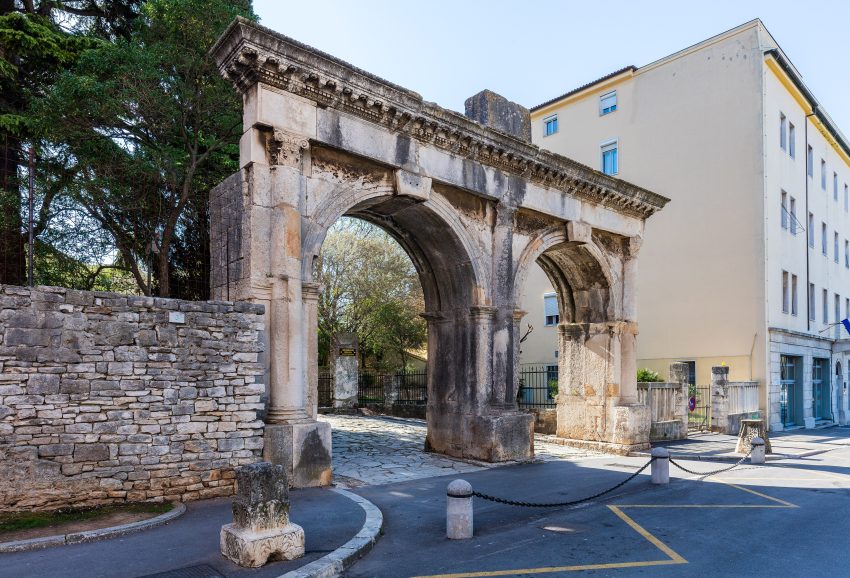
The Twin Gates (Porta Gemina) are one of Pula's most atmospheric Roman-era remnants: a double-arched stone gateway that once pierced the city walls and still anchors the Old Town's northern edge. You'll find them just a short walk from Pula's headline sights, making them an effortless “pause-and-look” stop that adds context to the city's ancient layout.
Most visitors see the Twin Gates as part of a self-guided walking tour linking the Arena, the Forum, and Pula's hilltop fortress area. For the best views, approach from both sides: one angle highlights the twin arches and decorative details, while the other helps you imagine the line of the former walls and the flow of people entering Roman Pola.
Table of Contents
- History and Significance of the Twin Gates
- Things to See and Do in the Twin Gates
- How to Get to the Twin Gates
- Practical Tips on Visiting the Twin Gates
- Where to Stay Close to the Twin Gates
- Is the Twin Gates Worth Visiting?
- For Different Travelers
- FAQs for Visiting Twin Gates
- Nearby Attractions to the Twin Gates
History and Significance of the Twin Gates
The Twin Gates date to Roman Pula (ancient Pola) and were built as a practical, fortified entrance through the city's defensive walls. Unlike a single monumental arch, the “twin” design created two parallel passages, which helped manage traffic and movement into the town.
Architecturally, the gate is known for its paired semicircular arches and surviving decorative elements that hint at Pula’s importance in the Roman world. Even if you’re not a specialist, it’s an easy place to spot classic Roman stonework and proportions up close, without needing a ticket or a timed entry.
Today, the Twin Gates are significant less as a standalone “big attraction” and more as a piece of the city's Roman puzzle. They make the ancient street plan feel real: you're not just looking at ruins, you're standing in a former threshold where the walled city began.
Things to See and Do in the Twin Gates
Start by taking a slow lap around the structure to appreciate how the two arches mirror each other. Look for the remnants of decorative features and the way the stone has weathered over time; it’s a great spot to notice how centuries of use and exposure have shaped the surface.
Next, use the Twin Gates as a navigation point for a mini Roman-history loop. From here, it's easy to continue toward the fortress hill area or back into the Old Town lanes for cafés, small shops, and additional Roman and Venetian-era details tucked into everyday streets.
Finally, treat it as a photography stop rather than a long visit. The most satisfying “activity” is comparing perspectives: a straight-on shot that frames both arches symmetrically, then a wider angle that includes nearby walls and streets to show how the gate sits in the living city.
How to Get to the Twin Gates
The nearest airports are Pula Airport (PUY) for the quickest arrival, with larger international options including Rijeka Airport (RJK) and Trieste Airport (TRS) if flights to Pula are limited. For the best deals and a seamless booking experience, check out these flights to Pula on Booking.com.
If you're coming by rail, trains connect Pula with other Istrian and Croatian hubs, and from Pula's train station you can reach the Old Town on foot or by a short local ride. Train schedules and bookings can be found on Omio.
Driving is straightforward in Istria, but Old Town streets are tight and parking is the main challenge—aim for public garages/paid lots on the edge of the center, then walk the last stretch to the gates.
Practical Tips on Visiting the Twin Gates
- Entrance fee: Free.
- Opening hours: 24 Hours.
- Best time to visit: Go early morning for quiet streets and clean, even light; golden hour before sunset is best for warmer stone tones and softer shadows.
- How long to spend: Plan 10–20 minutes for photos and a quick look, or 30–45 minutes if you’re using it as a waypoint on a longer Roman-history walk.
- Accessibility: The area is generally walkable, but expect uneven paving and occasional steps/curbs in the surrounding Old Town routes.
- Facilities: There are no on-site facilities at the monument itself; cafés, restrooms, and conveniences are easiest to find deeper in the Old Town and near major sights.
Where to Stay Close to the Twin Gates
Base yourself in Pula’s Old Town/center if you want to explore on foot and stitch together Roman sights, cafés, and evening strolls without relying on transport.
Hotel Amfiteatar A practical pick for travelers who want a central base near the Arena and an easy walk to the Twin Gates, with a classic city-hotel feel.
Park Plaza Histria Pula Best if you want a resort-style stay with pools and seaside access, while still being a manageable ride into the Old Town for sightseeing.
Boutique Hotel Oasi A quieter, boutique option near the water that suits travelers who want calmer evenings and a more local neighborhood vibe.
Ribarska Koliba Resort Included for its marina setting and strong “Istria coast” atmosphere—great if you’re mixing city history with sea views and seafood dinners.
Hotel Milan A solid mid-range choice that balances value and comfort, handy for travelers who prefer a straightforward stay and don’t need to be in the busiest lanes.
Is the Twin Gates Worth Visiting?
Yes—especially because it's free, central, and genuinely adds texture to a Pula walking tour. It's not a destination you plan a whole day around, but it's exactly the kind of small Roman landmark that makes the Old Town feel layered and historically “readable” as you move through it.
Honest Pivot: If you're short on time and only want the biggest “wow” moments, prioritize the Arena, the Forum area, and a viewpoint instead—then treat the Twin Gates as optional. Also, if you're expecting a fully restored monument or a curated museum-style experience, you may find it more satisfying as a quick photo stop than a deep visit.
What Other Travellers Say...

Reviews are very positive overall, with visitors praising the Twin Gates as a striking Roman-era landmark in the heart of Pula and an easy stop on a day of Old Town exploring. Common highlights include the attractive double-arch design, the sense of history, and how well it fits into a walk between other sights. A recurring downside is that some travelers feel the stone looks weathered or darkened and would benefit from cleaning, and a few note it's a quick look rather than a long standalone visit.


For Different Travelers
The Twin Gates work best as a flexible add-on: you can spend two minutes or twenty, and it still feels worthwhile. Because it sits in the everyday city fabric, it's easy to combine with food stops, shopping lanes, and other Roman highlights.
Families with Kids
Kids often enjoy the simple “two-arches” concept and the idea of passing through an ancient city entrance. Turn it into a mini scavenger hunt: spot the twin openings, count decorative elements, and imagine who used the gate long ago.
Pair it with a bigger, more interactive payoff nearby (like the Arena or a fortress viewpoint) so the day has a clear highlight. The Twin Gates then become a quick, low-effort history moment rather than a long stop.
Couples & Romantic Getaways
For couples, the appeal is the atmosphere: stone textures, narrow streets, and that cinematic “Old World” feeling as you wander. It’s a great place for a quick photo together that looks timeless without needing a ticket line.
Plan to pass by around sunset, then continue to a wine bar or dinner in the Old Town. The gates are best as a gentle transition point between sightseeing and an evening out.
Budget Travelers
This is a perfect budget-friendly sight: no entry fee, no time pressure, and it fits naturally into a walking day. If you’re watching spending, build a self-guided Roman route and use free landmarks like this to balance out any paid attractions.
Bring a refillable water bottle and do your “paid” stops selectively (for example, choose one major ticketed site), then fill the rest of the day with open-air history and viewpoints.
History Buffs
History lovers will appreciate how the Twin Gates connect to the story of Pula as a fortified Roman town. It's a small structure, but it's a tangible piece of urban infrastructure—an entrance, not just a decorative monument.
To deepen the visit, look at the gate in relation to the surrounding streets and surviving wall traces, then continue to other Roman-era points in the center. The value here is context: seeing how ancient Pula functioned as a city.
FAQs for Visiting Twin Gates
Getting There
Tickets & Entry
Visiting Experience
Tours, Context & Itineraries
Photography
Accessibility & Facilities
Food & Breaks Nearby
Safety & Timing
Nearby Attractions to the Twin Gates
- Pula Arena: The city's iconic Roman amphitheatre and the top must-see for first-time visitors.
- Forum (Pula's main square): A lively historic center point for cafés, people-watching, and nearby Roman-era landmarks.
- Temple of Augustus: A compact Roman temple that's easy to appreciate even on a quick Old Town loop.
- Fortress Kaštel: A hilltop fortress area that rewards you with broader views over Pula and the harbor.
- Zerostrasse Tunnels: Underground passages that add a different perspective to Pula’s layered history and make a good hot-day break.
The Twin Gates appears in our Complete Guide to Visiting Pula!

Moira & Andy
Hey! We're Moira & Andy. From hiking the Camino to trips around Europe in Bert our campervan — we've been traveling together since retirement in 2020!
This website uses affiliate links which may earn a commission at no additional cost to you!
Planning Your Visit
24 Hours.
Free.
Nearby Attractions
- Archaeological Museum of Istria (0.1) km
Historic Site, Museum and Viewing Point - Gate of Hercules (0.1) km
City Gate, Historic Site and Monument - Small Roman Theatre (0.1) km
Arts Venue, Roman Site and Theatre - Pula Castle (0.2) km
Castle, Museum and Viewing Point - Roman Amphitheater (0.3) km
Amphitheatre, Attraction and Roman Site - Triumphal Arch of the Sergii (0.3) km
Attraction, Historic Site and Monument - Pula Cathedral (0.3) km
Cathedral, Church and Historic Building - Floor Mosaic The Punishment of Dirce (0.4) km
Attraction, Historic Site and Roman Site - Franciscan Church and Monastery (0.4) km
Church, Monastery and Religious Building - Forum Square and Communal Palace (0.4) km
Palace, Square and Town Hall