Thien Mu Pagoda, Hue
Historic Building in Hue
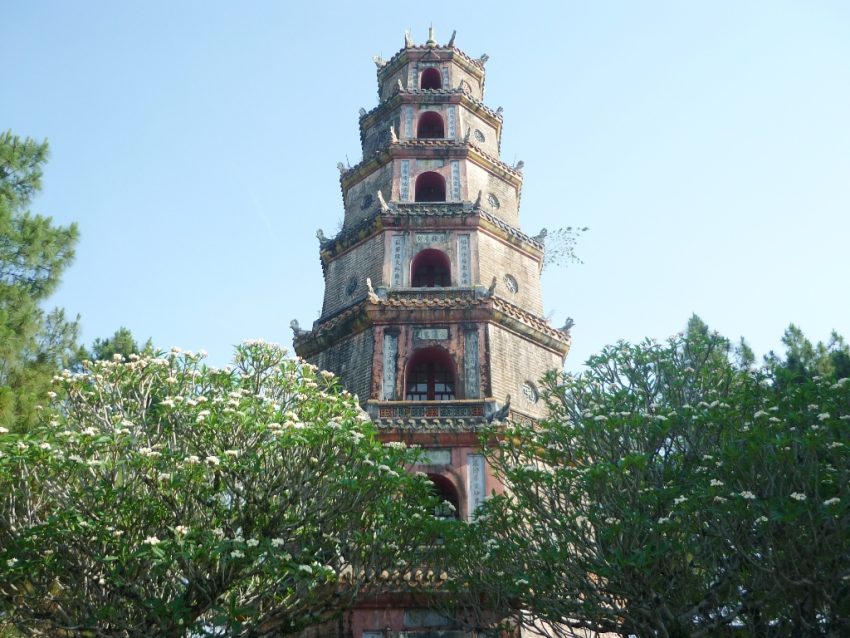
Thien Mu Pagoda, also known as Linh Mu Pagoda, sits gracefully atop Ha Khe Hill overlooking the Perfume River, about 5 kilometres west of Hue. Founded in 1601 by Lord Nguyen Hoang, it is one of the oldest and most revered Buddhist temples in Central Vietnam. Steeped in legend, crowned with the iconic seven-storey Phuoc Duyen Tower, and surrounded by tranquil gardens, it stands as one of the best places to visit in Hue.
The pagoda's legendary origins and centuries of expansion have shaped it into a place where myth, spirituality, and history intertwine. From Cham temples predating the Nguyen Lords to imperial reconstructions, storm damage restorations, and modern political symbolism-including the preserved car of monk Thich Quang Duc-Thien Mu Pagoda remains a powerful cultural and religious symbol of Vietnam.
Table of Contents
History and Significance of Thien Mu Pagoda
Thien Mu Pagoda was established in 1601 by Lord Nguyen Hoang, guided by a local legend of a “Heavenly Lady” who foretold the rise of a powerful ruler who would build a temple on Ha Khe Hill. The auspicious dragon-shaped geography of the hill further inspired him to create a sacred site that would harness spiritual energy and strengthen his burgeoning territory.
Through the centuries, the pagoda was expanded many times. Under Lord Nguyen Phuc Chu, it was rebuilt on a larger scale, complete with grand halls, a powerful bronze bell, and various palatial structures. Although not all of these buildings survive today, inscriptions, artifacts, and restored architecture echo the pagoda’s former magnificence.
During turbulent periods in Vietnamese history, Thien Mu Pagoda played varied roles-including serving as an altar of Earth Worship during the Tay Son Dynasty and becoming a symbol of Buddhist resistance during the 1960s. It remains a deeply spiritual site, layered with religious, political, and cultural meaning.
Things to See and Do in Thien Mu Pagoda
The seven-storey Phuoc Duyen Tower, built in 1844 by King Thieu Tri, is the pagoda's most iconic structure and a defining symbol of Hue. Rising 21 metres, the octagonal tower stands elegantly at the riverfront entrance and houses Buddha statues on each level.
Inside the pagoda grounds, visitors can explore ancient halls containing statues of Dharma protectors, the Ten Kings, Maitreya, and the Three Worlds Buddha. The Dai Hong Chung bell, weighing more than two tons, is a masterpiece of bronze craftsmanship that has endured for centuries.
The complex’s gardens offer peaceful paths through rockeries and bonsai, including a rock garden gifted by Dao Tan, founder of Vietnamese opera. One of the most poignant sites is the Austin car used by monk Thich Quang Duc before his self-immolation in Saigon in 1963-a deeply symbolic moment in modern Vietnamese history.
How to Get to Thien Mu Pagoda
The nearest airport is Phu Bai International Airport, located about 16 kilometres from Hue and offering frequent domestic flights for easy access. For the best deals and a seamless booking experience, check out these flights to Hue on Booking.com.
Hue Railway Station provides convenient rail connections to Da Nang, Hanoi, Ho Chi Minh City, and other major destinations in Vietnam. Train schedules and bookings can be found on Omio.
Travelling by car is straightforward, with roads leading directly along the riverfront from central Hue; parking areas are found close to the pagoda's entrance.
Practical Tips on Visiting Thien Mu Pagoda
- Suggested tips: Dress respectfully, as Thien Mu Pagoda remains an active place of worship.
- Best time to visit: Early morning or sunset for calm surroundings and beautiful light on the tower.
- Entrance fee: Free entry.
- Opening hours: Typically 8:00-17:00, though the grounds are often accessible earlier.
- How long to spend: Around 45-60 minutes exploring the pagoda and riverfront area.
- Accessibility: Mostly accessible, with some stairs near the tower; paths can be uneven.
- Facilities: Restrooms and small drink stalls available nearby.
- Photography tip: Capture the Phuoc Duyen Tower reflected in the Perfume River on calm mornings.
- Guided tours: Many Hue city tours include Thien Mu Pagoda due to its cultural and historical significance.
- Nearby food options: Restaurants and riverside cafés can be found along Nguyen Phuc Nguyen Street.
Where to Stay close to Thien Mu Pagoda
Staying near the Perfume River provides scenic surroundings and easy access to Thien Mu Pagoda. The elegant Azerai La Residence offers sophisticated riverside accommodation just a short drive away. Those seeking boutique comfort may enjoy Le Domaine de Cocodo, known for its tranquil ambiance. Another convenient option is Villa Hue, ideal for travellers wanting stylish rooms near Hue’s heritage sites.
Is Thien Mu Pagoda Worth Visiting?
Thien Mu Pagoda is absolutely worth visiting. Its riverside setting, legendary origins, architectural highlights, and powerful historical resonance make it one of Hue's most iconic attractions. Whether you come for spirituality, photography, or history, it offers a serene yet deeply meaningful experience that stays with visitors long after they leave.
What Other Travellers Say...

Thiên Mụ Pagoda in Huế sits on a hill beside the Perfume River and is known for its seven‑story tower, landscaped grounds and monastic community; visitors describe a calm, peaceful atmosphere with well‑maintained gardens, nice riverside seating and photo opportunities, lovely river views, and a spiritual, relaxing place to walk around — it's an easy, worthwhile stop on a day trip or cruise excursion.


FAQs for Visiting Thien Mu Pagoda
Nearby Attractions to Thien Mu Pagoda
- Hue Imperial City: The historic seat of the Nguyen emperors.
- Hon Chen Temple: A colourful riverside temple dedicated to the Mother Goddess.
- Vong Canh Hill: A scenic viewpoint overlooking the Perfume River.
- Tu Duc Tomb: One of the most beautiful imperial mausoleums near Hue.
- Thuy Bieu Village: A peaceful countryside village known for gardens and local crafts.
The Thien Mu Pagoda appears in our Complete Guide to Visiting Hue!

Moira & Andy
Hey! We're Moira & Andy. From hiking the Camino to trips around Europe in Bert our campervan — we've been traveling together since retirement in 2020!
This website uses affiliate links which may earn a commission at no additional cost to you!
Planning Your Visit
8AM-6PM
Free
Nearby Attractions
- Ho Quyen Arena (1.2) km
Historic Site - Tomb of Tu Duc (3.2) km
Historic Site - Dien Tho Residence (3.7) km
Historic Building - Cung Truong Sanh (3.7) km
Historic Building - Hung Mieu Temple (3.7) km
Historic Building - Mieu Temple (3.7) km
Historic Building - Hien Lam Pavilion (3.7) km
Historic Building - Tu Phuong Vo Su Tower (3.9) km
Historic Building - Halls of the Mandarins (4.0) km
Historic Building - Forbidden Purple City (4.0) km
Historic Building