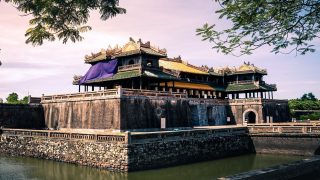
Tu Phuong Vo Su Tower, Hue
Historic Building in Hue
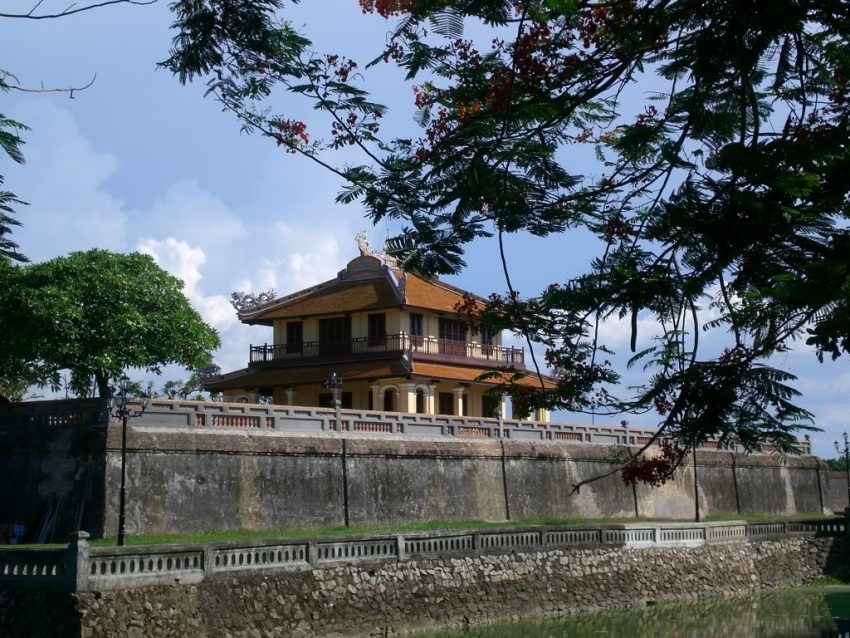
Tu Phuong Vo Su Tower, also known as the Tower of Peace or the Pavilion of Four Directions, stands near the Hoa Binh Gate on the Bac Khuyet platform of the Hue Imperial Citadel. Built in 1923 under King Khai Dinh for his 40th birthday celebrations, the two-story structure quickly became a serene retreat for the royal family. Its breezy balconies, elevated position, and peaceful atmosphere made it one of the things to do in Hue.
The tower's name translates to “Four Directions of Peace,” expressing the Nguyen Dynasty's hope for stability during a time when their authority had become mostly symbolic. Over the decades, Tu Phuong Vo Su Tower endured war, structural damage, and controversy, yet it stands today as a restored landmark symbolising both cultural resilience and architectural hybridity.
Table of Contents
- History and Significance of Tu Phuong Vo Su Tower
- Things to See and Do in Tu Phuong Vo Su Tower
- How to Get to Tu Phuong Vo Su Tower
- Practical Tips on Visiting Tu Phuong Vo Su Tower
- Where to Stay close to Tu Phuong Vo Su Tower
- Is Tu Phuong Vo Su Tower Worth Visiting?
- FAQs for Visiting Tu Phuong Vo Su Tower
- Nearby Attractions to Tu Phuong Vo Su Tower
History and Significance of Tu Phuong Vo Su Tower
Commissioned by King Khai Dinh in 1923, the tower was initially built for the “Tu tuan dai khanh tiet” longevity ceremony marking the monarch’s 40th birthday. After the festivities, it became a cherished retreat where the king, royal family members, and palace children could rest, study, and admire views over the Imperial City. Before its construction, the location was occupied by the Tu Thong Pavilion, a guard post demolished to make way for the new structure.
The tower’s symbolic meaning-peace in all four directions-echoed the Nguyen court’s yearning for harmony during French colonial rule. Despite this aspiration, history was turbulent. After the fall of the Nguyen Dynasty in 1945, the tower suffered neglect and damage, with the 1968 Tet Offensive causing significant structural problems. Soil saturation and shifted walls deformed the building, and much of the original wooden frame was lost.
Yet Tu Phuong Vo Su Tower remained culturally important, and its restoration became a priority. The structure's survival reflects both its architectural value and its role as a poetic symbol of peace and endurance.
Things to See and Do in Tu Phuong Vo Su Tower
Visitors can admire the tower’s unusual mix of East Asian decorative motifs and early 20th-century European construction techniques. Nearly square in shape, the two-story structure offers a porch on the ground floor and a balcony above, where the royal family once enjoyed views and cool breezes.
The decorative elements include a sun motif flanked by dragons and a tiled roof reflecting Nguyen aesthetic traditions. Walking around the tower reveals its position along the Imperial City's northwest-southeast axis, linking it symbolically and spatially with major structures such as Ngo Mon Gate, Thai Hoa Palace, Can Thanh Palace, and Kien Trung Palace.
Although the interior is modest compared to other citadel buildings, its architectural blend tells a unique story of cultural exchange during a transitional period of Vietnamese history.
How to Get to Tu Phuong Vo Su Tower
Phu Bai International Airport, located about 16 kilometres from Hue, provides the nearest air access with frequent domestic routes connecting the city to major hubs. For the best deals and a seamless booking experience, check out these flights to Hue on Booking.com.
Hue Railway Station sits a short distance from the Imperial City and offers regular train services linking Hue with Da Nang, Hanoi, and Ho Chi Minh City. Train schedules and bookings can be found on Omio.
Travelling by car is easy, with parking zones outside the main citadel gates. From there, visitors can walk toward the north gate area to reach Tu Phuong Vo Su Tower.
Practical Tips on Visiting Tu Phuong Vo Su Tower
- Suggested tips: Explore the ground floor and walk around the balcony area to appreciate the architectural blend.
- Best time to visit: Early morning or late afternoon for cooler breezes and good lighting.
- Entrance fee: Included within the Imperial City ticket.
- Opening hours: Typically 8:00-17:30; hours may vary with seasons.
- How long to spend: Around 20-30 minutes.
- Accessibility: Mostly accessible, though the upper floor may require climbing stairs.
- Facilities: Basic facilities are available elsewhere within the Imperial City.
- Photography tip: Shoot from the northwest to capture the tower with the Imperial City walls as a backdrop.
- Guided tours: Many tours covering the northern citadel include this tower.
- Nearby food options: Snacks and cafés are available just outside the citadel walls.
Where to Stay close to Tu Phuong Vo Su Tower
Staying near the Imperial City offers convenient access to Tu Phuong Vo Su Tower and other important historic structures. The refined Azerai La Residence provides elegant accommodation close to the Perfume River. For boutique comfort, Le Domaine de Cocodo is a tranquil option near the city centre. Another appealing stay is Villa Hue, well-positioned for exploring Hue’s cultural landmarks.
Is Tu Phuong Vo Su Tower Worth Visiting?
Tu Phuong Vo Su Tower is absolutely worth visiting, especially for travellers interested in architecture that bridges tradition and modernity. Its peaceful setting, restored structure, and historical layers-from royal retreats to wartime damage to modern-day restoration-make it a fascinating addition to any tour of the Imperial City.
What Other Travellers Say...

Four-direction Innocent Pavilion, located in Đặng Thái Thân, Phú Hòa, Huế, is a historic royal pavilion converted into a café where you can buy gifts and sit on a patio to enjoy views of the Citadel; visitors praise its peaceful, well-maintained architecture and landscaping, renovated interior and evening atmosphere, costume rentals for photos, attentive staff, tasty (though slightly pricier) coffee served with paper straws, and recommend timing and seating to make the most of the vistas — it’s a fitting final stop when touring the Imperial City.


FAQs for Visiting Tu Phuong Vo Su Tower
Nearby Attractions to Tu Phuong Vo Su Tower
- Hoa Binh Gate: The north gate of the Imperial City.
- Kien Trung Palace: A French-Vietnamese style palace once used by Nguyen emperors.
- Can Chanh Palace (ruins): Former working palace of the Nguyen emperors.
- Thai Hoa Palace: The ceremonial throne hall of the Nguyen court.
- Ngo Mon Gate: The grand southern entrance to the Imperial City.
The Tu Phuong Vo Su Tower appears in our Complete Guide to Visiting Hue!

Moira & Andy
Hey! We're Moira & Andy. From hiking the Camino to trips around Europe in Bert our campervan — we've been traveling together since retirement in 2020!
This website uses affiliate links which may earn a commission at no additional cost to you!
Planning Your Visit
Nearby Attractions
- The Royal Library (0.2) km
Historic Building - Cung Truong Sanh (0.3) km
Historic Building - Nhat Thanh Lau (0.3) km
Historic Building - Forbidden Purple City (0.3) km
Historic Building - The Royal Theatre (0.3) km
Historic Building - Dien Tho Residence (0.4) km
Historic Building - Halls of the Mandarins (0.4) km
Historic Building - Thai Hoa Palace (0.4) km
Palace - Hung Mieu Temple (0.5) km
Historic Building - Noon Gate (0.5) km
City Gate