Den Gamle By, Aarhus
in Aarhus
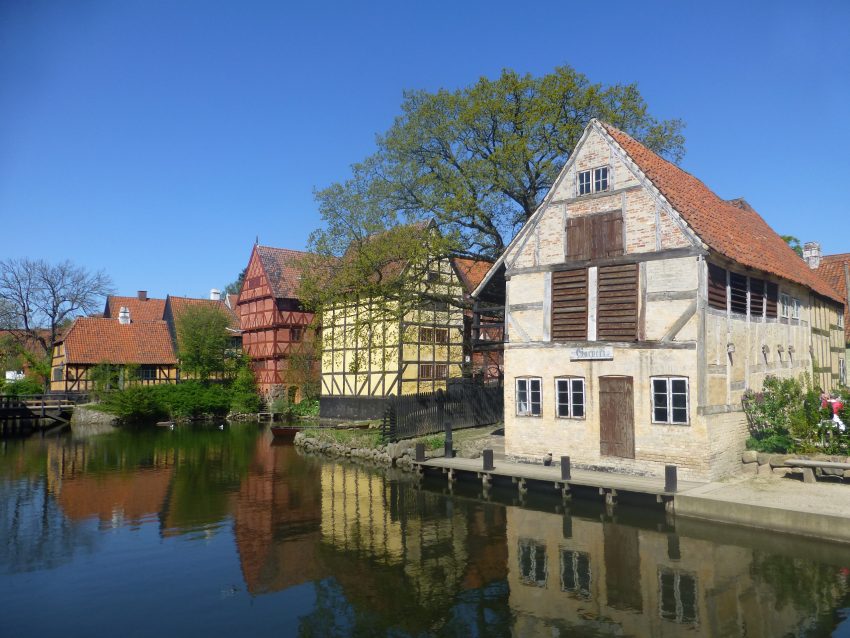
Den Gamle By is the attraction in Aarhus that most reliably turns a “quick look” into half a day. Set beside the Botanical Garden, it is a full open-air townscape where you walk through real streets lined with historic buildings that have been moved, rebuilt, and furnished to match their era-so you are not just looking at exhibits, you are moving through a believable city.
What makes it special is the breadth: you can drift from older timber-framed houses and traditional workshops into distinctly modern-feeling streets that capture the 20th century and beyond. It is immersive without being gimmicky, and it rewards slow travel-especially if you like lingering in shop interiors, reading details, and noticing how ordinary routines (food, housing, work, leisure) change over time.
Table of Contents
- History and Significance of the Den Gamle By
- Things to See and Do in the Den Gamle By
- How to Get to the Den Gamle By
- Practical Tips on Visiting the Den Gamle By
- Where to Stay Close to the Den Gamle By
- Is the Den Gamle By Worth Visiting?
- For Different Travelers
- FAQs for Visiting Den Gamle By
- Nearby Attractions to the Den Gamle By
History and Significance of the Den Gamle By
Den Gamle By began as a preservation project and became one of Denmark's defining “living history” museums. The core idea is simple but powerful: instead of isolating objects in display cases, rebuild the environments they belonged to-streets, homes, businesses, and civic spaces-so visitors understand how people actually lived, moved, and worked.
Its significance in Aarhus is also geographic. Placing the museum beside the Botanical Garden makes it feel like a cultural park: you can combine an urban-history deep dive with an easy outdoor break, and you remain close enough to the centre that Den Gamle By can anchor an entire day of sightseeing without complex logistics.
Today, the museum functions as a practical, human-scale introduction to Danish social history. It is not only about “big events”; it is about the lived texture of daily life-housing standards, consumer culture, public services, and changing norms-presented in a way that stays memorable because you walked through it.
Things to See and Do in the Den Gamle By
Start by choosing a “time period strategy” rather than trying to see everything in strict order. Many visitors find it most satisfying to begin in the older market-town streets for the atmosphere, then move forward in time-because the contrast makes the 20th-century areas feel more vivid and surprisingly emotional (a familiar shop sign, a recognisable living-room layout, a shift in what people consider “normal”).
Prioritise interiors and staffed spaces. The workshops, stores, and domestic rooms are where Den Gamle By does its best work: it turns history into something you can read in objects that were made to be used-kitchens, counters, tools, shelves, signs, and small everyday choices. If you are travelling with someone who “doesn't usually love museums,” these are the moments that typically convert them.
Leave time for the newer streets as well. The modern-era sections give the museum bite: you see how Denmark’s welfare-state era and contemporary life look when turned into history you can walk through, not just talk about.
How to Get to the Den Gamle By
Aarhus Airport (AAR) is the closest airport for the city, and Billund Airport (BLL) is a common alternative for a wider range of routes and carriers. For the best deals and a seamless booking experience, check out these flights to Aarhus on Booking.com.
If you are arriving by rail, take the train to Aarhus Central Station and continue into the city by foot, bus, or taxi depending on your luggage and weather. Train schedules and bookings can be found on Omio.
Local buses make Den Gamle By straightforward from across Aarhus, and it is also walkable from central districts if you are already sightseeing nearby.
If you are driving, aim for parking near the museum or in a central car park and then finish on foot, as the city-centre area is easiest enjoyed without constantly relocating the car.
Practical Tips on Visiting the Den Gamle By
- Entrance fee: Adults 145 DKK (01 January – 27 March) / 205 DKK (28 March – 31 December). Children 0–17 free. Students 75 DKK / 105 DKK (student tickets sold on-site only, with valid student ID).
- Opening hours: (Winter) 01 January – 27 March: Monday – Friday: 10:00–16:00; Saturday – Sunday: 10:00–17:00; 07 February – 15 February: Daily: 10:00–17:00. (Summer) 28 March – 30 December: Daily: 10:00–17:00; 24 December & 31 December: Daily: 10:00–15:00.
- Official website: https://www.dengamleby.dk/
- Best time to visit: Weekday mornings for calmer streets and easier access to interiors; late afternoon can be lovely too, but allow buffer time so you do not feel rushed at closing.
- How long to spend: 4-5 hours if you want to properly explore multiple eras and interiors; 2-3 hours for a highlights-focused visit that still feels worthwhile.
- Accessibility: Expect uneven surfaces and cobbles in the historic streets; many outdoor areas are manageable, and mobility scooters can be borrowed (book ahead in peak season).
- Facilities: Multiple toilets and baby-changing points are available across the museum, lockers are available for larger bags, and there are eateries for lunch and café breaks so you can pace the visit comfortably.
Where to Stay Close to the Den Gamle By
For a culture-heavy itinerary, base yourself in central Aarhus around the Latin Quarter and cathedral streets so you can walk to museums, cafés, and evening dining; if your main priority is transport efficiency for day trips, stay closer to Aarhus Central Station for the smoothest arrivals and departures while still keeping Den Gamle By within easy reach.
For a classic, walk-everywhere stay in the historic core, choose Hotel Royal. If you prefer a smaller, characterful property with a calm feel but strong central access, Boutique Hotel Villa Provence is an excellent fit. For modern comfort with simple logistics and quick connections across the city, consider Comwell Aarhus Dolce by Wyndham.
Is the Den Gamle By Worth Visiting?
Yes-decisively. If you do one major paid attraction in Aarhus, Den Gamle By is often the best value because it delivers both scale and variety: you get architecture, design, social history, and the feeling of discovery that comes from moving through real spaces rather than scanning a single gallery.
Honest pivot: if you dislike walking-heavy attractions, struggle on cobbles, or only want “masterpieces” and headline objects, this may not be your best use of time. Den Gamle By shines when you enjoy atmosphere, detail, and the slow satisfaction of connecting daily life across different eras.
What Other Travellers Say...

Recreation of a market town from the time of Hans Christian Andersen, including 75 period houses.


For Different Travelers
Families with Kids
Den Gamle By works well for families because it feels like a small town adventure rather than a formal museum. Children tend to engage more naturally when they can move from street to street, pop into different rooms, and spot the differences between “then” and “now” without being asked to read long panels.
Plan your visit as short bursts of indoor exploration with outdoor resets. A simple rhythm-two or three interiors, then a snack break, then another cluster-keeps energy steady and reduces the risk of museum fatigue.
Couples & Romantic Getaways
For couples, Den Gamle By is an easy win because it is both structured and wander-friendly. You can follow a loose route, but you can also let the visit unfold organically-finding a quiet street, stepping into a shop, then resurfacing for a coffee break without feeling like you are “doing it wrong.”
It is also unusually good for conversation. The museum is full of small prompts-furnishings, advertising, social norms, domestic layouts-that naturally lead to “What would you have missed?” and “Would you have liked living here?” moments.
Budget Travelers
While it is a paid attraction, Den Gamle By can justify its cost if you treat it as your primary half-day activity rather than a quick add-on. It packs enough content and variety that you can skip another ticketed museum and still feel you had a substantial culture day.
To stretch value, plan your visit around a longer stay inside the museum rather than pairing it with too many other stops. Bring a refillable water bottle, use the on-site cafés selectively, and treat the experience as your main event.
History Buffs
If you care about social history, Den Gamle By is one of the strongest museum experiences in Denmark because it does not flatten the past into a single narrative. It shows the granular reality: how housing changes, how consumer culture arrives, how public services shape daily life, and how “modern” becomes dated faster than you expect.
Go in with a theme-work, domestic life, leisure, or urban change-and you will notice more. The museum rewards people who like comparing details across periods rather than just ticking off buildings.
FAQs for Visiting Den Gamle By
Getting There
Tickets & Entry
Visiting Experience
Tours, Context & Itineraries
Photography
Accessibility & Facilities
Food & Breaks Nearby
Safety & Timing
Nearby Attractions to the Den Gamle By
- Aarhus Botanical Garden - A relaxing green space next door that pairs perfectly with a museum-heavy day.
- ARoS Aarhus Art Museum - Aarhus's flagship art museum and a strong contrast to Den Gamle By's historical focus.
- Aarhus City Hall - A modernist landmark and an easy architecture stop in the central area.
- The Latin Quarter - The best district for cafés, small shops, and a slow wander after your museum visit.
- Aarhus Cathedral - A central landmark that anchors the historic core and fits naturally into a city-centre walking loop.
The Den Gamle By appears in our Complete Guide to Visiting Aarhus!

Moira & Andy
Hey! We're Moira & Andy. From hiking the Camino to trips around Europe in Bert our campervan — we've been traveling together since retirement in 2020!
This website uses affiliate links which may earn a commission at no additional cost to you!
Planning Your Visit
(Winter) 01 January - 27 March: Monday - Friday: 10:00-16:00; Saturday - Sunday: 10:00-17:00; 07 February - 15 February: Daily: 10:00-17:00.
(Summer) 28 March - 30 December: Daily: 10:00-17:00; 24 December & 31 December: Daily: 10:00-15:00.
Adults 145 DKK (01 January - 27 March) / 205 DKK (28 March - 31 December). Children 0-17 free. Students 75 DKK / 105 DKK (student tickets sold on-site only, with valid student ID).
Nearby Attractions
- Aarhus Botanical Gardens (0.1) km
Attraction, Gardens and Park - Møllestien (0.7) km
Street - ARoS Aarhus Art Museum (0.8) km
Arts Venue and Museum - Our Lady Church (0.9) km
Church, Historic Building and Religious Building - Åboulevarden (1.0) km
Area - Aarhus City Hall (1.1) km
Attraction - Latinerkvarteret (1.1) km
Area - Salling ROOFTOP (1.1) km
Attraction, Gardens and Viewing Point - Naturhistorisk Museum Aarhus (1.1) km
Museum - Aarhus University (1.1) km
Attraction, Notable Building and Park
