Kruja Ethnographic Museum
Museum in Kruja

Nestled within the walls of Kruja Castle, the Kruja Ethnographic Museum offers a fascinating window into the traditional life and culture of Albania's past. Housed in an authentic 19th-century home that once belonged to the influential Toptani family, the museum brings history to life through its rooms, artifacts, and immersive storytelling. Its atmospheric interiors, colorful details, and richly furnished spaces make it one of the top attractions in Kruja for anyone curious about how Albanians once lived, worked, and celebrated.
Visiting the museum is a great place to visit on a walking tour of Kruja, especially after exploring the nearby Skanderbeg Museum and the castle's ancient walls. The building's authenticity - from its courtyard to its hammam - offers a rare and intimate glimpse of Albanian domestic life during the Ottoman era.
Table of Contents
- History and Significance of Kruja Ethnographic Museum
- Things to See and Do in Kruja Ethnographic Museum
- How to Get There
- Practical Tips on Visiting Kruja Ethnographic Museum
- Is Kruja Ethnographic Museum Worth Visiting?
- FAQs for Visiting Kruja Ethnographic Museum
- Nearby Attractions to Kruja Ethnographic Museum
History and Significance of Kruja Ethnographic Museum
The Ethnographic Museum was opened in 1989 and occupies the former residence of the Toptani family, one of Kruja’s most prominent landowning dynasties. The house dates to the early 19th century and has been meticulously preserved, showcasing the architectural style and craftsmanship typical of affluent Albanian households of the Ottoman period. Built from stone, wood, and plaster, the structure reflects the balance between functionality and beauty, with carved ceilings, frescoed walls, and decorative furniture that highlight the artistry of local craftsmen.
The Toptanis' home serves as an ideal setting for the museum's purpose: to illustrate the daily lives, social customs, and work traditions of families in the Kruja region. Through its detailed recreations of rooms and activities, the museum helps visitors understand the self-sufficiency, hospitality, and gender roles that shaped 19th-century Albanian society.
Things to See and Do in Kruja Ethnographic Museum
The museum’s tour begins in the work yard, where centuries-old tools and curiosities reveal the rhythm of domestic labor. Here, you can see traditional baking ovens, olive presses, stone beehives, and poultry cages - all reminders of how households once functioned as independent units of production. The ground floor displays a variety of tools used in farming, leatherwork, and olive oil production, emphasizing the family’s ability to sustain itself entirely from its land and livestock.
The upper floor is devoted to family life and hospitality. One of the highlights is the women’s room, which features the paja - a collection of handmade objects such as blankets, tablecloths, and ornaments that a young woman would prepare for her future marriage. This room also reflects the central role of women in maintaining household harmony and tradition. In contrast, the men's room showcases weapons, swords, and ornate décor, representing a space of authority and social gathering. Visitors will also notice a small Turkish bath (hammam), frescoed walls, and colorful furniture - details that reflect both luxury and daily ritual. This spot is one of the best places to visit in Kruja for understanding the elegance and intimacy of traditional Albanian family life.
How to Get There
The Kruja Ethnographic Museum is located within the Kruja Castle complex, about 32 km north of Tirana. To reach Kruja, you can take a taxi or drive from Tirana in around one hour along the SH52 highway. If you are looking to rent a car in Albania I recommend having a look at Discover Cars, first, as they compare prices and review multiple car rental agencies for you.
Once in Kruja, the museum is accessed by walking through the old bazaar and up to the castle entrance. The house is clearly signposted inside the fortress area and can easily be visited together with the Skanderbeg Museum. Public buses from Tirana also run regularly to Kruja's main town, from where the castle is a short but steep uphill walk.
Practical Tips on Visiting Kruja Ethnographic Museum
- Best time to visit Kruja Ethnographic Museum: Morning or late afternoon to enjoy cooler temperatures inside the stone house.
- Entrance fee in Euros: Around €3.
- Opening hours: Daily from 9 am to 6 pm.
- Official website: Information available via the National Museum of Kruja.
- How long to spend: Around 45 minutes to 1 hour.
- Accessibility: Narrow stairs and uneven flooring; limited wheelchair access.
- Facilities: Gift shop and rest area nearby in the castle courtyard.
- Photography tip: Capture the carved wood ceilings and vibrant painted furniture on the upper floor.
- Guided tours: Available in several languages; guides often provide rich anecdotes about local customs.
- Nearby food options: Traditional restaurants within the castle walls and near the old bazaar.
Is Kruja Ethnographic Museum Worth Visiting?
Yes. The Kruja Ethnographic Museum is one of the must-see places in Kruja, offering an immersive journey into Albania's cultural and domestic history. Its beautifully preserved rooms, authentic artifacts, and evocative setting make it one of the most atmospheric museums in the country. Whether you're drawn by craftsmanship, anthropology, or architecture, it's an essential stop that deepens any visit to Kruja Castle.
What Other Travellers Say...

Ethnographic Museum of Kruja, tucked beside the Krujë fortress at GQ4V+MFJ Rruga Kala, presents a recently renovated traditional wealthy Albanian home that immerses visitors in local life through displayed household tools, storytelling panels and a mix of multimedia features—interactive walls, audio guides, augmented and virtual reality experiences (including a virtual dressing room and VR scenes of family life). The compact two-level building can be toured in about 20–30 minutes; rooms carry English information cards so you can self‑guide, though staff also offer engaging short tours. Note the museum is small, lacks air conditioning and a restroom, and accepts cash only.


FAQs for Visiting Kruja Ethnographic Museum
Nearby Attractions to Kruja Ethnographic Museum
- Preza Castle - A scenic hilltop ruin with panoramic vistas of the surrounding plains.
- Kruja Castle - The historic fortress of Skanderbeg, Albania's national hero.
- Skanderbeg Museum - Dedicated to Albania's struggle against Ottoman rule.
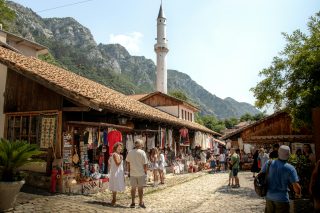
- Old Bazaar of Kruja - A lively street lined with artisan shops and local crafts.
- Sari Salltik Cave - A sacred site on Mount Kruja offering sweeping mountain views.
The Kruja Ethnographic Museum appears in our Complete Guide to Visiting Kruja!

Moira & Andy
Hey! We're Moira & Andy. From hiking the Camino to trips around Europe in Bert our campervan — we've been traveling together since retirement in 2020!
This website uses affiliate links which may earn a commission at no additional cost to you!
Planning Your Visit
9am-7pm daily May-Sep, to 4pm Tue-Sun Oct-Apr
300 lekë
Nearby Attractions
- Kruja Castle (0.1) km
Castle - Skanderbeg Museum (0.1) km
Museum - Kruja’s Medieval Hammam (0.1) km
Historic Building - The Tekke of Dollma (0.1) km
Mosque - Watch Tower (0.1) km
Tower - Kruja Bazaar (0.3) km
Bazaar - Skanderbeg Monument (0.5) km
Monument - Sari Salltik Cave (1.3) km
Cave and Religious Building - Zgërdhesh Archaeological Site (3.8) km
Ruins - Qafshtame National Park (8.3) km
National Park