House of the Vettii, Pompeii
Roman Site in Pompeii
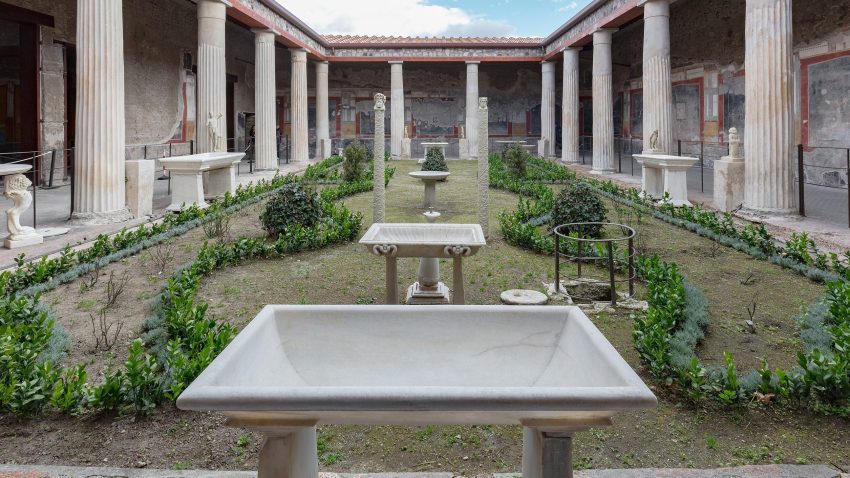
The House of the Vettii is one of the must-see places in Pompeii if you want to understand how wealth and status could be built outside the traditional aristocracy. Owned by the freedmen brothers Aulus Vettius Restitutus and Aulus Vettius Conviva, this richly decorated residence showcases how former slaves could climb the social ladder through trade and business. At the entrance, a striking painting of Priapus, god of prosperity, sets the tone: this is a house that celebrates economic success and the pleasures that success could buy.
Inside, the house feels more intimate than giants like the House of the Faun, yet it is packed with colour, sculpture, fountains, and sophisticated wall paintings. During a major restructuring in the Augustan era, the traditional tablinum reception room was sacrificed to create a larger garden, turning the peristyle into the heart of the home. Statues, water jets, and elaborately painted rooms cluster around this space, making the House of the Vettii a highlight of any walking tour of Pompeii for anyone curious about Roman taste, work, and leisure.
Table of Contents
- History and Significance of the House of the Vettii
- Things to See and Do in the House of the Vettii
- How to Get to the House of the Vettii
- Practical Tips on Visiting the House of the Vettii
- Where to Stay close to the House of the Vettii
- Is the House of the Vettii Worth Visiting
- FAQs for Visiting House of the Vettii
- Nearby Attractions to the House of the Vettii
History and Significance of the House of the Vettii
The House of the Vettii began as a typical elite townhouse, but its most important transformation took place during the Augustan period in the 1st century BCE. At that time, Pompeii was being reshaped to reflect new imperial fashions and a more cosmopolitan outlook. The Vettii brothers used this opportunity not only to repair and expand their property but also to modernise its layout, eliminating the usual tablinum to carve out a larger peristylium garden. This shift from formal reception space to a garden-focused design tells you a lot about changing ideas of comfort and display in the early Empire.
What makes the house especially striking is its association with two freedmen owners. Aulus Vettius Restitutus and Aulus Vettius Conviva had once been enslaved, but after gaining their freedom they accumulated enough wealth to join the local elite. Their decision to place the house under the protection of Priapus, whose image greets visitors at the entrance, is both a religious gesture and a bold statement about prosperity and fertility. The painting, showing the god weighing his exaggerated phallus against a bag of money, is an almost tongue-in-cheek reminder that economic power and virility went hand in hand in Roman symbolism.
The eruption of Vesuvius in AD 79 froze the house in a late phase of decoration and use, capturing the Vettii at the peak of their success. Repairs after the AD 62 earthquake had already reshaped parts of Pompeii, and the House of the Vettii reflects a mature, confident style of interior design known as Fourth Style wall painting. Today, it stands as one of the clearest examples of how freedmen could use architecture and art to project their identity, underlining the social complexity of Pompeii beyond old aristocratic families.
Things to See and Do in the House of the Vettii
As you enter, pause at the painting of Priapus to the right of the doorway. This guardian image is not just decorative; it announces the house’s claim to prosperity and protection, making the threshold a statement of the owners’ ambitions. From there, move into the atrium and notice how quickly your view is drawn towards the garden rather than into a traditional tablinum. The Vettii brothers wanted visitors to be impressed by greenery, water, and art, not just by formal reception furniture.
Around the peristylium, look closely at the richly decorated rooms. One of the most famous is the living room with the frieze of Cupids (erotes), showing them busily engaged in the productive occupations of the time: selling wine, washing clothes, cultivating flowers, harvesting, making jewellery, and preparing perfumes. It is both charming and revealing, suggesting that the owners took pride in the commercial activities that had made their fortune. The presence of such playful yet work-focused imagery in a prestigious room hints at a new kind of elite identity, rooted in trade rather than inherited land.
Do not miss the kitchen area, where the lararium painting marks a small shrine to the household gods. Here, the everyday and the sacred blend together, reminding you that Roman families sought divine protection for their domestic and economic life alike. Near the entrance, graffiti refers to a prostitute named Eutychus, a slave who offered her services for two Asses in an adjacent room decorated with erotic scenes. This detail, along with the house's broader decorative programme, points to the complex mix of respectability, pleasure, and commerce that defined the Vettii household and makes the house one of the best places to visit in Pompeii for a vivid sense of social reality.
How to Get to the House of the Vettii
To visit the House of the Vettii, you first travel to the archaeological site of Pompeii in the modern town of Pompei, near Naples. The nearest major gateway is Naples International Airport, which has frequent connections from cities across Italy and Europe and serves as the main entry point for visitors heading to Pompeii. For the best deals and a seamless booking experience, check out these flights to Pompeii on Booking.com. From the airport, you can continue your journey by public transport, taxi, or rental car.
By train, the most popular route is to take the Circumvesuviana line from Napoli Centrale or Piazza Garibaldi towards Sorrento and get off at Pompei Scavi Villa dei Misteri, a short walk from one of the main entrances to the ruins.Use Omnio to easily compare schedules, book train tickets, and find the best prices all in one place for a hassle-free journey across Italy. Regional Trenitalia services also call at Pompei station in the modern town, from where you can walk or take local transport to the archaeological park.
If you are travelling by car, the A3 motorway and surrounding roads connect Naples with Pompei, with signposted exits and parking areas close to the site.If you are looking to rent a car in Italy I recommend having a look at Discover Cars, first, as they compare prices and review multiple car rental agencies for you. Once inside the archaeological park, use an official map or app to locate the House of the Vettii, which lies in a residential quarter not far from other major domus such as the House of the Faun.
Practical Tips on Visiting the House of the Vettii
- Suggested tips: Bring a site map or download one in advance so you can plan a route that links the House of the Vettii with nearby homes and public buildings.
- Best time to visit: Early morning or late afternoon are ideal for avoiding peak crowds and harsh midday sun, giving you more space to study the frescoes.
- Entrance fee: Adults: €22.00 (General Pompei Tickets)
- Opening hours: Daily: 9:00 - 15:30
- Official website: https://pompeiisites.org
- How long to spend: Allow 30 to 45 minutes in and around the house to explore the peristylium, key rooms, and decorative details at a relaxed pace.
- Accessibility: Paths can be uneven, with thresholds and steps between rooms, so visitors with reduced mobility should check current access conditions and follow marked accessible routes where available.
- Facilities: There are no toilets or cafés inside the house; rely on the facilities and water points located elsewhere in the archaeological park.
- Photography tip: Focus on details like the Priapus painting, Cupid frieze, lararium, and garden statuary, using a higher ISO setting if interiors are dim rather than relying on flash.
- Guided tours: Consider joining a guided tour that includes several elite houses; a good guide can unpack the social messages in the Vettii décor, from trade imagery to erotic panels.
- Nearby food options: Plan to eat at cafés and restaurants near the park entrances in modern Pompei, or use designated refreshment points within the site for shorter breaks.
Where to Stay close to the House of the Vettii
Staying in modern Pompei makes it easy to explore the archaeological site in depth and return to highlights like the House of the Vettii at quieter times. A comfortable and convenient option is Hotel Forum, just a short walk from one of the main entrances. For rooms with views towards Vesuvius and the ruins, Hotel del Sole Pompei offers an excellent base right by the archaeological park. If you prefer a friendly, central stay with easy access to shops and restaurants, Hotel Diana Pompei keeps you close to transport links while still within easy reach of the site on foot.
Is the House of the Vettii Worth Visiting
The House of the Vettii is absolutely worth visiting, especially if you are interested in the social diversity and ambition that shaped Pompeii. Unlike older aristocratic homes, it tells the story of freedmen who used commerce and visual display to claim a place among the local elite. Its innovative garden-centred layout, vivid wall paintings, and revealing details like the Cupid frieze and erotic rooms make it one of the most expressive and human-scale houses in the city. For many visitors, it is where the lives and aspirations of Pompeii's residents feel most immediate.
What Other Travellers Say...

Casa dei Vettii in Vicolo dei Vetti, Pompei, is a lavishly decorated ancient residence famed for its richly colored, well-preserved frescoes and ornate interior layout; visitors highlight its striking mythological wall paintings, detailed ceilings and floor tiling, the central atrium and peristyle garden, and rooms that once balanced family living spaces with servant quarters—together creating a vivid sense of the home’s former wealth and social life and making it a must-see within the archaeological site.


FAQs for Visiting House of the Vettii
Nearby Attractions to the House of the Vettii
- House of the Faun: A vast aristocratic residence with famous mosaics that shows a more traditional elite lifestyle from the Roman Republic.
- Pompeii Forum: The city's civic heart, surrounded by temples, markets, and public buildings, with one of the best views of Mount Vesuvius.
- Forum Baths: A compact but richly decorated public bath complex behind the Temple of Jupiter, illustrating everyday comfort and social life.
- Villa of the Mysteries: A suburban villa outside the city walls, renowned for its enigmatic frescoes related to Dionysian rites.
- Temple of Apollo: One of Pompeii’s oldest sanctuaries, located near the Forum, where colonnades and altars reveal deep-rooted religious traditions.
The House of the Vettii appears in our Complete Guide to Visiting Pompeii!

Moira & Andy
Hey! We're Moira & Andy. From hiking the Camino to trips around Europe in Bert our campervan — we've been traveling together since retirement in 2020!
This website uses affiliate links which may earn a commission at no additional cost to you!
Planning Your Visit
Daily: 9:00 – 15:30
Adults: €22.00 (General Pompei Tickets)
Nearby Attractions
- House of the Faun (0.1) km
Roman Site - House of the Tragic Poet (0.2) km
Roman Site - Forum Baths (0.2) km
Roman Site - Lupanar (0.3) km
Roman Site - Pompeii’s Forum (0.3) km
Roman Site - House of Menander (0.5) km
Roman Site - Villa of Diomedes (0.5) km
Roman Site - Villa dei Misteri (0.6) km
Roman Site - Mount Vesuvius (9.1) km
Hike - Positano (13.6) km
Town