Teatro di San Carlo, Naples
Theatre in Naples
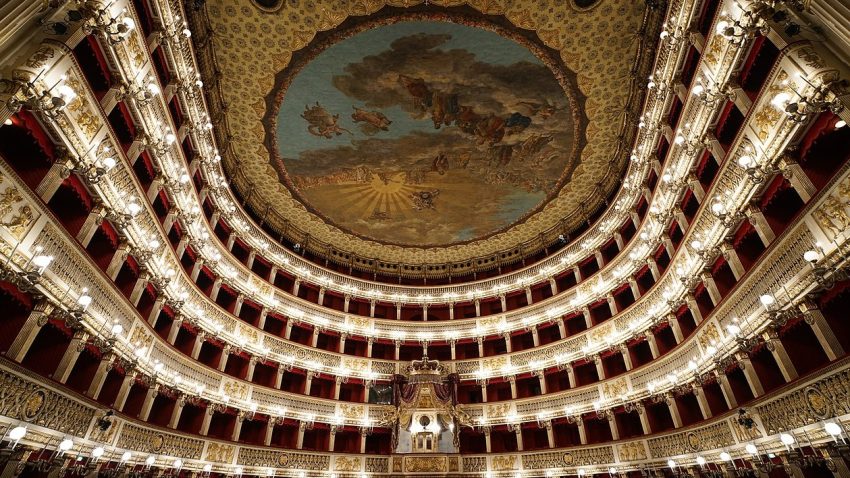
Teatro di San Carlo is one of the top attractions in Naples for anyone who loves music, architecture, or a bit of royal drama. Tucked just behind the Royal Palace and a few steps from Piazza del Plebiscito, this 18th-century opera house has been in almost continuous use since 1737, making it older than both La Scala in Milan and La Fenice in Venice. From the outside it looks elegant but relatively discreet; step through the doors and you are suddenly in a golden horseshoe of tiers, boxes, and a glittering royal box that feels like stepping onto the set of a period film.
Originally commissioned by King Charles VII of Bourbon to replace the smaller Teatro San Bartolomeo, Teatro di San Carlo quickly became a powerhouse of European opera. Over the centuries it has hosted premieres, star composers, and some of the greatest voices in the world, surviving fires, political upheavals, and major restorations. Today, with a modernised stage and lovingly restored interiors, it is a highlight of any walking tour of Naples, and even a rehearsal or backstage visit can be as thrilling as a full evening performance.
Table of Contents
- History and Significance of the Teatro di San Carlo
- Things to See and Do in the Teatro di San Carlo
- How to Get to the Teatro di San Carlo
- Practical Tips on Visiting the Teatro di San Carlo
- Where to Stay close to the Teatro di San Carlo
- Is the Teatro di San Carlo Worth Visiting?
- FAQs for Visiting the Teatro di San Carlo
- Nearby Attractions to the Teatro di San Carlo
History and Significance of the Teatro di San Carlo
Teatro di San Carlo opened in 1737, when King Charles VII wanted a theatre that matched his ambitions for Naples as a leading European capital. Designed by Giovanni Antonio Medrano, it featured a classic horseshoe-shaped auditorium, state-of-the-art stage machinery for its time, and seating for more spectators than any other opera house in the world. Its debut performance, Domenico Sarro's “Achille in Sciro,” set the tone for a venue designed to impress both politically and artistically.
Throughout the 18th and early 19th centuries, San Carlo was a shining beacon of Neapolitan opera. Composers such as Gluck and Johann Christian Bach brought new works to its stage, and under the legendary impresario Domenico Barbaia (from 1809 to 1841) the theatre gained a reputation for lavish productions and sensational casts. Barbaia's era saw the rise of stars and the strengthening of Naples as a musical capital, even as fashions and tastes evolved.
Disaster struck in 1816 when a fire destroyed much of the building, but the theatre was rebuilt with remarkable speed by architect Antonio Niccolini, who restored its grandeur and refined its interiors. Even as Italy's musical spotlight gradually shifted toward Milan in the late 19th century, San Carlo continued to host works by composers like Giuseppe Verdi, Giacomo Puccini, and the verismo school. In recent decades, major renovations-most notably in 2008-2009-have modernised the infrastructure and stage technology while carefully preserving its historic appearance, ensuring the theatre remains both a working house and a living monument to Naples' artistic heritage.
Things to See and Do in the Teatro di San Carlo
The most magical way to experience San Carlo is, of course, to attend an evening performance. As you step into the auditorium, the red and gold horseshoe opens up around you: six tiers of boxes and galleries, a grand royal box centred opposite the stage, and an elaborate ceiling fresco above a glittering chandelier. Even before the music starts, simply sitting in your seat and looking around can feel like travelling back to the Bourbon court.
If your schedule or budget doesn’t line up with a full opera or ballet, consider joining a daytime guided tour. These often include the auditorium, royal box, foyer, and some backstage areas, along with stories about the 1816 fire, the quick reconstruction, and the famous singers and composers who worked here. Standing in the royal box or looking out over the empty seats gives you a very different perspective on the theatre’s scale and design.
Keep an eye out for details: carved cherubs and gilded ornamentation on the boxes, the curve of the balcony lines, and the way the horseshoe shape focuses sound toward the stage and audience. Depending on the programme, you might also catch recitals, concerts, or special events outside the main opera season. Even a short visit to the lobby and façade, combined with the nearby Royal Palace and Galleria Umberto I, makes this spot one of the best places to visit in Naples if you're exploring the monumental district.
How to Get to the Teatro di San Carlo
Teatro di San Carlo is located just behind the Royal Palace and beside Galleria Umberto I, a minute or two from Piazza del Plebiscito in central Naples, so it's easy to combine with other major sights. If you are arriving by air, you will land at Naples International Airport (Capodichino), where taxis, rideshares, and shuttle buses connect you with the city centre in around 20-30 minutes; from there it's a short walk toward Piazza del Plebiscito and Galleria Umberto I to reach the theatre. For the best deals and a seamless booking experience, check out these flights to Naples on Booking.com.
Most long-distance and regional trains arrive at Napoli Centrale on Piazza Garibaldi. From the station, you can ride the metro to Toledo or Municipio, or take a bus toward the historic and monumental district, then walk the final few hundred metres to the theatre’s main entrance. Use Omnio to easily compare schedules, book train tickets, and find the best prices all in one place for a hassle-free journey across Italy.
If you're travelling by car, aim for parking garages near via Toledo, Piazza Municipio, or the waterfront, as traffic restrictions and limited street parking make driving directly to the theatre impractical; once parked, you can walk through the monumental area to reach Teatro di San Carlo in just a few minutes. If you are looking to rent a car in Italy I recommend having a look at Discover Cars, first, as they compare prices and review multiple car rental agencies for you.
Practical Tips on Visiting the Teatro di San Carlo
- Suggested tips: Check the official programme in advance and, if possible, book a performance or guided tour rather than just admiring the exterior.
- Best time to visit: Evening performances are the most atmospheric, but late-morning or early-afternoon guided tours offer quieter access to the interiors.
- Entrance fee: Adults: € 9 (£ 7.70). Young people under 30/seniors over 60: € 7 (£ 6). Children under 10 years old: € 4 (£ 3.40).
- Opening hours: Guided tours: Monday to Saturday (excluding holidays): 10:30 am, 11:30 am, 12:30 pm, 2:30 pm, 3:30 pm and 4:30 pm.
- Official website: https://www.teatrosancarlo.it/
- How long to spend: Allow 1-2 hours for a guided visit, and a full evening for an opera or ballet including arrival and intervals.
- Accessibility: The theatre offers some accessible seating and facilities, but historic architecture can mean steps and narrow passages; check in advance if you have reduced mobility.
- Facilities: On site you'll find a box office, cloakroom, and basic services; bars and cafés nearby in Galleria Umberto I and around Piazza del Plebiscito are ideal before or after a show.
- Photography tip: During tours, discreetly focus on wide shots of the auditorium from the stalls or a box, and detail shots of the royal box and ceiling; photography is usually restricted during performances.
- Guided tours: Official guided tours are a great option if you can’t attend a show, offering access to the main spaces plus insider stories about the theatre’s past.
- Nearby food options: Before or after your visit, head into Galleria Umberto I or along via Toledo for cafés, pastries, or a sit-down meal within easy walking distance.
Where to Stay close to the Teatro di San Carlo
Staying near Teatro di San Carlo lets you enjoy evening performances without worrying about long journeys back to your hotel, and puts you right in the middle of Naples' monumental centre. For a comfortable, central base just a short walk from the theatre, Grand Hotel Oriente offers modern rooms and easy access to via Toledo and Piazza del Plebiscito. If you like the idea of sleeping almost next door to the Galleria and theatre, Hotel Art Resort Galleria Umberto places you inside the famous arcade, only moments from San Carlo. For sea views and a pleasant stroll to evening performances, Hotel Royal Continental along the Lungomare gives you a scenic walk to the theatre via the waterfront and Piazza del Plebiscito.
Is the Teatro di San Carlo Worth Visiting?
Teatro di San Carlo is absolutely worth visiting, even if you are not a dedicated opera fan. As the world's oldest continuously active opera house, it combines historical weight with living culture: you're not just looking at a monument, you're stepping into a place that still does exactly what it was built for nearly three centuries ago. Its gilded interior, superb acoustics, and rich programme make it a memorable evening out, while daytime tours reveal the stories of fires, rebuilds, impresarios, and star performers. If you're exploring the monumental heart of the city, this theatre is a natural companion to the Royal Palace and Piazza del Plebiscito and one of the must-see places in Naples for anyone interested in music, history, or architecture.
What Other Travellers Say...

San Carlo Theatre on Via San Carlo in Napoli welcomes visitors into an opulent, horseshoe-shaped auditorium famed for its frescoed ceiling; guided tours (about 30 minutes) are highly recommended and considered excellent value, staff are patient and helpful, and catching a performance lets you enjoy the bar before the show and lively, engaging music and opera experiences that left visitors impressed.


FAQs for Visiting the Teatro di San Carlo
Nearby Attractions to the Teatro di San Carlo
- Via Toledo and the Historic Centre: The main shopping street leading toward the UNESCO-listed old town, full of churches, shops, and classic pizzerias.
- Piazza del Plebiscito: Naples' main monumental square, framed by the Royal Palace and the church of San Francesco di Paola.
- Royal Palace of Naples (Palazzo Reale): The former Bourbon residence with richly decorated state rooms facing Piazza del Plebiscito.
- Galleria Umberto I: A 19th-century glass-roofed shopping arcade just steps away, ideal for a pre- or post-theatre stroll.
- Castel Nuovo (Maschio Angioino): A medieval fortress by the port, offering museum spaces and harbour views within walking distance.
The Teatro di San Carlo appears in our Complete Guide to Visiting Naples!

Moira & Andy
Hey! We're Moira & Andy. From hiking the Camino to trips around Europe in Bert our campervan — we've been traveling together since retirement in 2020!
This website uses affiliate links which may earn a commission at no additional cost to you!
Planning Your Visit
Guided tours: Monday to Saturday (excluding holidays): 10:30 am, 11:30 am, 12:30 pm, 2:30 pm, 3:30 pm and 4:30 pm.
Adults: € 9 (£ 7.70). Young people under 30/seniors over 60: € 7 (£ 6). Children under 10 years old: € 4 (£ 3.40).
Nearby Attractions
- Galleria Umberto I (0.1) km
Shopping Centre - Royal Palace of Naples (0.1) km
Palace - Piazza del Plebiscito (0.2) km
Square - Castel Nuovo (0.3) km
Castle - San Francesco di Paola (0.3) km
Church - Napoli Sotterranea (0.3) km
Historic Site - Bourbon Tunnel (0.4) km
Historic Site - Fontana del Gigante (0.9) km
Fountain - San Martino Monastery (1.0) km
Monastery and Museum - Castel Ovo (1.0) km
Castle