Silver Gate, Split
City Gate, City Walls and Historic Site in Split
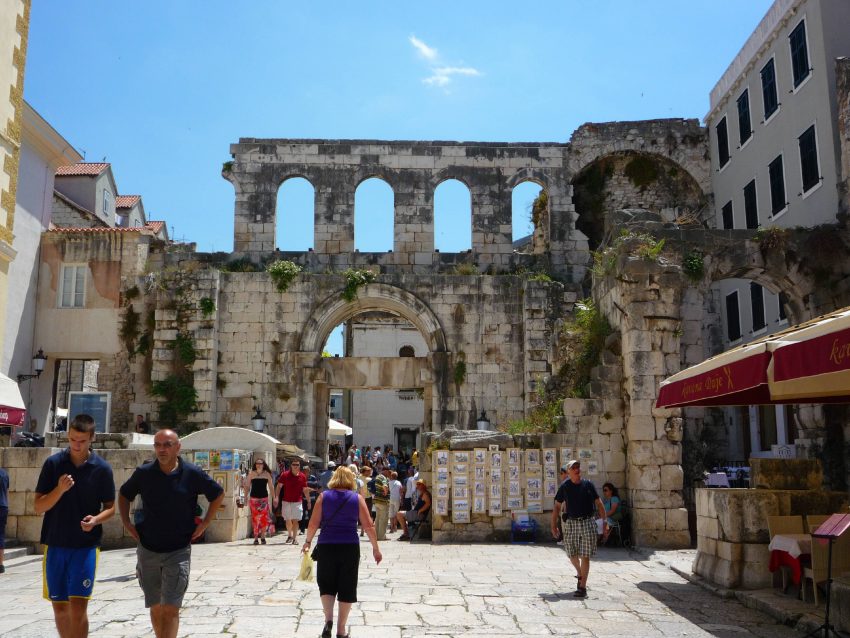
The Silver Gate (Srebrna vrata) is the eastern entrance into Split's Old Town, built into the walls of Diocletian's Palace and still used today as a natural “front door” to the historic core. It's one of those places you'll likely pass through without planning to, then realize you've just walked through a piece of Roman-era city infrastructure.
Because it sits right on the main pedestrian flow between the modern city and the palace streets, the Silver Gate is easiest to appreciate on a self-guided stroll or as a quick stop on a walking tour of Diocletian's Palace. For the best views, look at it from both sides: outside the walls for the full facade, then inside the palace to see how it connects to the palace's street grid.
Table of Contents
- History and Significance of the Silver Gate
- Things to See and Do in the Silver Gate
- How to Get to the Silver Gate
- Practical Tips on Visiting the Silver Gate
- Where to Stay Close to the Silver Gate
- Is the Silver Gate Worth Visiting?
- For Different Travelers
- FAQs for Visiting Silver Gate
- Nearby Attractions to the Silver Gate
History and Significance of the Silver Gate
The Silver Gate is traditionally known as the eastern gate of Diocletian's Palace, part of the fortified complex built in the late Roman period that later became the living, breathing heart of Split. Unlike a standalone monument, it's woven into everyday city life: commuters, tour groups, and evening strollers all use the same passage that once controlled access to the imperial complex.
Over centuries, the palace walls and gates were adapted as Split expanded, with layers added, removed, and repurposed. The Silver Gate's present-day appearance reflects restoration work carried out in the 20th century, which helped recover the gate's form after wartime damage and later urban changes.
Today, its significance is less about a single “must-see” object and more about context: it's a tangible threshold between modern Split and the Roman street plan inside the palace. If you're trying to understand how Diocletian's Palace functions as a city rather than a museum, this gate is a perfect starting point.
Things to See and Do in the Silver Gate
Start by taking a slow lap around the outside approach to the gate so you can see the wall line and how the entrance is framed. The stonework is especially striking in angled light, and it’s a great spot to notice the contrast between the palace’s ancient masonry and the later buildings that press in around it.
Then walk through the gate into the palace streets and follow the east–west line of the old thoroughfare deeper into the complex. This is a simple but satisfying “do” at the Silver Gate: use it as an orientation point, then let the palace unfold naturally as you wander toward the central areas.
If you’re visiting with a guide, ask for a quick explanation of the palace gates (Silver, Golden, Iron, and Bronze) and why each mattered. Even a two-minute overview makes the gate feel less like a passageway and more like a surviving piece of an organized Roman defensive and ceremonial system.
How to Get to the Silver Gate
The nearest airport is Split Airport (SPU), about a 30–40 minute drive from central Split depending on traffic. For the best deals and a seamless booking experience, check out these flights to Split on Booking.com.
Split is connected by rail to other Croatian cities, and arriving at Split's main train station puts you within an easy walk of the Old Town and the palace walls. Train schedules and bookings can be found on Omio.
If you’re traveling by car, aim for a public garage or paid lot outside the tight Old Town area, then continue on foot to the gate.
Practical Tips on Visiting the Silver Gate
- Entrance fee: Free.
- Opening hours: 24 Hours.
- Best time to visit: Early morning for quieter photos and a calmer walk into the palace; evenings are lively and atmospheric but busier.
- How long to spend: 10–20 minutes is enough for photos and a look from both sides, or 45–90 minutes if you use it as the start of a palace wander.
- Accessibility: The area is generally walkable, but expect uneven stone paving and occasional steps; wheels can be challenging in crowded periods.
- Facilities: No dedicated facilities at the gate itself, but you’ll find cafés, bakeries, and restrooms in nearby restaurants around the Old Town.
Where to Stay Close to the Silver Gate
The best area to base yourself is inside or immediately next to Diocletian's Palace for maximum walkability.
Staying near the Silver Gate means you can step into the Old Town before day-trippers arrive and return easily for a midday break. For a classic, full-service option with a prime location, consider a heritage-style hotel close to the palace lanes; for a quieter night, choose a property just outside the walls while still keeping everything within a short walk.
Cornaro Hotel Chosen for its upscale comfort and easy walk to the palace entrances, plus a polished base if you want to mix history with modern amenities.
Hotel Park Split Included for travelers who want a resort-like feel near Bačvice Beach while staying close enough to reach the Silver Gate on foot.
Heritage Hotel Antique Split A great pick for sleeping inside the historic core, with a boutique atmosphere that matches the palace setting.
Hotel Peristil Selected for its iconic palace-adjacent location and the experience of waking up surrounded by Roman-era architecture.
Radisson Blu Resort & Spa, Split Ideal if you want a bigger hotel with spa facilities and sea views, while still being a straightforward ride or longer walk from the Old Town.
Is the Silver Gate Worth Visiting?
Yes, it's worth visiting, but think of it as a meaningful waypoint rather than a standalone attraction you plan an entire day around. The real value is how it anchors your understanding of Split: you're literally walking through a Roman gate into a neighborhood that has been continuously used for centuries.
Honest Pivot: If you're short on time and not especially interested in Roman history or urban archaeology, you can skip making a special trip and simply notice it in passing while exploring Diocletian's Palace. You'll get the most out of it if you enjoy connecting small architectural details to the bigger story of the palace and the city.
What Other Travellers Say...

Visitors rate the Silver Gate very highly and describe it as a beautiful, easy stop that feels like a real piece of Roman Split rather than a staged attraction. Common highlights include the impressive limestone architecture, the sense of entering the Old Town through a historic gate, and the convenience of it being open and free to pass through. A minor downside mentioned indirectly is that it's a quick experience with limited “activities” on-site, so it can feel more like a pass-through than a destination if you're not interested in history.


For Different Travelers
The Silver Gate works best when you treat it as part of a broader Old Town walk. It's quick, central, and easy to combine with palace highlights, markets, and waterfront time.
Families with Kids
Kids often enjoy the simple idea of “entering the city through a gate,” and it’s an easy win because it doesn’t require a long attention span. Turn it into a mini scavenger hunt: spot different stone textures, arches, and the way the streets narrow and open up.
Because it’s a thoroughfare, keep a close eye in peak season when crowds funnel through. Pair it with a gelato stop nearby and a short loop to another palace gate to keep the pace fun.
Couples & Romantic Getaways
For couples, the Silver Gate is a great start to a slow, aimless wander through the palace lanes, especially in the evening when the stones glow under warm lights. It's less about the gate itself and more about the feeling of slipping from modern streets into a historic maze.
Use it as a meeting point before dinner in the Old Town, then take a scenic route toward the Peristyle and back out toward the Riva. The best romantic moments here are unplanned: a quiet corner, a musician nearby, and the sense of being inside living history.
Budget Travelers
This is an easy budget-friendly stop because it’s part of the public fabric of the Old Town and doesn’t require a ticket. You can build a full, low-cost day around it by walking the palace streets, photographing details, and visiting viewpoints around the old walls.
If you’re watching spending, skip paid “extras” and focus on a self-guided route linking the gates, the Peristyle area, and the waterfront. Bring a refillable water bottle and plan a bakery lunch rather than sitting down in the busiest lanes.
History Buffs
History lovers will appreciate the Silver Gate as a functional piece of the palace's defensive and urban plan, not just a decorative remnant. It's a good place to think about controlled access, movement through the complex, and how later centuries reshaped Roman infrastructure.
To deepen the visit, connect the gate to the palace’s street layout and compare it with the other entrances. A guided tour is especially worthwhile here because small architectural cues make more sense when placed in the broader timeline of Split’s growth.
FAQs for Visiting Silver Gate
Getting There
Tickets & Entry
Visiting Experience
Tours, Context & Itineraries
Photography
Accessibility & Facilities
Food & Breaks Nearby
Safety & Timing
Nearby Attractions to the Silver Gate
- Diocletian's Palace streets: The maze-like lanes inside the palace are the main event, packed with architecture, shops, and everyday life.
- Peristyle (Peristil): The palace’s central ceremonial courtyard, a classic stop for photos and atmosphere.
- Cathedral of Saint Domnius: A landmark complex that layers Roman and medieval history in one compact site.
- Riva Promenade: Split's waterfront walkway for people-watching, sunset strolls, and café breaks.
- Bačvice Beach: A sandy city beach known for swimming and the local game of picigin.
The Silver Gate appears in our Complete Guide to Visiting Split!

Moira & Andy
Hey! We're Moira & Andy. From hiking the Camino to trips around Europe in Bert our campervan — we've been traveling together since retirement in 2020!
This website uses affiliate links which may earn a commission at no additional cost to you!
Planning Your Visit
24 Hours.
Free.
Nearby Attractions
- Cathedral of St. Domnius (0.1) km
Cathedral and Religious Building - City Museum of Split (0.1) km
Historic Building, Historic Site and Museum - Diocletian's Palace (0.1) km
Historic Building, Historic Site and Palace - Podrum (0.1) km
Historic Room, Historic Site and Roman Site - Vestibule (0.1) km
Courtyard, Historic Room and Historic Site - Ethnographic Museum (0.1) km
Attraction, Historic Building and Museum - Church of Saint Martin (0.1) km
Church and Historic Site - Temple of Jupiter (0.1) km
Historic Site, Religious Building and Roman Site - Golden Gate (0.1) km
City Gate, Historic Site and Roman Site - Bronze Gate (0.1) km
Attraction, City Gate and Historic Site