São Vicente de Fora, Lisbon
Monastery in Lisbon
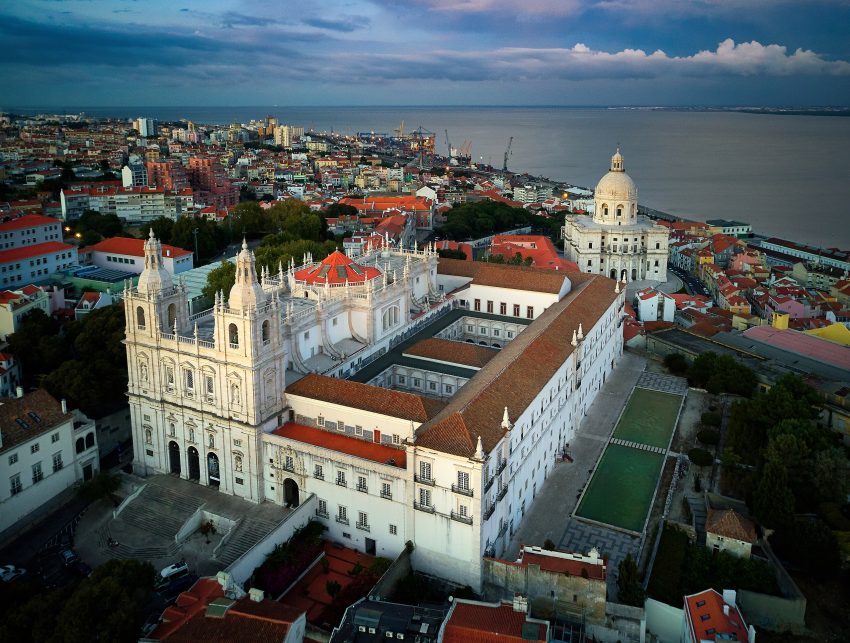
The Monastery of São Vicente de Fora is one of those places where Lisbon's royal, religious, and artistic stories all intersect. Perched just above Alfama and close to the National Pantheon, this 16th-century complex was commissioned by King Philip II of Spain and dedicated to Saint Vincent, Lisbon's patron saint. Its name “de Fora” recalls the time when it stood just outside the old city walls; today, it feels like a serene world apart from the busy streets below, with pale facades, bell towers, and a church that blends Mannerist and Baroque details.
Inside, the atmosphere deepens. You wander through cloisters lined with blue-and-white azulejo panels, past chapels where marble altars and carved stonework frame the light, and down into the Royal Pantheon of the Braganza Dynasty, where many Portuguese monarchs are laid to rest. It is a place that rewards slow exploration: reading the inscriptions in the royal tombs, following the tile panels like a visual storybook, and eventually climbing up to the rooftop terrace for one of the most expansive panoramas in the city. With its mix of art, history, and views, São Vicente de Fora is often visited on walking tours of Lisbon by travellers who want to go beyond the obvious sights.
Table of Contents
- History and Significance of Monastery of São Vicente de Fora
- Things to See and Do in Monastery of São Vicente de Fora
- How to Get to Monastery of São Vicente de Fora
- Practical Tips on Visiting Monastery of São Vicente de Fora
- Where to Stay close to Monastery of São Vicente de Fora
- Is Monastery of São Vicente de Fora Worth Visiting?
- FAQs for Visiting Monastery of São Vicente de Fora
- Nearby Attractions to Monastery of São Vicente de Fora
History and Significance of Monastery of São Vicente de Fora
The Monastery of São Vicente de Fora was built in the late 16th century under King Philip II of Spain (Philip I of Portugal), during the Iberian Union when the two crowns were united. It was designed in a sober Mannerist style, with classical lines and restrained decoration that reflected Counter-Reformation ideals, yet its size and prominent position show the political and religious ambitions of the era. Dedicated to Saint Vincent, whose relics were traditionally associated with the city's protection, the monastery was intended as both a spiritual centre and a statement of royal power.
Over time, the monastery became closely tied to the Portuguese monarchy, especially after the restoration of independence in 1640 and the rise of the House of Braganza. In the 19th century it took on a new role as the Royal Pantheon of the Braganza Dynasty, with tombs and sarcophagi created for kings, queens, and other members of the royal family. Walking through this pantheon, you are literally surrounded by the history of modern Portugal, from João IV, who helped restore independence, to later monarchs such as Maria II.
The building also survived earthquakes, political upheavals, and the decline of monastic life, gradually shifting from a working monastery to a historic monument and museum space. Today, it stands as a layered symbol of Lisbon's resilience and continuity: a place where religious devotion, royal memory, and artistic expression coexist. For visitors, that makes São Vicente de Fora one of the top attractions in Lisbon if you are curious about how architecture can hold centuries of national history under one roof.
Things to See and Do in Monastery of São Vicente de Fora
A visit usually begins in the church, where light filters through high windows onto pale stone walls, intricate carvings, and richly worked altarpieces. The façade's relative simplicity gives way to a more ornate interior, with chapels that reward close inspection: look for sculpted details, gilded elements, and the way the architecture guides your eye toward the main altar. Even if you have seen many churches in Lisbon, this one feels particularly solemn and grand.
From there, the cloisters are a highlight. Their arcades open onto a central courtyard, and the walls are covered in remarkable azulejo panels. Some depict scenes from the Conquests of Lisbon, while others illustrate La Fontaine's fables in a distinctly Portuguese visual language, complete with animals, moral lessons, and playful compositions. Elsewhere, biblical stories unfold across long runs of tiles, turning the cloisters into a kind of ceramic library. Taking the time to follow these panels from scene to scene is one of the most memorable parts of the visit.
Do not miss the Royal Pantheon of the Braganza Dynasty, where white marble tombs and sarcophagi line the space in carefully ordered rows. It is both impressive and reflective, a reminder of how closely tied this monastery is to Portugal's royal past. Finally, head up to the rooftop terrace, where you will be rewarded with sweeping views over the Tagus River, the National Pantheon, and the red-tiled roofs of Alfama. Here, you really feel how São Vicente de Fora presides over the old city, and it becomes clear why this spot is one of the where to go in Lisbon if you love panoramic viewpoints as much as historic interiors.
How to Get to Monastery of São Vicente de Fora
Monastery of São Vicente de Fora stands on a hill just above Alfama, near the National Pantheon and Feira da Ladra. From central Alfama or Santa Apolónia, it is an uphill walk through narrow streets and stairways, with the monastery's twin towers and pale façade as useful landmarks. Classic tram routes and local buses also stop nearby, making it easy to fold into a day spent exploring the neighbourhood.
If you are flying into Lisbon, you will arrive at Humberto Delgado Airport, which is linked to the city by metro, buses, and taxis in roughly 20-30 minutes depending on traffic. For the best deals and a seamless booking experience, check out these flights to Lisbon on Booking.com. From the airport, a straightforward route is to take the metro to Santa Apolónia and then walk or take a short bus ride up to the monastery.
Arriving by train, long-distance and regional services use stations such as Santa Apolónia and Oriente. From Santa Apolónia, São Vicente de Fora is within walking distance up the hill; from Oriente, you can connect by metro to Santa Apolónia or another central stop and continue by bus or on foot through Alfama.Train schedules and bookings can be found on Omio.
If you are driving, be prepared for narrow streets, one-way systems, and limited parking around Alfama and São Vicente de Fora.If you are looking to rent a car in Portugal I recommend having a look at Discover Cars, first, as they compare prices and review multiple car rental agencies for you. It is usually easiest to leave your car in a larger car park near the riverfront or at Santa Apolónia and then walk up, treating the climb and its viewpoints as part of the experience.
Practical Tips on Visiting Monastery of São Vicente de Fora
- Suggested tips: Take your time in the cloisters and rooftop areas rather than rushing through; the azulejo panels and views are where the monastery’s personality really shines.
- Best time to visit: Late morning or mid-afternoon offer good light in the cloisters and on the rooftop without the harsher midday glare; early in the day is usually quieter if you prefer fewer people.
- Entrance fee: Adults: €8.00
- Opening hours: Tuesday to Sunday, usually from 10:00 AM – 6:00 PM (closed on Mondays).
- Official website: https://mosteirodesaovicentedefora.com/
- How long to spend: Plan on 60-90 minutes to explore the church, cloisters, azulejo galleries, royal pantheon, and rooftop terrace without feeling rushed.
- Accessibility: The complex includes stairs, uneven surfaces, and rooftop access that may be challenging for visitors with reduced mobility; it is best to confirm which areas are accessible before you go.
- Facilities: Expect a ticket office, basic restrooms, and sometimes a small shop or information area; cafés, restaurants, and other services are easy to find in the streets around Feira da Ladra and Alfama.
- Photography tip: In the cloisters, look for reflections of the arches and tiles in puddles or polished stone; on the rooftop, use a wide angle to capture the National Pantheon, river, and Alfama in a single frame.
- Guided tours: When available, guided visits or audio guides can add depth, especially in the azulejo galleries and royal pantheon, where there are many stories behind individual panels and tombs.
- Nearby food options: After your visit, wander into Alfama for traditional tascas, small restaurants, and viewpoints where you can sit with a drink or meal and enjoy the atmosphere.
Where to Stay close to Monastery of São Vicente de Fora
Staying near the Monastery of São Vicente de Fora puts you slightly away from the busiest tourist streets while keeping you close to Alfama's main sights and viewpoints. For a comfortable, local-feeling base within walking distance of both the monastery and the National Pantheon, Alfama Lisbon Lounge Suites offers apartment-style accommodation that works well for longer stays. If you prefer a more boutique, design-forward option with terraces overlooking the Tagus and the rooftops, Memmo Alfama Hotel is a stylish choice just a pleasant stroll away. Another appealing option is Hotel Convento do Salvador, a converted convent that offers quiet rooms and a peaceful atmosphere while still being close to Alfama’s lanes, viewpoints, and Fado venues.
Is Monastery of São Vicente de Fora Worth Visiting?
Monastery of São Vicente de Fora is absolutely worth visiting, especially if you enjoy places where art, history, and city views come together. The combination of its royal pantheon, remarkable azulejo collection, and rooftop terrace makes it much more than “just another church,” and the relatively calm atmosphere compared with more famous sights is a bonus. Add in its location near Feira da Ladra and the National Pantheon, and it becomes a great place to visit on a walking tour of Lisbon focused on the Alfama hills and their layered history.
What Other Travellers Say...

Church of St. Vincent de Fora on Largo de São Vicente in Lisbon is an art-filled, peaceful church complex that serves as the burial site for Portuguese Braganza monarchs; visitors praise its impressive interior architecture and expansive church with decorated side chapels, tranquil white cloisters adorned with large blue-and-white tiled scenes, a well-presented museum, and rooftop/bell-tower vantage points that offer rewarding views over Lisbon.


FAQs for Visiting Monastery of São Vicente de Fora
Nearby Attractions to Monastery of São Vicente de Fora
- National Pantheon (Panteão Nacional) - Striking domed monument and final resting place of notable Portuguese figures, with excellent rooftop views over the river and Alfama.
- Feira da Ladra - Lisbon’s famous flea market, held nearby on set days each week, perfect for browsing antiques, vintage items, and everyday curiosities.
- Alfama District - The city’s oldest quarter, a maze of narrow streets, stairways, Fado houses, and small squares that rewards slow, curious wandering.
- Miradouro da Graça - Scenic viewpoint higher up the hill, offering wide panoramas of the castle, river, and red rooftops below.
- Castelo de São Jorge - Historic hilltop castle overlooking Lisbon, with ancient walls, archaeological remains, and far-reaching views across the city and Tagus.
The São Vicente de Fora appears in our Complete Guide to Visiting Lisbon!

Moira & Andy
Hey! We're Moira & Andy. From hiking the Camino to trips around Europe in Bert our campervan — we've been traveling together since retirement in 2020!
This website uses affiliate links which may earn a commission at no additional cost to you!
Planning Your Visit
Tuesday to Sunday, usually from 10:00 AM - 6:00 PM (closed on Mondays).
Adults: €8.00
Nearby Attractions
- National Pantheon (0.1) km
Historic Building - São Jorge Castle (0.8) km
Castle - Lisbon Cathedral (1.0) km
Cathedral - Praça do Rossio (1.3) km
Square - Arco da Rua Augusta (1.3) km
Historic Building and Viewing Point - Elevador de Santa Justa (1.3) km
Viewing Point - Museu Nacional do Azulejo (1.4) km
Museum - Carmo Convent (1.4) km
Convent - Teatro Nacional de São Carlos (1.6) km
Theatre - Miradouro de São Pedro de Alcântara (1.7) km
Viewing Point