Santuário de Nossa Senhora dos Remédios
Church in Lamego
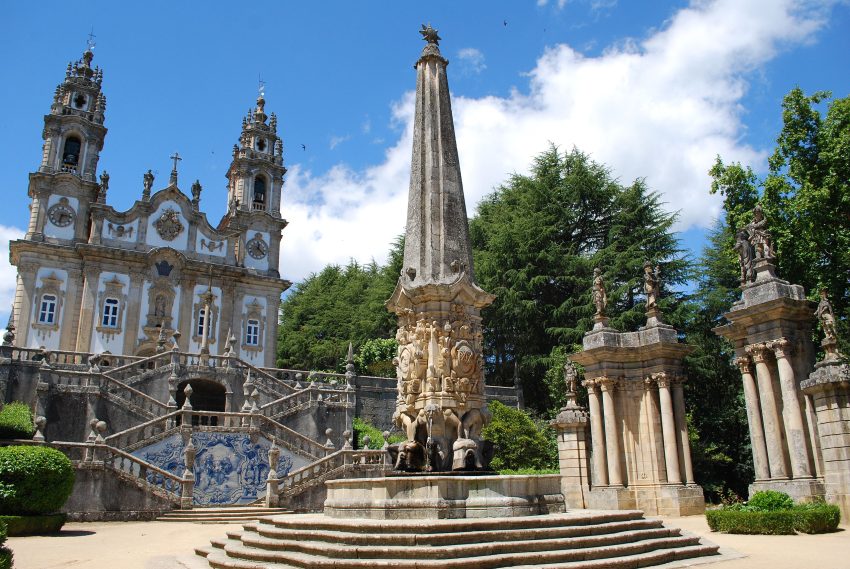
Rising above Lamego on Monte de Santo Estêvão, the Santuário de Nossa Senhora dos Remédios is the city's defining landmark: a Baroque church reached by a dramatic, multi-terraced staircase framed by fountains, statues, and leafy parkland. Whether you tackle the steps from town or arrive by road near the top, the first impression is the same: this is a place designed to feel like a journey, not just an arrival.
What makes the visit special is how many “mini-stops” it naturally creates. You can pause at viewpoints, listen to the water running in the fountains, and watch the city widen below you with every level. It's easy to see why this is one of the top attractions in Lamego, and it also fits beautifully into a walking tour of Lamego if you like your sightseeing with a bit of momentum and reward at the end.
Table of Contents
- History and Significance of the Santuário de Nossa Senhora dos Remédios
- Things to See and Do in the Santuário de Nossa Senhora dos Remédios
- How to Get to the Santuário de Nossa Senhora dos Remédios
- Practical Tips on Visiting the Santuário de Nossa Senhora dos Remédios
- Where to Stay Close to the Santuário de Nossa Senhora dos Remédios
- Is the Santuário de Nossa Senhora dos Remédios Worth Visiting?
- For Different Travelers
- FAQs for Visiting the Santuário de Nossa Senhora dos Remédios
- Nearby Attractions to the Santuário de Nossa Senhora dos Remédios
History and Significance of the Santuário de Nossa Senhora dos Remédios
Long before the current sanctuary crowned the hill, worship here centred on an earlier hermitage dedicated to Santo Estêvão, recorded in the medieval period. Over time, devotion shifted toward the Virgin, and the site became associated with petitions for help, healing, and protection-an emotional thread that still shapes the atmosphere today, even outside festival season.
The first stone of the present sanctuary was laid in 1750, but this is very much a “centuries in the making” monument: the church and its surrounding complex evolved gradually, and the overall project reached completion in the early 20th century. That long timeline helps explain the rich layering you’ll notice-grand Baroque ambition, later additions, and the careful choreography of space that turns the ascent into a devotional promenade as much as a scenic walk.
The sanctuary’s most important moment each year is tied to Marian festivities, with September 8 (Nativity of the Virgin) traditionally drawing pilgrims and events that transform the hill and park into a living stage. Even if you visit on a quiet weekday, you’ll still sense that this is not a “static” monument-it’s a place with a pulse, built for gathering.
Things to See and Do in the Santuário de Nossa Senhora dos Remédios
Start with the staircase itself. The climb is part architecture, part storytelling: multiple levels break the ascent into manageable chapters, with fountains, sculptural details, and decorative pauses that invite you to stop, look back, and re-frame the city below. If you enjoy slow travel, this is a satisfying place to take your time and let the details come to you.
Midway, you’ll find features that feel like outdoor rooms-terraces where people naturally linger, take photos, or catch their breath. Look out for symbolic sculpture and the way the fountains punctuate the route; the sound of running water is a surprisingly strong part of the experience, especially in warmer months.
At the top, step inside the church to see how the mood changes. The interior is devoted to Marian iconography, with gilded carving, altarpieces, and decorative elements that feel intimate compared to the monumental exterior approach. Afterward, spend a few minutes in the surrounding park: it’s a genuinely pleasant place to decompress, and the viewpoints are excellent at golden hour.
If the towers are open during your visit, consider the paid climb as an optional “bonus level” for wider panoramas-especially on clear days when the landscape stretches well beyond the city.
How to Get to the Santuário de Nossa Senhora dos Remédios
If you're arriving from outside the region, the nearest airport is Vila Real (VRL), with Porto Airport (OPO) the main international gateway for most travelers. For the best deals and a seamless booking experience, check out these flights to Vila Real on Booking.com. From either, you can continue by bus, taxi, or a rental car depending on how much of the Douro Valley you’re linking into your itinerary.
By train, note that Lamego itself does not have a central rail station, so the usual approach is to take the scenic Douro Line to Peso da Régua, then connect onward by bus or taxi into Lamego. Train schedules and bookings can be found on Omio. This option is especially appealing if you want the river-and-vineyard views en route, then treat the sanctuary as your “grand finale” in town.
By bus, services connect Lamego with nearby cities, and the central bus station makes it straightforward to reach the city centre before heading up to the sanctuary on foot or by taxi. If you're driving, the simplest approach is to park near the upper access road and explore the sanctuary and terraces from the top down, or park in town and do the full staircase ascent for the classic experience. If you are looking to rent a car in Portugal I recommend having a look at Discover Cars, first, as they compare prices and review multiple car rental agencies for you.
Practical Tips on Visiting the Santuário de Nossa Senhora dos Remédios
- Entrance fee: Towers visit: €3.50.
- Opening hours: (Summer) May – September: Daily: 07:30–20:00. (Winter) October – April: Daily: 07:30–18:00.
- Official website: https://www.santuarioremedios.pt/
- Best time to visit: Aim for late afternoon for softer light on the stonework and a more atmospheric climb, then stay through sunset if the sky is clear. On festival days, go earlier for space and better sightlines.
- How long to spend: Plan 60-90 minutes for a relaxed visit; add extra time if you’re climbing the full staircase slowly or lingering in the park and viewpoints.
- Accessibility: The upper area is easiest if you arrive by road, but the staircase includes many steps and uneven sections that can be challenging for limited mobility. Inside the church is typically calmer and easier-paced than the climb.
- Facilities: You’ll find basic amenities more reliably back in the city centre; bring water if you’re climbing, especially in warm weather, and wear shoes with grip for stone steps.
Where to Stay Close to the Santuário de Nossa Senhora dos Remédios
For a culture-heavy itinerary, base yourself in central Lamego near the cathedral and main squares so you can walk to sights and tackle the sanctuary steps at your own pace; if your trip is more Douro-focused (wineries and viewpoints), consider staying on the outskirts with easier driving and parking.
If you want a comfortable, low-stress base with good amenities and quick access to both town and the sanctuary, Lamego Hotel & Life is a strong all-rounder. For something stylish and very close to Lamego’s historic core (handy if you plan to explore on foot before heading uphill), Douro Castelo Signature Hotel & Spa puts you near the main landmarks and makes early starts easy. If you prefer a quieter countryside setting with a more rural feel while still being within reach of the sanctuary, Hotel Rural Casa dos Viscondes da Várzea is a good fit.
Is the Santuário de Nossa Senhora dos Remédios Worth Visiting?
Yes-especially because it’s not just “a church on a hill.” The staircase, terraces, and viewpoints turn the visit into a full experience, and it’s one of those places that feels different depending on whether you arrive in morning calm, late-afternoon glow, or during the festival season when the city’s energy rises up the mountain with you.
What Other Travellers Say...

Santuário de Nossa Senhora dos Remédios in Lamego crowns the Monte de Santo Estêvão with an 18th-century chapel noted for its Baroque and Rococo façade and an ornate altar; visitors describe a dramatic zigzag staircase with many landings and decorative features where you can rest as you climb, rewarding you with wide views over the city and surrounding valley, tranquil gardens and a luminous white church at the top, and note that the walk can be as strenuous as you choose—some prefer to drive to the summit and take the steps down and back up.


For Different Travelers
Families with Kids
Treat the staircase like a game of small goals: terrace to terrace, fountain to fountain, with frequent snack-and-photo breaks to keep spirits high. If the full ascent feels like too much, arrive by car near the top and let kids explore the park space and viewpoints without the “big climb” pressure.
Couples & Romantic Getaways
Go in the late afternoon, climb slowly, and lean into the ritual of stopping at viewpoints-this is one of Lamego’s best spots for that “we earned this view” feeling. Afterward, head back into town for a relaxed dinner, using the sanctuary visit as your shared highlight of the day.
Budget Travelers
This is a high-impact visit with a low price tag: the sanctuary and staircase are free, and you can build an entire half-day around the climb, photos, and park time. Pack water and a simple picnic snack, and you’ll avoid paying “convenience prices” after the climb.
History Buffs
Look beyond the headline dates and focus on the layered development: medieval worship roots, 18th-century construction ambition, and later expansions that finished the vision. The iconography and sculptural programme along the staircase also reward a slower, more interpretive walk-especially if you enjoy decoding religious symbolism in public space.
FAQs for Visiting the Santuário de Nossa Senhora dos Remédios
Getting There
Tickets & Entry
Visiting Experience
Tours, Context & Itineraries
Photography
Accessibility & Facilities
Food & Breaks Nearby
Safety & Timing
Nearby Attractions to the Santuário de Nossa Senhora dos Remédios
- Lamego Cathedral (Sé de Lamego): The city's main cathedral, a worthwhile interior visit with a strong sense of place in the historic centre.
- Museu de Lamego: A compact museum with art and heritage collections that add context to the city's religious and cultural history.
- Castelo de Lamego: Hilltop castle remains and viewpoints that make a good add-on if you're already chasing panoramas.
- Avenida Dr. Alfredo de Sousa: The elegant central avenue at the foot of the climb, ideal for a pre- or post-visit stroll and café break.
- Peso da Régua (Douro Riverfront): A classic Douro Valley base for riverside scenery and wine-country connections, easy to combine with Lamego in a day.
The Santuário de Nossa Senhora dos Remédios appears in our Complete Guide to Visiting Vila Real!

Moira & Andy
Hey! We're Moira & Andy. From hiking the Camino to trips around Europe in Bert our campervan — we've been traveling together since retirement in 2020!
This website uses affiliate links which may earn a commission at no additional cost to you!
Planning Your Visit
(Summer) May - September: Daily: 07:30-20:00.
(Winter) October - April: Daily: 07:30-18:00.
Towers visit: €3.50.
Nearby Attractions
- Lamego Cathedral (1.0) km
Cathedral - Castelo de Lamego (1.1) km
Castle - Museu de Lamego (1.1) km
Museum - Capela de São Pedro de Balsemão (3.3) km
Church - Museu do Douro (8.1) km
Museum - Mosteiro de Santa Maria de Salzedas (8.7) km
Monastery - Casa de Mateus (24.4) km
Palace - Castelo de Numão (44.0) km
Castle - Monte da Penha (53.4) km
Religious Building and Viewing Point - Centro Cultural Vila Flor (55.4) km
Gardens and Historic Building