Church of Santa Maria della Spina, Pisa
Church in Pisa
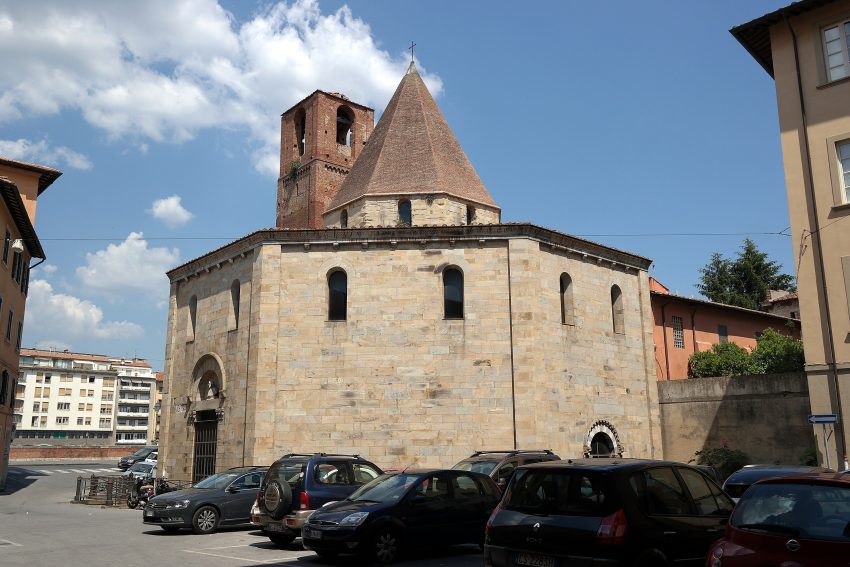
Tucked close to the Arno in Pisa, the Church of Santa Maria della Spina is a small but extraordinary Gothic jewel that feels worlds away from the crowds around the Leaning Tower. Its unusual octagonal plan and pyramid shaped roof immediately set it apart from other churches in the city, while layers of legend, noble patronage and sacred relics give it a wonderfully mysterious character. For travellers who enjoy going beyond the obvious postcard sights, this is one of the must-see places in Pisa, pairing distinctive architecture with an intimate, almost secretive atmosphere.
Inside, the geometry of the church is as intriguing as its exterior. The octagon, symbolising rebirth and entry into the Christian community, is woven through the design, from the dome supported by equidistant pillars to the subtle esoteric references to the number eight. Add in the tomb of Maria Mancini, a favourite of Louis XIV, and a 12th century well whose bucket is said to have been used by Santa Ubaldesca to turn water into wine, and you have a setting where history, faith and legend coexist in a surprisingly small footprint, often visited on walking tours of Pisa that seek out its quieter corners.
Table of Contents
- History and Significance of the Church of Santa Maria della Spina
- Things to See and Do in the Church of Santa Maria della Spina
- How to Get to the Church of Santa Maria della Spina
- Practical Tips on Visiting the Church of Santa Maria della Spina
- Where to Stay close to the Church of Santa Maria della Spina
- Is the Church of Santa Maria della Spina Worth Visiting
- FAQs for Visiting Church of Santa Maria della Spina
- Nearby Attractions to the Church of Santa Maria della Spina
History and Significance of the Church of Santa Maria della Spina
The Church of Santa Maria della Spina has roots in the 12th century, when it was first built in what was then a developing quarter along the river. From early on it was tied to the Hospitallers of Jerusalem, who were active across Europe in caring for pilgrims and guarding sacred sites, and over the centuries it became entwined in local stories that sometimes confused its associations with those of the Templars. This mix of documented history and conjecture only enhances its aura: even for locals, this is a church that invites questions as much as answers.
Architecturally, its octagonal plan is the key to understanding its symbolism. In Christian tradition, the number eight is linked to rebirth, renewal and the “eighth day,” beyond the normal seven day cycle of earthly time. Stepping into an eight sided space like this is therefore a physical metaphor for entering a new spiritual state. The dome, resting on pillars set at equal distances, reinforces the sense of balance and order, while the external Gothic decoration expresses a more emotional, vertical push towards heaven in its pointed forms. It is a tightly composed statement of faith in miniature, distinct from the grand processional spaces of Pisa’s larger churches.
Over time, the church accumulated relics, stories and burials that added to its status. The tomb of Maria Mancini, once a favourite of Louis XIV, brings an unexpected French courtly connection to this small Tuscan sanctuary, while the story of Santa Ubaldesca's miracle at the well - transforming water into wine with the help of the 12th century bucket that is still preserved here - links the building to local traditions of charity and wonder. Today, Santa Maria della Spina is celebrated as a hidden gem among Pisa's architectural wonders, valued for its distinctive plan, its legends and its quiet, contemplative interior.
Things to See and Do in the Church of Santa Maria della Spina
As you approach the church, take a moment to walk slowly around the exterior and appreciate how unusual it is within the Pisan context. While much of the city’s sacred architecture is defined by long façades and classical rhythms, here the octagonal footprint and pyramidal roof make the building read almost like a small, freestanding shrine. The Gothic details, including pointed arches and sculpted decoration, give it a delicate, lace like quality that contrasts with the more massive forms of other churches.
Inside, the geometry becomes even more apparent. Stand under the dome and look at how the supporting pillars are set at regular intervals, emphasising the centrality of the space and the symbolism of the number eight. The octagonal plan encourages you to move around the perimeter, rather than just up a central nave, and you quickly sense how this creates a more intimate relationship between visitor, architecture and any liturgical focus at the centre. It is a compact church, but one designed to feel complete and self contained, like a spiritual microcosm.
Seek out the tomb of Maria Mancini, which adds a human, almost romantic layer to the church’s story. Knowing she was once favoured by Louis XIV makes her resting place in this small Pisan church all the more striking, a reminder of how personal histories can cross borders and centuries. Do not miss the well and the 12th century bucket associated with the legend of Santa Ubaldesca’s miracle; even if you take the story as symbolic rather than literal, it speaks to longstanding local beliefs about charity, faith and divine intervention in everyday life. Together, these elements turn a short visit into a richly textured experience.
How to Get to the Church of Santa Maria della Spina
If you are flying into Tuscany, you will arrive at Pisa International Airport Galileo Galilei; from the airport, you can reach central Pisa by people mover, taxi or bus, then continue on foot towards the Arno to find the church on the riverbank. For the best deals and a seamless booking experience, check out these flights to Pisa on Booking.com.
By train, your first stop is Pisa Centrale, the city's main station; from there, walk along Corso Italia towards the river, cross to the appropriate bank and follow the Lungarni until you reach the church, which sits close to the water and is easy to spot once you are nearby. Use Omnio to easily compare schedules, book train tickets, and find the best prices all in one place for a hassle-free journey across Italy.
If you are travelling by car, drive towards Pisa and follow signs for the city centre, then park in one of the public car parks or on street spaces outside the restricted traffic zone; from your parking spot, head on foot towards the Arno and follow the embankment until you reach the small church of Santa Maria della Spina. If you are looking to rent a car in Italy I recommend having a look at Discover Cars, first, as they compare prices and review multiple car rental agencies for you.
Practical Tips on Visiting the Church of Santa Maria della Spina
- Suggested tips: Combine your visit with a stroll along the Lungarni and a wander through nearby medieval streets so the church becomes part of a wider picture of Pisa beyond the main monuments.
- Best time to visit: Early morning or late afternoon tend to be quieter, with softer light on the façades and fewer tour groups passing along the riverfront.
- Entrance fee: Free
- Opening hours: 3:30-5:00 pm
- How long to spend: Around 20-30 minutes is usually enough to see the interior, find the key features such as the tomb and the well, and enjoy a few moments of quiet reflection.
- Accessibility: The church is small and historic, and access may involve a step or uneven threshold; approach paths along the Lungarni are generally level but can include some cobbles.
- Facilities: There are no extensive facilities inside such a small church, so plan to use nearby cafés, bars or public services in the surrounding streets.
- Photography tip: Take wider shots from across the street or river to capture the church’s unusual outline and its relationship with the Arno, then step closer for details of stonework and rooflines.
- Guided tours: Some guided tours of Pisa include Santa Maria della Spina as a brief stop, which can be helpful for understanding the mix of Hospitaller history and local legend.
- Nearby food options: The streets leading away from the river offer cafés and small restaurants where you can pause for a coffee, gelato or light meal before continuing your walk.
Where to Stay close to the Church of Santa Maria della Spina
For easy access to Santa Maria della Spina and the Arno embankments, staying near the river or in the southern part of the historic centre works well. A comfortable option within walking distance is Hotel Bologna Pisa, which gives you quick routes both to the Lungarni and deeper into the old town. If you prefer to be nearer the station while still only a short walk from the church, NH Pisa makes getting in and out of the city straightforward and still allows for relaxed riverside strolls. Travellers who want to stay closer to the main monuments yet be able to wander down to Santa Maria della Spina via the Lungarni might enjoy Grand Hotel Duomo, using the riverside walk as a scenic link between the Campo dei Miracoli and the quieter church.
Is the Church of Santa Maria della Spina Worth Visiting
The Church of Santa Maria della Spina is absolutely worth visiting if you enjoy intimate, slightly offbeat sacred spaces with rich symbolism and stories. Its octagonal plan and esoteric geometry set it apart from other churches in Pisa, while the combination of Hospitaller ties, the tomb of Maria Mancini and the legend of Santa Ubaldesca's miracle at the well create a tapestry of history that feels both local and unexpectedly international. Because it is small, you can fit it easily into a broader walk along the Arno, and the contrast between this compact, symbolic structure and the grand cathedral complex elsewhere in the city helps you appreciate just how varied Pisa's religious architecture really is.
What Other Travellers Say...

Chiesa di Santa Maria della Spina sits on the south bank of the Arno in Pisa and is a compact Gothic church notable for its ornate white marble facade, abundance of statues and carved detail, and a painted timber ceiling; visitors report it feels like a delicate cake perched at the river's edge, is especially striking at night, and now serves as an exhibition space rather than an active parish, with free entry noted by some and occasional contemporary displays that have provoked mixed reactions.


FAQs for Visiting Church of Santa Maria della Spina
Nearby Attractions to the Church of Santa Maria della Spina
- Lungarni of Pisa: Scenic embankments along the Arno, ideal for relaxed riverside strolls linking different parts of the historic centre.
- Narrow Street (Borgo Stretto): A lively medieval shopping street with arcades, cafés and markets, perfect for browsing after a visit to the church.
- Logge di Banchi: An early 17th century arcaded loggia near the river that once hosted cloth and grain markets and still forms a striking urban backdrop.
- Piazza Vittorio Emanuele II: The modern square by the main station, with its statue of Vittorio Emanuele II and surrounding civic buildings, not far from the Lungarni.
- Campo dei Miracoli: Pisa's iconic ensemble of the Leaning Tower, cathedral, baptistery and Camposanto, easily reachable on foot or by bus from the church area.
The Church of Santa Maria della Spina appears in our Complete Guide to Visiting Pisa!

Moira & Andy
Hey! We're Moira & Andy. From hiking the Camino to trips around Europe in Bert our campervan — we've been traveling together since retirement in 2020!
This website uses affiliate links which may earn a commission at no additional cost to you!
Planning Your Visit
3:30-5:00 pm
Free
Nearby Attractions
- Logge di Banchi (0.2) km
Historic Building - Palazzo Vecchio de Palazzo Medici (0.3) km
Historic Building and Palace - Museo Nazionale di San Matteo (0.3) km
Museum - Palazzo Blu (0.3) km
Gallery and Palace - Borgo Stretto (0.3) km
Street - Corso Italia (0.4) km
Street - Murale Tuttomondo (0.6) km
Historic Site - Piazza Vittorio Emanuele II (0.6) km
Square - Santa Maria della Spina (0.6) km
Church - Santo Stefano dei Cavalieri (0.6) km
Church