Rue d'Alsace-Lorraine, Toulouse
Area and Street in Toulouse
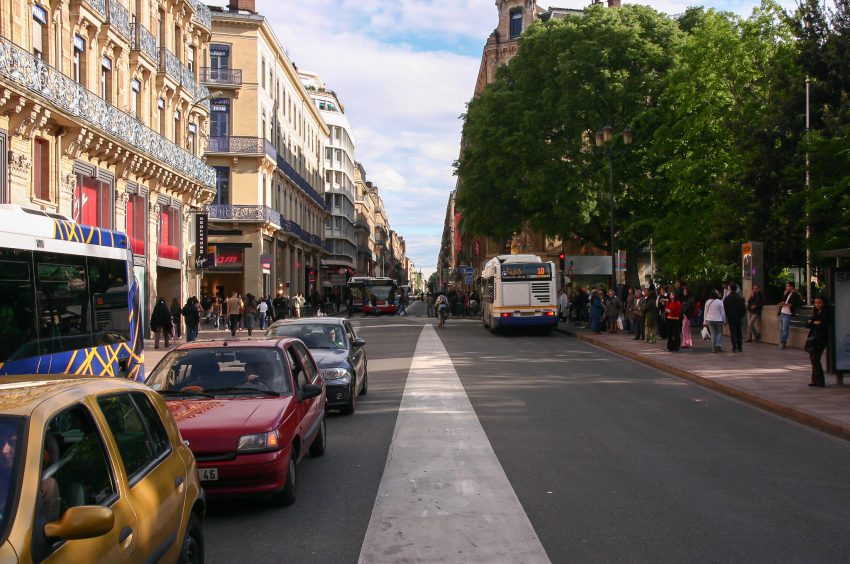
Rue d'Alsace-Lorraine is one of Toulouse's main central streets: a long, straight boulevard that cuts through the heart of the Ville Rose with elegant 19th-century façades, big-name shops, and a steady flow of locals on the move. It's the kind of place you naturally end up on when you're walking between the Capitole area, Esquirol, and the historic lanes around the Carmes and Saint-Étienne districts.
For visitors, the appeal is simple: it's an easy, scenic connector with plenty of window-shopping, people-watching, and architectural details to notice as you go. It also works beautifully as part of a self-guided walking tour, especially if you pair it with nearby landmarks like Place du Capitole, Place Esquirol, and the Musée des Augustins.
Table of Contents
- History and Significance of the Rue d’Alsace-Lorraine
- Things to See and Do in the Rue d’Alsace-Lorraine
- How to Get to the Rue d’Alsace-Lorraine
- Practical Tips on Visiting the Rue d’Alsace-Lorraine
- Where to Stay Close to the Rue d’Alsace-Lorraine
- Is the Rue d’Alsace-Lorraine Worth Visiting?
- For Different Travelers
- FAQs for Visiting Rue d’Alsace-Lorraine
- Nearby Attractions to the Rue d’Alsace-Lorraine
History and Significance of the Rue d’Alsace-Lorraine
Rue d'Alsace-Lorraine is a product of Toulouse's 19th-century modernization. Laid out between 1869 and 1873, it was designed as a broad, efficient north–south axis to improve circulation through the historic center, with a uniform, “grand boulevard” feel that still stands out in a city known for medieval lanes and pink-brick streetscapes.
Its name, adopted in 1872, commemorates Alsace-Lorraine in the aftermath of the Franco-Prussian War, giving the street a distinctly historical and political resonance beyond its everyday role as a shopping artery.
Today, its significance is twofold: it's a key urban spine for getting around central Toulouse, and it's also a showcase of the city's Haussmann-influenced architecture, where consistent building heights, stone detailing, and wide sightlines create a more Parisian rhythm than you might expect in the south.
Things to See and Do in the Rue d’Alsace-Lorraine
Start by treating the street as a moving viewpoint rather than a single “stop.” Walk it slowly and look up: the façades, balconies, and cornices are part of the experience, and the straight perspective makes it easy to appreciate how deliberately the street was planned.
Shopping is the obvious draw, with a mix of major brands and city-center retail that makes it a practical place to pick up essentials or browse French high-street fashion. Even if you're not buying anything, it's a lively slice of everyday Toulouse—especially in the late afternoon when the street fills with after-work foot traffic.
For a culture-leaning detour, use the street as a gateway to nearby highlights: the Musée des Augustins is close enough to combine with a stroll, and Place Esquirol is a natural pause point for photos, a quick coffee, or simply watching the city move around you.
How to Get to the Rue d’Alsace-Lorraine
The nearest airport is Toulouse–Blagnac Airport (TLS), with onward connections into the city center by taxi, rideshare, shuttle, and public transport. For the best deals and a seamless booking experience, check out these flights to Toulouse on Booking.com.
Toulouse is also very well connected by rail, and arriving at Toulouse-Matabiau station makes it easy to continue by metro, bus, or a short taxi ride toward the central districts around Capitole and Esquirol. You can use SNCF Connect to check schedules, compare routes, and purchase tickets for National (SNCF ) and regional trains (TER). For a more streamlined experience, we recommend using Omio, which allows you to easily compare prices, schedules, and book tickets for both National and Regional travel across all of Europe, all in one place.
If you’re traveling by car, aim to park in a central paid garage on the edge of the core and continue on foot, as the center is busy and some areas prioritize pedestrians. If you are looking to rent a car in France I recommend having a look at Discover Cars, first, as they compare prices and review multiple car rental agencies for you.
Practical Tips on Visiting the Rue d’Alsace-Lorraine
- Entrance fee: Free.
- Opening hours: 24 Hours.
- Best time to visit: Late morning for a relaxed stroll and open shops, or early evening for peak atmosphere and people-watching in the city center.
- How long to spend: Plan 30–60 minutes for a walk-through with browsing; longer if you’re shopping or linking it with nearby squares and museums.
- Accessibility: The street is generally flat and city-center friendly, but expect crowds at busy times and occasional curb changes at crossings.
- Facilities: You’ll find plenty of cafés, bakeries, and public-transport access nearby; restrooms are easiest to find in cafés or larger commercial venues.
Where to Stay Close to the Rue d’Alsace-Lorraine
Base yourself in central Toulouse (Capitole/Esquirol) for the easiest walking access to Rue d'Alsace-Lorraine, major sights, and the best choice of dining and transit.
If you want classic city-center convenience, pick a hotel near Place du Capitole or Esquirol so you can step out and be on the street within minutes. For a quieter feel without losing walkability, look toward Saint-Étienne, where the atmosphere is more residential and refined while still close to the action.
Plaza Hotel Capitole Toulouse Chosen for its unbeatable central location and the ability to start your day right in the historic core.
Grand Hotel de l’Opera, BW Premier Collection A great pick for travelers who want heritage ambiance and a “special occasion” base steps from the main squares.
Le Grand Balcon Included for its boutique feel and walkable access to shopping streets, cafés, and the riverfront.
Hôtel Albert 1er A solid, practical choice for comfort and value in a very central, sightseeing-friendly spot.
Ibis Styles Toulouse Capitole Ideal if you want a reliable, straightforward stay close to transit and the city-center walking grid.
Is the Rue d’Alsace-Lorraine Worth Visiting?
Yes—especially if you like cities best on foot. Rue d'Alsace-Lorraine is not a “single attraction” with a ticket booth; it's a central Toulouse experience that combines architecture, daily life, and easy connections between major sights, making it a smart inclusion on almost any first-time itinerary.
Honest Pivot: if you're short on time and not interested in shopping streets or urban strolling, you can skip making it a dedicated stop and simply cross it when moving between Place du Capitole, Esquirol, and the Carmes area.
For Different Travelers
Rue d'Alsace-Lorraine is flexible: you can treat it as a quick connector, a shopping run, or a slow architectural walk. How much you'll enjoy it depends on whether you like city energy and street-level details.
Families with Kids
For families, the biggest advantage is simplicity: it’s a straightforward, central walk with plenty of places to pause for snacks or a quick break. It also connects well to nearby squares where kids can reset their energy.
That said, it can get crowded, so it’s best approached as a short stroll rather than a long “must-do” activity. Pair it with a nearby park, riverside walk, or a museum that suits your family’s pace.
Couples & Romantic Getaways
Couples will appreciate how easy it is to build a relaxed date-style walk here: browse a few shops, admire the architecture, then peel off into smaller lanes for wine bars or dinner. The street's grand perspective and city buzz feel especially nice in the early evening.
For a more romantic rhythm, use Rue d'Alsace-Lorraine as the backbone of a longer wander—Capitole to Esquirol to the Carmes area—rather than staying on the main boulevard the whole time.
Budget Travelers
Budget travelers can enjoy the street for free as a scenic walk and a practical route between key sights. It’s also a good place to look for affordable takeaway food options nearby, especially if you step one or two streets off the main drag.
The main caution is shopping temptation: many storefronts are geared toward mainstream retail rather than bargains. Treat it as a stroll and save your spending for markets, museums, or day trips.
FAQs for Visiting Rue d’Alsace-Lorraine
Getting There
Tickets & Entry
Visiting Experience
Tours, Context & Itineraries
Photography
Accessibility & Facilities
Food & Breaks Nearby
Safety & Timing
Nearby Attractions to the Rue d’Alsace-Lorraine
- Place du Capitole: Toulouse's iconic central square, perfect for photos and soaking up the city's energy.
- Place Esquirol: A lively hub near the Garonne with cafés, transit connections, and classic city-center bustle.
- Musée des Augustins: A major fine-arts museum in a former convent, easy to combine with a walk nearby.
- Basilique Saint-Sernin: One of Toulouse's most famous churches and a highlight for Romanesque architecture lovers.
- Couvent des Jacobins: A striking Gothic complex known for its elegant interior and calm atmosphere in the center.
The Rue d'Alsace-Lorraine appears in our Complete Guide to Visiting Toulouse!

Moira & Andy
Hey! We're Moira & Andy. From hiking the Camino to trips around Europe in Bert our campervan — we've been traveling together since retirement in 2020!
This website uses affiliate links which may earn a commission at no additional cost to you!
Planning Your Visit
24 Hours.
Free.
Nearby Attractions
- Capitole de Toulouse (0.2) km
Historic Building, Square and Town Hall - Musée du Vieux Toulouse (0.4) km
Museum - Place Saint-Georges (0.4) km
Square - Rue Saint-Rome (0.4) km
Area, Attraction and Street - Basilica of Saint Sernin (0.5) km
Basilica, Church and Historic Building - Musée des Augustins (0.5) km
Convent, Historic Building and Museum - Church of the Jacobins (0.5) km
Church, Convent and Historic Building - Hotel d'Assezat and Bemberg Foundation (0.6) km
Gallery, Historic Building and Museum - Cathédrale Saint-Étienne de Toulouse (0.7) km
Attraction, Cathedral and Religious Building - Quai de la Daurade (0.7) km
Promenade, River and Walk