Porte Dijeaux, Bordeaux
City Gate in Bordeaux
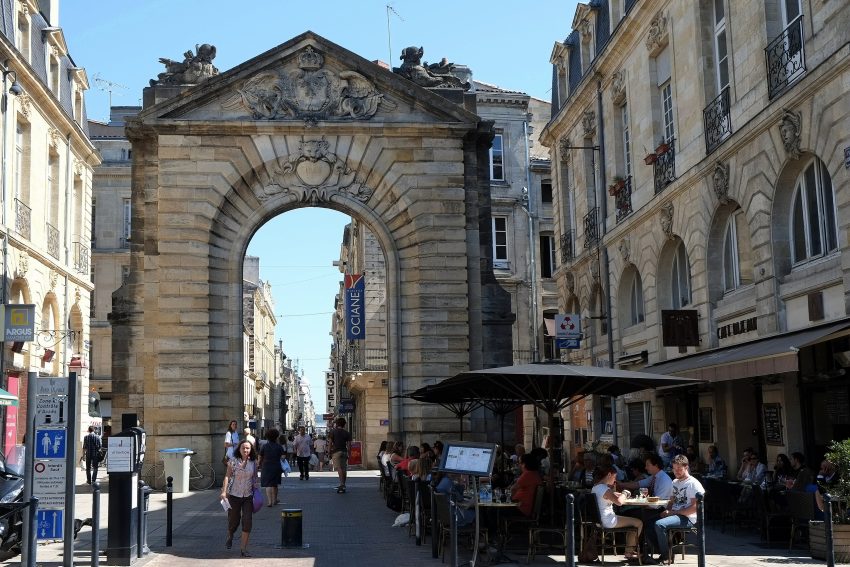
Porte Dijeaux is one of the must-see places in Bordeaux for travellers who enjoy blending architecture, history, and urban exploration. Standing beside Place Gambetta and opening onto Rue des Dijeaux, this grand archway marks a site first fortified in Roman times, later transformed into the classical stone monument we see today. It's a great place to visit on a walking tour of Bordeaux, especially as it connects some of the city's most atmospheric streets, cafés, and boutiques.
The arch's graceful lines and balanced proportions reflect the ambitions of 18th-century Bordeaux-a city becoming wealthier, culturally refined, and architecturally confident. More symbolic than defensive, Porte Dijeaux welcomes visitors into the historic centre with quiet dignity, just as it has done for centuries.
History and Significance of Porte Dijeaux
The site of Porte Dijeaux has served as a western gateway since Roman times, when Bordeaux (then Burdigala) was enclosed within defensive walls. The modern arch was built between 1748 and 1753 by architect Michel Voisin and originally named Porte Dauphine, honouring the heir to the French throne, the future Louis XVI.
Its restrained classical style was designed to harmonise with the elegant architecture emerging across Bordeaux at the time. After the French Revolution, the gate adopted the name Porte Dijeaux, reflecting the adjacent Rue des Dijeaux, a historic commercial street leading into the medieval core of the city.
The arch was listed as a historic monument in 1921 and remains a key landmark, bridging the city’s ancient origins with its Enlightenment-era transformation.
Things to See and Do in Porte Dijeaux
Walk through the arch and admire its clean classical symmetry from both sides. From the Place Gambetta side, the arch perfectly frames Rue des Dijeaux, one of Bordeaux’s most lively pedestrian streets lined with shops and cafés.
Pair your visit with a stroll around Place Gambetta’s renovated garden, a peaceful space ideal for relaxing or people-watching. Photographers will appreciate how the arch interacts with the wide urban space around it, especially in late afternoon light.
How to Get There
Porte Dijeaux is located beside Place Gambetta and is easily accessible on foot from Bordeaux's historic centre. Several tram lines, including B and D, stop nearby at Gambetta. You can use SNCF Connect to check schedules, compare routes, and purchase tickets for National (SNCF ) and regional trains (TER). For a more streamlined experience, we recommend using Omio, which allows you to easily compare prices, schedules, and book tickets for both National and Regional travel across all of Europe, all in one place. Public car parks are available around the square for those travelling by car. If you are looking to rent a car in France I recommend having a look at Discover Cars, first, as they compare prices and review multiple car rental agencies for you. Travellers arriving by air can reach Bordeaux Airport and take tram or shuttle links into the city centre. For the best deals and a seamless booking experience, check out these flights to Bordeaux on Booking.com.
Practical Tips on Visiting Porte Dijeaux
- Best time to visit Porte Dijeaux: Late afternoon for warm light illuminating the arch.
- Entrance fee in Euros: Free.
- Opening hours: Always accessible.
- Official website: bordeaux-tourisme.com
- How long to spend: 10-20 minutes, longer if exploring nearby streets.
- Accessibility: Fully accessible for wheelchairs and strollers.
- Facilities: Numerous cafés, restaurants, and shops in the immediate area.
- Photography tip: Stand in Place Gambetta to capture the arch framing Rue des Dijeaux.
- Guided-tours: Often included on historical walking tours of central Bordeaux.
- Nearby food options: Plenty of options around Gambetta and Rue Porte Dijeaux.
Where to Stay close to Porte Dijeaux
For a central stay steps from the arch, consider Hôtel Konti by HappyCulture. For boutique charm and refined style, Yndo Hôtel offers a luxurious experience. Another excellent nearby choice is Mama Shelter Bordeaux, known for its lively atmosphere and contemporary design.
Is Porte Dijeaux Worth Visiting?
Yes. While modest compared to some of Bordeaux's grand monuments, Porte Dijeaux is one of the top sights in Bordeaux for anyone interested in urban history and classical architecture. Its central location, elegant design, and historic significance make it a rewarding stop on any exploration of the city.
What Other Travellers Say...

Porte Dijeaux at 90 Rue de la Porte Dijeaux in Bordeaux is a neoclassical city gate described as a historic monument with intricate stonework and architectural details; visitors praise it as a splendid, must-see landmark situated near busy streets, shops, cafés and side streets ideal for an afternoon of wandering, people-watching and starting a city exploration, with notable carved decorations including a coat of arms and other pediment motifs.


FAQs for Visiting Porte Dijeaux
Nearby Attractions to Porte Dijeaux
- Place Gambetta: A beautifully redesigned garden square beside the arch.
- Cathédrale Saint-André: Bordeaux's Gothic masterpiece a short walk away.
- Grand Théâtre de Bordeaux: An 18th-century architectural gem.
- Rue Sainte-Catherine: One of Europe's longest pedestrian shopping streets.
- Musée des Beaux-Arts: A leading art museum housed near the Palais Rohan.
The Porte Dijeaux appears in our Complete Guide to Visiting Bordeaux!

Moira & Andy
Hey! We're Moira & Andy. From hiking the Camino to trips around Europe in Bert our campervan — we've been traveling together since retirement in 2020!
This website uses affiliate links which may earn a commission at no additional cost to you!
Nearby Attractions
- Musée des Arts Décoratifs et du Design de Bordeaux (0.2) km
Museum - Palais Rohan (0.3) km
Palace and Town Hall - Musée des Beaux-Arts de Bordeaux (0.4) km
Museum - Cathédrale Saint-André (0.4) km
Cathedral - Tour Pey-Berland (0.4) km
Tower - Le Grand-Théâtre (0.5) km
Theatre - Rue Sainte-Catherine (0.5) km
Street - Maison Gobineau (0.5) km
Historic Building - Basilique Saint-Seurin (0.6) km
Basilica - Place du Parlement (0.6) km
Square