Porte Brunet, Saint-Émilion
City Gate in Saint-Émilion
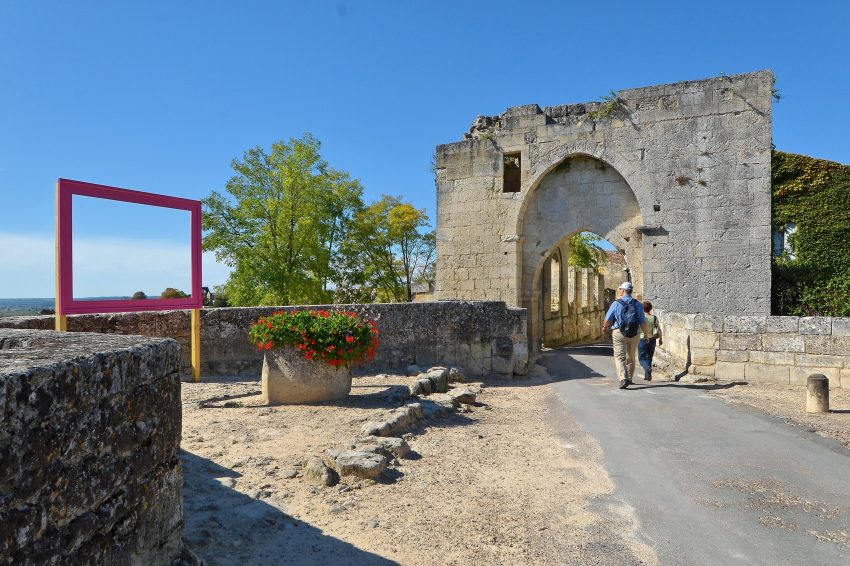
Porte Brunet is one of Saint-Émilion's surviving medieval gateways, and it still feels like a threshold between the compact stone lanes and the open countryside beyond. Built as part of the town's defences, it's the kind of sight you naturally encounter while wandering-then pause for longer than expected once you notice the double-arched passage and the way the landscape opens up on the far side. For many visitors, it becomes one of the top sights in Saint-Émilion because it's both historically meaningful and effortlessly scenic.
It also fits neatly into a walking tour of Saint-Émilion, especially if you like building your route around gateways, viewpoints, and the old edges of town. The gate rewards a slow look: you can read layers of change in the stonework, imagine how access was controlled, and then finish with a panoramic glance over the valley that makes Saint-Émilion feel bigger than its small medieval core.
Table of Contents
History and Significance of the Porte Brunet
Porte Brunet dates to the 12th century and formed part of Saint-Émilion's fortification system at a time when the town's prosperity made it worth protecting. Unlike gates that vanished through demolition or redevelopment, this one endured, leaving a rare, tangible piece of the town's defensive footprint that you can still walk through today.
Its name is often linked to the Gascon term Branet, referring to open land or moor-like clearings, which suits the gate’s original orientation toward the countryside. In other words, this wasn’t only a military structure-it was also a practical portal, connecting the fortified settlement to fields, routes, and everyday movement beyond the walls.
The details in the masonry underline its defensive purpose. The passage and its openings were designed to slow and control entry, and features such as a defensive drop-opening above the route reflect the hard realities of medieval siege thinking. Later modifications, including widening to allow carts through, show how the gate evolved as the town’s needs shifted from purely defensive priorities toward commerce and circulation.
Things to See and Do in the Porte Brunet
Start by walking through the gate in both directions and looking back each time. From one side it reads as a compact urban gateway; from the other, it feels like a framed exit toward open land, which helps you understand why gates mattered psychologically as well as strategically.
Next, look closely at the structure’s defensive storytelling. Notice the two arches, the thickness of the masonry, and any surviving traces of fittings that hint at doors and control points. Even without signage, the gate’s proportions and stonework make it easy to imagine the bottleneck effect it would have created.
Finally, linger for the view. The real pleasure of Porte Brunet is that it's both a historic object and a lookout point, so it works beautifully as a short pause for photos and a breath of open air before you dive back into Saint-Émilion's tighter lanes.
Practical Tips on Visiting the Porte Brunet
- Entrance fee: Free
- Opening hours: Always accessible (outdoor landmark; best visited in daylight)
- Best time to visit: Early morning for quieter photos, or late afternoon when the light softens and the valley view looks its best.
- How long to spend: 10-20 minutes is ideal for a slow look, a few photos, and a short pause for the panorama.
- Accessibility: Expect uneven stone surfaces and gentle slopes nearby, typical of Saint-Émilion’s historic edges.
- Facilities: There are no dedicated facilities at the gate itself, so plan cafés and restrooms around the main streets of the historic centre.
Where to Stay Close to the Porte Brunet
For a culture-heavy itinerary, base yourself inside Saint-Émilion’s medieval centre so you can walk to monuments and dinners; if your main focus is vineyards and day trips, staying just outside the core is often calmer and easier for parking and quick departures.
If you want a comfortable base that keeps the historic lanes at your doorstep, Hotel Porte Brunet is a convenient, well-located choice. For a classic stay close to the heart of town with an easy rhythm for evenings, Hôtel Palais Cardinal places you within a short walk of the main sights. If you prefer more space and a quieter setting while staying close to town, Château Hôtel Grand Barrail suits travellers who want vineyard atmosphere with downtime built in.
Is the Porte Brunet Worth Visiting?
Yes, because it’s a high-impact stop with almost no effort. You get a surviving piece of Saint-Émilion’s medieval defences, a clear sense of how the town controlled access, and a scenic view that makes the fortification story feel grounded in the landscape.
It's especially worthwhile if you enjoy seeing the “edges” of historic towns, not just the central monuments. Porte Brunet adds a satisfying chapter to your route without requiring tickets, queues, or careful timing.
What Other Travellers Say...

Porte Brunet, on Rue de la Porte Brunet in Saint-Émilion, is a medieval gateway that retains a strong, photogenic presence and offers pleasant views—especially at dusk—despite its missing towers; visitors note its timeless, Gothic character and cultural significance, the quiet setting close to the town centre, a nice viewpoint though lacking benches, and nearby beehives.


For Different Travelers
Families with Kids
This is a low-stress stop for families because it's outdoors, quick, and naturally story-friendly. Kids usually respond well to the idea of gates, walls, and medieval defence features, and the open view provides a nice break from narrow lanes.
If you’re visiting with younger children, keep the visit simple and focus on the most obvious viewpoint and the fun of passing through the arch. It’s an easy win that doesn’t demand much patience.
Couples & Romantic Getaways
For couples, Porte Brunet works as a small, atmospheric pause-an unplanned-feeling moment that still delivers something memorable. The valley view is particularly good for a quiet photo stop and a slower stroll just outside the busiest streets.
It also pairs nicely with an evening pace. Visit as the light softens, then head back into the medieval centre for a relaxed drink or dinner, with the sense that you've seen a more spacious side of Saint-Émilion.
Budget Travelers
Porte Brunet is ideal for budget travellers because it's free and genuinely rewarding. It's the kind of stop that proves you can build a great Saint-Émilion day around walking, viewpoints, and street-level history without paying for every highlight.
Use it as a connector between larger stops, and let it shape your route so you’re getting variety-lanes, gates, open views-without adding costs.
FAQs for Visiting the Porte Brunet
Getting There
Tickets & Entry
Visiting Experience
Tours, Context & Itineraries
Photography
Accessibility & Facilities
Food & Breaks Nearby
Safety & Timing
Nearby Attractions to the Porte Brunet
- Tour du Roy: A medieval keep with a rooftop panorama that gives you the best overview of town and vineyards.
- Collegiate Church of Saint-Émilion and Cloister: A major church complex where quiet courtyards and layered architecture reward slow wandering.
- Monolithic Church of Saint-Émilion: A dramatic limestone-carved monument that showcases Saint-Émilion's underground heritage.
- Porte de la Cadène and Maison de la Cadène: A Gothic archway beside the town's last timber-framed house, ideal for medieval street character.
- Cloître des Cordeliers: A picturesque cloister with underground cellars that blend history and a sparkling-wine experience.
The Porte Brunet appears in our Complete Guide to Visiting Saint-Émilion!

Moira & Andy
Hey! We're Moira & Andy. From hiking the Camino to trips around Europe in Bert our campervan — we've been traveling together since retirement in 2020!
This website uses affiliate links which may earn a commission at no additional cost to you!
Planning Your Visit
Always accessible (outdoor landmark; best visited in daylight)
Free
Nearby Attractions
- Cloître des Cordeliers (0.2) km
Convent - Porte de la Cadène (0.2) km
City Gate - Washhouses of Saint-Émilion (0.2) km
Historic Site - Hermitage of Saint Emilion (0.2) km
Religious Building - Place de l’Église Monolithe (0.2) km
Square - Chapelle de la Trinité (0.2) km
Church - Monolithic Church of Saint-Émilion (0.2) km
Church - Bell Tower of the Monolithic Church (0.3) km
Tower - Tour du Roy (0.3) km
Castle and Tower - Mairie de Saint-Émilion (0.3) km
Town Hall