Porta Soprana, Genoa
City Gate and City Walls in Genoa
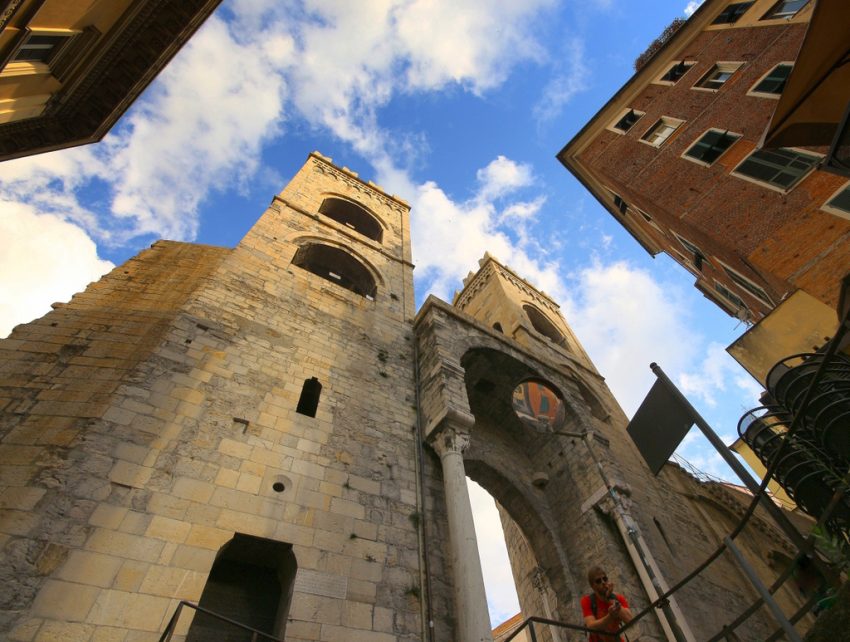
Porta Soprana is one of the best places to visit in Genoa for travellers who are drawn to medieval fortifications, dramatic architecture, and echoes of the city's powerful maritime past. Rising proudly at the eastern entrance to old Genoa, this monumental gateway-with its pair of imposing towers-was built in the mid-12th century during a period of crisis and rapid urban fortification.
It is also a highlight of any walking tour of Genoa, forming a natural link between the city's medieval lanes, Columbus' House, and the remains of the Sant'Andrea cloister. Standing before its ogival arch and carved capitals, visitors quickly understand why Porta Soprana remains one of the top attractions in Genoa.
Table of Contents
- History and Significance of Porta Soprana, Genoa
- Things to See and Do in Porta Soprana, Genoa
- How to Get to Porta Soprana, Genoa
- Practical Tips on Visiting Porta Soprana, Genoa
- Where to Stay close to Porta Soprana, Genoa
- Is Porta Soprana, Genoa Worth Visiting?
- FAQs for Visiting Porta Soprana, Genoa
- Nearby Attractions to Porta Soprana, Genoa
History and Significance of Porta Soprana, Genoa
Between 1155 and 1158, Genoa faced the imminent threat of attack from the forces of Emperor Frederick Barbarossa. In response, the citizens mobilised to construct a powerful new defensive system-massive walls, fortified towers, and monumental gates. Porta Soprana formed a crucial part of these defences and became the main eastern entrance to the medieval city, particularly for travellers arriving from the Levant.
The construction of these fortifications proved decisive. With the city now protected by strong walls and supported by a formidable naval fleet, Barbarossa found himself unable to launch a successful assault. Forced into negotiation, he acknowledged Genoa’s rising power, marking an important moment in the city’s political and military history.
Restoration works in the early 20th century ensured Porta Soprana's continued survival and revealed its refined architectural details. Its ogival arch-remarkably predating the Gothic style-displays both strength and elegance. Marble columns on either side feature beautifully carved capitals, illustrating the craftsmanship of medieval Genoa.
Things to See and Do in Porta Soprana, Genoa
Though the interior of the towers is not open to the public, standing beneath Porta Soprana offers a compelling sense of medieval Genoa's scale and ambition. The twin towers soar above the entranceway, their stonework revealing centuries of weathering and restoration.
Take time to admire the graceful arch, whose pointed form hints at architectural innovations that would later flourish across Europe. The richly decorated capitals surrounding the gateway highlight the skilled artisans who contributed to the city’s fortifications.
Just a few steps away, visitors can explore Columbus' House and the peaceful Cloister of Sant'Andrea. Together with Porta Soprana, these sites offer a concentrated glimpse into Genoa's medieval urban fabric.
How to Get to Porta Soprana, Genoa
Genoa Cristoforo Colombo Airport provides convenient access to the city, with buses and taxis connecting travellers to the historic centre near Porta Soprana in under thirty minutes. For the best deals and a seamless booking experience, check out these flights to Genoa on Booking.com.
Train travellers can arrive at either Genova Brignole or Genova Piazza Principe stations, both offering quick bus or metro links to Piazza Dante. From there, it’s a short walk to the gate. Use Omnio to easily compare schedules, book train tickets, and find the best prices all in one place for a hassle-free journey across Italy.
If travelling by car, parking is available in the garages around Piazza Dante or Piazza Corvetto. From these areas, it's an easy walk to Porta Soprana through pedestrian-friendly streets. If you are looking to rent a car in Italy I recommend having a look at Discover Cars, first, as they compare prices and review multiple car rental agencies for you.
Practical Tips on Visiting Porta Soprana, Genoa
- Suggested tips: Combine your visit with Columbus' House and the Sant'Andrea cloister for a rounded medieval experience.
- Best time to visit: Early morning or late afternoon for softer light on the stone towers.
- Entrance fee in Euros: Free to visit from the outside.
- Opening hours: The gate is always visible; surrounding sites may have specific hours.
- Official website: Search “Porta Soprana Genova” for information on nearby attractions.
- How long to spend: 15-30 minutes at the gate itself.
- Accessibility: The immediate area is accessible, though surfaces may be uneven.
- Facilities: Cafés and shops can be found nearby in Piazza Dante.
- Photography tip: Position yourself slightly back from the arch to capture both towers in a single frame.
- Guided tours: Many Genoa walking tours include Porta Soprana as a key stop.
- Nearby food options: Piazza Dante and Via Ravecca offer excellent cafés, bakeries, and trattorias.
Where to Stay close to Porta Soprana, Genoa
Staying near Porta Soprana places you in one of Genoa's most atmospheric districts, ideal for exploring the medieval city, major squares, and museums. For a refined stay, consider Hotel Bristol Palace. A stylish boutique option nearby is Hotel Genova City Center. For those who prefer to stay within the old town’s winding alleys, Hotel Le Nuvole offers charm and convenience.
Is Porta Soprana, Genoa Worth Visiting?
Yes, Porta Soprana is definitely worth visiting. Its impressive twin towers, elegant medieval arch, and strategic historical importance make it one of the top sights in Genoa. Whether you're exploring the city's defensive history or enjoying its atmospheric streets, this gate offers a powerful glimpse into Genoa's medieval strength.
What Other Travellers Say...

Porta Soprana, on Via di Porta Soprana in Genoa, is a prominently towered medieval city gate dating to the 12th century that was restored in later centuries; its twin towers and robust stone archway evoke stepping back into the old city, sit near cobbled streets, nearby ruins and the house linked to Christopher Columbus, and are surrounded by cafés and restaurants where visitors can view and enjoy the landmark.


FAQs for Visiting Porta Soprana, Genoa
Nearby Attractions to Porta Soprana, Genoa
- Columbus' House: The reconstructed birthplace of the famous explorer.
- Cloister of Sant'Andrea: Elegant medieval remains beneath the gate.
- Piazza Dante: A lively square linking medieval and modern Genoa.
- Via XX Settembre: One of Genoa’s grand shopping avenues.
- Palazzo Ducale: A major cultural centre offering exhibitions, history, and events.
The Porta Soprana appears in our Complete Guide to Visiting Genoa!

Moira & Andy
Hey! We're Moira & Andy. From hiking the Camino to trips around Europe in Bert our campervan — we've been traveling together since retirement in 2020!
This website uses affiliate links which may earn a commission at no additional cost to you!
Planning Your Visit
Nearby Attractions
- Christopher Columbus House (0.0) km
Historic Building - Church of Jesus and the Saints Ambrogio and Andrea (0.2) km
Church - Piazza De Ferrari (0.2) km
Square - Piazza Matteotti (0.2) km
Square - Doge’s Palace (0.2) km
Palace - Cathedral of San Lorenzo (0.3) km
Cathedral - Santa Maria di Castello (0.4) km
Church - Palazzo San Giorgio (0.6) km
Palace - Oriental Art Museum (0.7) km
Museum - Via Garibaldi Palaces (0.7) km
Palace


