Porta Sant'Angelo, Perugia
City Gate near Perugia

Rising from the 14th century walls on the northern edge of Perugia, Porta San Michele is a powerful reminder that this hilltop city was once a fortress as much as a cultural centre. Fortified by Ambrogio Maitani in 1326, the gate grew in stages into a tall, complex structure that controlled one of the main routes into town and symbolised both protection and power, making it one of the top attractions in Perugia if you enjoy medieval engineering and city history.
Today, the gate's three distinct levels, the Museum of the City Walls and Gates housed inside, and the broad views from the roof terrace turn a simple gateway into a full visitor experience. You can trace the evolution from stone base to brick keep, learn how the walls once worked as a defensive system and then step out above the rooftops, making Porta San Michele often visited on walking tours of Perugia as a dramatic vantage point and story rich stop.
Table of Contents
- History and Significance of the Porta San Michele
- Things to See and Do in the Porta San Michele
- How to Get to the Porta San Michele
- Practical Tips on Visiting the Porta San Michele
- Where to Stay close to the Porta San Michele
- Is the Porta San Michele Worth Visiting?
- FAQs for Visiting Porta San Michele
- Nearby Attractions to the Porta San Michele
History and Significance of the Porta San Michele
Porta San Michele is the largest medieval gate in Perugia and an integral part of the 14th century city walls. Its origins lie in the period when the city was consolidating its defences and redefining its boundaries, and from the start it was treated as a key strategic point. The first level, built in sandstone to match the contemporary walls, formed the original core, tying the gate visually and structurally to the rest of the perimeter.
In the 1370s a second level in limestone was added under the direction of Gérard du Puy, known as the Abbate di Monmaggiore, acting as Papal Legate. Recognising the strategic value of this northern approach, he linked Porta San Michele to the fortress of Porta Sole and the nearby Porta di Sant'Antonio, creating a defensive chain that controlled movement along one of the main routes into Perugia. The third level, constructed in brick between 1416 and 1424 by architect Fioravante Fioravanti on the orders of Braccio Fortebracci, transformed the gate into a true keep with trapdoors, slits and embrasures, a process completed by 1479.
Over the centuries the structure was repaired and adapted several times, but its essential form remained, and since the 1990s it has housed the Museum of the City Walls and Gates. This gives Porta San Michele a dual role: it is both a preserved piece of medieval military architecture and a curated space where visitors can understand how Perugia’s defences developed. The dedication to St Michael the Archangel, one of the city’s protector saints, reinforces the symbolic weight of the gate, tying martial strength to spiritual guardianship.
Things to See and Do in the Porta San Michele
As you approach Porta San Michele, take time to read the stone and brick layers from bottom to top. The sandstone of the first level, aligned with the city walls, sets the older medieval tone, while the limestone belt above and the later brick keep tell you at a glance that this gate has been reworked more than once. It is like looking at a cross section of Perugia’s political and military history written into masonry.
Inside, the Museum of the City Walls and Gates brings that story to life with displays on the different construction phases, models of the walls and information about the people who shaped them, from Ambrogio Maitani to Braccio Fortebracci. You can learn how the trapdoors, slits and embrasures were used, where the gate sat within the wider system of fortifications and why commanders cared so much about this particular entrance. It is the sort of museum that turns what might otherwise be “just a gate” into one of the things to do in Perugia that really deepens your sense of the place.
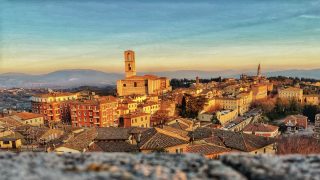
Do not miss the roof terrace. Climbing up through the structure to emerge above the city is both atmospheric and rewarding, and from the top you get a splendid view of Perugia, the surrounding hills and the line of the old walls. It is a perfect spot for orientation at the start of your visit or for a final look back at the cityscape before you leave, and the sense of height makes it easier to imagine guards once watching the approaches for friend and foe alike.
How to Get to the Porta San Michele
Most visitors reach Perugia via San Francesco d'Assisi - Perugia Airport, a small but useful hub with connections to other Italian and European cities. For the best deals and a seamless booking experience, check out these flights to Perugia on Booking.com. From the airport, shuttle buses and taxis link you to the lower part of town, where you can connect to local buses or the minimetro up to the historic centre.
If you arrive by train, you will come into Perugia’s main station in the valley, served by regional and intercity services.Use Omnio to easily compare schedules, book train tickets, and find the best prices all in one place for a hassle-free journey across Italy. From there, the minimetro or city buses climb up to the historic core; once at the top, you can either walk through the old streets towards the northern side of the centre or use local buses to get closer to the gate and walls.
Travelling by car, follow the main roads into Perugia from the surrounding Umbrian countryside, then park in one of the multi storey or terrace car parks at the edge of the historic centre.If you are looking to rent a car in Italy I recommend having a look at Discover Cars, first, as they compare prices and review multiple car rental agencies for you. From your parking area, signed pedestrian routes and streets will guide you towards the northern district and Porta San Michele; it is best explored on foot so you can appreciate the walls and views at your own pace.
Practical Tips on Visiting the Porta San Michele
- Suggested tips: Combine your visit to Porta San Michele with a short walk along the nearby wall sections and allow time for the museum and the roof terrace rather than just passing through the arch.
- Best time to visit: Late afternoon is particularly rewarding, with softer light on the stone and wide views from the terrace; mornings can be quieter if you prefer fewer people.
- Entrance fee: Viewing the external of the tower is free
- Opening hours: 24 Hours
- Official website: https://www.artemusicadelperugino.com/services-5
- How long to spend: Plan 45-60 minutes for the museum and terrace, plus extra time if you want to walk a longer stretch of the walls in either direction.
- Accessibility: The historic structure involves stairs, narrow passages and height differences; access to upper levels and the terrace may be challenging for visitors with limited mobility.
- Facilities: On site facilities are limited, so use cafés, toilets and shops in the nearby streets of the historic centre before or after your visit.
- Photography tip: From the terrace, look for compositions that include both the city and the broader Umbrian landscape; at ground level, step back to capture the three construction levels stacked above the arch.
- Guided tours: Check whether any themed wall and gate tours are available; a guide can help you link Porta San Michele to other defensive points like Porta Sole and appreciate the overall strategy.
- Nearby food options: Small cafés and trattorias in the northern part of the historic centre offer easy spots for a coffee or meal after you have explored the gate and walls.
Where to Stay close to the Porta San Michele
Staying in Perugia’s historic centre makes it easy to reach Porta San Michele on foot while keeping the rest of the city at your fingertips. A long standing central option is Sina Brufani, which offers panoramic views and straightforward access to the promenades leading towards different parts of the walls. For something more intimate, Hotel Fortuna provides characterful rooms just off Corso Vannucci, from where you can stroll through the old streets to the northern gate area. If you prefer a boutique feel with a historic setting, Hotel Priori Secret Garden places you in a charming corner of the centre, within comfortable walking distance of Porta San Michele and other key sights.
Is the Porta San Michele Worth Visiting?
If you are interested in how Perugia defended itself and organised its space, Porta San Michele is absolutely worth including in your itinerary. The layered construction in stone, limestone and brick, the transformation from simple gateway to fortified keep and the later reuse as a museum together tell a vivid story of power, strategy and urban growth. Add in the rooftop views and its role marking the start of one of the city's Royal Streets, and it becomes clear that this is one of the best places to visit in Perugia for travellers who like their sightseeing mixed with strong sense of place.
What Other Travellers Say...

Chiesa di San Michele Arcangelo sits on Via del Tempio in Perugia and is a striking, centuries‑old circular church capped by a dome; inside, ornate columns support a central drum pierced by windows and visitors note ancient frescoes and simple, elegant decoration that create a peaceful, timeless atmosphere used for weddings and baptisms though regular services are limited—it occupies the first church you reach approaching Perugia, can be reached on foot from the town gate with street parking nearby, and rewards the walk with unique early Christian/Romanesque character and views over the surroundings.


FAQs for Visiting Porta San Michele
Nearby Attractions to the Porta San Michele
- Etruscan Walls of Perugia: Surviving sections of the much older Etruscan fortifications, offering a powerful contrast to the later medieval defences.
- Etruscan Arch: One of Perugia's most impressive ancient gateways, showcasing finely worked stone and inscriptions from the Roman period.
- Carducci Gardens: A landscaped park with viewpoints and the Perugino Monument, ideal for a relaxed walk with panoramic vistas.
- Piazza IV Novembre and Duomo di Perugia: The city's main square and cathedral, forming the religious and civic heart of Perugia.
- Corso Vannucci: The central pedestrian street lined with shops, cafés and historic buildings, perfect for a stroll after exploring the northern walls.
The Porta Sant'Angelo, Perugia appears in our Complete Guide to Visiting Perugia!

Moira & Andy
Hey! We're Moira & Andy. From hiking the Camino to trips around Europe in Bert our campervan — we've been traveling together since retirement in 2020!
This website uses affiliate links which may earn a commission at no additional cost to you!
Planning Your Visit
24 Hours
Viewing the external of the tower is free
Nearby Attractions
- Basilica di Santa Maria degli Angeli (2.8) km
Basilica - Basilica di San Francesco d'Assisi (4.7) km
Basilica - Piazza Inferiore di San Francesco (4.8) km
Square - Perugia ”San Francesco” Airport (4.8) km
Airport - Bosco di San Francesco (4.8) km
Woods - Palazzo Bernabei (4.9) km
Museum and Palace - Abbey of San Pietro (4.9) km
Abbey - Pinacoteca Comunale (5.0) km
Gallery and Palace - Teatro Metastasio in Assisi (5.2) km
Theatre - Chiesa di Santa Maria Maggiore (5.4) km
Basilica, Historic Building and Historic Site