Pointe du Hoc, Bayeux
Historic Site near Bayeux
Pointe du Hoc, perched between Utah and Omaha Beaches, is one of Normandy's most dramatic and historically significant D-Day sites. On June 6, 1944, this sheer promontory became the focus of one of the most daring missions of the Second World War. The U.S. 2nd Ranger Battalion, led by Lieutenant Colonel James E. Rudder, scaled 30-meter-high cliffs under heavy German fire to destroy artillery batteries that threatened Allied troops landing on the beaches below. Their bravery and determination turned the tide for the invading forces and became a defining moment in the story of the Normandy landings.
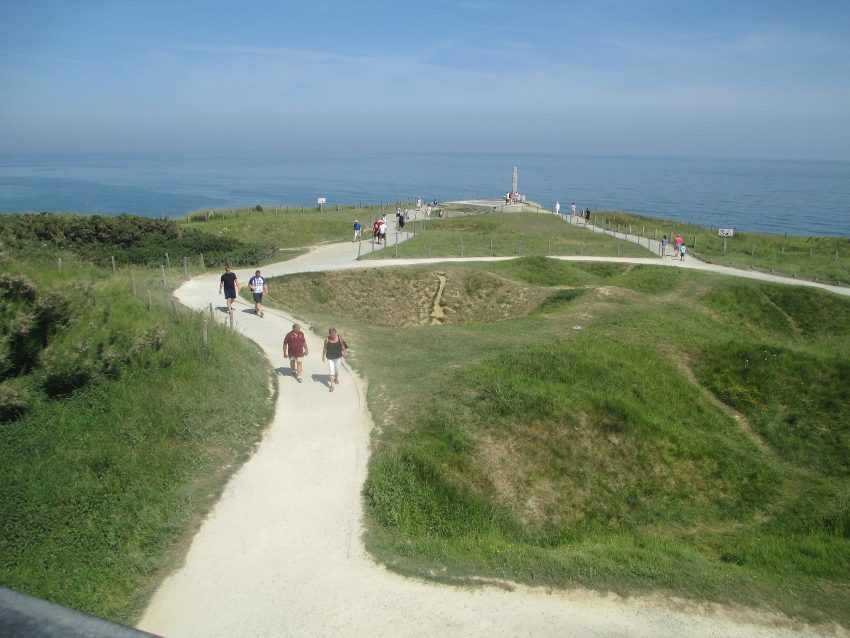
Today, the site stands as both a battlefield and a memorial, preserved almost exactly as it was in 1944. Craters left by naval bombardments pockmark the earth, while shattered bunkers and gun casemates stand as silent witnesses to the ferocity of the assault. The Pointe du Hoc Ranger Monument-a stark granite obelisk rising above the cliffs-commemorates the men who fought and died here. For visitors tracing the D-Day route, this is one of the best places to go on a day trip from Bayeux, offering a mix of breathtaking coastal scenery and solemn historical reflection.
History and Significance
Before D-Day, German forces fortified Pointe du Hoc with six artillery guns capable of firing on both Omaha and Utah Beaches. Recognizing its strategic importance, Allied planners tasked the U.S. 2nd Ranger Battalion with capturing the position early on June 6, 1944. Using ropes, ladders, and grappling hooks, the Rangers scaled the cliffs under relentless fire, only to discover that the main guns had been moved inland. They pressed on, located the artillery pieces hidden nearby, and destroyed them with thermite grenades, preventing catastrophic losses on the beaches.
Although their mission succeeded, the cost was immense-of the 225 Rangers who began the assault, fewer than 90 were fit for duty by the end of the day. The courage and tenacity they displayed have since become legendary, symbolizing the sacrifices made during Operation Overlord. Today, Pointe du Hoc remains largely untouched, managed by the American Battle Monuments Commission as a place of remembrance and education.
Things to See and Do
Visitors can walk through the preserved battlefield, where craters, bunkers, and gun emplacements tell the story of the fierce fighting. The Pointe du Hoc Ranger Monument, built atop a German bunker, provides sweeping views of the Channel coast and serves as the focal point for reflection. Interpretive panels throughout the site explain key moments of the battle, and the visitor center offers detailed historical displays and personal accounts from those who fought here.
The rugged cliffs and windswept landscapes also make Pointe du Hoc a striking photography location, especially at sunrise or sunset. For history enthusiasts, the authenticity of the terrain-still scarred by explosions-is both haunting and powerful. Many visitors combine a trip here with stops at nearby Omaha Beach and the Normandy American Cemetery to gain a broader understanding of the D-Day campaign.
How to Get to Pointe du Hoc from Bayeux
Pointe du Hoc is located about 35 kilometers west of Bayeux, making it an easy 40-minute drive along the D514 coastal road. If you are looking to rent a car in France I recommend having a look at Discover Cars, first, as they compare prices and review multiple car rental agencies for you. The route passes through scenic farmland and small villages that still bear traces of wartime history. If you don't have a car, guided D-Day tours from Bayeux frequently include Pointe du Hoc as one of their main stops, offering expert commentary and transport.
Practical Tips for Visiting Pointe du Hoc
- Best time to visit: Late spring to early autumn for comfortable weather and clear coastal views
- Entrance fee in Euros: Free entry year-round
- Opening hours: Daily, from sunrise to sunset
- Official website: www.abmc.gov
- How long to spend: 1-1.5 hours
- Accessibility: Some paths are uneven; paved routes available for partial access
- Facilities: Visitor center, restrooms, and interpretive panels
- Photography tip: Capture the cliffs from the northern trail for the best perspective on their height
- Guided tours: Available from Bayeux, often combined with Omaha and Utah Beaches
- Nearby food options: Cafés and restaurants in Grandcamp-Maisy, just a few minutes’ drive away
Nearby Attractions
- Omaha Beach - One of the most famous D-Day landing sites, with memorials and museums along the shore
- Normandy American Cemetery - A moving memorial overlooking Omaha Beach, honoring over 9,000 U.S. soldiers
- Utah Beach Museum - Showcasing the American landings and naval operations that secured the western flank
- La Cambe German War Cemetery - Resting place for over 21,000 German soldiers, offering perspective on both sides of the conflict
- Grandcamp-Maisy - A nearby fishing village with a small harbor, seafood restaurants, and a quieter coastal charm
What Other Travellers Say...

The Pointe du Hoc, at 14450 Cricqueville-en-Bessin, France, is a coastal promontory marked by WWII bunkers, bomb craters and a soldiers' monument, offering dramatic views and a sobering sense of history; visitors praise the preserved bunkers and underground displays and recommend guided-tours for context, but note much of the site is fenced off to protect eroding areas, some paths and bunker access are closed or unsuitable for electric wheelchairs, it can get crowded, and visitors are asked to respect the site and its rules (including no animals) to help keep it intact.


The Pointe du Hoc appears in our Complete Guide to Visiting Bayeux!

Moira & Andy
Hey! We're Moira & Andy. From hiking the Camino to trips around Europe in Bert our campervan — we've been traveling together since retirement in 2020!
This website uses affiliate links which may earn a commission at no additional cost to you!
Nearby Attractions
- D-Day Beaches (14.2) km
Historic Site - Airborne Museum in Sainte-Mère-Église (23.6) km
Museum - Bayeux War Cemetery (24.2) km
Cemetery - Memorial Museum of the Battle of Normandy (24.4) km
Museum - Place Charles de Gaulle (24.4) km
Historic Site and Park - Conservatoire de la Dentelle de Bayeux (24.7) km
Museum - Baron Gérard Museum of Art and History (MAHB) (24.7) km
Museum - Mairie de Bayeux (24.7) km
Town Hall - Hôtel du Doyen (24.7) km
Historic Building - Bayeux Cathedral (24.7) km
Cathedral