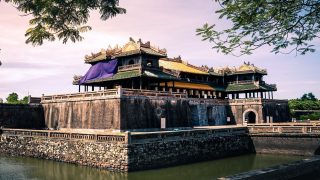
Phu Van Tower, Hue
Historic Building in Hue
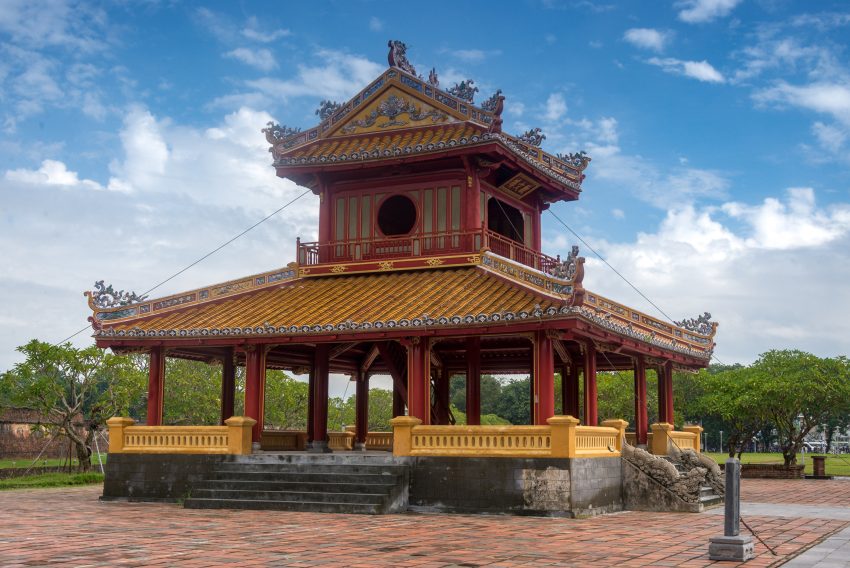
Phu Van Lau, also known as Phu Van Tower, is one of the most iconic structures along the main axis of Hue Imperial City. Built in 1819 during the reign of King Gia Long, this elegant two-story pavilion served as the official platform for displaying royal documents, decrees, and the results of imperial examinations. Its prominent location facing the Perfume River and standing before the Flag Tower makes it one of the top attractions in Hue.
The tower once played a vital role in the ceremonial and administrative life of the Nguyen Dynasty. Officials and citizens passing by were required to show respect by dismounting and tipping their hats, a rule reinforced by two stone steles reading Khuynh Cai Ha Ma-tip your hat and get off your horse. Flanked by small bronze cannons and looking across to Nghinh Luong Dinh pavilion by the river, Phu Van Lau was not only a place for solemn announcements but also a backdrop for royal festivities, including elephant-and-tiger fights under King Minh Mang and birthday celebrations for the monarch.
History and Significance of Phu Van Lau
Completed in 1819 under King Gia Long, Phu Van Lau served as an essential link between the imperial court and the public. Important proclamations such as edicts, decrees, and examination results were posted here, reinforcing royal authority and transparency in governance. The significance of this site is reflected in its position along the Imperial City’s ceremonial axis, aligned with the Flag Tower and key structures beyond.
As a marker of respect, passers-by were commanded to dismount and show reverence whenever they approached, a rule literally carved in stone on two granite steles still standing today. These steles highlight the tower’s ceremonial gravity and its function as a public interface for imperial announcements. The paired bronze cannons and symmetrical setting reinforce its symbolism within the broader architectural ensemble of the citadel.
The tower has endured a series of restorations, often prompted by natural disasters, including severe damage during the storm of 1904 under King Thanh Thai. Despite repairs and partial reconstructions, its Nguyen-style architecture has been faithfully preserved. A notable chapter in its history occurred in 1916 when revolutionaries Tran Cao Van and Thai Phien used the nearby wharf as a meeting place during their attempted uprising with King Duy Tan. More recently, a structural collapse in 2014 highlighted ongoing preservation challenges, reminding visitors of the tower’s fragile yet enduring legacy.
Things to See and Do in Phu Van Lau
Visitors can admire the tower’s elegant two-story wooden structure, which showcases classic Nguyen Dynasty proportions and decorative elements. The upper floor, where official documents were once displayed, offers insight into the communication methods of the imperial court. The bronze cannons positioned nearby enhance the ceremonial atmosphere and are worth examining up close.
From the base of the tower, guests can look across to Nghinh Luong Dinh pavilion by the Perfume River. This riverside structure was a favored retreat for the kings, offering a graceful contrast to the official functions of Phu Van Lau. The juxtaposition of governance and leisure enriches the understanding of royal life in Hue.
The area around Phu Van Lau also provides a dramatic view of the Flag Tower, one of Hue’s most recognizable landmarks. Visitors can walk along the riverside promenade, explore nearby fortifications, and enjoy photography opportunities that capture the architectural harmony of Hue’s ceremonial axis.
How to Get to Phu Van Lau
Phu Bai International Airport, located about 16 kilometres south of Hue, offers frequent domestic flights and is the most convenient gateway for air travellers. For the best deals and a seamless booking experience, check out these flights to Hue on Booking.com.
Hue Railway Station connects the city with major destinations such as Da Nang, Hanoi, and Ho Chi Minh City, making rail travel an easy option for visitors heading to the Imperial City. Train schedules and bookings can be found on Omio.
Travelling by car is straightforward, with parking areas located near the main citadel entrances. From there, Phu Van Lau is a short walk along the riverside and the outer fortifications of the Imperial City.
Practical Tips on Visiting Phu Van Lau
- Suggested tips: Visit in the early morning or late afternoon when the lighting is ideal for photography along the Perfume River.
- Best time to visit: Morning or sunset for cooler conditions and scenic river views.
- Entrance fee: Viewable for free from outside; nearby areas inside the citadel require an Imperial City ticket.
- Opening hours: Open-air site accessible at all hours; adjacent structures follow Imperial City hours (8:00-17:30).
- How long to spend: Around 15-30 minutes for viewing the tower and exploring the riverfront.
- Accessibility: Mostly accessible, though surrounding walkways may have uneven stones.
- Facilities: Small cafés and benches are available along the riverside promenade.
- Photography tip: Capture Phu Van Lau with the Flag Tower rising behind for a dramatic historical backdrop.
- Guided tours: Many city tours include Phu Van Lau as part of the riverside and citadel introduction.
- Nearby food options: Restaurants and cafés line the riverfront and surrounding streets.
Where to Stay close to Phu Van Lau
Staying near the Perfume River offers great access to Phu Van Lau and many other Hue attractions. The elegant Azerai La Residence provides refined riverside accommodations within a short walk of the tower. For a boutique stay, Le Domaine de Cocodo offers comfort and convenience close to historic sites. Another appealing option is Villa Hue, a quiet retreat well positioned for exploring the city.
Is Phu Van Lau Worth Visiting?
Phu Van Lau is absolutely worth visiting for its historical depth, architectural charm, and prominent position along the ceremonial axis of the Imperial City. Whether viewed as a symbol of imperial authority or as a scenic stop along the Perfume River, it offers an enriching look at Hue's cultural landscape. Its layered history-from royal announcements to political intrigue-makes it a fascinating and memorable site.
What Other Travellers Say...

Phu Van Lau is a historic pavilion in the imperial complex noted for its role in official announcements and ceremonies during the Nguyễn dynasty; visitors describe it as a pleasant-looking pavilion where emperors once waited for imperial boats and where formal guests were received. Expect a popular spot for photos and outdoor relaxation, though some visitors find large tour groups can make visits brief. The site’s name is often explained as meaning the Tower of the Student.


FAQs for Visiting Phu Van Lau
Nearby Attractions to Phu Van Lau
- Flag Tower: Hue’s most prominent military and ceremonial landmark.
- Nghinh Luong Dinh: Riverside pavilion once used by the Nguyen kings for relaxation.
- Noon Gate (Ngo Mon): The grand southern entrance to the Imperial City.
- Nine Holy Cannons: Monumental bronze works symbolizing imperial strength.
- Thai Hoa Palace: The ceremonial throne hall of the Nguyen Dynasty.
The Phu Van Tower appears in our Complete Guide to Visiting Hue!

Moira & Andy
Hey! We're Moira & Andy. From hiking the Camino to trips around Europe in Bert our campervan — we've been traveling together since retirement in 2020!
This website uses affiliate links which may earn a commission at no additional cost to you!
Planning Your Visit
Nearby Attractions
- Perfume River (0.2) km
River - Nine Holy Cannons (0.3) km
Historic Site - Meridian Gate (0.3) km
City Gate - Hien Lam Pavilion (0.4) km
Historic Building - Thai Hoa Palace (0.4) km
Palace - Mieu Temple (0.5) km
Historic Building - Halls of the Mandarins (0.5) km
Historic Building - Hung Mieu Temple (0.5) km
Historic Building - Noon Gate (0.6) km
City Gate - Forbidden Purple City (0.6) km
Historic Building