Palazzo del Capitano del Popolo, Perugia
Palace in Perugia
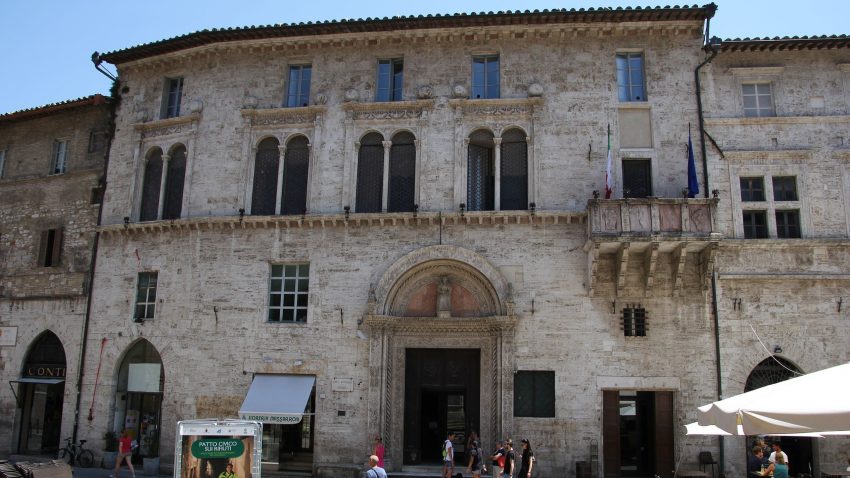
Set on the edge of a steep hillside in the heart of Perugia, the Palazzo del Capitano del Popolo rises over what was once Piazza Sopramuro, the “Plaza Above the Wall.” This 13th century space, shored up by powerful retaining walls, originally opened directly onto sweeping views of the valley and served as a busy market until 1472. Today the palace and its neighbouring buildings define Piazza Matteotti, turning a former open platform into a compact civic stage and making the palazzo one of the top attractions in Perugia for anyone interested in how medieval power reshaped public space.
By 1481, the new Captain of the People Palace and the Old University of Perugia had closed off the cliff-side view, but in return they gave the square a striking architectural frame. Designed by Lombard architects Gasparino di Antonio and Leone di Matteo, the palace features a doorway that echoes the grand entrance of the Town Hall, two elegant windows decorated with Renaissance wreaths and a statue of Justice presiding over the lunette above the door. Paired with Gothic arches at ground level and the adjacent university building, it is a highlight of any walking tour of Perugia, especially if you continue through the Gothic archways to the Lanari Room and out to the terrace overlooking the valley.
Table of Contents
- History and Significance of the Palazzo del Capitano del Popolo
- Things to See and Do in the Palazzo del Capitano del Popolo
- How to Get to the Palazzo del Capitano del Popolo
- Practical Tips on Visiting the Palazzo del Capitano del Popolo
- Where to Stay close to the Palazzo del Capitano del Popolo
- Is the Palazzo del Capitano del Popolo Worth Visiting
- FAQs for Visiting Palazzo del Capitano del Popolo
- Nearby Attractions to the Palazzo del Capitano del Popolo
History and Significance of the Palazzo del Capitano del Popolo
The story of the Palazzo del Capitano del Popolo begins with Piazza Sopramuro itself. Laid out in the 13th century on the very edge of Perugia's hillside, the square took its name from the supporting walls that held it above the drop. For more than a century this was an open, elevated market space, filled with stalls and activity, with unbroken views over the valley below. It embodied Perugia's dual nature as both a fortified hill town and a commercial hub for the surrounding countryside.
In the late 15th century, the city's political and intellectual ambitions reshaped the square. By 1481 the Palazzo del Capitano del Popolo and the Old University had risen along its edge, physically closing the open panorama but affirming the piazza's role as a centre of civic authority. Gasparino di Antonio and Leone di Matteo gave the palace a portal reminiscent of the Town Hall's entrance, reinforcing the connection between the Captain of the People and Perugia's broader system of government. The two upper windows, framed with Renaissance wreaths, and the statue of Justice in the lunette underline the building's function as a place where public power and law were exercised.
Time and disaster also left their imprint. A major earthquake in 1741 destroyed the palace’s third floor, which was replaced with a more modest mezzanine level, changing its silhouette but keeping the structure in use. The ground floor preserved its Gothic arches, a reminder of the building’s medieval origins beneath later modifications. Next door, the Old University, begun in 1453 and raised by two additional storeys by 1514 to plans by Fiorenzo di Lorenzo, extended the square’s role as a place where civic administration and higher learning met. Today the palace still anchors Piazza Matteotti, flanked by Gothic passageways leading to the Lanari Room and modern additions such as the covered market and terrace, which connect historic fabric with contemporary city life.
Things to See and Do in the Palazzo del Capitano del Popolo
Begin by standing back in Piazza Matteotti to take in the palace façade as a whole. Notice how it closes the cliff edge that once opened onto the valley, transforming an exposed market into a more enclosed civic space. The doorway immediately recalls the entrance to Perugia’s Town Hall, with its sense of formality and ceremony. Look up to see the two windows adorned with carved wreaths, a clearly Renaissance detail that softens the strict lines of the façade and adds a decorative rhythm at upper-storey level.
Above the portal, the statue of Justice dominates the lunette. This figure is more than mere ornament: it symbolises the authority of the Captain of the People and the role of the palace in defending civic rights and order. At ground level, move closer to examine the Gothic arches that still frame the base, hinting at the building’s medieval core despite later alterations. Knowing that the third floor was rebuilt as a mezzanine after the 1741 earthquake gives an extra layer to your reading of the structure, turning cracks and irregularities into clues rather than flaws.
To the left of the palace, follow the Gothic archways into the Lanari Room area. This space is occasionally used for arts and crafts events, so you may find exhibitions or local markets occupying the interior; even when empty, the vaulted passages are atmospheric and worth a quick look. Back in the square, explore the covered market complex that hides underground parking and elevators beneath its roof. Taking the lifts or stairs up to the terrace gives you a modern version of the views once enjoyed from the open edge of Piazza Sopramuro, with perspectives over the valley and the southern part of Perugia that help you understand why this site was chosen in the first place.
How to Get to the Palazzo del Capitano del Popolo
Most visitors arrive in Perugia via San Francesco d'Assisi - Perugia Airport or larger hubs such as Rome and Florence, then continue into the city by bus, train or car. For the best deals and a seamless booking experience, check out these flights to Perugia on Booking.com. From Perugia’s airport, shuttle buses and taxis bring you into town, where you can connect with local buses or the minimetro up to the historic centre.
If you come by train, you will arrive at Perugia’s main station in the lower town, served by regional and intercity lines.Use Omnio to easily compare schedules, book train tickets, and find the best prices all in one place for a hassle-free journey across Italy. From there, the minimetro or city buses carry you up to the hilltop; once you are in the historic centre, Piazza Matteotti and the Palazzo del Capitano del Popolo are just a short walk away, a few minutes from Corso Vannucci and nearby squares.
Travelling by car, follow the main roads into Perugia and park in one of the multi-storey or terrace car parks around the edge of the historic core.If you are looking to rent a car in Italy I recommend having a look at Discover Cars, first, as they compare prices and review multiple car rental agencies for you. Escalators, lifts and pedestrian routes then lead you into the centre; from Piazza Italia or other central points, it is easy to navigate on foot to Piazza Matteotti, where the palace occupies the dominant side of the square.
Practical Tips on Visiting the Palazzo del Capitano del Popolo
- Suggested tips: Combine time in Piazza Matteotti with a wider loop that takes in Corso Vannucci, Piazza IV Novembre and Rocca Paolina so you can see how Perugia's civic spaces connect across the hilltop.
- Best time to visit: Late afternoon or early evening is ideal for enjoying the terrace views over the valley; mornings are quieter if you prefer a calmer atmosphere in the square.
- Entrance fee: The square and palace exterior are free to admire
- Opening hours: Piazza Matteotti is accessible at all time
- How long to spend: Allow 30-45 minutes to explore the square, study the palace details and visit the terrace; extend your stay if there is an exhibition or craft event in the Lanari Room.
- Accessibility: The square is mostly level and paved; access from outlying car parks or lower streets may involve escalators or lifts, and the terrace and market levels are generally reachable without major barriers.
- Facilities: The covered market area beneath the square offers modern conveniences such as lifts and, usually, toilets; cafés, shops and services are abundant in the surrounding streets.
- Photography tip: Frame the palace façade from several angles to capture the contrast between the Gothic arches and Renaissance windows, then head to the terrace to photograph wide valley views and the southern sweep of Perugia.
- Guided tours: Look for city walks that specifically include Perugia’s civic architecture, as guides often stop here to explain the role of the Captain of the People and the evolution of Piazza Sopramuro into Piazza Matteotti.
- Nearby food options: The streets around the square are lined with cafés, bakeries and trattorias, making it easy to pair your visit with a coffee, snack or leisurely meal.
Where to Stay close to the Palazzo del Capitano del Popolo
Staying in Perugia's historic centre makes visiting the Palazzo del Capitano del Popolo effortless, as it sits at the heart of the old town. A classic, centrally located option is Sina Brufani, which offers panoramic views and a short stroll to both Piazza Matteotti and Corso Vannucci. For a more intimate stay with historic character, Hotel Fortuna lies just off the main street, placing you within easy walking distance of the palace, nearby squares and key museums. If you prefer a boutique atmosphere, Hotel Priori Secret Garden provides a stylish base from which you can explore the palace, the Lanari Room and the rest of the medieval centre on foot.
Is the Palazzo del Capitano del Popolo Worth Visiting
If you are interested in Perugia's civic and political history, the Palazzo del Capitano del Popolo is definitely worth seeking out. It shows how a simple cliff-edge market square evolved into a formal civic space framed by power and learning, with the palace and Old University reshaping the skyline. The blend of Gothic and Renaissance details, the story of the earthquake and reconstruction, and the way modern elements like the covered market and terrace have been woven into the historic setting make this one of the best places to visit in Perugia for travellers who enjoy reading history directly from architecture and urban space.
What Other Travellers Say...

Palazzo Capitano del Popolo in Castiglione del Lago is described by a visitor as an elegant palace notable for its attached clock tower, offering a classic landmark to spot while exploring Contrada Castello.

FAQs for Visiting Palazzo del Capitano del Popolo
Nearby Attractions to the Palazzo del Capitano del Popolo
- Piazza IV Novembre and Fontana Maggiore: Perugia's main square, with a famous medieval fountain and views of the cathedral and Palazzo dei Priori.
- Corso Vannucci: The central pedestrian street, perfect for a stroll, shopping and people watching before or after your time in Piazza Matteotti.
- Rocca Paolina: The 16th century fortress and underground city, accessible via nearby escalators, offering a striking contrast to the open square above.
- Palazzo dei Priori: A Gothic civic palace housing important art collections, providing another facet of Perugia's civic architecture and history.
- Perugia Aqueduct Walk: A scenic elevated walkway on the former aqueduct, easily reached from the centre and ideal for extending your exploration with atmospheric views over rooftops and hills.
The Palazzo del Capitano del Popolo appears in our Complete Guide to Visiting Perugia!

Moira & Andy
Hey! We're Moira & Andy. From hiking the Camino to trips around Europe in Bert our campervan — we've been traveling together since retirement in 2020!
This website uses affiliate links which may earn a commission at no additional cost to you!
Planning Your Visit
Piazza Matteotti is accessible at all time
The square and palace exterior are free to admire
Nearby Attractions
- Corso Vannucci (0.1) km
Street - National Gallery of Umbria (0.1) km
Gallery - Nobile Collegio della Mercanzia (0.1) km
Historic Building and Museum - Nobile Collegio del Cambio (0.1) km
Museum - Piazza IV Novembre (0.1) km
Square - Palazzo dei Priori (0.1) km
Town Hall - Perugino Monument (0.1) km
Monument - Palazzo Baldeschi al Corso (0.1) km
Palace - Fontana Maggiore (0.1) km
Fountain - Etruscan Well (0.2) km
Historic Site