Opéra National de Lyon
Opera House in Lyon
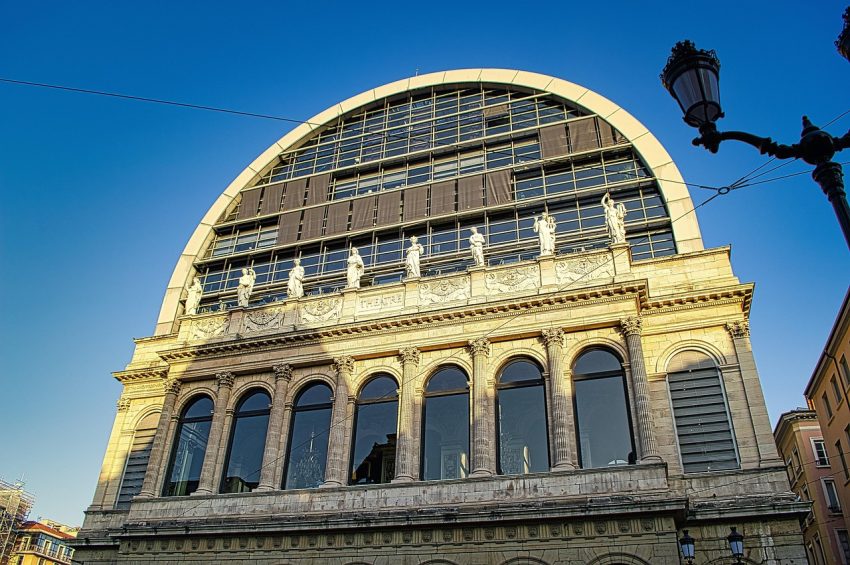
The Opéra National de Lyon is one of the best places to visit in Lyon if you're drawn to the intersection of architecture and performance. Originally built in the 1830s and radically reimagined by architect Jean Nouvel in the late 20th century, it rises next to the Hôtel de Ville with a classical stone base crowned by a sleek glass-and-metal dome. By day it's a striking contrast against the sky; by night it glows like a lantern, hinting at the music, movement, and drama unfolding inside.
Step through the doors and you move from historic façades into a world of minimal black and red, state-of-the-art acoustics, and a stage that hosts everything from Puccini and Mozart to contemporary ballet and bold new productions. The opera house has a reputation for adventurous programming and high artistic standards, making it a highlight of any walking tour of Lyon for culture lovers. Even if you don't catch a performance, just standing in the square between the opera and City Hall, watching people flow in for an evening show, gives you a feel for the city's creative heartbeat.
Table of Contents
- History and Significance of the Opéra National de Lyon
- Things to See and Do in the Opéra National de Lyon
- How to Get to the Opéra National de Lyon
- Practical Tips on Visiting the Opéra National de Lyon
- Where to Stay close to the Opéra National de Lyon
- Is the Opéra National de Lyon Worth Visiting?
- FAQs for Visiting Opéra National de Lyon
- Nearby Attractions to the Opéra National de Lyon
History and Significance of the Opéra National de Lyon
The story of the Opéra National de Lyon begins in the early 19th century, when the city needed a theatre that reflected its growing status. The original building, completed in the 1830s, followed the model of many European opera houses: an elegant neoclassical façade facing the city and a traditional horseshoe-shaped auditorium inside. For decades it was a social and cultural focal point, hosting operas, concerts, and gatherings for Lyon's elite and emerging middle class.
By the late 20th century, however, the old building no longer met modern safety standards or artistic needs. Instead of demolishing it outright, the city chose a more daring route: a complete reinvention by architect Jean Nouvel. He preserved the historic stone façade and outer shell, then hollowed out and rebuilt the interior, adding the now-iconic curved glass dome on top. This allowed the opera to gain extra height for rehearsal rooms and technical spaces without overwhelming the square at street level.
Today, the Opéra National de Lyon stands as a powerful symbol of the city's willingness to blend tradition with innovation. Architecturally, it's a conversation between centuries; culturally, it's a flagship institution that has helped cement Lyon's reputation as a serious arts city, not just a gastronomic one. Its productions regularly tour internationally or win awards, and its resident opera, ballet, and orchestra ensembles are known for creativity as much as craftsmanship.
Things to See and Do in the Opéra National de Lyon
The most immersive way to experience the Opéra National de Lyon is, of course, to attend a performance. Whether it's a classic opera, a contemporary reimagining, a ballet, or a symphonic concert, you'll get a feel for the house's excellent acoustics and its distinctive visual style. The black-and-red interior, with its dramatic lighting and clean lines, creates a sense of anticipation as soon as you take your seat, and the steeply raked auditorium ensures good sightlines even from higher levels.
If your schedule and budget allow, consider exploring the variety of productions on offer. One night might feature a traditional staging of a beloved opera, while another showcases a modern piece or a daring reinterpretation with inventive sets and multimedia. The ballet company also has a strong reputation for both classical and contemporary works, often programming pieces that push beyond the expected. Checking the season programme in advance lets you pick something that matches your tastes, whether you’re a first-time opera-goer or a seasoned fan.
Even without a ticket, the building is still worth a closer look. Walk around the exterior to see how the original façades and colonnades at street level interact with the striking glass dome above. From nearby streets and squares, you can capture some great photos of this old-meets-new skyline. When guided-tours are available, they're well worth joining: you may get to peek into rehearsal spaces, step on or near the stage, and, if you're lucky, access rooftop viewpoints that reveal sweeping vistas over the Presqu'île, the Saône, and Fourvière.
How to Get to the Opéra National de Lyon
Most visitors arriving from farther afield land at Lyon-Saint Exupéry Airport (LYS), which has frequent connections across Europe and beyond. For the best deals and a seamless booking experience, check out these flights to Lyon on Booking.com. From the airport, the Rhônexpress tram takes you into the city, where you can transfer to metro or tram lines to reach the Presqu’île and the opera district.
By train, Lyon Part-Dieu and Lyon Perrache are the main stations.You can use SNCF Connect to check schedules, compare routes, and purchase tickets for National (SNCF ) and regional trains (TER). For a more streamlined experience, we recommend using Omio, which allows you to easily compare prices, schedules, and book tickets for both National and Regional travel across all of Europe, all in one place. From Part-Dieu, you can take the metro (Line B to Saxe-Gambetta, then Line D or A) or a tram/bus combination to reach the Hôtel de Ville - Louis Pradel area; from Perrache, a metro or tram ride up through the Presqu'île will bring you to the same central hub. The Opéra National de Lyon is just a short walk from the Hôtel de Ville - Louis Pradel metro station.
If you're travelling by car, follow signs towards the city centre and look for underground car parks around the Hôtel de Ville, Place des Terreaux, or along the Rhône quays.If you are looking to rent a car in France I recommend having a look at Discover Cars, first, as they compare prices and review multiple car rental agencies for you. Once you’ve parked, everything is easily done on foot: the opera, City Hall, Musée des Beaux-Arts, and nearby bars and restaurants are all close together, making it easy to turn your performance night into a full evening out.
Practical Tips on Visiting the Opéra National de Lyon
- Suggested tips: Book tickets as early as you can for popular productions, and arrive 20-30 minutes before curtain time to enjoy the atmosphere and find your seat without rushing.
- Best time to visit: Evening performances offer the full experience of the illuminated dome and the buzz of the crowd, but daytime tours (when available) are ideal if you want to see behind the scenes.
- Entrance fee: €10–15 and go up depending on the seat and show
- Opening hours: Opening Hours (Box Office):
Monday to Saturday: 12:00 PM – 7:00 PM
Closed on Sundays and holidays (except on performance days) - Official website: https://www.opera-lyon.com
- How long to spend: Plan 2.5-3 hours for an evening performance including intervals; allow 1-1.5 hours for a guided tour.
- Accessibility: The opera offers accessible seating areas and lifts, but it’s worth mentioning any specific mobility needs when booking tickets to ensure the best arrangements.
- Facilities: On-site you’ll find cloakrooms, bars for pre-show and interval drinks, restrooms, and nearby public transport stops; plenty of restaurants and cafés are just a short walk away.
- Photography tip: Capture the building’s contrast by shooting from Place Louis Pradel or Place de la Comédie, framing the classical façade below and the glass dome above, especially around blue hour.
- Guided tours: When available, tours provide insight into stage technology, rehearsal spaces, and the building's architectural transformation-ideal for design and theatre enthusiasts.
- Nearby food options: The surrounding streets are full of bistros, wine bars, and late-opening cafés, making it easy to grab dinner before the show or a drink afterwards to round off the evening.
Where to Stay close to the Opéra National de Lyon
If you want to be just a short stroll from curtain up, Grand Hôtel des Terreaux is a charming option near Place des Terreaux. From here, you can walk to the Opéra National de Lyon in a few minutes, enjoy daytime sightseeing around the Presqu'île, and still be close enough to wander back on foot after an evening performance.
For a stylish central base between the opera, rivers, and shopping streets, Hôtel Silky by HappyCulture works particularly well. It puts you within comfortable walking distance of the opera house, Place Bellecour, and the Saône riverbanks, so you can mix cultural evenings with relaxed daytime exploring.
Another convenient choice is Hôtel de Paris, located in the 1st arrondissement just a few blocks from the Opéra National de Lyon and the Hôtel de Ville. It's ideal if you want to focus your stay around the city's cultural triangle of opera, museums, and historic squares without needing to rely heavily on public transport.
Is the Opéra National de Lyon Worth Visiting?
The Opéra National de Lyon is absolutely worth visiting, whether you're an opera devotee or just mildly curious about the arts. The building alone-19th-century stone topped with a futuristic dome-is reason enough to swing by, and catching a performance adds an extra layer of experience that stays with you long after the final curtain. With its adventurous programming, strong ensemble, and prime location at the cultural heart of the Presqu'île, it sums up a lot of what makes Lyon feel both historic and forward-looking at the same time.
What Other Travellers Say...

Opéra National de Lyon at 1 Place de la Comédie stages opera, dance and concerts in an architecturally striking venue with a rooftop terrace offering city views; visitors praise its modern, well-organized interior, backstage and rehearsal access on guided-tours, friendly reception and clean facilities, and note that performances (including orchestral programs) create a memorable experience though ticket prices can feel steep, while occasional free student concerts and a nearby café make it easy to enjoy the building even without attending a paid show.


FAQs for Visiting Opéra National de Lyon
Nearby Attractions to the Opéra National de Lyon
- Croix-Rousse Slopes - The historic silk-weaving district rising above the Presqu’île, reachable on foot or by metro for viewpoints, murals, and village-like streets.
- Hôtel de Ville de Lyon - The grand 17th-century City Hall facing the opera, with an ornate façade and central role in Lyon's civic life.
- Place des Terreaux - Iconic square nearby, home to the Bartholdi fountain and the Musée des Beaux-Arts de Lyon.
- Musée des Beaux-Arts de Lyon - Major fine arts museum in a former abbey, just a short walk from the opera.
- Saône River Quays - Scenic riverbanks a few minutes' walk downhill, ideal for a pre- or post-show stroll.
The Opéra National de Lyon appears in our Complete Guide to Visiting Lyon!

Moira & Andy
Hey! We're Moira & Andy. From hiking the Camino to trips around Europe in Bert our campervan — we've been traveling together since retirement in 2020!
This website uses affiliate links which may earn a commission at no additional cost to you!
Planning Your Visit
Opening Hours (Box Office):
Monday to Saturday: 12:00 PM - 7:00 PM
Closed on Sundays and holidays (except on performance days)
€10-15 and go up depending on the seat and show
Nearby Attractions
- Hôtel de Ville de Lyon (0.1) km
Historic Building - Place des Terreaux (0.2) km
Square - Musée des Beaux-Arts de Lyon (0.2) km
Museum - Basilique Saint-Bonaventure (0.5) km
Basilica - Amphitheater of the Three Gauls (0.5) km
Roman Site - Place du Change (0.7) km
Square - Musée Gadagne (0.8) km
Museum - Vieux Lyon (0.8) km
Area - Place des Jacobins (0.8) km
Square - Cour d’Appel (0.9) km
Historic Building