Alyscamps, Arles
Historic Site in Arles
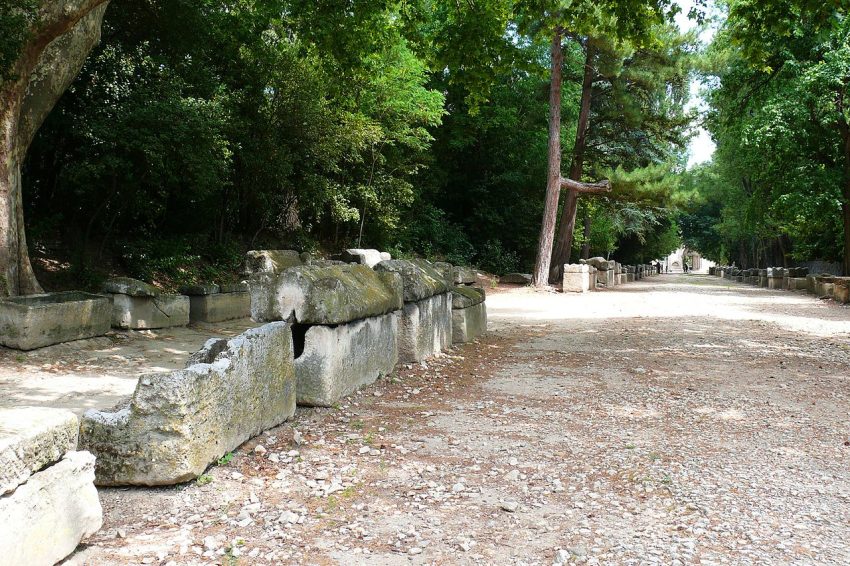
Just beyond Arles' historic walls lies the Alyscamps, one of the must-see places in Arles and a hauntingly beautiful Roman necropolis steeped in legend, art, and faith. Stretching along a shaded avenue lined with weathered sarcophagi, the site once marked the final resting place of nobles, saints, and pilgrims - a silent testament to 1,500 years of human devotion and craftsmanship. Its name, derived from the Latin Elisii Campi (Elysian Fields), evokes the Roman afterlife and the paradise awaiting heroes and the virtuous.
Today, the Alyscamps is both an archaeological treasure and a place of reflection. Once celebrated by medieval poets and later painted by Vincent van Gogh and Paul Gauguin, it remains a great place to visit on a walking tour of Arles, offering a rare glimpse into the city's layered history - where Roman grandeur, Christian tradition, and artistic imagination converge.
History and Significance of the Alyscamps
Constructed just outside Arles' ancient city walls, the Alyscamps began as a Roman burial ground in the 1st century AD, following the Roman custom of forbidding burials within the city limits. Like the Appian Way in Rome, this tree-lined necropolis became the resting place for the wealthy and powerful, forming the terminus of the Via Aurelia, the major Roman road linking Rome to Gaul. Over time, its grandeur grew - with elaborate sarcophagi, sculpted tombs, and family mausoleums forming a corridor of remembrance stretching over a kilometer.
With the Christianization of Arles in the 4th century, the Alyscamps became even more revered. Saints such as Genesius and Trophimus were believed to be buried here, and legends claimed Christ himself attended Saint Trophimus's funeral, leaving an imprint on a sarcophagus. These beliefs transformed the site into a sacred pilgrimage destination, drawing people from across Europe who wished to be interred in its hallowed ground. By the Middle Ages, it was one of the top sights in Arles and an important stop along the Way of Saint James, the pilgrimage route to Santiago de Compostela.
Though its prestige waned after the relics of Saint Trophimus were moved to Arles Cathedral in 1152, the Alyscamps continued to serve as a burial site for centuries. Its decline came during the Renaissance, when tombs were looted and sarcophagi gifted to dignitaries or repurposed for construction. In the 19th century, the arrival of the railway and canal further damaged the site, but in 1888 it gained new fame when Van Gogh and Gauguin painted it during their brief collaboration in Arles. Today, restored and preserved, the Alyscamps stands as an open-air museum - tranquil, atmospheric, and profoundly moving.
Things to See and Do in the Alyscamps
A stroll through the Alyscamps is a journey through time and imagination. The main path, flanked by rows of ancient sarcophagi, leads visitors through centuries of history, from Roman grandeur to medieval spirituality. Each tomb tells a story, its carvings depicting scenes of myth, faith, and resurrection. At the end of the avenue stands the 12th-century Church of Saint Honoratus, a serene Romanesque chapel marking the necropolis's spiritual heart.
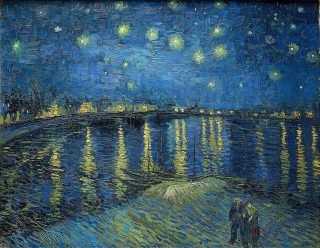
Art lovers will find the Alyscamps particularly evocative, as it inspired Van Gogh's and Gauguin's paintings in the autumn of 1888. Standing among the cypress trees and weathered stone, it's easy to see what drew them here - the play of light and shadow, the deep sense of history, and the quiet melancholy of a place suspended between life and eternity. This is a cornerstone of walking tours of Van Gogh's Arles.
How to Get There
The Alyscamps is located about a 10-minute walk south of Arles' historic center, along Avenue des Alyscamps. From the Arles railway station, head toward Boulevard des Lices, then follow signs for the site. For those arriving by car, parking is available nearby at Parking du Centre or Parking des Lices, both within walking distance of the entrance.
Practical Tips on Visiting the Alyscamps
- Best time to visit the Alyscamps: Early morning or late afternoon for softer light and fewer visitors.
- Entrance fee in Euros: Around 4.50 EUR for adults; free for children under 18.
- Opening hours: Typically 9:00-18:00, with shorter hours in winter.
- Official website: www.arlestourisme.com
- How long to spend: 45 minutes to 1 hour for a full walk through the necropolis.
- Accessibility: The main path is flat and accessible, though some uneven ground remains.
- Facilities: Restrooms and informational panels on-site.
- Photography tip: Visit at golden hour for atmospheric photos among the cypress trees.
- Guided tours: Offered seasonally; combine with Arles’ Roman monuments for deeper context.
- Nearby food options: Cafés and restaurants are located along Boulevard des Lices and Place du Forum.
Is the Alyscamps Worth Visiting?
Absolutely. The Alyscamps is one of the things to do in Arles that reveals the city's soul - a serene yet powerful reminder of its ancient roots and enduring beauty. Whether you come for its Roman heritage, its Christian legends, or the echoes of Van Gogh's brushstrokes, this evocative necropolis offers a truly timeless experience.
What Other Travellers Say...

Alyscamps is a tree‑lined avenue in Arles flanked by ancient sarcophagi that leads to a quiet Roman cemetery and a small 12th‑century church; visitors describe a peaceful, garden‑like stroll a short walk from the centre, noting its historic atmosphere and that it can feel like a long walk of ruins ending at a chapel—many found it well worth a visit, especially with a city pass.


Nearby Attractions to the Alyscamps
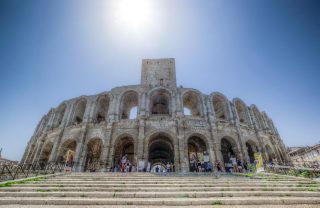
- Arles Arena - The city's grand Roman amphitheater, still hosting events and performances.
- Roman Theatre of Arles - Another impressive remnant of the city's classical past.
- Saint-Trophime Church - A masterpiece of Romanesque art featuring exquisite sculptures.
- Van Gogh Foundation - Celebrates the artist's Arles period with exhibitions and modern art.
- Thermes de Constantin - The remains of Roman baths offering insight into daily life in ancient Arles.
The Alyscamps appears in our Complete Guide to Visiting Arles!

Moira & Andy
Hey! We're Moira & Andy. From hiking the Camino to trips around Europe in Bert our campervan — we've been traveling together since retirement in 2020!
This website uses affiliate links which may earn a commission at no additional cost to you!
Planning Your Visit
01/03 to 30/04: daily between 9 am and 6 pm.
01/05 to 30/09: daily between 9 am and 7 pm.
01/10 to 31/10: daily between 9 am and 6 pm.
02/11 to 01/03: daily between 10.30 am and 4.30 pm.
Closed January 1st, May 1st & December 25th.
€5
Nearby Attractions
- Jardin d'Ete (0.4) km
Gardens - Roman Theatre in Arles (0.5) km
Historic Site and Roman Site - Saint-Trophime Cloister (0.5) km
Cathedral - Arles Arena (0.6) km
Amphitheatre and Roman Site - Église Saint Trophime d'Arles (0.6) km
Church - Place de la République (0.6) km
Historic Site and Square - Arles Obelisk (0.6) km
Monument - Église Sainte-Anne d'Arles (0.6) km
Church - Town Hall and Cryptoportics of Arles (0.7) km
Town Hall - Place du Forum (0.7) km
Square