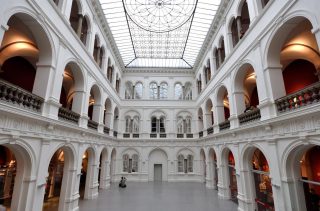
Museum of Natural History, Wrocław University
Museum in Wrocław

The Museum of Natural History at the University of Wrocław is the kind of place that makes you slow down in the best way: a traditional, specimen-rich museum where you can move from towering skeletons to tiny insects, from fossil history to glittering minerals, all in one satisfying circuit. It sits on ul. Henryka Sienkiewicza 21, close to the Botanical Garden and the green, academic edge of the centre, so it feels like a calm pocket of Wrocław that's still very walkable.
If your trip is heavy on architecture and café streets, this museum is one of the top sights in Wrocław for adding a completely different layer-scientific, visual, and surprisingly immersive. It also fits neatly into a walking tour of Wrocław because you can pair it with Ostrów Tumski and riverside strolls without needing to reorganise your day.
Table of Contents
- History and Significance of the Museum of Natural History, University of Wrocław
- Things to See and Do in the Museum of Natural History, University of Wrocław
- How to Get to the Museum of Natural History, University of Wrocław
- Practical Tips on Visiting the Museum of Natural History, University of Wrocław
- Where to Stay Close to the Museum of Natural History, University of Wrocław
- Is the Museum of Natural History, University of Wrocław Worth Visiting?
- For Different Travelers
- FAQs for Visiting the Museum of Natural History, University of Wrocław
- Nearby Attractions to the Museum of Natural History, University of Wrocław
History and Significance of the Museum of Natural History, University of Wrocław
This museum’s roots go back to the university’s long tradition of collecting, classifying, and teaching through real objects-specimens gathered by researchers and explorers, then preserved so future generations can keep learning from them. That academic DNA still shows in how the displays feel: less “theme park,” more genuine cabinet-of-curiosities energy, but on a larger, more serious scale.
What makes it particularly meaningful in Wrocław is the regional angle. Silesia's landscapes, rivers, forests, and changing ecosystems are part of the story, and you start to see how natural history connects to the city's broader identity: trade routes, scientific networks, and the way institutions preserve knowledge through political and social change.
For visitors, the significance is simple and practical: it’s a museum that teaches you to look more closely. After you’ve spent time here, even a walk through parks and along the river feels different-you notice shapes, patterns, and details you might have overlooked earlier.
Things to See and Do in the Museum of Natural History, University of Wrocław
Start with the headline exhibits that make natural history museums so satisfying: large skeletons and zoological displays that give you instant scale and drama. Even if you don’t read every label, these rooms are visually powerful and help you place different species in relation to each other-what’s rare, what’s local, what’s extinct, and what’s simply astonishing.
Next, give yourself time for the smaller worlds: insects, shells, and preserved specimens where the craft of collecting and conserving becomes part of the experience. This is where the museum can feel almost meditative-rows of detail that reward patience, especially if you like photography, sketching, or slow-looking rather than rushing to the next landmark.
Finally, don’t skip the geology and palaeontology sections if you’re even slightly curious. Fossils and minerals add a different kind of wonder-deep time, ancient environments, and the physical building blocks of the region-making the museum feel like a full “life on Earth” story rather than a single-topic collection.
How to Get to the Museum of Natural History, University of Wrocław
Copernicus Airport Wrocław (WRO) is the nearest airport, and the simplest route is to travel into the city by bus or taxi, then continue toward the university and Ostrów Tumski area. For the best deals and a seamless booking experience, check out these flights to Wrocław on Booking.com.
If you arrive by train, you'll come into Wrocław Główny, then connect by tram/bus or a taxi depending on luggage and weather; it's a straightforward city-centre transfer. You can easily check schedules and book tickets through the PKP Intercity website. However, for a smoother experience, we recommend using Omio, which simplifies the booking process and lets you compare prices and schedules all in one place.
Within Wrocław, this museum is easy to combine with the Botanical Garden and Ostrów Tumski on foot, especially if you like building your day as a set of walkable loops rather than point-to-point transport.
If you’re driving, plan to use paid parking in the wider centre and walk the final stretch, as the closer streets can be slower and less predictable for finding a space. If you are looking to rent a car in Poland I recommend having a look at Discover Cars, first, as they compare prices and review multiple car rental agencies for you.
Practical Tips on Visiting the Museum of Natural History, University of Wrocław
- Entrance fee: 14 PLN (adult); 10 PLN (concession).
- Opening hours: Tuesday – Friday: 09:00–16:30. Saturday – Sunday: 10:00–17:30. Closed on Monday.
- Official website: https://muzeum-przyrodnicze.uni.wroc.pl/en/index.php
- Best time to visit: Go mid-morning on a weekday for a calmer, more spacious feel, especially if you like lingering with the smaller, detail-heavy exhibits.
- How long to spend: Allow 1.5-3 hours depending on your interest level; it’s easy to stay longer if you enjoy reading labels and following the collections room by room.
- Accessibility: Expect a classic museum layout in a historic university setting, so plan a flexible route and ask staff about lifts or the easiest circulation path if you need it.
- Facilities: Treat this as a focused museum stop and plan your main café break before or after, using nearby central areas for the widest choice.
Where to Stay Close to the Museum of Natural History, University of Wrocław
For a culture-heavy itinerary, the best base is the Old Town or the riverside centre so you can walk to major sights and enjoy evenings without transport planning; if your priority is early trains and day trips, staying near Wrocław Główny keeps everything friction-free.
If you want a refined, quiet-leaning base near the cathedral island side of the centre, The Bridge Wrocław - MGallery works well for an elegant stay with easy access to Ostrów Tumski and riverside walks. For a relaxed riverside hotel that still keeps you close to the Old Town, HP Park Plaza is a practical choice for a calm evening reset after sightseeing. And if you prefer a dependable central option that stays walkable to the city’s main cultural corridor, Radisson Blu Hotel, Wrocław is a strong all-round base.
Is the Museum of Natural History, University of Wrocław Worth Visiting?
Yes-especially if you want a museum that feels genuinely rooted in a working university rather than designed purely for tourism. The collections deliver the classic natural history pleasures (scale, variety, detail) and they’re easy to enjoy whether you’re a science enthusiast or just curious.
It’s also a smart itinerary choice because it pairs so naturally with nearby green space and historic districts. You can do a focused museum visit, then step straight back into Wrocław’s most scenic walking areas.
What Other Travellers Say...

Museum of Natural History, Henryka Sienkiewicza 21, Wrocław, offers a compact, well‑organized walkthrough of the natural world with extensive bird displays arranged by relationships and labelled in Polish and scientific names (some also include English), large insect and plant collections with herbarium specimens, a dramatic full blue whale skeleton and about 66 complete animal skeletons, plus reptile, amphibian and mammal taxidermy; visitors note good value, an old‑fashioned but educational layout without multimedia, a small gift shop, stairs with lift access via the university entrance, occasional inaccuracies in some labels, limited English signage and warm conditions on upper floors, and suggest allocating around an hour (or more) to explore.


For Different Travelers
Families with Kids
This museum is a strong family stop because it offers instant visual hooks-big skeletons, striking specimens, and clear “what is that?” moments that don’t require long attention spans. A good approach is to set a simple mission like “find three favourites,” then keep moving so kids stay engaged.
If you’re travelling with younger children, aim for the most dramatic rooms first, then leave while energy is still high. Pair it with the Botanical Garden afterwards so the day stays balanced between indoor learning and outdoor running-around time.
Couples & Romantic Getaways
For couples, this is a quietly charming break from the Old Town’s busier rhythms. It’s calm, atmospheric in a classic-museum way, and gives you plenty to talk about as you wander-favourite exhibits, surprising details, and the shared pleasure of discovering something unexpected together.
It also works nicely as part of a slower day: museum first, then a riverside walk, then dinner back in the Old Town. That rhythm feels thoughtful without being overly planned.
Budget Travelers
This is a good-value museum stop because it can anchor a full half-day when you combine it with free walking nearby. Once you've done the museum, you can keep costs down by turning the rest into a self-guided loop through Ostrów Tumski, river paths, and scenic streets.
If you’re watching spending, avoid stacking multiple ticketed attractions back-to-back. Use this museum as the “paid highlight,” then let the city’s walkable scenery carry the rest of the day.
History Buffs
Natural history museums are surprisingly good for history-minded travellers because they show the long timeline beneath the city: landscapes, ecosystems, and scientific collecting traditions that shaped how people understood the region. Here, the university context adds an extra layer-this is knowledge preserved through institutions and generations.
If you like connecting dots, treat the visit as a way to read the city differently afterwards. Parks, riverbanks, and even building stone can feel more interesting once you’ve seen how the museum frames the natural world.
FAQs for Visiting the Museum of Natural History, University of Wrocław
Getting There
Tickets & Entry
Visiting Experience
Tours, Context & Itineraries
Photography
Accessibility & Facilities
Food & Breaks Nearby
Safety & Timing
Nearby Attractions to the Museum of Natural History, University of Wrocław
- Botanical Garden of the University of Wrocław: A green, peaceful garden that pairs perfectly with a museum morning for an easy nature-focused day.
- Ostrów Tumski: The cathedral island district with atmospheric streets and a calmer, older-feeling side of Wrocław.
- National Museum in Wrocław: A major art-and-history museum that adds cultural depth if you're building a museum-heavy itinerary.
- Panorama of the Battle of Racławice: A distinctive, immersive art experience that makes a memorable second stop.
- Wrocław Market Square (Rynek): The city's headline medieval square for colourful façades, cafés, and classic Old Town wandering.
The Museum of Natural History, Wrocław University appears in our Complete Guide to Visiting Wrocław!

Moira & Andy
Hey! We're Moira & Andy. From hiking the Camino to trips around Europe in Bert our campervan — we've been traveling together since retirement in 2020!
This website uses affiliate links which may earn a commission at no additional cost to you!
Planning Your Visit
Tuesday - Friday: 09:00-16:30.
Saturday - Sunday: 10:00-17:30.
Closed on Monday.
14 PLN (adult); 10 PLN (concession).
Nearby Attractions
- Cathedral Island (0.3) km
Area and Island - Wroclaw Cathedral (0.3) km
Cathedral - Tumski Bridge (0.4) km
Bridge - National Museum of Wrocław (0.7) km
Museum - Wroclaw Market Hall (0.7) km
Market - Raclawice Panorama (0.7) km
Gallery - Wroclaw University Museum (0.9) km
Historic Building - Cathedral of St. Mary Magdalene (1.2) km
Church - Stare Jatki (1.2) km
Statue - The Pillory (1.3) km
Monument