Museo Fortuny, Venice
Museum in Venice
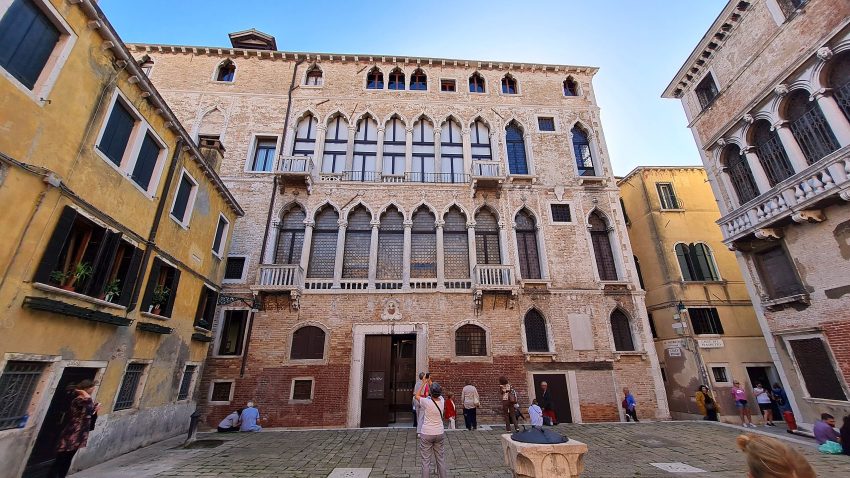
Tucked into the San Marco district, the Fortuny Museum is one of those Venice finds that feels like a secret, even when the city is busy. It sits inside Palazzo Fortuny (Palazzo Pesaro Orfei), a Gothic palazzo that still carries the working spirit of Mariano Fortuny, the artist-designer-inventor who turned these rooms into a creative laboratory of textiles, lighting, photography, and painting.
Rather than a conventional gallery, the visit feels like wandering through an inhabited house of ideas: dim, theatrical spaces, richly textured walls, and objects that hint at experiments mid-flow. If you're building a walking tour of Venice and want a stop that's intimate and distinctive, this spot is one of the top sights in Venice for travelers who like their museums with mood and personality.
Table of Contents
- History and Significance of the Fortuny Museum
- Things to See and Do in the Fortuny Museum
- How to Get to the Fortuny Museum
- Practical Tips on Visiting the Fortuny Museum
- Where to Stay Close to the Fortuny Museum
- Is the Fortuny Museum Worth Visiting?
- For Different Travelers
- FAQs for Visiting Fortuny Museum
- Nearby Attractions to the Fortuny Museum
History and Significance of the Fortuny Museum
Mariano Fortuny (1871-1949) is remembered in Venice not just as an artist, but as a restless maker: someone who treated fabric, pigments, lenses, and light as parts of the same creative language. Palazzo Fortuny became his long-term base, and over time it evolved into a hybrid home-and-workshop where he developed designs, tested materials, and refined the visual worlds that made his name.
That setting is the museum's real historical power. You're not only looking at objects associated with Fortuny, you're walking through a place shaped by his working habits, with traces of the atelier still built into the rooms. It's a rare Venice experience where the building doesn't simply house a collection, it is part of the story, preserving the texture of early 20th-century experimentation inside a much older Venetian shell.
After Fortuny’s death, the palazzo passed to the Comune di Venezia and later became a museum run by the city’s civic museum foundation. Today it holds a distinctive position in Venice’s cultural landscape: less about blockbuster masterpieces, more about stepping into the backstage of creativity, where craftsmanship and invention take centre stage.
Things to See and Do in the Fortuny Museum
Start by letting the building set the pace. The palazzo’s interiors tend to be atmospheric, with rooms that feel deliberately staged, and that’s part of the point: Fortuny’s world was theatrical, and the museum experience often mirrors that with dramatic sightlines, layered textiles, and a sense of curated shadow and glow.
Look out for the way the museum weaves different mediums together. You might move from paintings to textiles to lighting elements without a hard boundary between “fine art” and “design,” which makes the visit feel surprisingly modern. Even if you don’t arrive as a Fortuny expert, the museum is good at communicating how one mind can move across disciplines and leave a coherent aesthetic behind.
Finally, treat this as a “reset” stop in Venice. Because it's slightly removed from the densest flows around Piazza San Marco, it can feel calmer than the headline sights, making it an ideal place to slow down, notice details, and reconnect with why Venice inspires artists in the first place.
How to Get to the Fortuny Museum
The Fortuny Museum is in central Venice in the San Marco area, near Campo San Beneto, and the final approach is typically on foot through narrow calli and small bridges.
The nearest airport is Venice Marco Polo Airport (VCE), with Venice Treviso Airport (TSF) as a secondary option. For the best deals and a seamless booking experience, check out these flights to Venice on Booking.com.
If you arrive by rail, Venezia Santa Lucia is the main station, and from there you can continue on foot and by vaporetto depending on your pace and luggage. Use Omnio to easily compare schedules, book train tickets, and find the best prices all in one place for a hassle-free journey across Italy.
The simplest public-transport route is Vaporetto Line 1 to the Sant’Angelo stop, then a short walk through San Marco’s backstreets to the museum entrance.
If you’re coming from the mainland by bus, most services terminate at Piazzale Roma, where you can switch to Vaporetto Line 1 (Sant’Angelo) and continue on foot.
Driving into historic Venice isn't practical, so plan to park at Piazzale Roma or Tronchetto and continue by vaporetto and walking. If you are looking to rent a car in Italy I recommend having a look at Discover Cars, first, as they compare prices and review multiple car rental agencies for you.
Practical Tips on Visiting the Fortuny Museum
- Entrance fee: Adults: €15.00
- Opening hours: (Summer) 01 April – 31 October; Wednesday – Monday: 10:00–18:00. (Winter) 01 November – 31 March; Wednesday – Monday: 10:00–17:00. Closed on Tuesdays.
- Official website: http://www.fortuny.visitmuve.it/
- Best time to visit: Late morning on a weekday is ideal for a quieter feel, especially outside peak summer weekends.
- How long to spend: Plan for around 60-90 minutes for a satisfying visit without rushing.
- Accessibility: The museum is generally accessible, but expect an older building feel underfoot, with occasional uneven surfaces.
- Facilities: There is an elevator and toilets on-site, plus a cloakroom for items that shouldn’t be carried through the galleries.
Where to Stay Close to the Fortuny Museum
For a culture-heavy itinerary, base yourself in San Marco or San Polo for walkable access to the Grand Canal, major museums, and evening atmosphere; if transport links and a calmer local feel matter more, Cannaregio is an easy-going base with straightforward connections to the station.
Staying near San Marco keeps you close to the museum and makes it easy to weave the visit into early mornings and late afternoons before the day-trippers peak, with options like Splendid Venice - Starhotels Collezione for a polished, central stay and Hotel Saturnia & International if you like a classic Venetian address near the core sights.
If you prefer a quieter courtyard feel while still being close enough to walk everywhere, Hotel Al Codega is well-placed for easy access to both San Marco and Rialto without feeling like you’re sleeping on the city’s busiest corridors.
Is the Fortuny Museum Worth Visiting?
Yes, especially if you enjoy places that feel lived-in and specific to their city. Venice has no shortage of grand rooms and famous façades, but the Fortuny Museum offers something rarer: a sense of creative intimacy, where the building and collection work together to tell a story.
It’s particularly rewarding if you’re drawn to design, textiles, photography, theatre, or the way artistic ideas cross-pollinate. Even travelers who think they’re “not museum people” often enjoy this visit because it feels less like reading labels and more like stepping into a distinctive Venetian world.
What Other Travellers Say...

Museo Fortuny sits in a Gothic palace on Fondamenta Narisi and showcases the work and workshop of Mariano Fortuny, with strong focuses on stage and textile design, painting and photography; visitors praise the rich tapestries, original furnishings, evocative costumes, fabric‑printing machinery, architectural models and staged rooms, note an impressive fresco in a sitting room, and recommend allowing a couple of hours to explore (there are many stairs and some found the audio guides tricky to match to rooms).


For Different Travelers
Families with Kids
This can work well for kids who like slightly mysterious interiors and unusual objects, especially if you frame the visit as exploring an old palace where someone invented things. The varied rooms help keep attention moving, which is useful when patience is limited.
To make it smoother, set a simple “treasure hunt” goal: look for patterns in fabrics, interesting lamps, or rooms that feel like sets from a story. Pair it with a gelato stop nearby and keep expectations to a shorter visit if you’re traveling with younger children.
Couples & Romantic Getaways
The Fortuny Museum is an excellent couples' stop because it's atmospheric and less hectic than the biggest Venice highlights. The dim, layered spaces feel intimate, and the surrounding lanes in San Marco can be wonderfully quiet once you step away from the main routes.
Plan it as part of a slower mini-itinerary: museum first, then a wander towards Rialto or the Accademia area, with a café break in between. It's a satisfying way to experience Venice as a mood rather than a checklist.
Budget Travelers
If you’re watching spending, this is a good museum to prioritise because it offers a distinctive experience that feels uniquely Venetian, not interchangeable with “another gallery.” It’s also easy to combine with free wandering through nearby campos and canals, which is one of the best ways to enjoy the city on a budget.
Consider timing your visit on a day when you're already in central Venice, so you're not stacking transport costs. Pair it with a self-guided walk through San Polo backstreets or along the Grand Canal viewpoints for a full, low-cost afternoon.
History Buffs
Treat this museum as social and cultural history as much as art history. It captures the moment when Venice was both a muse and a workshop for modern creativity, with Fortuny's life bridging craft traditions and new technologies.
The palazzo itself adds a second historical layer: Gothic Venice as the container, early 20th-century invention as the content. If you like places where buildings tell stories, this is a satisfying deep dive.
FAQs for Visiting Fortuny Museum
Getting There
Tickets & Entry
Visiting Experience
Tours, Context & Itineraries
Photography
Accessibility & Facilities
Food & Breaks Nearby
Safety & Timing
Nearby Attractions to the Fortuny Museum
- Teatro La Fenice: Venice's famed opera house, just a short walk away, with tours and a richly decorated interior when performances aren't on.
- St Mark's Square: The city's iconic civic stage, ideal for people-watching and pairing with nearby cultural landmarks.
- Rialto Bridge: A classic Grand Canal viewpoint and an easy place to combine with snacks, shops, and canal-side photos.
- Scala Contarini del Bovolo: A tucked-away spiral staircase with a rewarding view over Venice's rooftops.
- Gallerie dell'Accademia: A top stop for Venetian painting, and a great way to extend your museum day across the canal corridor.
The Museo Fortuny appears in our Complete Guide to Visiting Venice!

Moira & Andy
Hey! We're Moira & Andy. From hiking the Camino to trips around Europe in Bert our campervan — we've been traveling together since retirement in 2020!
This website uses affiliate links which may earn a commission at no additional cost to you!
Planning Your Visit
(Summer) 01 April - 31 October; Wednesday - Monday: 10:00-18:00.
(Winter) 01 November - 31 March; Wednesday - Monday: 10:00-17:00.
Closed on Tuesdays.
Adults: €15.00
Nearby Attractions
- Palazzo Contarini del Bovolo (0.2) km
Palace - Teatro La Fenice (0.2) km
Opera House - Rialto Bridge (0.4) km
Bridge - Procuratie Nuovissime (Newest Procuracies) (0.4) km
Historic Building - Museo Correr (0.4) km
Historic Building and Museum - Procuratie Vecchie, St Marks Square (0.5) km
Historic Building - Fondaco dei Tedeschi (0.5) km
Historic Building - Ca' Rezzonico (0.5) km
Gallery and Historic Building - Basilica S.Maria Gloriosa dei Frari (0.5) km
Church - Mercato di Rialto (Rialto Market) (0.5) km
Market


