Museo di Storia Naturale, Siena
Archive, Attraction and Museum in Siena
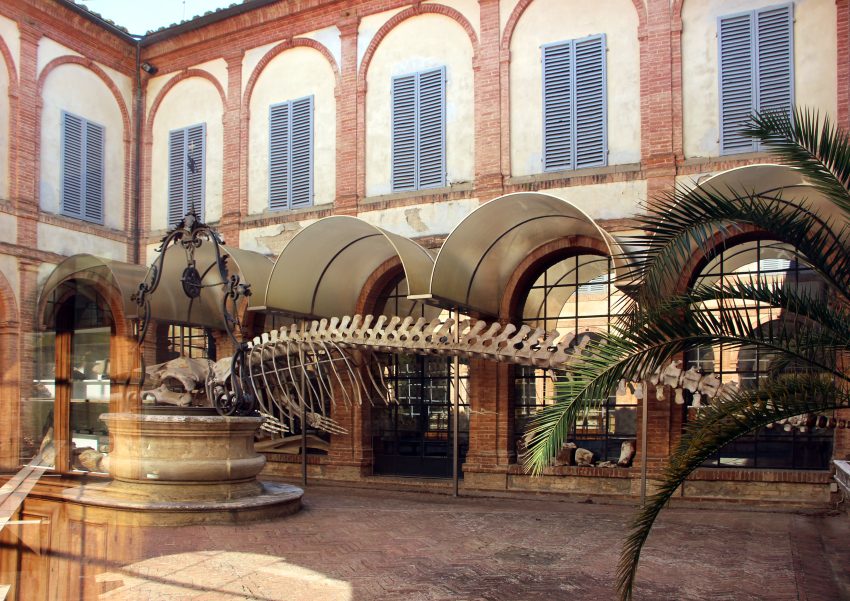
Tucked into Siena's historic fabric, the Museo di Storia Naturale (Natural History Museum) is a small-but-memorable stop for anyone curious about animals, rocks, and the old-school charm of scientific collections. It's the kind of place that feels like a “cabinet of wonders,” where preserved specimens and mineral displays reward slow looking rather than rushing.
It also fits beautifully into a walking tour day: pair it with the nearby Basilica of San Domenico, the Duomo area, or a loop that starts at Piazza del Campo and wanders outward to Siena's quieter lanes. If you're looking for a break from the biggest-ticket sights, this museum is one of the best places in Siena to spend an hour (or two) learning something unexpected.
Table of Contents
- History and Significance of the Museo di Storia Naturale
- Things to See and Do in the Museo di Storia Naturale
- How to Get to the Museo di Storia Naturale
- Practical Tips on Visiting the Museo di Storia Naturale
- Where to Stay Close to the Museo di Storia Naturale
- Is the Museo di Storia Naturale Worth Visiting?
- For Different Travelers
- FAQs for Visiting Museo di Storia Naturale
- Nearby Attractions to the Museo di Storia Naturale
History and Significance of the Museo di Storia Naturale
The Museo di Storia Naturale in Siena is closely tied to the city's long tradition of scholarship and scientific collecting. Rather than a modern, highly interactive museum, it preserves the feel of historical natural-history displays, where specimens and objects were gathered, cataloged, and used to teach generations of students and researchers.
That “archive-like” atmosphere is part of its significance: you’re not only seeing zoology and geology, you’re also seeing how knowledge was organized and presented in earlier eras. For travelers, it’s a refreshing contrast to Siena’s better-known medieval and Renaissance art focus.
Today, its value is twofold: it's a family-friendly introduction to biodiversity and earth science, and it's also a quiet cultural stop that helps round out a Siena itinerary beyond churches, palaces, and piazzas.
Things to See and Do in the Museo di Storia Naturale
Start with the zoological collections, where preserved birds and other specimens tend to be the biggest crowd-pleasers. The displays have a classic natural-history look that kids often find fascinating, and adults will appreciate the sheer variety packed into a compact space.
Don’t miss the geology and mineral sections. Many visitors highlight the gemstones, rocks, and minerals as a standout, and it’s easy to linger here comparing colors, crystal forms, and textures—especially if you’ve been touring Siena’s brick-and-stone streets and want a deeper sense of the region’s material world.
If you’re interested in how museums used to feel, take time to notice the overall layout and presentation style. This is less about flashy storytelling and more about discovery: move slowly, scan the cases carefully, and you’ll keep finding details you didn’t notice at first.
How to Get to the Museo di Storia Naturale
The nearest major airports are Florence Airport (Amerigo Vespucci) and Pisa International Airport (Galileo Galilei), with Rome's airports also possible if you're building a longer Italy trip. For the best deals and a seamless booking experience, check out these flights to Siena on Booking.com.
From elsewhere in Tuscany, you can reach Siena by train (often with a change), arriving at Siena railway station and then continuing by local bus, taxi, or a walk uphill into the historic center. Use Omnio to easily compare schedules, book train tickets, and find the best prices all in one place for a hassle-free journey across Italy..
If you’re driving, plan to park outside the ZTL (limited traffic zone) and continue on foot or by bus into the center. If you are looking to rent a car in Italy I recommend having a look at Discover Cars, first, as they compare prices and review multiple car rental agencies for you.
Once you're in central Siena, the museum is best reached on foot—ideal to slot into a self-guided walking route that also includes nearby churches, viewpoints, and small local museums.
Practical Tips on Visiting the Museo di Storia Naturale
- Official website: https://www.museostorianaturalesiena.it/
- Entrance fee: Adults: €5; Reduced: €3; Family (2 adults + up to 4 children): €13.
- Opening hours: (Summer) April 1 – September 30; Monday – Friday: 09:00–18:30; Saturday: 10:00–19:00; Sunday: 10:00–18:30. (Winter) October 1 – March 31; Monday – Friday: 09:00–15:00; Saturday: 13:00–18:00; Closed on Sunday.
- Best time to visit: Go earlier in the day for a calmer experience and better time to read labels at your own pace. If you’re visiting in peak season, aim for a weekday to avoid occasional crowding around the cases.
- How long to spend: Plan for about 60–90 minutes for a satisfying visit. If you love minerals, zoology, or slower “treasure hunt” museums, you can easily stretch it to 2 hours.
- Accessibility: Expect an older building layout; step-free access may be limited in some areas. If you need step-free entry or elevator access, it’s worth confirming details with the museum before you go.
- Facilities: This is a compact museum, so facilities are typically simple rather than extensive. Bring water, and plan your coffee or lunch stop at a nearby café afterward.
Where to Stay Close to the Museo di Storia Naturale
Base yourself in Siena’s historic center for the easiest walking access to the museum and the city’s main sights.
Grand Hotel Continental Siena – Starhotels Collezione A top-end choice right in the center, ideal if you want classic Siena atmosphere, walkability, and an elegant stay between museum visits and evening passeggiata.
Hotel Athena A reliable favorite with a convenient edge-of-center location that makes arrivals by car or taxi simpler while still keeping you within an easy walk of major sights.
NH Siena Great for travelers who want a modern, comfortable base near the historic center and close to transit connections—useful if you're day-tripping around Tuscany.
Hotel Chiusarelli A solid mid-range pick with a central location that works well for museum-hopping, especially if you like being near parks and easy walking routes.
Hotel Minerva A practical option near Siena station with good value and straightforward logistics—handy if you're arriving by train and want a simple base.
Is the Museo di Storia Naturale Worth Visiting?
Yes—especially if you enjoy quieter, curiosity-driven museums and want something different from Siena’s headline attractions. It’s highly regarded by visitors for being a “hidden gem,” with friendly staff and collections that feel surprisingly rich for the museum’s size.
Honest Pivot: if you strongly prefer modern, highly interactive exhibits or you rely on extensive English-language interpretation, you may find parts of the experience less accessible. In that case, consider prioritizing Siena’s major art-and-architecture sights and fitting this in only if you have extra time.
What Other Travellers Say...

Travelers rate this museum very highly and often describe it as a hidden gem away from Siena’s busiest tourist flow. Common highlights include friendly, helpful staff, a surprisingly rich collection (especially preserved birds and minerals/gemstones), and strong appeal for families with curious kids. A few visitors mention practical drawbacks such as limited English information and occasional crowding that can make some specimens harder to view.


For Different Travelers
This museum works best as a flexible add-on: you can drop in for a quick visit or slow down and explore the cases in detail. It's also a nice way to balance a Siena day that's otherwise heavy on churches, frescoes, and medieval streets.
Families with Kids
Kids who love animals, rocks, and “weird and wonderful” displays often get hooked quickly here. The compact size helps: it’s easier to keep everyone engaged compared with larger museums.
To make it smoother, turn the visit into a scavenger hunt (favorite bird, strangest specimen, prettiest mineral). If you’re traveling with younger children, this can be a great rainy-day or midday-break stop.
Couples & Romantic Getaways
For couples, it’s a charming detour from Siena’s busiest lanes—quiet, a little quirky, and easy to pair with a long lunch or aperitivo afterward. It also adds variety to a romantic itinerary that might otherwise be all piazzas and panoramic viewpoints.
If you like slow travel, treat it as a “curiosity stop” on a walking route: museum first, then a stroll to a nearby church or viewpoint, then coffee and people-watching back toward the center.
Budget Travelers
This is a strong value stop in Siena, especially compared with some of the city's pricier headline attractions. It's also easy to reach on foot, so you can keep transport costs low.
Budget tip: plan a museum-and-walk day—combine this visit with free wandering through Siena’s contrade neighborhoods and viewpoints, then cap it with an inexpensive bakery lunch.
History Buffs
Even though it’s a natural-history museum, history lovers will appreciate the older-style presentation and the sense of stepping into a long tradition of collecting and study. The museum’s “archive” feel can be as interesting as the specimens themselves.
Look for the way objects are grouped and displayed—this is a window into how earlier generations learned science. It's a different kind of Siena history, but it complements the city's better-known medieval story.
FAQs for Visiting Museo di Storia Naturale
Getting There
Tickets & Entry
Visiting Experience
Tours, Context & Itineraries
Photography
Accessibility & Facilities
Food & Breaks Nearby
Safety & Timing
Nearby Attractions to the Museo di Storia Naturale
- Piazza del Campo: Siena's iconic shell-shaped main square, perfect for people-watching and soaking up the city's energy.
- Siena Cathedral (Duomo di Siena): A must-see for architecture and art lovers, with richly decorated interiors and nearby museum spaces.
- Basilica of San Domenico: A powerful, quieter church experience with important local religious history and a more contemplative feel.
- Santa Maria della Scala: A major museum complex with layered history and exhibitions in a former hospital setting.
- Orto Botanico dell'Università di Siena: A peaceful botanical garden nearby that pairs nicely with a natural-history visit.
The Museo di Storia Naturale appears in our Complete Guide to Visiting Siena!

Moira & Andy
Hey! We're Moira & Andy. From hiking the Camino to trips around Europe in Bert our campervan — we've been traveling together since retirement in 2020!
This website uses affiliate links which may earn a commission at no additional cost to you!
Planning Your Visit
(Summer) April 1 - September 30; Monday - Friday: 09:00-18:30; Saturday: 10:00-19:00; Sunday: 10:00-18:30.
(Winter) October 1 - March 31; Monday - Friday: 09:00-15:00; Saturday: 13:00-18:00; Closed on Sunday.
Adults: €5; Reduced: €3; Family (2 adults + up to 4 children): €13.
Nearby Attractions
- Orto Botanico dell'Università (0.0) km
Attraction and Gardens - Sant'Agostino (0.0) km
Church, Historic Site and Religious Building - Pinacoteca Nazionale (0.2) km
Attraction, Gallery and Museum - Via di Città (0.3) km
Area, Street and Walk - Palazzo Chigi Saracini (0.4) km
Arts Venue, Historic Building and Palace - Piazza del Mercato (0.4) km
Attraction, Market and Square - Santa Maria of Scala Hospital Museum (0.4) km
Historic Building, Historic Site and Museum - Museo dell'Opera del Duomo & Facciatone (0.4) km
Museum, Tower and Viewing Point - Duomo di Siena (0.4) km
Cathedral, Church and Religious Building - Biblioteca Piccolomini (0.4) km
Cathedral, Historic Room and Library