Mosteiro dos Jerónimos, Lisbon
Monastery in Lisbon
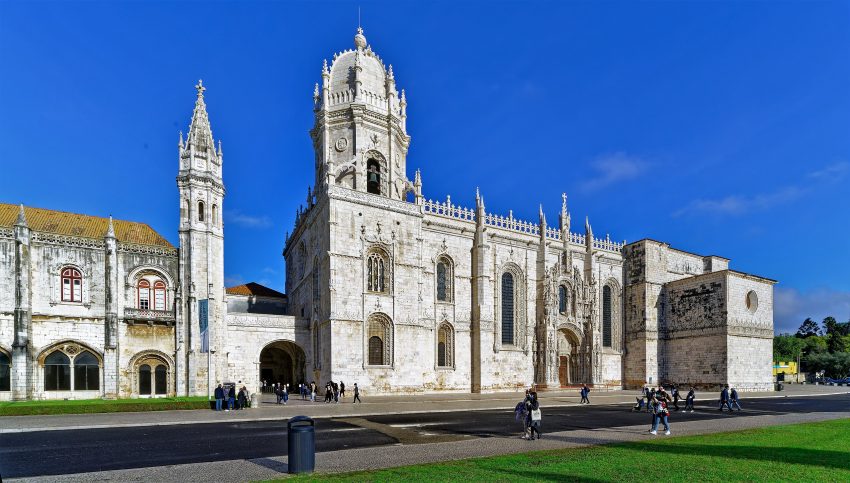
Standing right beside the Tagus in Belém, the Jerónimos Monastery is where Lisbon's seafaring dreams were carved into stone. Its lacy Manueline façades, nautical motifs, and soaring church make it one of the must-see places in Lisbon if you're interested in the Age of Discoveries or just love jaw-dropping architecture. Inside, you'll find tombs of national heroes like Vasco da Gama and Luís de Camões, cloisters that look like sculpted lace, and a church whose vaulting somehow floats with almost no visible support.
At the same time, the monastery feels deeply tied to the river and the ships that once set off to map the world. This spot is one of the best places to see in Lisbon if you want to understand how spice taxes, imperial ambition, and religious devotion shaped the Portugal we see today. The combination of intricate stonework, maritime symbolism, and the calm of the cloistered courtyards creates a powerful contrast with the busy streets and trams just outside, and it's often visited on walking tours of Lisbon that link Belém's monuments together.
Table of Contents
- History and Significance of The Jerónimos Monastery
- Things to See and Do in The Jerónimos Monastery
- How to Get to The Jerónimos Monastery
- Practical Tips on Visiting The Jerónimos Monastery
- Where to Stay close to The Jerónimos Monastery
- Is the Jerónimos Monastery Worth Visiting?
- FAQs for Visiting The Jerónimos Monastery
- Nearby Attractions to The Jerónimos Monastery
History and Significance of The Jerónimos Monastery
Before the monastery, there was only a small riverside hermitage dedicated to Santa Maria, built in 1452 by Infante D. Henrique (Prince Henry the Navigator) as a spiritual anchor for sailors leaving Lisbon. In the early 16th century, King Manuel I secured papal approval to replace this with a grand monastery, gifting it to the Order of St. Jerome. The project became a monumental statement of power, piety, and maritime success, built at the very threshold from which ships pushed out into the Atlantic and towards India.
Construction began around 1501 and continued for about a century, led by a succession of master builders. The initial design is credited to the French architect Boytac, later developed by João de Castilho and Diogo de Torralva, who helped shape the fluid, ornate Manueline style seen today. The project was funded not by conventional taxation but by revenues from overseas trade, including the “Vintena da Pimenta,” a 5% levy on goods from Africa and the East that effectively transformed spices into stone. This made the monastery not just a religious building, but a physical ledger of Portugal’s trading might.
Over time, Jerónimos became both a spiritual and symbolic centre of the Discoveries. It was here that Vasco da Gama is said to have prayed before departing for India, and later where he and Luís de Camões were honoured with tombs in the church. Surviving the devastating 1755 Lisbon earthquake with relatively little damage, the monastery now stands as one of Europe's most important late Gothic and Renaissance religious complexes, recognised by UNESCO as a World Heritage Site and widely regarded as one of the top attractions in Lisbon.
Things to See and Do in The Jerónimos Monastery
Most visitors start with the south façade, a riot of carved stone where maritime symbols, royal coats of arms, and saints compete for attention. Look for the richly decorated portal by João de Castilho, guarded by Infante D. Henrique and watched over by the Virgin of Bethlehem and Archangel Gabriel. It’s worth taking a moment just to trace the details with your eyes: ropes, shells, leaves, and fantastical creatures all woven into a single, fluid skin of limestone. The western portal by Nicolau Chanterenne offers a more restrained but equally fascinating entrance into the sacred interior.
Inside the church, the first thing that grabs you is the vast, hall-like nave and the extraordinary ribbed vaults that span it with minimal visible support. Slender columns branch out like trees, giving the space both lightness and grandeur. Near the entrance you’ll find the tombs of Vasco da Gama and Luís de Camões, placed here in the 19th century as a national tribute to exploration and literature. Further towards the high altar lie the tombs of King Manuel I and Queen Maria, framed by richly carved stonework that reinforces the link between monarchy, faith, and imperial ambition.
The cloisters are arguably the most magical part of the monastery. Two storeys of filigree arches wrap around a peaceful courtyard, every capital and arch tracery carved with vegetal, maritime, and religious motifs. Walk the galleries slowly, watching how the light shifts across the stone and picking out details like ropes, knots, armillary spheres, and sea creatures. Upstairs, you’ll find access to the upper cloister and viewpoints into the church, as well as side chapels and exhibition areas that help explain the building’s history and restoration. Don’t miss the sacristy and any temporary exhibitions if they’re open during your visit; they often hold beautiful liturgical objects and historical artefacts that bring the monastery’s daily life to life.
How to Get to The Jerónimos Monastery
The Jerónimos Monastery is in the Belém district, about 6-7 km west of central Lisbon, and is well connected by public transport. The nearest major gateway is Lisbon Humberto Delgado Airport, which has flights from across Europe and many intercontinental connections. For the best deals and a seamless booking experience, check out these flights to Lisbon on Booking.com. From the airport, you can take the metro and then a tram or bus, or grab a taxi or rideshare directly to Belém.
If you're arriving in Lisbon by train, most long-distance services from cities like Porto or Faro arrive at Santa Apolónia or Oriente stations, both of which are linked to the city's metro network.Train schedules and bookings can be found on Omio. From central areas such as Cais do Sodré or Praça da Figueira, tram 15E and several buses run out to Belém, stopping a short walk from the monastery. This makes it easy to fold Jerónimos into a wider day exploring the waterfront, Belém Tower, and the Monument to the Discoveries.
Travelling by car, you'll follow the riverside roads west from central Lisbon towards Belém; there is some parking in the area, though it can be busy at peak times and on weekends, so allow extra time to find a space.If you are looking to rent a car in Portugal I recommend having a look at Discover Cars, first, as they compare prices and review multiple car rental agencies for you. Many visitors find it easier to combine public transport one way with a taxi or rideshare the other, especially if they’re staying in hilly central neighbourhoods.
Practical Tips on Visiting The Jerónimos Monastery
- Suggested tips: Arrive as close to opening time as possible, especially in peak season, and consider visiting the church first and then the cloisters while tour groups are still forming.
- Best time to visit: Weekday mornings outside of July-August tend to offer the calmest experience, with softer light for photos and shorter queues.
- Entrance fee: Adult: €18.00
- Opening hours: Tuesday to Sunday, 9:30 am to 5:30 pm. Closes 18:30 in summer
- Official website: https://www.museusemonumentos.pt/en/museus-e-monumentos/mosteiro-dos-jeronimos-e-capela-de-sao-jeronimo/
- How long to spend: Allow at least 1.5-2 hours to see both church and cloisters without rushing; architecture fans or photographers could easily spend half a day.
- Accessibility: The site has some ramps and lifts, but parts of the cloister and church involve steps and uneven stone; check current accessibility details before visiting if mobility is an issue.
- Facilities: Expect ticket offices, basic restrooms, and a small shop; cafés and restaurants are plentiful in the surrounding streets of Belém.
- Photography tip: The cloister is best photographed when the sun is low and the arches cast dramatic shadows; a wide-angle lens helps capture the full sweep of the vaults in the church.
- Guided tours: Consider a guided tour or audio guide if you want more context on the symbolism and history; many Lisbon city tours include Jerónimos as a key stop.
- Nearby food options: Don’t miss the legendary custard tarts at Pastéis de Belém just a short walk away, plus riverside cafés for a relaxed lunch with Tagus views.
Where to Stay close to The Jerónimos Monastery
If you want to stay within easy walking distance of the monastery, Belém has a handful of excellent boutique hotels. Altis Belém Hotel & Spa offers a sleek, contemporary stay right on the waterfront, with spa facilities and river views that feel like a calm retreat after a busy day of sightseeing. For a blend of history and comfort, NAU Palácio do Governador is set in a converted governor’s palace close to Belém Tower and within a pleasant walk of Jerónimos. Another convenient choice is Hotel Jerónimos 8, practically next door to the monastery, ideal if you want to be first in line in the morning or enjoy the cloisters in the softer evening light.
Is the Jerónimos Monastery Worth Visiting?
The short answer is absolutely yes. Even if you're only in Lisbon for a couple of days, Jerónimos Monastery is a powerful, beautiful snapshot of Portugal's golden age and still feels surprisingly atmospheric despite its popularity. The combination of Manueline stonework, the resting places of national icons, and the tranquil cloisters make it far more than “just another church,” and its riverside setting means you can easily combine it with Belém Tower, the Monument to the Discoveries, and a pastel de nata or two. For most travellers, Jerónimos ends up being one of the things to do in Lisbon that lingers longest in memory.
What Other Travellers Say...

Jerónimos Monastery in Belém is a late-Gothic Manueline complex whose wings house archaeology and maritime museums; visitors praise its intricate architecture, symmetrical, photogenic cloisters and spacious church with notable tombs, and recommend buying tickets in advance to avoid long queues, arriving early to skip lines, and taking about 40 minutes to tour; expect crowds, limited on-site signage and audio-guide convenience, possible sun exposure while waiting, nearby attractions to combine with the visit, and a small garden out front highlighting plant motifs seen in the decoration.


FAQs for Visiting The Jerónimos Monastery
Nearby Attractions to The Jerónimos Monastery
- Belém Tower: Iconic riverside fortress guarding the Tagus, with turrets and terraces offering atmospheric views over the water.
- Monument to the Discoveries (Padrão dos Descobrimentos): Striking riverside monument celebrating Portugal's navigators, with a viewing platform over Belém and the bridge.
- Museu Nacional dos Coches (National Coach Museum): Fascinating collection of royal coaches and carriages that brings Portugal’s regal pageantry to life.
- MAAT - Museum of Art, Architecture and Technology: Contemporary museum in a dramatic riverside building, mixing exhibitions with great views from its rooftop.
- Pastéis de Belém bakery: Historic pastry shop famous for its original custard tarts, perfect for a sweet break before or after your monastery visit.
The Mosteiro dos Jerónimos appears in our Complete Guide to Visiting Lisbon!

Moira & Andy
Hey! We're Moira & Andy. From hiking the Camino to trips around Europe in Bert our campervan — we've been traveling together since retirement in 2020!
This website uses affiliate links which may earn a commission at no additional cost to you!
Planning Your Visit
Tuesday to Sunday, 9:30 am to 5:30 pm.
Closes 18:30 in summer
Adult: €18.00
Nearby Attractions
- Padrão dos Descobrimentos (0.5) km
Monument - Torre de Belém (1.1) km
Tower - Museu Nacional de História Natural e da Ciência (5.3) km
Museum - Miradouro de São Pedro de Alcântara (5.8) km
Viewing Point - Teatro Nacional de São Carlos (5.8) km
Theatre - Carmo Convent (5.9) km
Convent - Elevador de Santa Justa (6.0) km
Viewing Point - Praça do Rossio (6.1) km
Square - Arco da Rua Augusta (6.2) km
Historic Building and Viewing Point - Museu Calouste Gulbenkian (6.4) km
Museum