Møllestien, Aarhus
Street in Aarhus
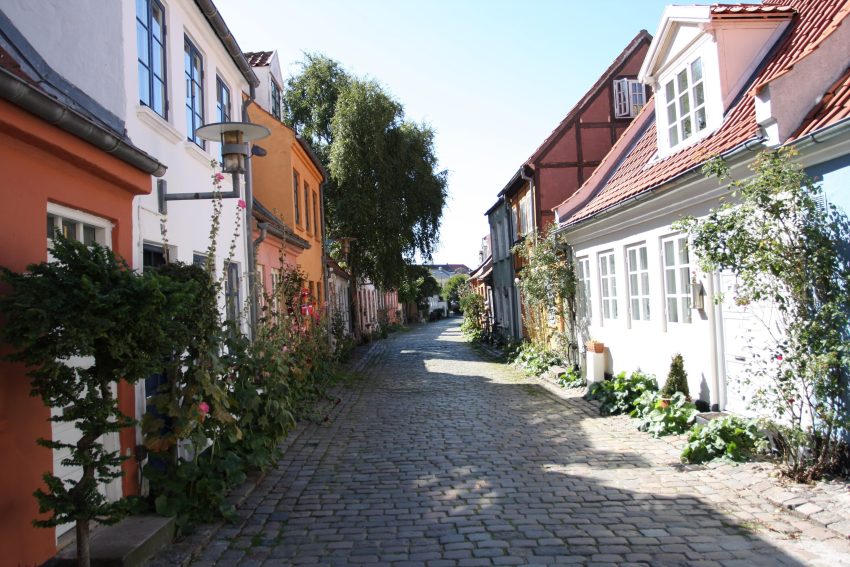
Møllestien is a tiny street with an outsized reputation: a short ribbon of cobblestones lined with small, brightly painted historic houses that feels more like a preserved village lane than a city-centre address. It sits close to Aarhus's core, so it's easy to fold into a walking day-often as a quick detour between the cathedral area, the Latin Quarter, and nearby museums.
The appeal is simple and immediate. The scale is intimate, the colours are photogenic, and the atmosphere is noticeably quieter than the main shopping streets. Even if you only have ten minutes, Møllestien delivers that “I found something local” feeling that makes a city break more memorable.
Table of Contents
History and Significance of the Møllestien (The Mill Path)
The name Møllestien translates to “Mill Path,” a nod to the practical, working-city history that once ran through this part of Aarhus. Before it became a favourite photo stop, the lane would have been tied to everyday movement and small-scale urban life-routes, workshops, and homes that supported the city's growth long before modern streetscapes took over.
What makes Møllestien significant today is how rare this kind of streetscape has become in a fast-evolving city. The small houses, tight frontages, and human scale are a reminder of what “ordinary” housing looked like in earlier periods, before larger apartment blocks and broader roads became the norm.
It also functions as a cultural counterweight to Aarhus's bigger civic statements. In a city with major modern landmarks, Møllestien is valuable precisely because it is small and quiet-heritage you experience at walking speed, without a ticket, and without the feeling of being funnelled through an attraction.
Things to See and Do in the Møllestien (The Mill Path)
Walk it slowly from end to end, then walk it again in the opposite direction. Because it’s short, you can take your time noticing details-doorways, window frames, tiny gardens, and the way the cobbles change underfoot-without committing to a “proper” itinerary slot.
Come for photography, but treat it as a living street rather than a set. The best photos usually come from stepping back to capture the rhythm of the façades and the curve of the lane, then taking a few close-ups of colour contrasts and small architectural details.
Use Møllestien as a connector rather than a standalone stop. It pairs naturally with a café break in the Latin Quarter, a quick look at the cathedral area, or a museum visit nearby-so it becomes part of a relaxed loop instead of a single-purpose detour.
How to Get to the Møllestien (The Mill Path)
The closest airports are Aarhus Airport (AAR) and Billund Airport (BLL). For the best deals and a seamless booking experience, check out these flights to Aarhus on Booking.com.
From Aarhus Central Station (Aarhus H), it's usually easiest to walk into the historic core first and then continue on foot to Møllestien as part of a city-centre loop. Train schedules and bookings can be found on Omio.
If you’re travelling by car, park in a central garage and walk the last stretch, as the city centre is easier to enjoy on foot than by trying to navigate to a specific small street entrance.
Practical Tips on Visiting the Møllestien (The Mill Path)
- Best time to visit: Early morning for the quietest lane and cleanest photos; late afternoon/early evening for softer light and a more lived-in city-centre atmosphere.
- How long to spend: 10-20 minutes for a simple walk-through and photos; 30 minutes if you want to combine it with a slow café detour in the nearby Latin Quarter.
- Accessibility: Limited-cobblestones and uneven surfaces can be uncomfortable for travellers with reduced mobility, wheelchairs, or strollers; if needed, view it briefly from the ends and prioritise smoother nearby streets.
- Facilities: None on the lane itself; use nearby cafés, public restrooms, and seating in the Latin Quarter/cathedral area, and treat Møllestien as a short, outdoor stop rather than a linger-with-amenities attraction.
Where to Stay Close to the Møllestien (The Mill Path)
For a culture-heavy itinerary, the best base is Aarhus C around the Latin Quarter and the cathedral streets, so you can walk to sights, cafés, and evening atmosphere; if your priority is transport links for day trips, staying near Aarhus Central Station keeps logistics simple while still leaving Møllestien walkable.
A classic central option is Hotel Royal, which puts you close to the cathedral district and an easy stroll from Møllestien. For a smaller, characterful stay with a calm feel in the centre, Boutique Hotel Villa Provence works well for walking-based itineraries. If you want a modern, comfort-first base with quick station access, Hotel Oasia Aarhus is a practical choice.
Is the Møllestien (The Mill Path) Worth Visiting?
Yes. It's one of the simplest, lowest-effort “high return” stops in Aarhus: free, central, visually distinctive, and easy to pair with anything else you're doing in the old town. It also adds texture to your trip-proof that Aarhus isn't only museums and modern design, but also small-scale historic streets you can still experience in a natural way.
Honest pivot: if you're short on time and the weather is poor, Møllestien can be skipped without regret because it's primarily an outdoor, atmosphere-driven stop. Likewise, if cobbles and uneven surfaces are uncomfortable for you, you may prefer to focus on smoother, more accessible central routes.
What Other Travellers Say...

Scenic lane dating back to the 13th century known for its rustic old homes & flower gardens.


For Different Travelers
Families with Kids
For families, Møllestien works best as a short “reward stop” rather than a long one. Treat it like a quick wander and photo moment, then continue to somewhere with more space to run or something interactive, such as a museum or park.
If you’re using a stroller, take it slowly over the cobbles and consider approaching from the easiest, flattest direction. A ten-minute visit is usually enough to keep it positive and avoid fuss over uneven ground.
Couples & Romantic Getaways
Møllestien is ideal for couples because it feels quietly special without requiring planning. It's a good place for a slow walk, a few photos, and then a café nearby-especially if you're building a relaxed day around the Latin Quarter and city-centre wandering.
If you want the most atmospheric feel, aim for early morning or early evening when the lane is calmer. It’s the kind of street that feels more intimate when you’re not sharing it with a crowd.
Budget Travelers
This is a perfect budget-friendly highlight: it costs nothing and adds strong “Aarhus character” to your day. Use it as part of a free walking route that includes the cathedral area, the Latin Quarter streets, and a waterfront loop.
If you're trying to keep paid attractions to a minimum, Møllestien is a useful “texture stop” that makes a budget itinerary feel intentional rather than like you're only walking because you're saving money.
FAQs for Visiting Møllestien (The Mill Path)
Getting There
Visiting Experience
Photography
Accessibility & Timing
Nearby Attractions to the Møllestien (The Mill Path)
- Aarhus Cathedral: A major medieval landmark that anchors the historic centre and pairs naturally with a short Møllestien detour.
- The Latin Quarter: The best nearby area for cafés, small shops, and photogenic streets that continue the same relaxed walking mood.
- Aarhus Theatre: A beautiful historic theatre building that fits easily into a culture-and-architecture loop near the old town.
- Bispetorv (Bishop’s Square): A pleasant open square by the cathedral that works well as a pause point between central sights.
- Viking Museum: A compact, high-impact stop for a quick history layer close to the cathedral district.
The Møllestien appears in our Complete Guide to Visiting Aarhus!

Moira & Andy
Hey! We're Moira & Andy. From hiking the Camino to trips around Europe in Bert our campervan — we've been traveling together since retirement in 2020!
This website uses affiliate links which may earn a commission at no additional cost to you!
Planning Your Visit
24 Hours
Free
Nearby Attractions
- Our Lady Church (0.2) km
Church, Historic Building and Religious Building - ARoS Aarhus Art Museum (0.3) km
Arts Venue and Museum - Åboulevarden (0.3) km
Area - Salling ROOFTOP (0.4) km
Attraction, Gardens and Viewing Point - Aarhus City Hall (0.4) km
Attraction - Latinerkvarteret (0.5) km
Area - Viking Museum (0.5) km
Museum - Aarhus Cathedral (0.5) km
Attraction, Cathedral and Historic Site - Hotel Royal (0.5) km
Historic Building and Hotel - Bispetorvet (0.5) km
