Marrakech Museum, Marrakesh
Museum in Marrakesh
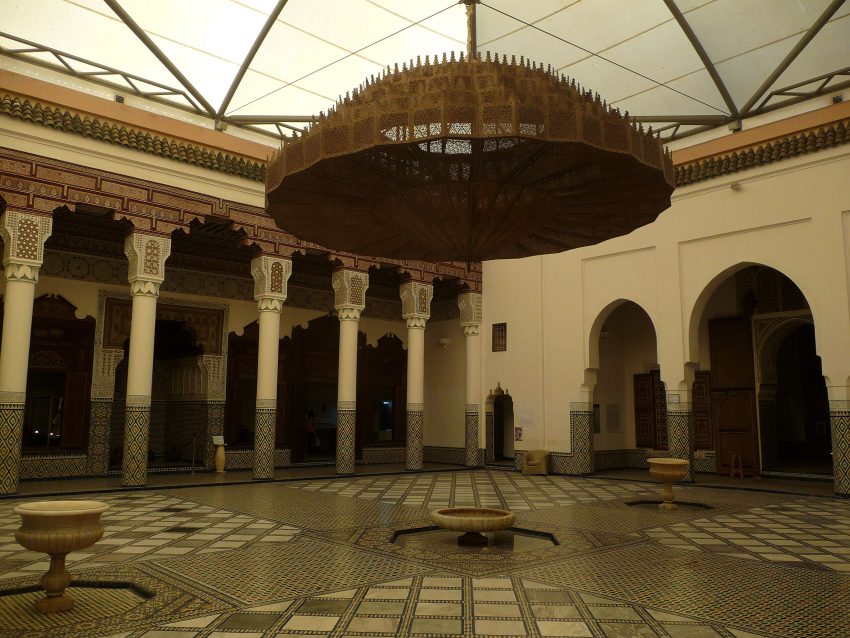
The Marrakech Museum, housed in the elegant Dar Mnebhi Palace, is where you come face to face with the quiet grandeur of Morocco's early 20th-century elite. Step inside and you are greeted by a vast central courtyard, once a riad garden and now a marble-and-zellij showpiece crowned by an enormous brass chandelier. Around it, rooms with painted cedar ceilings, carved stucco, and cool tiled floors draw you into a world of historic objects and contemporary art that tell the story of the city and the country from multiple angles. It is one of the best places to visit in Marrakech if you want culture, architecture, and a break from the chaos of the souks.
The building itself has lived several lives: home of Mehdi al-Mnebhi, war minister to Sultan Moulay Abdelaziz, later seized by the powerful Glaoui family, then turned into a girls' school after independence before falling into neglect. Its careful restoration in the 1990s by the Omar Benjelloun Foundation brought the palace back to life as a museum, and today it is often visited on walking tours of Marrakesh's Medina as a richly atmospheric stop just a few steps from Ben Youssef Madrasa and the main market streets.
Table of Contents
- History and Significance of the Marrakech Museum
- Things to See and Do in the Marrakech Museum
- How to Get to the Marrakech Museum
- Practical Tips on Visiting the Marrakech Museum
- Where to Stay close to the Marrakech Museum
- Is the Marrakech Museum Worth Visiting?
- FAQs for Visiting Marrakech Museum
- Nearby Attractions to the Marrakech Museum
History and Significance of the Marrakech Museum
The Marrakech Museum occupies Dar Mnebhi, a grand residence built at the turn of the 20th century by Mehdi al-Mnebhi. He was a qaid of the Mnabha tribe and rose to become minister of war under Sultan Moulay Abdelaziz between 1900 and 1908, replacing Ba Ahmed as the sultan's most trusted official. Like other powerful men of his time, al-Mnebhi commissioned a lavish urban palace that would both reflect his status and provide a comfortable base near the heart of power, with a central courtyard, salons, terraces, and all the facilities required for a sizeable household.
While al-Mnebhi served abroad as ambassador in London, his Marrakech palace was seized by the family of Pasha Thami El Glaoui, the de facto ruler of southern Morocco under French rule. After independence in 1956, the palace was taken over by the state and, in 1965, converted into a girls’ school. This phase ensured the building remained in daily use but did little to preserve its fine details, and over time it slipped into a state of neglect. What saved it was a decision in the 1990s by the Omar Benjelloun Foundation to restore Dar Mnebhi and transform it into a museum dedicated to Moroccan art and heritage.
The restoration, completed in 1997, not only rescued an important example of late 19th-early 20th-century Moroccan architecture but also gave Marrakech a new cultural institution in the old city. Today the museum’s exhibitions change over time, but its core mission remains the same: to showcase both historic artefacts and contemporary works, bridging past and present in a single setting. The building itself is part of the collection, and for many visitors the architecture is as compelling as the objects on display.
Things to See and Do in the Marrakech Museum
The highlight of the Marrakech Museum is its vast central courtyard, once a leafy riad garden and now fully paved and roofed over. Step into this space and your eye is immediately drawn to the monumental brass chandelier hanging from above, assembled from countless cut pieces forming complex geometric and arabesque motifs. The surrounding walls are richly decorated with zellij tiles, painted and carved cedar wood, and wall fountains that still hint at the courtyard's original role as a cool, shaded garden. It is a wonderful place to pause, look up, and appreciate how Moroccan artisans combine pattern, light, and space.
Branching off the courtyard are a series of rooms that now host the museum’s collections. Some display historic pieces-jewellery, ceramics, coins, arms, textiles-that illustrate the breadth of Moroccan craftsmanship across centuries. Others are used for contemporary art exhibitions, bringing in painting, sculpture, photography, or installation work by Moroccan artists and giving the museum a living, evolving dimension. Moving between these rooms, you experience both the decorative richness of their ceilings and walls and the objects they frame.
Do not miss the palace’s more intimate spaces, such as the hammam with its domed and vaulted chambers that reveal how elite households once handled bathing and relaxation. Roof terraces and the menzeh (viewing pavilion) offer glimpses over the medina’s rooftops and minarets, reminding you that this refined interior is still embedded in the dense urban fabric of Marrakech. Together, these elements make a visit to the museum feel less like walking through a static gallery and more like exploring a lived-in home that has been gently repurposed for public enjoyment.
How to Get to the Marrakech Museum
To visit the Marrakech Museum, you first need to get to Marrakech itself. Most international visitors arrive via Marrakech Menara Airport, a short drive from the historic centre and served by regular flights from major European cities and other Moroccan destinations. For the best deals and a seamless booking experience, check out these flights to Marrakesh on Booking.com. From the airport, taxis and pre-booked transfers can drop you near the medina-ask for a drop-off close to Ben Youssef or the main souks, then continue on foot through the lanes to Dar Mnebhi.
If you are travelling within Morocco, trains connect Marrakech with cities such as Casablanca, Rabat, and Tangier, arriving at the main railway station in the new town.Train schedules and bookings can be found on Omio. From there, a petit taxi will take you to one of the northern medina gates or near Jemaa el-Fnaa in around 10-15 minutes, depending on traffic; the museum is then reachable on foot by following signs or using an offline map. Long-distance buses from other regions arrive at various stations on the outskirts, where taxis are again your best option for reaching the old city.
Driving directly into the medina is not possible, as its streets are narrow and largely pedestrian. Instead, park in one of the guarded car parks around the city walls-such as near Bab Doukkala or Koutoubia-and walk the remaining distance to the museum. Because the Marrakech Museum sits close to Ben Youssef Madrasa and the main souks, it is easy to incorporate into a wider walking loop through the northern part of the old city.
Practical Tips on Visiting the Marrakech Museum
- Suggested tips: Combine your visit with nearby Ben Youssef Madrasa and the souks so you can appreciate the museum's calm, ordered courtyard as a contrast to busier streets outside.
- Best time to visit: Late morning or mid-afternoon are ideal for good light in the courtyard and slightly fewer tour groups than at peak times.
- Entrance fee: adult/child Dh50/30
- Opening hours: 9am-7pm, to 6pm Oct-Mar
- Official website: https://www.museedemarrakech.ma/
- How long to spend: Plan for 45-90 minutes to explore the courtyard, exhibition rooms, and hammam without rushing.
- Accessibility: The main courtyard and some rooms are on a single level, but there may be steps, uneven floors, and limited lift access to any upper areas.
- Facilities: Basic visitor facilities include a ticket office and, usually, access to toilets; for cafés and restaurants you will look to the nearby medina streets.
- Photography tip: Use the central chandelier and courtyard symmetry to frame your shots, and experiment with angles that capture both zellij and carved wood in a single image.
- Guided tours: A guide can help unpack details about Dar Mnebhi’s history, the symbolism of decorative motifs, and the stories behind key objects in the collection.
- Nearby food options: The surrounding alleys and nearby main streets offer plenty of cafés, juice bars, and small restaurants where you can pause for a drink or meal before or after your visit.
Where to Stay close to the Marrakech Museum
Staying near the Marrakech Museum puts you right in the northern medina, close to the souks, Ben Youssef Madrasa, and several key cultural sites. A refined option nearby is Riad Idra, which offers elegant rooms around a tranquil courtyard within walking distance of the museum. For a more intimate riad experience with a relaxed atmosphere, Riad Adika & Spa combines traditional design with modern comforts just a short stroll away. Travellers looking for a photogenic base with a bit of buzz might consider Riad Yasmine, which offers a stylish courtyard pool and easy access to both the museum area and the northern souks.
Is the Marrakech Museum Worth Visiting?
The Marrakech Museum is definitely worth visiting, particularly if you enjoy architecture and want to see how a historic palace can be reimagined as a cultural space. Even if you only have a passing interest in art, the combination of its grand courtyard, intricate decorative details, and varied exhibitions makes for a satisfying, multi-layered visit. As a calm, evocative counterpoint to the surrounding markets and streets, it comfortably earns its place as one of the top attractions in Marrakech for curious travellers.
What Other Travellers Say...

Marrakech Museum, located at Place Ben Youssef, showcases Moroccan decorative objects — from jewelry and ceramics to coins and contemporary art — housed in an attractively tiled building with a peaceful courtyard and pleasing architecture; visitors report it's calm and well maintained, a good quick stop or short cultural respite from the busy medina with friendly staff, photo opportunities, music and fountains, occasional Arabic calligraphy demonstrations, and exhibits primarily labeled in French or Arabic.


FAQs for Visiting Marrakech Museum
Nearby Attractions to the Marrakech Museum
- Ben Youssef Madrasa: A beautifully restored historic Islamic college with an iconic courtyard and intricate stucco and tilework.
- Le Jardin Secret: A tranquil garden and palace complex offering greenery, water features, and rooftop views right in the medina.
- Marrakech Souks: The bustling market streets surrounding the museum, where you can explore textiles, spices, crafts, and everyday local life.
- Maison de la Photographie de Marrakech: A photography museum with historic images of Morocco that adds visual depth to your understanding of the city.
- Jemaa el-Fnaa: Marrakech's famous main square, full of food stalls and performers, within walking distance and ideal to visit before or after the museum.
The Marrakech Museum appears in our Complete Guide to Visiting Marrakesh!

Moira & Andy
Hey! We're Moira & Andy. From hiking the Camino to trips around Europe in Bert our campervan — we've been traveling together since retirement in 2020!
This website uses affiliate links which may earn a commission at no additional cost to you!
Planning Your Visit
9am-7pm, to 6pm Oct-Mar
adult/child Dh50/30
Nearby Attractions
- Ben Youssef Madrasa (0.0) km
Madrasa - Almoravid Koubba (0.1) km
Historic Building - Le Jardin Secret (0.3) km
Gardens and Historic Building - Souks of Marrakesh (0.6) km
Market - Dar el Bacha (0.6) km
Historic Building and Museum - Jemaa el-Fnaa (0.7) km
Market and Square - Dar Si Said (0.9) km
Historic Building and Museum - Tiskiwin Museum (1.0) km
Museum - Kasbah Mosque (1.2) km
Mosque - Koutoubia Mosque (1.2) km
Mosque