Lupanar, Pompeii
Roman Site in Pompeii
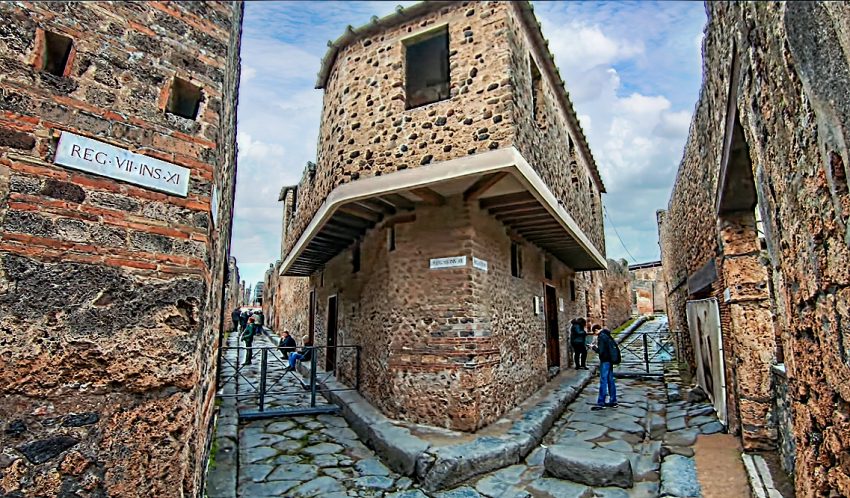
The Lupanar, whose name comes from the Latin word for prostitute, is one of the top attractions in Pompeii for visitors curious about the city's more intimate and gritty side. This two storey brothel sits just off the ancient streets and offers an unusually direct window into the sex trade of a busy Roman town. Inside, narrow rooms with built in beds, simple latrine facilities, and price references preserved in graffiti all speak to a world that was both highly commercial and tightly regulated. It is a compact site, but a powerful one.
The women who worked here were primarily Greek and Oriental slaves, paid between two and eight Asses per encounter at a time when a glass of wine cost a single As. That small gap between a drink and a visit underlines how cheap and transactional their labour was, even as the brothel itself was fully integrated into the urban fabric. Erotic paintings line the central corridor, acting like a visual menu for customers, while upstairs rooms once housed the slaves and owner. The combination of architecture, decoration, and surviving inscriptions makes the Lupanar a place that is often visited on walking tours of Pompeii to understand the city's social and economic underbelly, not just its grand villas and temples.
Table of Contents
- History and Significance of the Lupanar Brothel Pompeii
- Things to See and Do in the Lupanar Brothel Pompeii
- How to Get to the Lupanar Brothel Pompeii
- Practical Tips on Visiting the Lupanar Brothel Pompeii
- Where to Stay close to the Lupanar Brothel Pompeii
- Is the Lupanar Brothel Pompeii Worth Visiting
- FAQs for Visiting Lupanar Brothel Pompeii
- Nearby Attractions to the Lupanar Brothel Pompeii
History and Significance of the Lupanar Brothel Pompeii
In Roman slang, a “lupa” was a prostitute, and a lupanar was the place where she worked. The Lupanar in Pompeii is the best preserved and most famous of the city's brothels, standing in a busy quarter where passing trade would have been constant. Unlike elite houses or public baths, this building was designed with a single purpose: to provide quick, straightforward encounters to a steady stream of clients, most of them male citizens or visitors of modest means.
The workforce consisted mainly of enslaved women from Greece and the eastern Mediterranean, sometimes referred to as “Oriental” slaves, reflecting Roman patterns of conquest and trade. Payment ranged from two to eight Asses, just a little more than the cost of a cheap glass of wine, which underlines how little these women could earn and how commodified their bodies were. In this sense, the Lupanar is not just a curiosity; it is a stark reminder of the inequalities and exploitation built into Roman society, where even entertainment was bound up with slavery.
For archaeologists and historians, the Lupanar is exceptionally valuable because it combines physical layout, decoration, inscriptions, and price information in a single structure. The way rooms are arranged, the simplicity of the beds, the presence of a latrine under the stairs, and the erotic frescoes used as advertising all help reconstruct how brothels worked in practice. Together, these features show that prostitution was not hidden away but openly woven into the daily life and economy of Pompeii, operating within clear social norms and expectations.
Things to See and Do in the Lupanar Brothel Pompeii
When you step inside, the first thing to notice is the compact ground floor plan. Two entrances lead into a central corridor, off which five tiny rooms open. Each of these rooms has a built in masonry bed that would once have been topped with straw or simple mattresses. Curtains, rather than solid doors, separated these spaces from the corridor, highlighting both the lack of privacy for the prostitutes and the brisk, practical nature of the encounters. At the far end, under the staircase, the latrine reminds you that basic sanitation had to fit into the same cramped footprint.
Look closely at the walls of the central corridor and individual rooms to see the small erotic paintings, many of which are still visible or reconstructed. These frescoes depict different sexual positions and scenarios and effectively served as advertisements, showing clients what was on offer or simply setting the tone for what happened behind the curtains. In a largely illiterate society, images acted as a universal language, and in the Lupanar they also provided a visual escape from the otherwise bare surroundings.
If access allows, glance upstairs where the owner and some of the slaves likely lived in equally modest quarters. Although less dramatic than the frescoed ground floor, this level underlines that the Lupanar was a full time workplace and home for the people attached to it. As you walk back out into the street, it is worth taking a moment to imagine the constant flow of customers, the negotiations over price in Asses, and the everyday reality of the enslaved women whose lives played out within these narrow walls.
How to Get to the Lupanar Brothel Pompeii
To visit the Lupanar you first travel to the archaeological site of Pompeii, located in the modern town of Pompei near Naples. The nearest major gateway is Naples International Airport, which has frequent flights from across Italy and Europe and is the main arrival point for most visitors heading to the ruins. For the best deals and a seamless booking experience, check out these flights to Pompeii on Booking.com. From there, you can continue by public transport, taxi, or rental car.
By train, the most convenient option is usually the Circumvesuviana line from Napoli Centrale or Piazza Garibaldi towards Sorrento, getting off at Pompei Scavi Villa dei Misteri, a short walk from one of the main entrances to the archaeological park.Use Omnio to easily compare schedules, book train tickets, and find the best prices all in one place for a hassle-free journey across Italy. Regional trains also serve Pompei station in the modern town, where you can walk or transfer by local transport to the site.
If you prefer to drive, Pompei is well linked by the A3 motorway and surrounding roads, with clearly signposted exits and parking areas near the archaeological park.If you are looking to rent a car in Italy I recommend having a look at Discover Cars, first, as they compare prices and review multiple car rental agencies for you. Once inside, use an official map to locate the Lupanar in the central urban area, not far from the main streets and within easy walking distance of the Forum and several major houses.
Practical Tips on Visiting the Lupanar Brothel Pompeii
- Suggested tips: Be prepared for explicit imagery and tight spaces; this is a small, often crowded site, so move slowly and be patient when waiting to see particular frescoes.
- Best time to visit: Early morning or later in the afternoon helps avoid peak crowds and gives you more time to look at the wall paintings without feeling rushed.
- Entrance fee: Adults: €22.00 (General Pompei Tickets)
- Opening hours: Daily: 9:00 - 15:30
- Official website: https://pompeiisites.org
- How long to spend: Around 15 to 30 minutes is usually enough to walk through the ground floor rooms, examine the frescoes, and get a feel for the building.
- Accessibility: The narrow corridors, thresholds, and possible steps can be challenging for visitors with reduced mobility; check current access information and use any designated accessible routes where possible.
- Facilities: There are no toilets, cafés, or shops inside the Lupanar itself; rely on facilities elsewhere within the archaeological park and bring water, especially in hot weather.
- Photography tip: Use close up shots for the erotic frescoes and the built in beds, and be mindful of other visitors when taking photos in the tight corridor.
- Guided tours: A guided tour can add important context on prostitution, slavery, and morality in Roman society, helping you see the Lupanar as more than just a collection of risqué images.
- Nearby food options: Plan to eat at cafés and restaurants near the park entrances in modern Pompei or use designated refreshment points inside the site during longer visits.
Where to Stay close to the Lupanar Brothel Pompeii
Choosing accommodation in modern Pompei lets you explore the archaeological site, including the Lupanar, at a more relaxed pace. A convenient base close to one of the main entrances is Hotel Forum, which offers comfortable rooms within walking distance of the ruins. Nearby, Hotel del Sole Pompei provides views towards the archaeological area and Vesuvius, ideal if you plan multiple days among the ruins. For a friendly, central option close to shops, restaurants, and transport, Hotel Diana Pompei keeps you within easy reach of the site while giving you a quiet place to unwind at the end of the day.
Is the Lupanar Brothel Pompeii Worth Visiting
The Lupanar is very much worth visiting if you want a fuller picture of life in Pompeii beyond temples, forums, and grand villas. It shows, in stark and sometimes uncomfortable ways, how prostitution, slavery, and commerce were woven into the city's daily routine. The tiny stone beds, explicit frescoes, and traces of pricing in Asses make the lives of the women who worked here and the men who visited them feel uncomfortably real. For many travellers, it is one of the most thought provoking stops in the site, offering a counterpoint to the splendour of elite houses and public monuments.
What Other Travellers Say...

The brothel of Pompeii on Via Villa dei Misteri is a two‑storey ruin preserved by ash where the ground floor rooms still display frescoes; visitors note it offers a revealing glimpse into daily life and sexuality in ancient Pompeii, with some cheeky wall scenes in a few small, crumbling rooms. Guided tours are commonly recommended to unpack the history and stories behind the site, though crowds and narrow streets can make visits feel rushed and queues lengthy.


FAQs for Visiting Lupanar Brothel Pompeii
Nearby Attractions to the Lupanar Brothel Pompeii
- Pompeii Forum: The city's central square, surrounded by temples, the basilica, and public buildings, with dramatic views of Mount Vesuvius.
- House of the Tragic Poet: A traditional atrium house famous for its Cave Canem mosaic and rich mythological frescoes.
- House of the Vettii: A lavishly decorated domus owned by freedmen brothers, with vibrant wall paintings and a garden centred layout.
- Forum Baths: A compact but elegant public bath complex behind the Temple of Jupiter, illustrating everyday comfort and sociability in Pompeii.
- House of the Faun: One of Pompeii's largest and most luxurious residences, renowned for its mosaics and the iconic dancing faun statue.
The Lupanar appears in our Complete Guide to Visiting Pompeii!

Moira & Andy
Hey! We're Moira & Andy. From hiking the Camino to trips around Europe in Bert our campervan — we've been traveling together since retirement in 2020!
This website uses affiliate links which may earn a commission at no additional cost to you!
Planning Your Visit
Daily: 9:00 – 15:30
Adults: €22.00 (General Pompei Tickets)
Nearby Attractions
- Pompeii’s Forum (0.2) km
Roman Site - Forum Baths (0.2) km
Roman Site - House of the Faun (0.2) km
Roman Site - House of the Tragic Poet (0.3) km
Roman Site - House of Menander (0.3) km
Roman Site - House of the Vettii (0.3) km
Roman Site - Villa of Diomedes (0.7) km
Roman Site - Villa dei Misteri (0.9) km
Roman Site - Mount Vesuvius (9.4) km
Hike - Positano (13.4) km
Town