Lungarni of Pisa
in Pisa
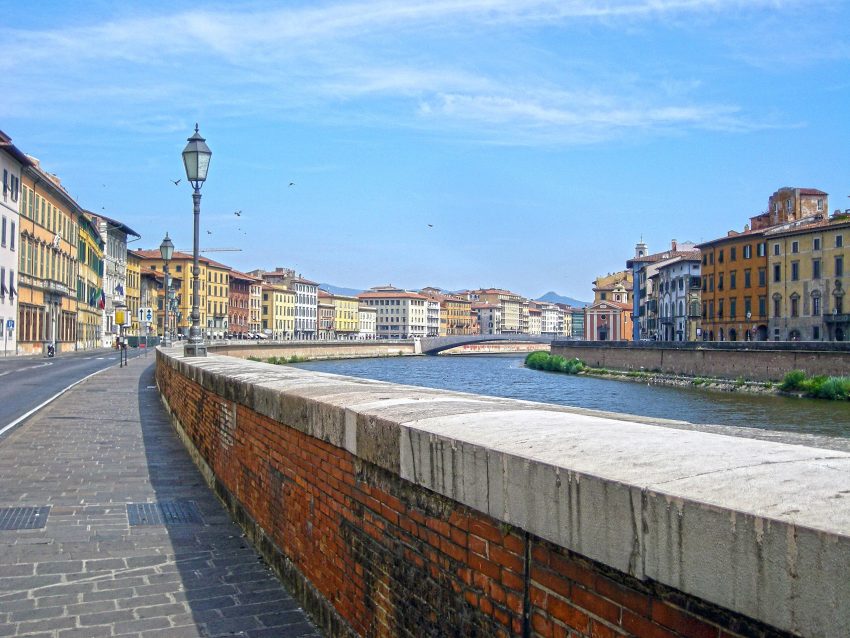
The Lungarni of Pisa are the elegant river embankments that line both sides of the Arno, framing the city with graceful bridges, ochre façades and reflections that glow at sunset. This is where locals come to stroll, chat and watch the light change on the water, and where visitors can see a different side of Pisa beyond the Leaning Tower. Linking key streets and squares, the Lungarni are one of the best places to visit in Pisa if you want to understand how the river has shaped the city's history, trade and daily rhythm.
As you walk along the embankments you pass historic palazzi, small churches, cafés and viewpoints that open towards the hills and, downstream, towards the sea. The Lungarni are perfect bookends to a day in the city: you might start with a quiet morning walk when the streets are still waking up, or finish your sightseeing with an early evening passeggiata, perhaps looping in Narrow Street and other medieval lanes nearby. The atmosphere shifts through the day, from practical and workaday to soft and romantic, making this a highlight of any walking tour of Pisa that ties together the station, the old centre and the riverside.
Table of Contents
- History and Significance of the Lungarni of Pisa
- Things to See and Do in the Lungarni of Pisa
- How to Get to the Lungarni of Pisa
- Practical Tips on Visiting the Lungarni of Pisa
- Where to Stay close to the Lungarni of Pisa
- Is the Lungarni of Pisa Worth Visiting
- FAQs for Visiting Lungarni of Pisa
- Nearby Attractions to the Lungarni of Pisa
History and Significance of the Lungarni of Pisa
The Lungarni developed as Pisa grew beyond its medieval core and began to look outwards towards the Arno as both a commercial artery and a scenic asset. In earlier centuries, the riverbanks were more functional than elegant, crowded with warehouses, mooring points and working yards that supported the maritime republic's trade. Over time, as the city's focus shifted from naval power to civic prestige and everyday life, the embankments were formalised into broad promenades flanked by substantial townhouses and palaces.
These palaces belonged to merchants, nobles and officials who wanted both practical access to the river and a prestigious address, and many of their façades still speak of that ambition in their coats of arms, grand portals and regular rows of windows. The Lungarni also became important routes linking different districts: you can follow them to move between the area around Piazza Vittorio Emanuele II, the shopping streets, the university quarter and the bridges that cross towards the Campo dei Miracoli. Walking here helps you join up the dots between Pisa's medieval, Renaissance and modern faces.
Today, the Lungarni are as much about atmosphere as they are about monuments. They provide much-needed open space in a tight-knit historic city and act as a social spine, where people come to sit on benches, lean on parapets and watch the river. At night, the reflections of lit-up façades and bridges make the Arno a quiet counterpoint to the busier squares, while during festivals and events the riverfront often comes alive with stalls, music and gatherings.
Things to See and Do in the Lungarni of Pisa
A simple riverside stroll is the best way to experience the Lungarni. Start near Piazza Vittorio Emanuele II or the Logge di Banchi and follow the river in either direction, crossing bridges when the mood takes you. Each stretch offers slightly different views: some lined with elegant palaces, others with smaller houses and university buildings, all reflected in the water below. Take your time to stop at viewpoints, look along the river's curve and notice how the hills frame the city in the distance.
Along the way, keep an eye out for small churches and distinctive buildings that punctuate the walk. Tiny riverside churches, historic bridges and palazzi with richly coloured façades add visual interest and invite quick photo stops. If you are exploring the medieval core, it is easy to detour from Narrow Street down to the Lungarni, using the river as a natural orientation line before heading back into the maze of alleys and piazzas.
The embankments also lend themselves to slow travel moments. Sit at a café terrace, grab a gelato or simply perch on the parapet and watch life unfold on both the water and the streets. In the evening, the Lungarni are particularly atmospheric, with couples, students and families all taking part in the traditional passeggiata. This spot is one of the best places to see in Pisa if you enjoy people-watching as much as checking off monuments, and it makes a gentle transition between daytime sightseeing and a relaxed dinner in the old town.
How to Get to the Lungarni of Pisa
If you are arriving by plane, fly into Pisa International Airport Galileo Galilei; from there, take the people-mover or a taxi to Pisa Centrale railway station and then walk up Corso Italia until you reach the river, where you will find yourself on the Lungarni in just a few minutes. For the best deals and a seamless booking experience, check out these flights to Pisa on Booking.com.
Travelling by train is straightforward: arrive at Pisa Centrale and follow the main pedestrian route along Corso Italia towards the Arno; once you reach the river, you can turn left or right to follow the Lungarni in either direction, crossing bridges to explore both banks. Use Omnio to easily compare schedules, book train tickets, and find the best prices all in one place for a hassle-free journey across Italy.
If you come by car, drive into Pisa following signs for the centre, then park in one of the public car parks or on-street spaces outside the restricted traffic zone; from there, walk towards the river and you will soon reach one of the Lungarni stretches, which run along both sides of the Arno through the historic core. If you are looking to rent a car in Italy I recommend having a look at Discover Cars, first, as they compare prices and review multiple car rental agencies for you.
Practical Tips on Visiting the Lungarni of Pisa
- Suggested tips: Pair a Lungarni stroll with visits to nearby spots such as the Logge di Banchi, Narrow Street and some of Pisa's smaller churches so you can see both riverfront and medieval lanes in a single loop.
- Best time to visit: Late afternoon and sunset are ideal, when the light softens, façades glow warm and reflections in the Arno are at their most photogenic.
- Entrance fee: Free to access; the Lungarni are public streets and promenades open to everyone.
- Opening hours: Accessible at all times, though the liveliest moments are usually in the early evening during the local passeggiata.
- How long to spend: Allow at least 45-60 minutes for a relaxed there-and-back stroll, more if you plan café stops, photo breaks and detours into nearby streets and squares.
- Accessibility: The embankments are mostly flat and paved, suitable for wheelchairs and strollers, though some sections have kerbs, cobblestones or narrow pavements that require extra care.
- Facilities: Cafés, bars, gelaterias and shops line streets close to the Lungarni, and you are never far from amenities such as ATMs, restrooms in cafés and small supermarkets.
- Photography tip: For classic shots, look along the river rather than straight across it, using bridges, reflections and distant hills to add depth; blue hour can be especially beautiful as lights come on.
- Guided tours: Many walking tours use the Lungarni as part of their route, explaining the history of the palaces and pointing out details you might otherwise miss.
- Nearby food options: Streets leading away from the Lungarni towards the centre are full of trattorias, wine bars and pizzerias, so it is easy to finish your walk with a relaxed meal nearby.
Where to Stay close to the Lungarni of Pisa
Staying near the Lungarni puts you in a great position to enjoy both the riverside atmosphere and easy access to the rest of the city. A well located choice is Hotel Bologna Pisa, which sits a short walk from both the Arno and central shopping streets, making it simple to reach the embankments at any time of day. For a more classic, tourist friendly base closer to the main monuments but still within reach of the river, Grand Hotel Duomo allows you to walk to the Lungarni via picturesque medieval lanes. If you prefer to be close to transport links while still enjoying evening strolls along the river, NH Pisa opposite Pisa Centrale offers a practical base that connects easily to the Lungarni via Corso Italia.
Is the Lungarni of Pisa Worth Visiting
The Lungarni of Pisa are absolutely worth including in your itinerary, especially if you enjoy seeing how a city lives and breathes beyond its headline monuments. Here you get space, light and perspective: the sweep of the river, the colour of the façades and the outline of the hills give you a sense of the wider landscape that the medieval streets can sometimes hide. It is also an area where locals genuinely spend time, from joggers and dog walkers in the morning to students and families in the evening, so you get a more authentic feel for everyday Pisa. As a setting for photos, quiet reflection or simply stretching your legs between sights, the Lungarni deliver a calm, memorable counterpoint to the busy Campo dei Miracoli.
What Other Travellers Say...

Lungarni di Pisa is the scenic riverside promenade along the Arno in Pisa, lined with colorful historic buildings, bridges and cafes; it's ideal for a leisurely walk or photos, especially at sunset, and provides views toward the Tower of Pisa and easy access from the train station, with nearby museums and eateries to explore.


FAQs for Visiting Lungarni of Pisa
Nearby Attractions to the Lungarni of Pisa
- Narrow Street (Borgo Stretto): A characterful medieval shopping street just off the river, lined with arcades, boutiques, bars and small markets.
- Logge di Banchi: A historic arcaded loggia near the Arno that once hosted cloth and grain markets and still anchors one end of Corso Italia.
- Piazza Vittorio Emanuele II: The lively square by Pisa Centrale station, an easy starting point for walking up to the Lungarni and into the historic centre.
- Palazzo Blu: A riverside palace and cultural centre hosting art exhibitions and a permanent collection, perfectly placed along the embankments.
- Campo dei Miracoli: Pisa's famous ensemble of the Leaning Tower, cathedral, baptistery and Camposanto, reachable with a scenic walk from the Lungarni through the old town.
The Lungarni of Pisa appears in our Complete Guide to Visiting Pisa!

Moira & Andy
Hey! We're Moira & Andy. From hiking the Camino to trips around Europe in Bert our campervan — we've been traveling together since retirement in 2020!
This website uses affiliate links which may earn a commission at no additional cost to you!
Planning Your Visit
Accessible at all times, though the liveliest moments are usually in the early evening during the local passeggiata.
Free to access; the Lungarni are public streets and promenades open to everyone.
Nearby Attractions
- Santa Maria della Spina (0.1) km
Church - Museum of the Ancient Ships (0.2) km
Historic Building and Museum - Palazzo Blu (0.4) km
Gallery and Palace - Torre Guelfa (0.4) km
Tower - Orto Botanico dell’Università di Pisa (0.5) km
Gardens - Logge di Banchi (0.5) km
Historic Building - Corso Italia (0.6) km
Street - Murale Tuttomondo (0.6) km
Historic Site - Santo Stefano dei Cavalieri (0.6) km
Church - Borgo Stretto (0.6) km
Street