Locorotondo, Alberobello
Town in Alberobello
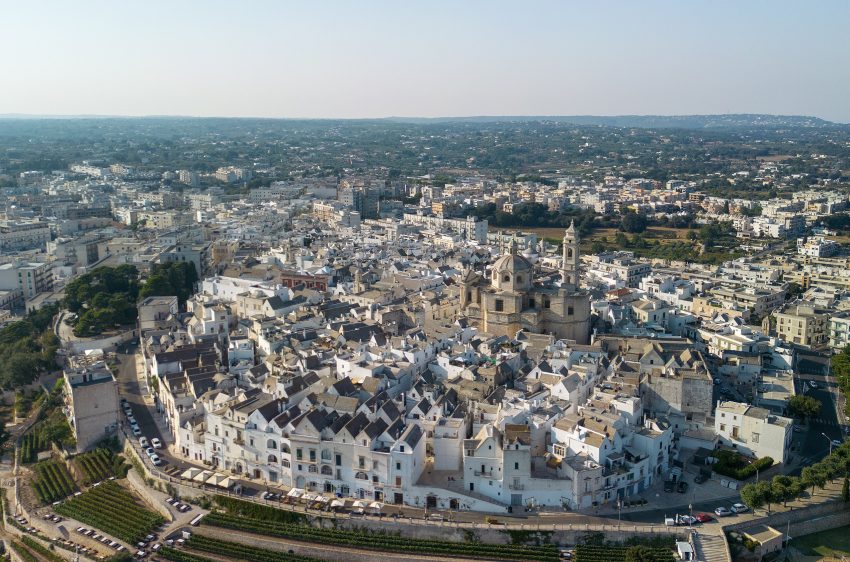
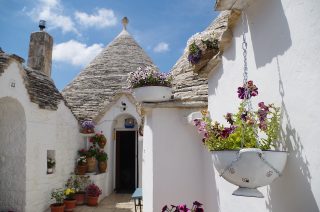
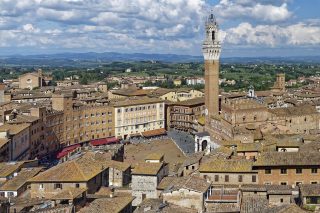
Locorotondo, near Alberobello in Puglia's Valle d'Itria, is a compact hill town known for its rounded historic centre, whitewashed lanes, and views over vineyards and olive groves. It is not a single monument but a small town made for slow walking, with churches, palazzi, terraces, cafés, and wine bars tucked into its narrow streets.
The appeal is in the town's clean geometry and calm pace: bright façades, flowered balconies, pale stone paving, and the sloping cummerse roofs that distinguish many local houses. It suits travelers who want a quieter counterpoint to Alberobello, a short scenic stop, or a base for exploring the Itria Valley by car.
History and Significance
Medieval Origins
Locorotondo developed in the Middle Ages around a rounded hilltop settlement, a layout that still shapes the old town today. Its name is usually understood as “round place,” a direct reference to the circular pattern of the historic centre.
The town sat within the agricultural landscape of the Valle d'Itria, where vines, olive groves, dry-stone walls, and scattered trulli defined daily life. Rather than growing into a large city, Locorotondo kept the scale of a working rural centre.
Local Identity and Architecture
Under later rulers, including the Counts of Conversano and the Kingdom of Naples, Locorotondo preserved a strong local identity. Its old centre is marked by whitewashed walls, narrow lanes, and the cummerse, the steeply sloping stone roofs typical of this part of Puglia.
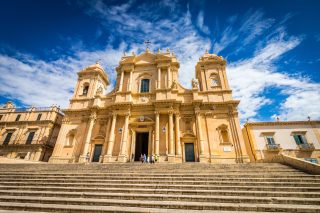
The Mother Church of San Giorgio Martire, built between the late 18th and early 19th centuries, gives the town a clear religious and architectural focus. Locorotondo is also listed among Italy's “Borghi più belli d'Italia,” a recognition tied to its well-kept historic fabric and setting.
Things to See and Do
The main reason to visit Locorotondo is the walk through the old centre. I would start around Piazza Vittorio Emanuele, then let the lanes lead toward the Church of San Giorgio Martire, small palazzi, white façades, doorways, balconies, and short glimpses of the valley beyond the town walls.
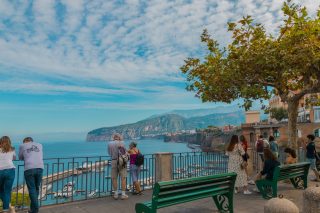
Do not rush the viewpoints. The terraces along the edge of the old town look out across vineyards, olive groves, trulli, and dry-stone walls, with the light often softer in the late afternoon. The contrast between the tight white streets and the open green valley is the town’s strongest visual detail.
Locorotondo is also a practical place to try local wine. The Locorotondo DOC is a dry white traditionally linked to local grapes such as Verdeca and Bianco d'Alessano, and nearby masserie and wineries often make the countryside part of the experience. In town, pair a glass with orecchiette, bombette, or simple vegetable dishes rather than treating the visit as a checklist of sights.
How to Get to the Locorotondo
The nearest useful airports are Bari Karol Wojtyła and Brindisi, with Bari usually the more convenient choice for Alberobello and the central Valle d'Itria. For the best deals and a seamless booking experience, check out these flights to Alberobello on Booking.com.
Locorotondo has a Ferrovie del Sud Est station on the regional line serving Alberobello, Martina Franca, and onward connections, so check the current timetable before planning a tight day. Use Omnio to easily compare schedules, book train tickets, and find the best prices all in one place for a hassle-free journey across Italy.
By car, Locorotondo is about 10 km from Alberobello, and parking is best handled in lots or street spaces outside the pedestrian historic centre rather than inside the old lanes. If you are looking to rent a car in Italy I recommend having a look at Discover Cars, first, as they compare prices and review multiple car rental agencies for you.
Where to Stay Close
Base yourself in Locorotondo if you want a quieter Itria Valley stay with easy access to Alberobello, Martina Franca, and Cisternino; choose Alberobello instead if your trip is mainly focused on the trulli districts and you want the main sights on your doorstep.
For a central stay inside the old-town atmosphere, Sotto Le Cummerse Albergo Diffuso works well because its rooms are spread through restored houses near the historic lanes. Travelers with a car who want countryside quiet but still want to stay close to town can look at Masseria Grofoleo, which is set just outside the centre. For a more resort-style countryside base with parking and a slower pace, Ottolire Resort suits visitors using Locorotondo as part of a wider Valle d'Itria itinerary.
Is the Locorotondo Worth Visiting?
Locorotondo is worth a short stop, especially if you are already staying in Alberobello, Martina Franca, or elsewhere in the Valle d'Itria. It is best for slow walkers, photographers, wine drinkers, and travelers who prefer a quieter town with views rather than a major museum or landmark. Skip it if your schedule is tight and you are looking for ticketed attractions, long opening hours, or a full-day list of sights; in that case, treat it as optional after Alberobello or Martina Franca.
What Other Travellers Say...
Trullo Sovrano, on Piazza Sacramento in Alberobello, is an 18th-century conical two-storey trullo now operated as a heritage museum with original period furnishings, artifacts and interpretive panels; visitors praise its photogenic, must-see character and occasional seasonal events, and note nearby food options, but warn it can be very crowded (avoid weekends) and that ticketing can be slow or confusing, leading to queues even for pre-purchased admissions.


Practical Tips on Visiting the Locorotondo
- Best time to visit: April to June and September to October usually give the best balance of mild weather, usable light, and manageable visitor numbers. Summer can be hot at midday, so morning or late afternoon works better.
- How long to spend: Allow two to three hours for the old town, viewpoints, and a drink or light meal. Add more time if you plan a winery visit or want to use Locorotondo as a slow evening stop.
- Accessibility: The old centre is compact but has cobbled lanes, mild slopes, uneven paving, and some stepped sections. Travelers with limited mobility may find the outer viewpoints and main streets easier than the narrowest alleys.
- Facilities: Restaurants, cafés, wine bars, and small shops sit in and around the historic centre. There is no single entry point for the town, so plan breaks around cafés or restaurants rather than expecting attraction-style facilities.
FAQs for Visiting the Locorotondo
Getting There
Tickets & Entry
Visiting Experience
Tours, Context & Itineraries
Photography
Accessibility & Facilities
Food & Breaks Nearby
Safety & Timing
The Locorotondo appears in our Complete Guide to Visiting Alberobello!

Moira & Andy
Hey! We're Moira & Andy. From hiking the Camino to trips around Europe in Bert our campervan — we've been traveling together since retirement in 2020!
This website uses affiliate links which may earn a commission at no additional cost to you!
Nearby Attractions
- Rione Aia Piccola (7.9) km
Area - Trullo Siamese (8) km
Historic Building - Territory Museum “House Pezzolla” (8) km
Museum - Belvedere Santa Lucia (8) km
Viewing Point - Church of Saint Lucia (8) km
Church and Religious Building - Alberobello in Miniature (8.1) km
Museum - Casa d’Amore (8.1) km
Historic Building - Rione Monti (8.1) km
Area - Romantic Trulli (8.1) km
Historic Building - Chiesa di Sant'Antonio (8.2) km
Church