Casa d’Amore, Alberobello
Historic Building in Alberobello
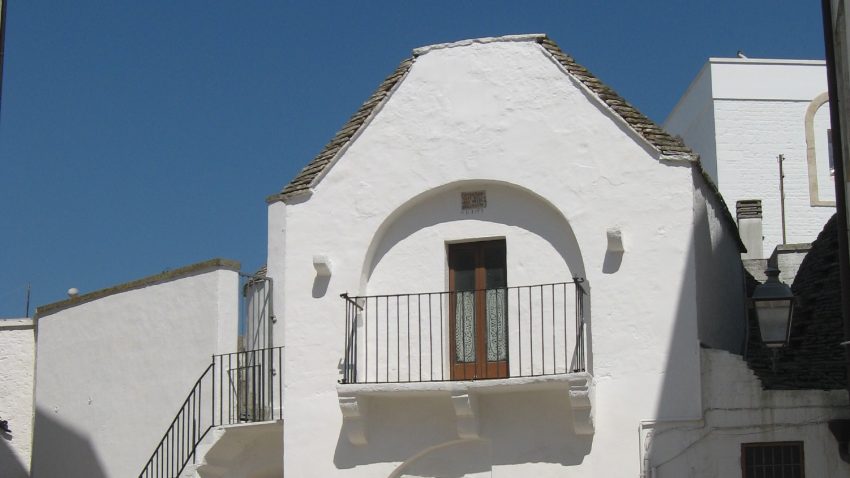
In the heart of Alberobello, where dry-stone trulli once stood as symbols of impermanence, Casa D'Amore tells a story of change and liberation. Built in 1797 by Francesco D'Amore, this elegant home was the first to use mortar - a seemingly small but revolutionary act that marked Alberobello's transformation from a feudal settlement to a royal town. Its inscription, still visible on the façade, proudly declares, “First building erected from royal authority.” For locals and visitors alike, Casa D'Amore represents not just architectural progress, but also the beginning of Alberobello's journey toward recognition and permanence.
This is one of the top attractions in Alberobello for history lovers and architecture enthusiasts. The building stands as a tangible reminder of a time when the townspeople, long bound by the Count's prohibitions, could finally build with pride and stability. Standing before it, you can almost feel the shift - from a community forced to dismantle its homes at a noble's whim, to one free to lay down roots in stone.
History and Significance
Before Alberobello was officially recognized as a city, the local Counts imposed a peculiar rule: all buildings had to be constructed without mortar. This ensured the structures could be dismantled quickly, helping the Counts avoid royal taxes on permanent dwellings. As a result, generations of residents built their homes entirely from dry limestone - giving rise to the now-iconic trulli.
When King Ferdinand IV of Naples granted Alberobello royal recognition in 1797, that restriction was lifted. Francesco D'Amore, a visionary local, was the first to seize this new freedom. His home was constructed with “malta,” a traditional mixture of lime and red earth called “vuolo,” marking the beginning of a new architectural era. Casa D'Amore thus became a symbol of progress - bridging the gap between Alberobello's humble trulli heritage and its more enduring urban identity.
Things to See and Do
Visitors can admire the building's graceful façade, featuring carved stone details and a clear inscription commemorating its historical importance. Inside, Casa D'Amore occasionally hosts small exhibitions and cultural events that shed light on Alberobello's evolution. The house's proportions and style also contrast beautifully with the nearby trulli, highlighting the town's architectural transition. This spot is one of the best places to see in Alberobello if you're interested in how the town's story of resilience and innovation unfolded over centuries.
How to Get There
Casa D'Amore is located in Piazza del Popolo, right in the center of Alberobello, making it easily accessible on foot from all major points in town. It's a short walk from both the Rione Monti trulli district and the train station. Parking is available nearby at Largo Martellotta or Via Indipendenza.
Practical Information
- Best time to visit: Morning or early evening, when the light enhances the stone’s texture.
- Entrance fee in Euros: Free to view from outside; occasional events may have small fees.
- Opening hours: Typically open for tours or exhibits during daytime hours; check locally.
- How long to spend: 15-30 minutes.
- Accessibility: Fully accessible from Piazza del Popolo.
- Facilities: Nearby cafés and shops in the square.
- Photography tip: Capture the inscription from a low angle for a dramatic composition.
- Nearby food options: Enjoy local orecchiette pasta or pastries from nearby trattorias in the main square.
Is Casa D’Amore Worth Visiting?
Yes - Casa D'Amore is often visited on walking tours of Alberobello and serves as a vital link between the town's rustic trulli heritage and its later architectural development. While the trulli may steal the spotlight, this historic house tells the story of how Alberobello gained its freedom - and the right to build permanently. It's a highlight of any walking tour of Alberobello and a stop that gives meaning to the town's transformation from temporary stone huts to a lasting city of character and culture.
What Other Travellers Say...
Casa D'Amore on Piazza Re Ferdinando IV di Borbone is a historic 1797 home noted for being the first in the area to feature terracotta and mortar on its facade; visitors describe it as a beautiful, spectacular little town highlight with unique trulli architecture, enjoyable and fun to explore, though it can be very crowded at peak times and is especially atmospheric when lit up at night.





The Casa d’Amore appears in our Complete Guide to Visiting Alberobello!

Moira & Andy
Hey! We're Moira & Andy. From hiking the Camino to trips around Europe in Bert our campervan — we've been traveling together since retirement in 2020!
This website uses affiliate links which may earn a commission at no additional cost to you!
Planning Your Visit
Nearby Attractions
- Church of Saint Lucia (0.1) km
Church and Religious Building - Territory Museum “House Pezzolla” (0.1) km
Museum - Belvedere Santa Lucia (0.1) km
Viewing Point - Vino & Amore (0.1) km
Attraction, Café and Shop - Rione Aia Piccola (0.2) km
Area - Rione Monti (0.3) km
Area - Trullo Siamese (0.3) km
Historic Building - Church of Saints Cosmas and Damiano (0.3) km
Attraction, Church and Religious Building - Alberobello in Miniature (0.3) km
Museum - Romantic Trulli (0.3) km
Historic Building