Literary and Philosophical Society of Newcastle upon Tyne
Historic Building in Newcastle upon Tyne
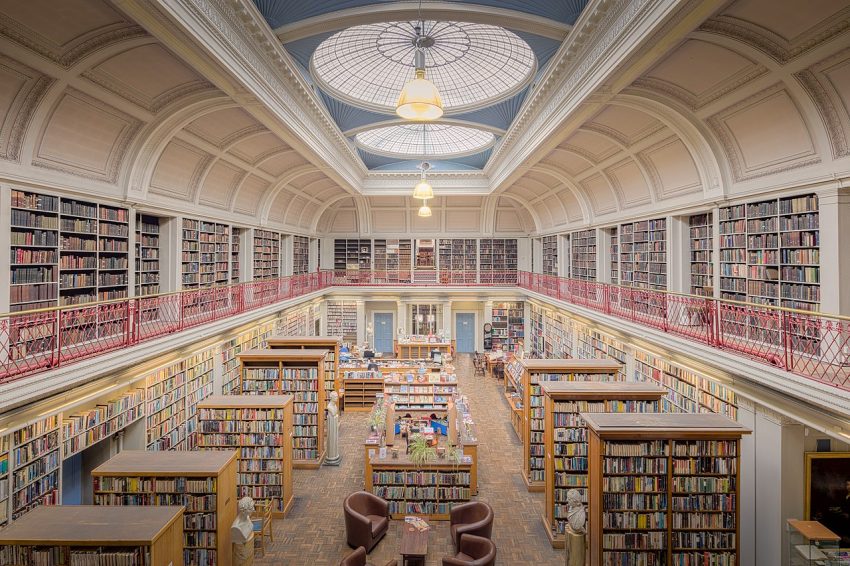
Hidden just behind Newcastle Central Station, the Literary and Philosophical Society - affectionately known as the Lit & Phil - is one of the best places to visit in Newcastle upon Tyne if you love books, history and quietly atmospheric interiors. Founded in 1793 as a “conversation club” more than fifty years before the London Library, it grew into a serious centre for reading and debate, while still keeping religion and politics off the formal agenda to encourage wide-ranging discussion. Today, its high-ceilinged reading rooms, tall bookcases and old-fashioned catalogues offer a wonderfully old-world backdrop for browsing, studying or simply daydreaming among the shelves.
From the start, the Lit & Phil was a place for ideas to circulate as quickly as the latest news, with members debating science, literature, philosophy and the issues of the day. Women were first admitted to the library in 1804, an early step towards opening the collections to a broader public. Now it is the largest independent library outside London, with books available both for lending and as a free reference resource, and a busy programme of talks, concerts and events. It is often visited on walking tours of Newcastle upon Tyne that slip away from the main streets to show you the city's quieter intellectual heart.
Table of Contents
- History and Significance of the The Literary and Philosophical Society
- Things to See and Do in the The Literary and Philosophical Society
- How to Get to the The Literary and Philosophical Society
- Practical Tips on Visiting the The Literary and Philosophical Society
- Where to Stay close to the The Literary and Philosophical Society
- Is the The Literary and Philosophical Society Worth Visiting
- FAQs for Visiting The Literary and Philosophical Society
- Nearby Attractions to the The Literary and Philosophical Society
History and Significance of the The Literary and Philosophical Society
The Literary and Philosophical Society was founded in 1793 by the Reverend William Turner and a small group of like-minded thinkers who wanted a space in which to exchange ideas, hear lectures and read widely. They called it a “conversation club”, reflecting a belief that knowledge grew best when shared and debated rather than hoarded. To keep the atmosphere open and avoid factionalism, religion and politics were officially placed off-limits, encouraging members to focus on literature, science, philosophy and the broader currents of thought.
As the 19th century unfolded, the Lit & Phil expanded its collections and membership, gradually evolving from a small debating circle into a substantial library and cultural institution. The decision to admit women in 1804 was ahead of its time and helped broaden the range of voices in the room, even if change came slowly. Shelves filled with books across disciplines, and the library became a key resource for local professionals, academics and curious readers who wanted access to texts that might not be available elsewhere in the city.
Over time, the society's commitment to independence became one of its defining features. Remaining outside the state system and separate from universities, the Lit & Phil developed a distinct identity as the largest independent library outside London, balancing lending services with free reference access for visitors. Its building - lined with portraits, busts and floor-to-ceiling shelves - embodies this long tradition of self-directed learning. Today, alongside its collections, the society hosts talks, readings, music and community events, ensuring that the founding spirit of conversation and shared knowledge is still very much alive.
Things to See and Do in the The Literary and Philosophical Society
The first thing most visitors notice when they step inside the Lit & Phil is the atmosphere. High windows, tall shelves and quiet reading tables create a sense of calm that feels a world away from the busy streets just outside. Take a slow walk around the main reading room and adjacent spaces, noting the old wooden catalogues, rolling ladders and the way books are shelved from floor to ceiling, often in pleasingly mismatched bindings. Even if you are not planning to borrow, simply browsing the spines can be a joy.
If you are interested in using the library more actively, you can ask at the desk about day access, membership and how to find specific titles. As the largest independent library outside London, the Lit & Phil's collections range across fiction, non-fiction, history, science and more specialist subjects, with many volumes you are unlikely to see in a standard public library. Staff and volunteers are usually happy to point you towards particular sections or tell you about the history of the building and some of its treasures.
Beyond the books, the society runs a lively programme of events: author talks, lectures, panel discussions, film screenings and occasional concerts that make good use of the building's acoustics and intimate scale. Check what is on during your visit and you might be able to combine a browse with an evening talk or recital. Between its architecture, shelves and events, the Lit & Phil quickly reveals itself as one of the things to do in Newcastle upon Tyne that rewards anyone who enjoys slow, thoughtful travel rather than rushing from sight to sight.
How to Get to the The Literary and Philosophical Society
If you are travelling from further afield, Newcastle International Airport is your main gateway, with regular domestic and European flights and a direct Metro link into the city centre in around 25 minutes. For the best deals and a seamless booking experience, check out these flights to Newcastle upon Tyne on Booking.com. From the airport, take the Metro to Central Station; from there, it is only a short walk to the library.
Arriving by train could not be easier, as the Lit & Phil sits just a few minutes’ walk from Newcastle Central Station on the East Coast Main Line.Train schedules and bookings can be found on Omio. Once you leave the station, follow signs towards Westgate Road and look for modest signage pointing you down the side streets to the society’s entrance, tucked just behind the main road.
If you prefer to drive, follow signs into Newcastle city centre and then towards Central Station and Westgate Road, where you will find several public car parks and on-street bays within walking distance. Once parked, you can explore the library and nearby attractions entirely on foot, using the station and the society as handy landmarks as you navigate the surrounding streets.
Practical Tips on Visiting the The Literary and Philosophical Society
- Suggested tips: Give yourself at least a little unstructured time simply to wander the stacks and soak up the atmosphere before focusing on any particular book or task.
- Best time to visit: Weekday mornings and afternoons are usually the calmest, making them ideal for quiet reading and browsing; evenings may be busier if events are scheduled.
- Entrance fee: Entry to the building and use of the reference library is generally free; there is a charge for borrowing memberships and certain events.
- Opening hours: Monday 9.30am* - 7.00pm Tuesday 9.30am - 8.00pm Wednesday 9.30am - 7.00pm Thursday 9.30am - 7.00pm Friday 9.30am - 5.00pm Saturday 9.30am - 1.00pm
- Official website: https://www.litandphil.org.uk/
- How long to spend: Allow at least an hour for a first visit, and longer if you plan to read, research or attend a talk or concert.
- Accessibility: The building is historic and some areas have stairs and narrow passages, but staff can advise on the most accessible routes and seating; if you have specific mobility needs, contact the society in advance.
- Facilities: Expect reading rooms, toilets and a reception area where you can join, ask questions or buy tickets for events; cafés and other services are available nearby around Central Station.
- Photography tip: Discreet photography may be possible, but always check and respect any guidelines; if allowed, focus on details like stacked shelves, old lamps and architectural features rather than other readers.
- Guided tours: Occasionally, tours or introductory talks about the history of the Lit & Phil and its collections are offered; keep an eye on the events calendar if you would like a more structured introduction.
- Nearby food options: When you are ready for a break, there are plenty of cafés, pubs and restaurants around Central Station and along Westgate Road, making it easy to combine a visit with lunch or coffee.
Where to Stay close to the The Literary and Philosophical Society
Staying close to the Lit & Phil puts you within easy reach of both the railway station and many of Newcastle’s main sights. Right across from Central Station, Royal Station Hotel offers period charm and the shortest possible walk to the library. A modern alternative just a little further into the city centre is Hampton by Hilton Newcastle, which combines contemporary comfort with excellent transport links. If you would prefer to stay nearer the Quayside while still being able to stroll up to the Lit & Phil, The Vermont Hotel gives you classic rooms with views over the river and castle.
Is the The Literary and Philosophical Society Worth Visiting
If you are the kind of traveller who slows down for bookshops, libraries and quiet corners with a sense of history, the Lit & Phil is absolutely worth visiting. It offers a very different experience from Newcastle's bigger headline attractions, swapping big statements and views for calm, intellectual atmosphere and shelves full of stories. The fact that it predates the London Library and remains the largest independent library outside the capital only adds to its appeal. For many visitors, a peaceful hour here becomes a highlight that balances out the city's livelier pubs, markets and riverfront - and a reminder that Newcastle has a long tradition of ideas as well as industry.
What Other Travellers Say...

Baltic Centre for Contemporary Art occupies a vast converted mill with minimalist interiors and hosts temporary contemporary art shows across several floors; admission to exhibitions is free and visitors praise the rooftop café/restaurant and bookstore as well as striking river and city views from the upper levels. Reviewers mention intriguing, sometimes provocative works and sculptures you can view up close, plus interactive areas for children that make it family-friendly. Staff are described as helpful, the venue can host events such as weddings with riverside terraces, and some visitors found certain temporary exhibitions less clearly explained and only a couple of floors open during their visit.


FAQs for Visiting The Literary and Philosophical Society
Nearby Attractions to the The Literary and Philosophical Society
- Newcastle Castle: Explore the medieval Castle Keep and Black Gate just a short walk away, with atmospheric interiors and views over the Tyne.
- Cathedral Church of St Nicholas: Visit Newcastle’s historic cathedral and its distinctive lantern spire, forming part of the city’s medieval quarter.
- Discovery Museum: Learn about Tyneside's maritime, scientific and social history in a grand former Co-operative Wholesale Society building west of the centre.
- Grainger Market and Grainger Street: Wander through a Grade I listed covered market and along one of the city's most elegant 19th-century shopping streets.
- The Quayside: Head downhill to the River Tyne for iconic bridge views, historic buildings and a lively mix of bars, cafés and restaurants on both banks.
The Literary and Philosophical Society of Newcastle upon Tyne appears in our Complete Guide to Visiting Newcastle upon Tyne!

Moira & Andy
Hey! We're Moira & Andy. From hiking the Camino to trips around Europe in Bert our campervan — we've been traveling together since retirement in 2020!
This website uses affiliate links which may earn a commission at no additional cost to you!
Planning Your Visit
Monday 9.30am* – 7.00pm
Tuesday 9.30am – 8.00pm
Wednesday 9.30am – 7.00pm
Thursday 9.30am – 7.00pm
Friday 9.30am – 5.00pm
Saturday 9.30am – 1.00pm
Entry to the building and use of the reference library is generally free; there is a charge for borrowing memberships and certain events.
Nearby Attractions
- St Nicholas Cathedral (0.2) km
Cathedral - Pons Aelius (0.2) km
Roman Site - Newcastle Castle (0.2) km
Castle - The Quayside (0.3) km
Area - Bessie Surtees House (0.3) km
Historic Building - Theatre Royal (0.4) km
Theatre - Grainger Market (0.4) km
Market - Edwardian Central Arcade (0.4) km
Historic Site - Blackfriars Restaurant (0.5) km
Historic Building - The Tyne Bridges (0.5) km
Bridge