Lisbon Cathedral
Cathedral in Lisbon
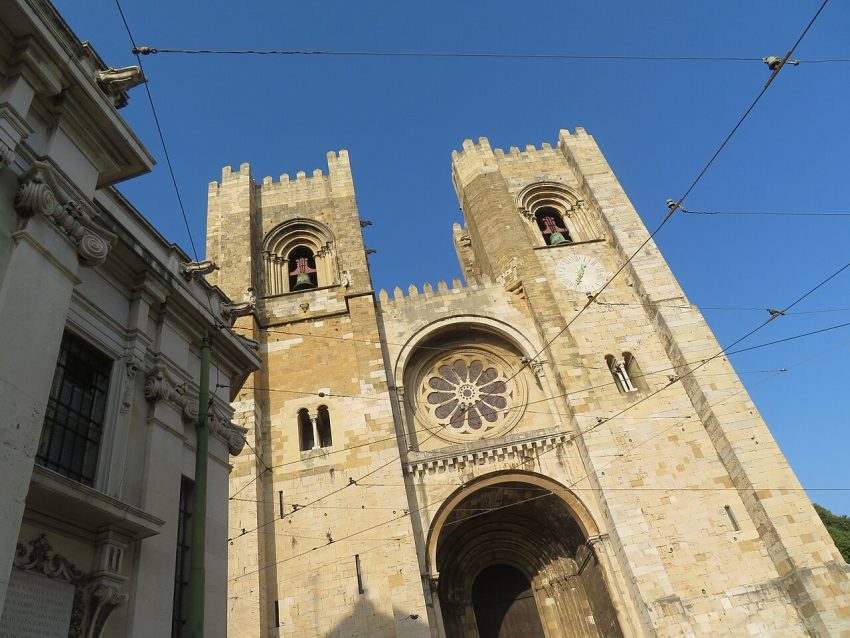
Lisbon Cathedral, or Sé de Lisboa, rises above the Alfama district with a stern, fortress-like façade that feels more like a medieval stronghold than a typical church. Twin bell towers, thick defensive walls, and a central rose window anchor its unmistakably Romanesque front, shaped by centuries of earthquakes, restorations, and stylistic overlays. Step through the heavy doors and the mood shifts: the interior is surprisingly restrained, with long, dim aisles, filtered light, and a sense of stone-cool calm that instantly reminds you this is the city's oldest surviving church, dating back to the 12th century.
Inside, details reveal themselves slowly. You can seek out the baptismal font associated with Saint Anthony of Padua, admire Gothic chapels and 14th-century sarcophagi, then wander into the Gothic cloister where recent excavations have exposed Roman, Moorish, and medieval layers of Lisbon's past. The treasury upstairs, filled with reliquaries, liturgical vestments, and jewels, adds a different dimension to the visit, pairing religious devotion with artistry and craftsmanship. It is often visited on walking tours of Lisbon, but taking time to explore beyond the nave is what really brings the cathedral's layered history to life.
Table of Contents
- History and Significance of Lisbon Cathedral
- Things to See and Do in Lisbon Cathedral
- How to Get to Lisbon Cathedral
- Practical Tips on Visiting Lisbon Cathedral
- Where to Stay close to Lisbon Cathedral
- Is Lisbon Cathedral Worth Visiting?
- FAQs for Visiting Lisbon Cathedral
- Nearby Attractions to Lisbon Cathedral
History and Significance of Lisbon Cathedral
Lisbon Cathedral was begun in 1147, shortly after King Afonso Henriques reconquered the city from Moorish control, and it was deliberately built on the site of the former main mosque as a statement of Christian power and identity. Its original Romanesque design, with the heavy west façade and towers you see today, reflects this turbulent frontier era, when churches needed to serve as both spiritual centers and defensive structures. Over time, Gothic, Baroque, and later interventions softened and enriched that original severity, but the basic outline of a fortress-church has survived both human conflict and natural disaster.
The 1755 Great Earthquake was the cathedral's greatest trial, causing serious damage to its structure and interior. Subsequent rebuilding campaigns added Gothic vaults, chapels, and the cloister, while later restorations in the 20th century tried to peel back some Baroque additions and “re-Romanesque” key areas like the nave and façade. This constant cycle of damage and repair means Lisbon Cathedral is almost like a timeline in stone: you can read Portugal's political fortunes, artistic tastes, and religious priorities in its walls and chapels.
Today, the cathedral remains the seat of the Patriarchate of Lisbon and one of the city's most important religious spaces. Relics of Saint Vincent, the city's patron, are housed here, and major liturgical celebrations still anchor Lisbon's religious calendar. Yet at the same time, it is a major cultural attraction, welcoming visitors who come as much for the cloister excavations and treasury collection as for prayer. That dual role-living church and historic monument-is a big part of its significance and charm.
Things to See and Do in Lisbon Cathedral
Start with the main nave, where the cool, dim Romanesque interior immediately contrasts with Lisbon’s bright light outside. Look up at the barrel vaults, the triforium gallery, and the central aisle leading your eye toward the chancel; the architecture feels simple, but its proportions are powerful. Just off the nave, seek out the baptismal font linked to Saint Anthony of Padua and the side chapels, some of which preserve Gothic details and older tombs that survived the earthquake and later renovations.
Next, head into the 14th-century Gothic cloister, which is smaller than the one at Jerónimos Monastery but has a fascinating archaeological twist. Here, excavations have uncovered layers of Roman houses, Islamic structures, and medieval walls, giving an almost open-air cross-section of Lisbon's long urban story. Information panels help you interpret what you are seeing, and the contrast between peaceful cloister arcades and the exposed ruins below makes this area feel particularly special. It is not just a pretty courtyard; it is one of the top attractions in Lisbon if you are interested in how cities evolve over centuries.
Don't skip the treasury, usually accessed via the upper levels. This museum-like space displays ornate reliquaries, gold and silver liturgical objects, embroidered vestments, and other pieces that chart the wealth and influence of the cathedral over time. The visit sometimes includes access to the high choir or balconies, where you can enjoy an unusual perspective down the nave and, in places, views over Alfama's rooftops and the Tagus. Together, the nave, cloister, excavations, and treasury make Lisbon Cathedral far more than a quick photo stop; taken in full, this spot is one of the best places to see in Lisbon Cathedral's historic quarter.
How to Get to Lisbon Cathedral
Lisbon Cathedral sits in the Alfama district, close to both Baixa and the waterfront, so it is very easy to reach on foot from central Lisbon if you are staying downtown. Many visitors arrive by the famous Tram 28, which passes directly in front of the cathedral and adds that classic Lisbon feel to the approach.
If you are flying into Lisbon, you will land at Lisbon Humberto Delgado Airport, which is connected to the city by metro, buses, and taxis in around 20-30 minutes depending on traffic. For the best deals and a seamless booking experience, check out these flights to Lisbon on Booking.com. From the airport, a combination of metro and a short uphill walk or tram ride will bring you to the cathedral area with minimal hassle.
For train arrivals from elsewhere in Portugal, long-distance services typically use Oriente station, while regional and intercity trains also serve Santa Apolónia, which is within walking distance or a short tram/bus ride from the cathedral.Train schedules and bookings can be found on Omio. From either station, you can combine metro and tram or simply take a taxi or rideshare up to Alfama if you have luggage.
If you are driving, be prepared for narrow, hilly streets and limited parking around Alfama, as this is one of Lisbon’s oldest quarters.If you are looking to rent a car in Portugal I recommend having a look at Discover Cars, first, as they compare prices and review multiple car rental agencies for you. It is often easier to park in a larger car park near the waterfront or in a modern district and then use public transport or walk up to the cathedral, treating the journey as part of the sightseeing.
Practical Tips on Visiting Lisbon Cathedral
- Suggested tips: Arrive early in the day or late in the afternoon to enjoy a quieter atmosphere, and allow time for both the cloister and the treasury rather than just a quick look at the nave.
- Best time to visit: Spring and autumn bring comfortable temperatures and softer light, ideal for exploring Alfama and combining the cathedral with nearby viewpoints; winter can be atmospheric but wetter, while summer is busier and hotter.
- Entrance fee: Adults: €7
- Opening hours: Monday to Saturday: 9:30–19:00 (April–October), 10:00–18:00 (November–March); closed Sundays and Holy Days.
- Official website: https://www.sedelisboa.pt/
- How long to spend: Around 60-90 minutes is enough for the nave, cloister, excavations, and treasury, but you could easily stretch to two hours if you enjoy reading displays and taking photos.
- Accessibility: Expect steps and uneven surfaces, particularly in the cloister, excavations, and upper levels; some areas are challenging or impossible for wheelchair users, so check current accessibility information in advance.
- Facilities: Basic facilities include restrooms and a ticket desk; cafés and shops are more easily found in the surrounding Alfama streets rather than inside the cathedral itself.
- Photography tip: The façade looks best in soft morning or late-afternoon light, while inside, a higher ISO setting helps capture the dim Romanesque nave and the details of the cloister arches without flash.
- Guided tours: Consider joining a guided tour or audio tour that links the cathedral with nearby São Jorge Castle and the Alfama district for fuller historical context and easier navigation.
- Nearby food options: After your visit, follow the winding streets into Alfama to find small tascas, wine bars, and pastelarias-perfect for a simple petisco lunch or a coffee break with a view.
Where to Stay close to Lisbon Cathedral
Staying near Lisbon Cathedral puts you right in the heart of the historic city, with Alfama's lanes and viewpoints on your doorstep. For a boutique feel just a short walk away, Memmo Alfama Hotel offers stylish rooms, a rooftop pool, and fantastic views over the Tagus-ideal if you want to stroll to the Sé in the morning and wander back through quiet streets at night. If you prefer to be closer to the flat streets of Baixa while remaining within easy reach of the cathedral, Brown’s Central Hotel combines design-focused interiors with great access to tram and metro connections. Travelers seeking apartment-style living might look at Lisbon Best View Apartments, which offer self-catering options within walking distance of both the cathedral and the riverfront.
Is Lisbon Cathedral Worth Visiting?
Lisbon Cathedral is absolutely worth visiting, especially if you are interested in how architecture and archaeology can tell a city's story. The mix of a fortress-like Romanesque exterior, Gothic cloister, excavated Roman and Moorish remains, and a richly stocked treasury makes it far more engaging than a simple church visit. Combine it with a wander through Alfama and a trip up to São Jorge Castle, and the cathedral becomes a natural anchor point for exploring historic Lisbon in depth.
What Other Travellers Say...

Lisbon Cathedral (Sé de Lisboa), at Largo da Sé 1, is a long-lived, historically rebuilt church whose fortress-like Romanesque exterior gives way to a peaceful, spacious interior with thick stone walls, soft light and chapels along the back; visitors praise the treasure room and balcony views of the nave and stained glass, note a narrow exterior balcony and choir loft worth climbing for vistas, and recommend allowing time to explore vestments and artifacts upstairs (there may be an admission fee or discounts available, and cloisters or access can sometimes be closed or crowded so consider buying tickets in busy periods).


FAQs for Visiting Lisbon Cathedral
Nearby Attractions to Lisbon Cathedral
- São Jorge Castle - Hilltop fortress with sweeping views over Lisbon and a great place to explore medieval walls and towers.
- Miradouro de Santa Luzia - Romantic viewpoint with azulejo panels and river vistas, perfect for photos and a short rest.
- Alfama District - Historic maze of steep lanes, fado bars, and tiny squares that rewards slow wandering in every direction from the cathedral.
- Praça do Comércio - Grand riverside square framed by yellow arcades, marking the historic commercial heart of Lisbon.
- Church of São Vicente de Fora - Impressive monastery-church complex with tiled cloisters, royal pantheon, and a rooftop terrace overlooking the city.
The Lisbon Cathedral appears in our Complete Guide to Visiting Lisbon!

Moira & Andy
Hey! We're Moira & Andy. From hiking the Camino to trips around Europe in Bert our campervan — we've been traveling together since retirement in 2020!
This website uses affiliate links which may earn a commission at no additional cost to you!
Planning Your Visit
Monday to Saturday: 9:30-19:00 (April-October), 10:00-18:00 (November-March); closed Sundays and Holy Days.
Adults: €7
Nearby Attractions
- Arco da Rua Augusta (0.4) km
Historic Building and Viewing Point - São Jorge Castle (0.5) km
Castle - Elevador de Santa Justa (0.6) km
Viewing Point - Carmo Convent (0.7) km
Convent - Praça do Rossio (0.7) km
Square - Teatro Nacional de São Carlos (0.8) km
Theatre - National Pantheon (0.9) km
Historic Building - São Vicente de Fora (1.0) km
Monastery - Miradouro de São Pedro de Alcântara (1.1) km
Viewing Point - Museu Nacional de História Natural e da Ciência (1.8) km
Museum