Iona Abbey, Isle of Mull
Abbey and Historic Building near Isle of Mull
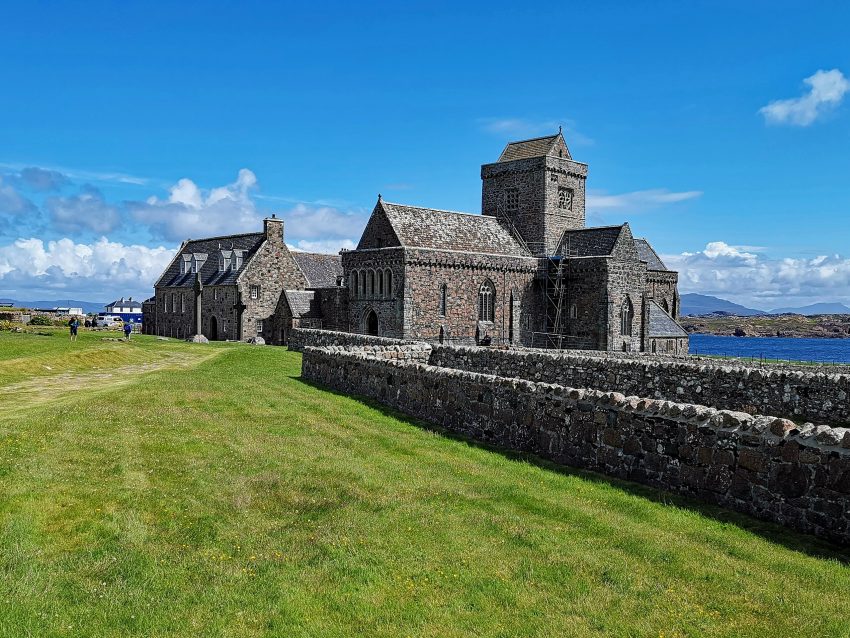
Iona Abbey stands as one of the most iconic and spiritually resonant sites in Scotland. Founded by St Columba, it sits peacefully on the tiny Isle of Iona, visible as you sail across the Sound of Iona from Fionnphort. Its granite walls, carved cloisters, Celtic crosses, and serene surroundings make it one of the best places to visit in Iona for anyone interested in early Christianity, Scottish history, or contemplative landscapes.
The Abbey appears strikingly large against the scale of the island, a reminder that Iona was once one of the most influential religious centres in all of Europe. Restored in stages from 1900 to the mid-20th century, it remains an active place of worship and home to the ecumenical Iona Community, keeping centuries of tradition alive.
History and Significance of Iona Abbey
Long before St Columba’s arrival in AD 563, Iona had been inhabited. Archaeological evidence reveals a Bronze Age burial mound, traces of Iron Age settlement, and the Vallum-an ancient earthwork that later enclosed Columba’s monastery. Although little survives from the original 6th-century monastery, its cultural and religious legacy is immense.
Iona endured repeated Viking raids, yet its monks safeguarded precious manuscripts, including transporting the famed Book of Kells to Ireland for protection. The monastery became a centre of Christian art and scholarship, producing early Gaelic poetry, intricate stone carvings, and stunning illuminated works.
In 1200, Reginald, “King of the Isles,” rebuilt the church on the original monastic site and brought a Benedictine community to Iona, which flourished until the Reformation. Columban monks continued alongside them, preserving the island’s spiritual traditions.
The Iona Community, established in the 1930s by George MacLeod, revitalised the Abbey buildings and continues to work for peace, justice, and reconciliation. For around 1,450 years, pilgrims have come to pray at St Columba’s shrine, and the Abbey remains a living place of faith and reflection.
Things to See and Do in Iona Abbey
The Abbey Church is the centrepiece, with its restored granite architecture and peaceful interior. The cloister is renowned for its intricately carved capitals, each featuring animals, plants, and biblical scenes. The nearby museum houses original Celtic high crosses, including masterpieces that once guided pilgrims in prayer.
St Columba’s Shrine, a small chapel at the heart of the complex, marks the traditional site of the saint’s burial. Pilgrims still visit to seek blessings or spend quiet time in contemplation. The surrounding grounds include grave markers of medieval clan leaders and early Christian stones.
Exploring the Abbey offers a deep sense of history, spirituality, and artistic beauty set within Iona’s tranquil landscape.
How to Get to Iona Abbey
The nearest airport is Oban Airport on the mainland, with ferries from Oban connecting to Mull at Craignure. For the best deals and a seamless booking experience, check out these flights to Isle of Mull on Booking.com.
Trains run from Glasgow to Oban, providing a convenient link to the ferry. Once on Mull, travel by bus or car to Fionnphort, where a passenger ferry crosses to Iona in about five minutes. Train schedules and bookings can be found on Omio.
Travelling by car on Mull is straightforward but involves narrow single-track roads. Park at Fionnphort, as cars are not permitted on Iona without special permission. From the Iona pier, the Abbey is a pleasant 10-minute walk.
Practical Tips on Visiting Iona Abbey
- Suggested tips: Allow time to explore the cloisters and museum; both are highlights.
- Best time to visit: Late spring to early autumn for good weather and longer daylight.
- Entrance fee: adult/child £7.50/4.50
- Opening hours: 9.30am-5.30pm Apr-Sep, 10am-4pm Oct-Mar
- Official website: http://www.historicenvironment.scot/
- How long to spend: 1-2 hours, longer if visiting for worship.
- Accessibility: Mostly accessible, though some historic areas have uneven floors.
- Facilities: Visitor centre, restrooms, gift shop, and café options in the village.
- Photography tip: Capture the Abbey from the ferry or shoreline for a stunning first impression.
- Guided tours: Available seasonally through Historic Environment Scotland.
- Nearby food options: Cafés and small eateries in Iona village.
Where to Stay close to Iona Abbey
Iona offers a few atmospheric stays close to the Abbey. St Columba Hotel provides peaceful rooms and beautiful views over the Sound. A short stroll away, Iona Pods offers cosy glamping just minutes from the Abbey. On nearby Mull, Argyll Arms Hotel is convenient for ferry access at Fionnphort.
Is Iona Abbey Worth Visiting?
Absolutely. Iona Abbey is one of the most spiritually significant and historically important sites in Scotland, combining ancient heritage with a peaceful island setting. Its atmosphere, beauty, and deep sense of history make it a must-see for any traveller to the Hebrides.
What Other Travellers Say...

Iona Abbey and Nunnery on the Isle of Iona is a restored medieval abbey with a museum and nunnery on the same site; visitors describe guided tours, informative signposts and displays of ancient relics, a peaceful atmosphere with plenty to see in a short visit (many people spend an hour or a few hours), ongoing restoration work at times, a gift shop and nearby toilets, and easy access without long queues when not booked in advance.


FAQs for Visiting Iona Abbey
Nearby Attractions to Iona Abbey
- St Oran’s Chapel and Reilig Odhráin: One of Scotland’s oldest burial grounds.
- Iona Nunnery: Atmospheric ruins from the 13th century.
- North Shore Beaches: White sands and turquoise waters on Iona’s coast.
- Dun I: A hilltop viewpoint overlooking Mull and the Atlantic.
- Fionnphort: Ferry point on Mull with views of Iona and nearby islets.
The Iona Abbey appears in our Complete Guide to Visiting Isle of Mull!

Moira & Andy
Hey! We're Moira & Andy. From hiking the Camino to trips around Europe in Bert our campervan — we've been traveling together since retirement in 2020!
This website uses affiliate links which may earn a commission at no additional cost to you!
Planning Your Visit
9.30am-5.30pm Apr-Sep, 10am-4pm Oct-Mar
adult/child £7.50/4.50
Nearby Attractions
- Fingal’s Cave and Staffa (11.6) km
Island - Eas Fors Waterfall (23.8) km
Waterfalls - Ben More (25.3) km
Mountain - Calgary Beach (27.9) km
Beach - Moy Castle (32.9) km
Castle - Lochbuie Standing Stones (33.0) km
Historic Site - Aros Castle (34.4) km
Castle - Tobermory Distillery (37.4) km
Distillery - Tobermory (37.5) km
Town - Tobermory Lighthouse (39.2) km
Lighthouse