House of the Tragic Poet, Pompeii
Roman Site in Pompeii
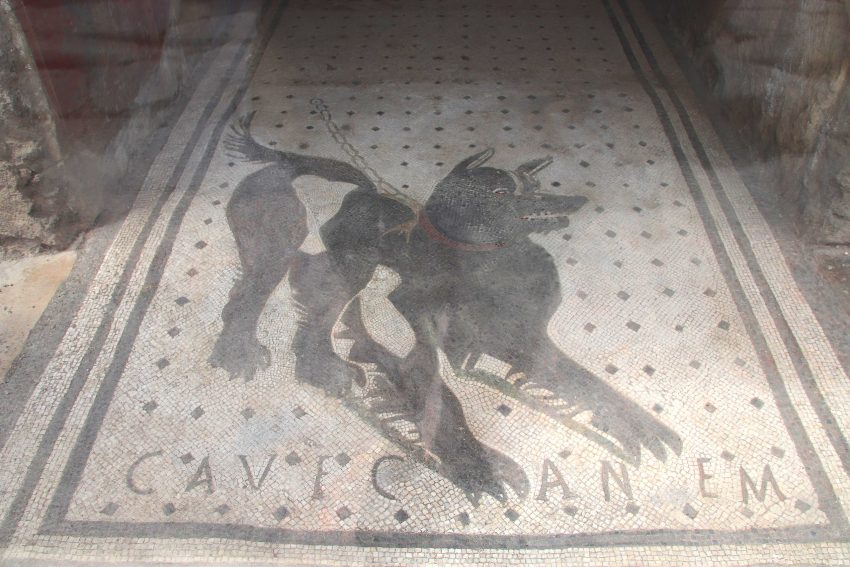
The House of the Tragic Poet is one of the top sights in Pompeii if you are fascinated by how art, literature, and everyday living came together in a single Roman home. From the street, it looks like a classic atrium house, but step closer and the famous Cave Canem mosaic at the original entrance warns visitors to beware of the dog, setting a surprisingly personal and almost playful tone. Today, access is usually via a side entrance that leads straight into the peristylium, but the preserved layout still lets you imagine how guests once crossed the threshold, greeted by intricate floors and vivid wall paintings.
Inside, the house is packed with visual stories. The atrium and tablinum preserve fine mosaics, including the scene of actors preparing for a play that gives the house its modern name, while the living room walls once blazed with mythological scenes from the Iliad, such as Ariadne abandoned by Theseus. In the peristyle garden, a small aedicula lararium marks the family shrine to the Lares and other protective deities, tying daily routine to domestic worship. This compact but richly decorated residence is often visited on walking tours of Pompeii as a textbook example of traditional architecture enhanced by sophisticated mythological and theatrical imagery.
Table of Contents
- History and Significance of the House of the Tragic Poet
- Things to See and Do in the House of the Tragic Poet
- How to Get to the House of the Tragic Poet
- Practical Tips on Visiting the House of the Tragic Poet
- Where to Stay close to the House of the Tragic Poet
- Is the House of the Tragic Poet Worth Visiting
- FAQs for Visiting House of the Tragic Poet
- Nearby Attractions to the House of the Tragic Poet
History and Significance of the House of the Tragic Poet
The House of the Tragic Poet retains the classic shape of a Roman atrium house, with rooms arranged around a central hall and an internal garden at the rear. Unlike some of the vast palaces of Pompeii, it is modest in size but remarkably rich in decoration, suggesting owners who valued cultural display as much as sheer scale. Its structure and development follow the typical pattern of elite Pompeian homes, shaped by multiple building and renovation phases as fashions and family fortunes evolved.
What makes this house stand out historically is the quality and subject matter of its art. The entrance mosaic bearing the inscription Cave Canem is one of the most famous in the ancient world, instantly humanising its owners by showing they had both a guard dog and a sense of humour. Inside, the choice of scenes from the Iliad and the world of theatre signals a household that wanted to be associated with high culture, Greek literature, and the drama of the stage. The painting of actors preparing for a performance in particular emphasises this connection and is the reason modern archaeologists gave the house its evocative name.
The preservation of the house's artworks owes much to the ash from the eruption of Vesuvius, which sealed floors and walls under metres of material. To protect them further, the original mosaics and frescos were removed to the National Archaeological Museum of Naples, with replicas now in place on site. As a result, the House of the Tragic Poet today functions both as a carefully managed ruin and as a gateway to museum collections, giving visitors a layered understanding of how Roman domestic art has been conserved and reinterpreted over time.
Things to See and Do in the House of the Tragic Poet
Begin your visit by picturing the original approach to the house. Although modern access is through a side entrance leading directly to the peristylium, it is worth pausing at the main doorway to see the Cave Canem mosaic, now protected by glass. Imagine stepping over this threshold in antiquity, aware of both the literal warning about the dog and the subtle message that you were entering a well-guarded, self-conscious household.
Move into the atrium and tablinum to study the surviving mosaics and the replica of the scene showing actors preparing for a play. This image, with figures adjusting costumes and props, underlines the importance of performance and storytelling in Roman culture and provides an intimate, behind-the-scenes moment rather than a grand stage scene. Around you, other floor patterns and wall fragments suggest the richness of the original decorative scheme, where mythological and theatrical themes would have surrounded guests as they waited to be received.
In the living room, look for the mythological paintings depicting episodes from the Iliad, including the still-visible scene of Ariadne abandoned by Theseus. Even in fragmentary form, the drama and emotion of the composition come through, turning the room into a kind of private gallery of tragic stories. Step into the peristylium to find the small aedicula lararium, a niche that served as a household shrine to the Lares and protective deities. Standing here, with the garden space around you, it is easy to imagine daily rituals of offering and prayer woven into the ordinary rhythms of meals, conversations, and quiet moments at home.
How to Get to the House of the Tragic Poet
To visit the House of the Tragic Poet you first need to reach the archaeological site of Pompeii in the modern town of Pompei, near Naples. The nearest major gateway is Naples International Airport, which offers frequent flights from across Italy and Europe and serves as the main arrival point for most visitors heading to Pompeii. For the best deals and a seamless booking experience, check out these flights to Pompeii on Booking.com. From the airport, you can continue by public transport, taxi, or rental car.
By train, the classic route is to take the Circumvesuviana line from Napoli Centrale or Piazza Garibaldi towards Sorrento and get off at Pompei Scavi Villa dei Misteri, a short walk from one of the main entrances to the archaeological park.Use Omnio to easily compare schedules, book train tickets, and find the best prices all in one place for a hassle-free journey across Italy. Regional Trenitalia services also stop at Pompei station in the modern town, from where you can walk or use local transport to reach the site.
If you are driving, Pompei is well connected via the A3 motorway and surrounding roads, with signposted exits and parking close to the archaeological park.If you are looking to rent a car in Italy I recommend having a look at Discover Cars, first, as they compare prices and review multiple car rental agencies for you. Once inside the site, use an official map or app to locate the House of the Tragic Poet within the central residential area; it is within easy walking distance of the Forum and other major landmarks.
Practical Tips on Visiting the House of the Tragic Poet
- Suggested tips: Combine your visit with nearby houses and the Forum so you can compare different domestic layouts and decorative styles in one circuit.
- Best time to visit: Early morning or late afternoon reduces crowding and glare on the glass protecting the Cave Canem mosaic, making it easier to appreciate details.
- Entrance fee: Adults: €22.00 (General Pompei Tickets)
- Opening hours: Daily: 9:00 - 15:30
- Official website: https://pompeiisites.org
- How long to spend: Allow 20 to 30 minutes to see the entrance mosaic, key interior frescoes, and the lararium at a relaxed pace.
- Accessibility: Expect uneven surfaces, thresholds, and occasional steps between rooms; visitors with reduced mobility should follow marked accessible routes where available and take extra care.
- Facilities: There are no toilets or cafés in the house; use the facilities and water fountains elsewhere in the archaeological park and bring water, especially in warmer months.
- Photography tip: Take close-up shots of the Cave Canem mosaic and the Ariadne painting where visible, and use oblique angles to avoid reflections on protective glass.
- Guided tours: Consider a guided tour that links the House of the Tragic Poet with other domus to understand how theatre, myth, and household religion shaped Pompeian interiors.
- Nearby food options: Plan to eat at cafés and restaurants just outside the park entrances in modern Pompei, or use designated refreshment areas inside the site on longer visits.
Where to Stay close to the House of the Tragic Poet
Staying in modern Pompei puts you within easy reach of the archaeological park and lets you visit the House of the Tragic Poet at quieter times of day. A convenient option close to one of the main entrances is Hotel Forum, which offers comfortable rooms a short walk from the ruins. Nearby, Hotel del Sole Pompei provides views towards the archaeological area and Vesuvius, making it a great base for exploring multiple days in the site. For a friendly, central stay with good access to shops, restaurants, and transport, Hotel Diana Pompei keeps you within easy walking distance of the entrances and the main streets leading to the house.
Is the House of the Tragic Poet Worth Visiting
The House of the Tragic Poet is definitely worth visiting if you are drawn to the more personal side of Pompeii. Its traditional atrium layout makes it easy to understand, while its extraordinary mosaics and paintings show how mythology, theatre, and domestic worship coloured everyday life. The Cave Canem mosaic at the threshold, the actors preparing for a play, and the Ariadne scene together create a vivid, almost cinematic impression of the household's identity and values. In a city full of impressive buildings, this house stands out for the intimacy and narrative richness of its decoration.
What Other Travellers Say...

House of the Tragic Poet, Vicolo Della Fullonica, Pompei NA, Italy — a restored Pompeian home notable for its rich ornamental detail and a colorful animal mosaic; visitors highlight a famous floor mosaic warning "Beware of the Dog" (Cave Canem), well-preserved frescoes and decorative elements, and note that protective barriers can limit close access and photography, with occasional closures of the house itself.


FAQs for Visiting House of the Tragic Poet
Nearby Attractions to the House of the Tragic Poet
- Pompeii Forum: The central civic square with temples, the basilica, and open views towards Mount Vesuvius.
- House of the Faun: A vast aristocratic residence with famous mosaics and the iconic dancing faun statue.
- House of the Vettii: A richly decorated domus owned by freedmen brothers, with commercial-themed cupid friezes and a garden-centred layout.
- Forum Baths: A compact but ornate public bath complex behind the Temple of Jupiter, illustrating how Pompeiians bathed and socialised.
- Temple of Apollo: One of Pompeii’s oldest sanctuaries, located near the Forum, with colonnades and altars reflecting long-standing religious traditions.
The House of the Tragic Poet appears in our Complete Guide to Visiting Pompeii!

Moira & Andy
Hey! We're Moira & Andy. From hiking the Camino to trips around Europe in Bert our campervan — we've been traveling together since retirement in 2020!
This website uses affiliate links which may earn a commission at no additional cost to you!
Planning Your Visit
Daily: 9:00 – 15:30
Adults: €22.00 (General Pompei Tickets)
Nearby Attractions
- Forum Baths (0.0) km
Roman Site - House of the Faun (0.1) km
Roman Site - House of the Vettii (0.2) km
Roman Site - Pompeii’s Forum (0.2) km
Roman Site - Lupanar (0.3) km
Roman Site - Villa of Diomedes (0.5) km
Roman Site - House of Menander (0.5) km
Roman Site - Villa dei Misteri (0.6) km
Roman Site - Mount Vesuvius (9.2) km
Hike - Positano (13.5) km
Town