House of Menander, Pompeii
Roman Site in Pompeii
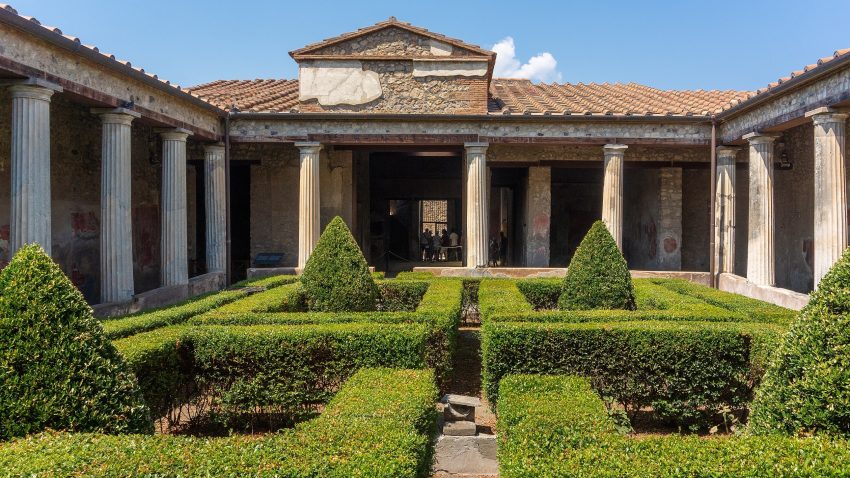
The House of Menander is one of the top attractions in Pompeii for anyone who wants to see how a truly high-ranking family lived just before the eruption of Vesuvius. Named after a painting of the Athenian playwright Menander in its portico, this expansive domus combines literary references, lavish decoration, and clever architecture to project culture and status. From the moment you step into the atrium with its mythological frescoes, you are in a house designed to impress guests and signal the sophistication of its owners.
Beyond its beauty, the house tells a powerful story about wealth and connections at the very top of Pompeian society. The rhodium-shaped peristyle, small private bath suite, basement cellar with its hoard of silver tableware, and the reconstructed wagon in the rustic area all point to a household that managed estates, held banquets, and entertained in real style. Belonging to Quintus Poppaeus Sabinus of the Poppei family, relatives of Empress Poppea Sabina, Nero's second wife, the House of Menander is often visited on walking tours of Pompeii as a textbook example of elite domestic life in the early Empire.
Table of Contents
- History and Significance of the House of Menander
- Things to See and Do in the House of Menander
- How to Get to the House of Menander
- Practical Tips on Visiting the House of Menander
- Where to Stay close to the House of Menander
- Is the House of Menander Worth Visiting
- FAQs for Visiting House of Menander
- Nearby Attractions to the House of Menander
History and Significance of the House of Menander
The House of Menander grew out of a sequence of building phases that mirror the broader development of Pompeii's elite housing. Rather than being built in a single campaign, it evolved over time as the family expanded and styles changed, resulting in a complex, layered residence typical of high-status homes in the city. Its name, taken from the portrait of the Greek playwright Menander in the portico, immediately signals the owner's alignment with Greek literary culture, a key marker of refinement in Roman upper-class circles.
During the Augustan era in the 1st century BCE, the house underwent major restructuring. Like other prestigious domus, it was adapted to meet new expectations for comfort and display. The atrium gained frescoes depicting scenes from the Iliad and the Odyssey, placing Homeric epic at the heart of the home and turning the main reception area into a gallery of literary and mythological references. The rhodium-shaped peristyle, with its higher northern side, added architectural drama and elegance, distinguishing the House of Menander from more conventional layouts.
Ownership by Quintus Poppaeus Sabinus of the Poppei family, relatives of Empress Poppea Sabina, linked the house directly to the imperial orbit. This connection underlines the political and social weight of its occupants, who could draw on influence and networks extending beyond Pompeii itself. The hidden silver hoard beneath the thermal area, carefully packed away and never recovered, encapsulates the abruptness of the AD 79 disaster and gives the house special importance for historians and archaeologists studying elite wealth and household ritual.
Things to See and Do in the House of Menander
As you enter, look for the portico painting that gives the house its name. The portrait of Menander is not just decoration but part of a larger programme of aligning the family with Greek theatre, literature, and urban sophistication. From there, move into the atrium and take your time with the frescoes inspired by the Iliad and the Odyssey. These scenes would have provided talking points for educated guests and reinforced the image of a household steeped in epic tradition.
Continue through to the peristyle, whose rhodium shape and raised northern side make the space feel theatrically framed. Imagine the colonnades surrounding planted beds, statues, and water features, with guests strolling or reclining nearby during summer banquets. This garden courtyard was both a visual centrepiece and a climate-friendly living space, catching breezes and soft light while maintaining a strong sense of order and symmetry.
Seek out the small thermal area, whose rooms show how the family could bathe in comfort at home rather than relying solely on public baths. Beneath this section a basement or cellar once held a chest with 118 pieces of silverware, including wine-serving sets, plates, and cups used at banquets. While the originals are now in the National Archaeological Museum in Naples, knowing that such a treasure was hidden here adds a sense of intimacy to the rooms above. On the south side, the rustic area with a reconstructed wagon helps you picture the logistical side of elite life, from transporting goods to managing rural estates that supplied the household.
How to Get to the House of Menander
To visit the House of Menander, you first need to reach the archaeological site of Pompeii in the modern town of Pompei, near Naples. The closest major gateway is Naples International Airport, which has frequent connections from across Italy and Europe and serves as the main arrival point for trips to the ruins. For the best deals and a seamless booking experience, check out these flights to Pompeii on Booking.com. From the airport you can continue by public transport, taxi, or rental car.
By train, the usual route is to take the Circumvesuviana line from Napoli Centrale or Piazza Garibaldi towards Sorrento and get off at Pompei Scavi Villa dei Misteri, a short walk from one of the main entrances to the archaeological park.Use Omnio to easily compare schedules, book train tickets, and find the best prices all in one place for a hassle-free journey across Italy. Regional Trenitalia services also stop at Pompei station in the modern town, where you can connect on foot or by local bus or taxi to the site.
If you are travelling by car, the A3 motorway links Naples and Salerno, with clearly signed exits for Pompei and parking areas near the archaeological park.If you are looking to rent a car in Italy I recommend having a look at Discover Cars, first, as they compare prices and review multiple car rental agencies for you. Once inside the site, use the official map or app to locate the House of Menander in its residential district, and allow time to combine it with neighbouring houses and public buildings.
Practical Tips on Visiting the House of Menander
- Suggested tips: Visit the House of Menander together with other elite homes like the House of the Vettii or House of the Faun to compare different expressions of wealth and taste.
- Best time to visit: Early morning or late afternoon helps you avoid the largest crowds and the strongest sun, making it easier to enjoy the frescoes and layout in relative calm.
- Entrance fee: Adults: €22.00 (General Pompei Tickets)
- Opening hours: Daily: 9:00 - 15:30
- Official website: https://pompeiisites.org
- How long to spend: Plan 30 to 45 minutes in and around the house to explore the atrium frescoes, peristyle, thermal area, and rustic sector at a relaxed pace.
- Accessibility: Expect uneven surfaces, thresholds, and occasional steps between rooms visitors with reduced mobility should consult current accessibility information and follow any marked routes.
- Facilities: There are no toilets or cafés in the house itself look for facilities elsewhere in the archaeological park and carry water, especially on hot days.
- Photography tip: Use wider shots to capture the atrium and peristyle layouts, then switch to close-ups of Iliad and Odyssey scenes, architectural details, and the Menander portrait in the portico.
- Guided tours: A guided visit can help decode the literary references, social signals, and family connections embedded in the decoration and layout of the house.
- Nearby food options: Plan meals and longer breaks at cafés and restaurants near the park entrances in modern Pompei, or use designated refreshment areas inside the site if available.
Where to Stay close to the House of Menander
Staying in modern Pompei allows you to enter the archaeological park early and explore the House of Menander before the busiest part of the day. A well placed choice is Hotel Forum, just a short walk from one of the main entrances and convenient for returning to your room at midday. Another comfortable option near the ruins is Hotel del Sole Pompei, where some rooms look towards the archaeological area and Mount Vesuvius. For a friendly, central base close to shops and restaurants as well as transport links, Hotel Diana Pompei keeps you within easy walking distance of the site while offering a relaxed place to unwind after a long day among the ruins.
Is the House of Menander Worth Visiting
The House of Menander is very much worth visiting, especially if you are interested in how architecture, art, and family history intersect in Pompeii. Its links to the Poppei family and, indirectly, to the imperial household place it at the very top of the city's social hierarchy, while the Iliad and Odyssey frescoes, rhodium peristyle, private bath suite, and silver hoard tell a multi-layered story of luxury, culture, and domestic routine. Standing in these rooms makes it easier to imagine not just the disaster of AD 79, but the sophisticated everyday life that came before.
What Other Travellers Say...

House of Menander in Pompei is an excavated mansion of a wealthy family featuring a colonnaded peristyle garden, an atrium with mosaics and vivid frescoes depicting mythological and everyday scenes, a lararium shrine, and restored porticoed gardens; visitors note well-preserved wall paintings, floor mosaics, displays including bones and a cart, and a compact layout that gives a clear sense of affluent Roman domestic life.


FAQs for Visiting House of Menander
Nearby Attractions to the House of Menander
- House of the Vettii: Another richly decorated domus owned by freedmen brothers, with vivid wall paintings and a garden-centred layout that contrasts with the Menander house.
- House of the Faun: A vast Hellenistic palace with famous mosaics and the iconic dancing faun statue, showcasing earlier Republican-era elite living.
- Pompeii Forum: The civic heart of the city, lined with temples and public buildings and offering classic views of Mount Vesuvius.
- Forum Baths: A compact but luxurious public bath complex near the Forum that illustrates everyday comfort and social life in Pompeii.
- Villa of the Mysteries: A suburban villa outside the city walls, renowned for its enigmatic fresco cycle believed to be linked to Dionysian rites.
The House of Menander appears in our Complete Guide to Visiting Pompeii!

Moira & Andy
Hey! We're Moira & Andy. From hiking the Camino to trips around Europe in Bert our campervan — we've been traveling together since retirement in 2020!
This website uses affiliate links which may earn a commission at no additional cost to you!
Planning Your Visit
Daily: 9:00 – 15:30
Adults: €22.00 (General Pompei Tickets)
Nearby Attractions
- Lupanar (0.3) km
Roman Site - Pompeii’s Forum (0.4) km
Roman Site - House of the Faun (0.5) km
Roman Site - Forum Baths (0.5) km
Roman Site - House of the Vettii (0.5) km
Roman Site - House of the Tragic Poet (0.5) km
Roman Site - Villa of Diomedes (1.0) km
Roman Site - Villa dei Misteri (1.1) km
Roman Site - Mount Vesuvius (9.6) km
Hike - Positano (13.4) km
Town