Hotel Dajti, Tirana
Historic Building in Tirana
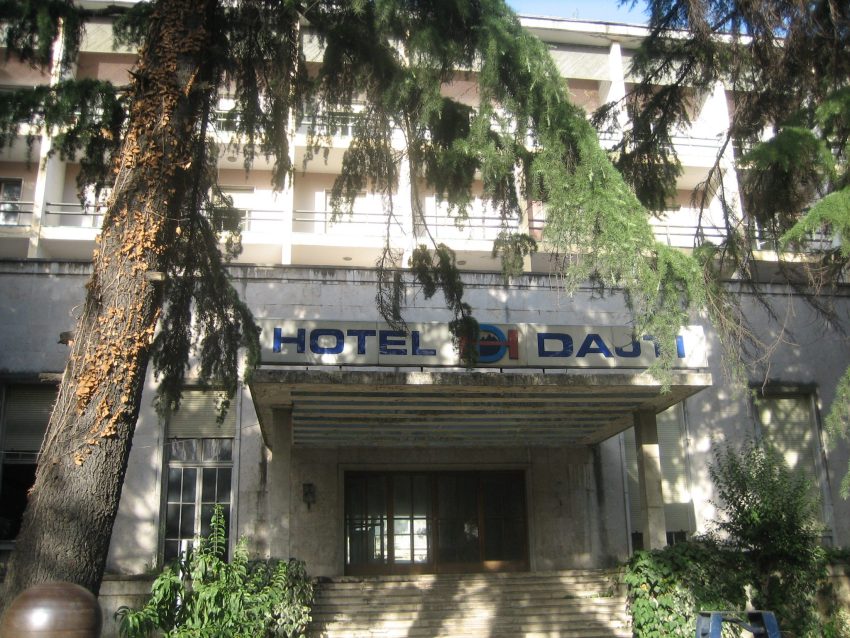
On a stroll along Bulevardi Dëshmorët e Kombit, the old Hotel Dajti sits opposite Park Rinia like a paused chapter of Tirana's recent history. It's the sort of place you might walk past without a second glance-until you know what happened behind those doors, and why it still matters as a city landmark even in its quieter, in-between years.
For curious travelers, Hotel Dajti is one of the things to do in Tirana because it captures a very specific atmosphere: elegant on the outside, charged on the inside, and inseparable from the country's communist-era relationship with the outside world. It's also often visited on walking tours of Tirana, partly because the location makes it an easy stop, and partly because its story is so vivid.
History and Significance of Hotel Dajti
Built in the 1930s in a functionalist style associated with Italy's interwar architectural influence, Hotel Dajti became far more than a place to sleep. During Albania's communist period, it operated as a controlled gateway for international visitors-one of the few places where foreigners could stay, and a space where the state could keep a close eye on who was meeting whom.
The hotel’s significance comes from the way it blended hospitality with surveillance and diplomacy. Accounts describe guest rooms monitored and staff operating behind the scenes, turning an ordinary hotel layout into part of the political machinery of the time. When it closed in December 2005, the building gradually deteriorated, reinforcing its reputation as a relic of another era.
More recently, it has been associated with restoration plans under the Bank of Albania, which has helped shift the story from decline toward preservation. Even if you only see it from the outside, the building reads like a physical footnote to Tirana’s transformations-Italian urban design, communist-era control, and the city’s present-day reinvention.
Things to See and Do in Hotel Dajti
Start by taking in the façade from the boulevard side, then move around for different angles-functionalism can look deceptively simple until you notice proportions, symmetry, and the way the building “sits” in the streetscape. Standing across from Park Rinia is a good way to frame the hotel in its urban context and understand why this spot once carried so much symbolic weight.
Because access can depend on renovation activity, treat this as an exterior-focused visit: a storytelling stop rather than an interior tour. If you enjoy connecting places to history, this is where Hotel Dajti excels-pause here, then continue your walk to nearby civic and cultural landmarks to see how Tirana's centre layers Ottoman traces, Italian planning, and post-communist development within a short radius.
Pairing the stop with a slow boulevard walk works particularly well. Come with a few key details in mind-the hotel’s role for foreign visitors, its reputation for surveillance, and its closure in 2005-and the building becomes much more than a photo; it becomes a prompt to look at the city with sharper eyes.
Practical Tips on Visitng Hotel Dajti
- Best time to visit Hotel Dajti: Early morning or late afternoon, when the boulevard is calmer and the light is softer for photos.
- Entrance fee in Euros: €0 for viewing from outside; interior access depends on current use/works.
- Opening hours: Exterior view anytime; interior visiting is not typically available during restoration or restricted use.
- How long to spend: 10-20 minutes for the exterior and photos; longer if you're folding it into a boulevard walking route.
- Accessibility: Flat pavements make the exterior easy to see with step-free access along the boulevard.
- Facilities: Plenty of cafés and services nearby around the city centre and Park Rinia area.
- Photography tip: Shoot from across the boulevard for a clean, symmetrical composition; twilight works well for moodier, cinematic frames.
- Guided tours: Choose a city walking tour that includes communist-era history or 20th-century Tirana-guides tend to bring the Hotel Dajti story to life.
- Nearby food options: Plan a coffee stop nearby rather than expecting anything on-site; the area around the park is convenient for a quick break.
Is Hotel Dajti worth visitng?
Yes-especially if you like places that are more about story than spectacle. You're not coming for an immersive museum-style experience; you're coming to stand in front of a building that represents how tightly controlled Albania's international interactions once were. If you only have a short time in Tirana and prefer “wow-factor” interiors, you might keep it as a brief stop on a longer walk. But if political history, architecture, or the city's communist-era layers interest you, it's a meaningful pause that adds depth to everything you see afterwards.
FAQs for visitng Hotel Dajti
Nearby Attractions to Hotel Dajti
- Skanderbeg Square: The city's central stage, surrounded by key institutions and a strong sense of Tirana's modern identity.
- Et'hem Bey Mosque: A compact but significant landmark that offers a glimpse into Tirana's Ottoman-era layers.
- Bunk'Art 2: A punchy, accessible introduction to Albania's communist-era security state, close to the centre.
- National Historical Museum: Useful for context-setting if you want the broad narrative before zooming into specific sites like Hotel Dajti.
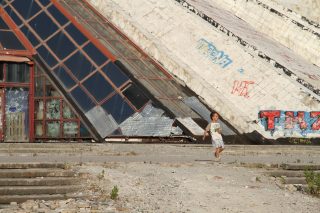
- The Pyramid of Tirana: A provocative piece of recent history that reflects the city's constant reinvention and changing public spaces.
What Other Travellers Say...
Reviews Summary
Banka e Shqipërisë sits on Skanderbeg Square in Tirana and houses a museum inside the central bank building spanning two floors: the first floor's Treasury Room (Rondo) presents a numismatic collection of coins and banknotes used across the country's historic territories, and the second floor outlines the central bank's institutional role and serves as an interactive information and education space for lessons on money and the economy; visitors comment on the attractive Italian-style building, helpful and friendly staff who enhance the visit, and informative reports and materials about the country's financial system.
The Hotel Dajti appears in our Complete Guide to Visiting Tirana!

Moira & Andy
Hey! We're Moira & Andy. From hiking the Camino to trips around Europe in Bert our campervan — we've been traveling together since retirement in 2020!
This website uses affiliate links which may earn a commission at no additional cost to you!
Planning Your Visit
Nearby Attractions
- House of Leaves (0.1) km
Museum - Skanderbeg Square (0.1) km
Square - National History Museum (0.2) km
Museum - Et’hem Bey Mosque (0.2) km
Mosque - Clock Tower In Tirana (0.2) km
Tower - Bunk'Art 2 (0.2) km
Historic Building and Museum - Palace of Culture (0.2) km
Notable Building - REJA - The Cloud (0.3) km
Monument - Rinia Park (0.4) km
Park - National Art Gallery (0.4) km
Gallery