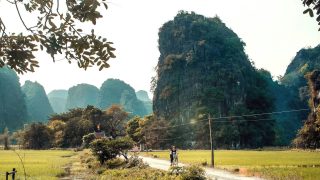
H'Mong King's Palace, Ha Giang
Historic Building and Palace near Ha Giang
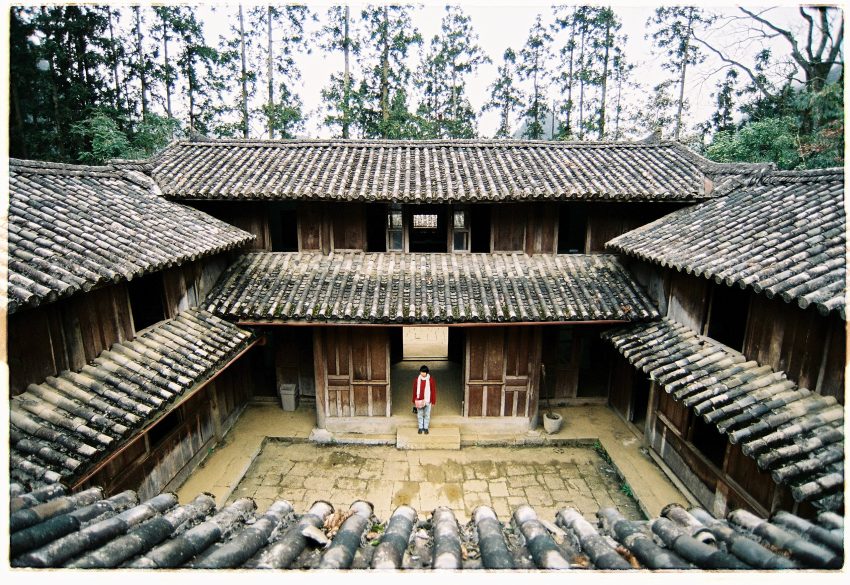
The H'Mong King's Palace, also known as the Vuong Mansion, is one of the top attractions in Hà Giang and often visited on walking tours of Hà Giang's highland communities, though most travellers reach it by motorbike or car along the loop. Nestled in the beautiful Sa Phìn Valley, this 64-room estate was once home to the most powerful H'Mong rulers in the region, and today it remains one of the must-see places in Hà Giang for culture and history lovers.
Rich in symbolism, craftsmanship, and political legacy, the mansion offers a compelling journey into the highland world of the early 20th century.
Table of Contents
- History and Significance of H’Mong King’s Palace
- Things to See and Do in H’Mong King’s Palace
- How to Get to H’Mong King’s Palace
- Practical Tips on Visiting H’Mong King’s Palace
- Where to Stay close to H’Mong King’s Palace
- Is H’Mong King’s Palace Worth Visiting?
- FAQs for Visiting H’Mong King’s Palace
- Nearby Attractions to H’Mong King’s Palace
History and Significance of H’Mong King’s Palace
The mansion was originally built as the residence of Vuong Chinh Duc, head of the Vuong clan and self-proclaimed “Vua Mèo” - King of the H’Mong people. By the late 19th and early 20th centuries, the Vuong family controlled much of the northern frontier, wielding power over trade, taxation, and security.
In 1913, Emperor Khai Dinh of the Nguyễn Dynasty formally recognised Vuong Chinh Duc as the legitimate ruler of the mountainous border region. His royal proclamation still hangs in the mansion’s main hall.
The legacy continued with his son, Vuong Chi Sinh (later renamed Vuong Chi Thanh by President Ho Chi Minh), who not only inherited leadership but also supported Vietnam’s anti-French resistance by donating wealth and resources. Revered by locals, he later served as a deputy in Vietnam’s first two National Assemblies.
Today, the mansion stands as both a historical residence and a symbol of H’Mong identity and frontier governance.
Things to See and Do in H’Mong King’s Palace
Approaching the mansion is part of the experience. Visitors climb a stone staircase shaded by ancient pines, passing through a wooden gate set in a circular stone wall before entering the main compound - one of the best places to visit in Hà Giang for architectural heritage.
Designed according to feng shui principles, the estate follows the Chinese “wang” (王) layout with four horizontal and six vertical structures. Ironwood beams, green stone foundations, and yin-yang roof tiles showcase a blend of Qing dynasty influence and traditional H’Mong aesthetics.
Inside, you can explore 64 rooms once used for living, governance, storage, and defence. The intricately carved pillars depict dragons, phoenixes, and bats - symbols of prosperity - while the roof tiles bear the Chinese character “shou” (寿), meaning longevity.
A large stone tank built to collect rainwater reflects the resource challenges of the region and still serves as the water supply for local villagers today.
Outside the main compound lies the family tomb area, where the graves of Vuong Chinh Duc and Vuong Chi Sinh stand with an epitaph gifted by President Ho Chi Minh: “Tận trung báo quốc, bất thụ nô lệ” - A life devoted to the nation, never accepting slavery.
How to Get to H’Mong King’s Palace
The nearest major airport is Nội Bài International Airport in Hanoi. For the best deals and a seamless booking experience, check out these flights to Ha Giang on Booking.com. Travellers typically reach Hà Giang City by bus or limousine service, then continue through Đồng Văn District by motorbike, car, or tour. The palace lies directly on the Hà Giang Loop and is accessible via National Road 4C, between Đồng Văn and Lũng Cú.
Practical Tips on Visiting H’Mong King’s Palace
- Suggested tips: Visit early in the morning to enjoy the mansion before tour groups arrive.
- Best time to visit: September-November and March-May for clear skies and vibrant scenery.
- Entrance fee: Small fee applies.
- Opening hours: Typically daylight hours.
- Official website: Refer to Hà Giang tourism sites for updates.
- How long to spend: 45 minutes to 1 hour.
- Accessibility: Uneven stone paths; stairs required to enter the compound.
- Facilities: Small shops and rest areas outside the gate.
- Photography tip: Capture the wooden gate framed by pine trees for an iconic first impression.
- Guided tours: Available through many loop tour operators.
- Nearby food options: Found in Sa Phìn Village, Đồng Văn, and roadside eateries.
Where to Stay close to H’Mong King’s Palace
Travellers typically stay in Đồng Văn, about 15 kilometres away. Options include Hoa Cuong Hotel for a comfortable base, Lô Lô Homestay for an authentic ethnic-village experience, and Phoenix Hotel Hà Giang for those starting or ending the loop.
Is H’Mong King’s Palace Worth Visiting?
Yes - the Vuong Mansion is one of Hà Giang’s most culturally important sites. Its blend of H’Mong heritage, feng shui design, political history, and atmospheric mountain setting makes it a fascinating stop along the loop and a rewarding experience for visitors interested in Vietnam’s highland cultures.
What Other Travellers Say...

Dinh Vua Mèo in Xà Phìn, Đồng Văn District is a well-preserved early 20th-century baroque-style palace of the Hmong Vương family set in a quiet valley surrounded by mountains; visitors report wooden halls, stone courtyards and intact, mixed H’Mông–Chinese–French architecture that can be explored in about 30–60 minutes. The site is peaceful and compact, has a small entrance fee, limited on-site English information (so a guide or translation app is helpful), easy parking for motorbikes, and a few stalls outside selling snacks like meat skewers; opening hours are generally 7:30 AM–5:00 PM daily.


FAQs for Visiting H’Mong King’s Palace
How many rooms are inside?
The compound contains 64 rooms across several structures.
Is the mansion Chinese or H’Mong in style?
It blends Qing dynasty architectural elements with H’Mong cultural design.
Can I visit the tombs?
Yes - the family graveyard is accessible to visitors.
Is it part of the Hà Giang Loop?
Yes - it is located directly on the loop between Đồng Văn and Lũng Cú.
Nearby Attractions to H’Mong King’s Palace
- Lũng Cú Flag Tower - Vietnam's symbolic northernmost point.
- Đồng Văn Old Quarter - Historic highland streets and traditional houses.
- Mã Pí Lèng Pass - Vietnam's most dramatic mountain pass with canyon views.
- Nho Quế River - Emerald canyon river reached by boat or trail.
- Sa Phìn Valley - Scenic ethnic-minority valley surrounding the mansion.
The H'Mong King's Palace appears in our Complete Guide to Visiting Ha Giang!

Moira & Andy
Hey! We're Moira & Andy. From hiking the Camino to trips around Europe in Bert our campervan — we've been traveling together since retirement in 2020!
This website uses affiliate links which may earn a commission at no additional cost to you!
Planning Your Visit
8:00 AM to 5:00 PM.
25,000 VND
Nearby Attractions
- Lũng Cú Flag Tower (13.2) km
Viewing Point - Mã Pí Lèng Pass (15.2) km
Hike, Pass and Viewing Point - Nho Quế River (22.4) km
River - Quản Bạ Heaven Gate (35.9) km
Pass - Hoang Su Phi Rice Terraces (92.8) km
Viewing Point - Sapa Market (177.0) km
Market - Sapa Lake (177.5) km
Lake - Sapa Stone Church (178.0) km
Church - Sapa Museum (178.1) km
Museum - Cat Cat Village (179.1) km
Village