Hien Lam Pavilion, Hue
Historic Building in Hue
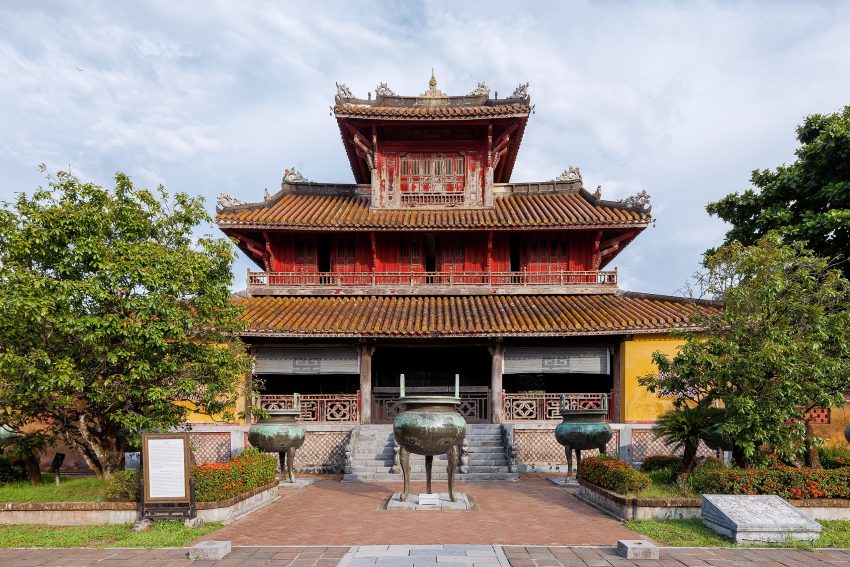
The Hien Lam Pavilion, standing at the heart of the Dynastic Temple's courtyard in the southwest corner of the Imperial Enclosure, is one of the most striking architectural symbols of the Nguyen Dynasty. Built in 1824 by Emperor Minh Mang, this three-story structure was designed as a grand memorial to individuals who shaped the dynasty's rise. Its refined proportions, ornate timberwork, and elevated ceremonial significance make it one of the best places to visit in Hue.
Surrounded by a beautifully restored walled complex, the pavilion forms the vertical focal point of a sacred space dedicated to emperors and their most distinguished mandarins. No building within the Citadel was allowed to exceed its height, a decree that reflects its revered status. With dragon-flanked stairways, Bat Trang brick flooring, enameled open-work windows, and exquisitely carved rafters, Hien Lam Pavilion embodies the artistry and ceremonial formality of the Nguyen era.
Table of Contents
- History and Significance of Hien Lam Pavilion
- Things to See and Do in Hien Lam Pavilion
- How to Get to Hien Lam Pavilion
- Practical Tips on Visiting Hien Lam Pavilion
- Where to Stay close to Hien Lam Pavilion
- Is Hien Lam Pavilion Worth Visiting?
- FAQs for Visiting Hien Lam Pavilion
- Nearby Attractions to Hien Lam Pavilion
History and Significance of Hien Lam Pavilion
The pavilion was commissioned by Emperor Minh Mang at a time of consolidation for the Nguyen Dynasty. Completed in 1824, it served as a memorial to those who contributed to the dynasty’s establishment and success. Its name, often translated as Pavilion of Splendour or Pavilion of the Glorious Coming, reflects its commemorative purpose and the emperor’s desire to honor loyalty, service, and accomplishment.
As part of the wider Dynastic Temple complex, the pavilion stands between spaces dedicated to the emperors themselves and the mandarins who supported them. To its north lies the Dynastic Temple (The Mieu), where Nguyen emperors are enshrined. To its east and west are the Left and Right Houses, which memorialise meritorious mandarins. This spatial arrangement symbolises the connection between imperial authority and the officials who upheld it.
The decree that no structure within the Citadel may rise higher than Hien Lam Pavilion speaks to its symbolic importance. Its prominent location and soaring design emphasise its role as a spiritual and political anchor within the Imperial City, linking the emperor's legacy with the contributions of the dynasty's most loyal servants.
Things to See and Do in Hien Lam Pavilion
Approaching the pavilion, visitors ascend stairways of nine steps on either side, divided by sinuous dragon designs. The centre passage was historically reserved for the emperor, a detail that conveys both hierarchy and ceremonial order. The symmetry and craftsmanship of the staircase alone reveal the ceremonial grandeur of the site.
The ground floor features Bat Trang bricks, a hallmark of traditional Vietnamese craftsmanship. Inside, the wooden rafters and carved floral panels demonstrate exceptional artistry, offering insight into Nguyen aesthetic preferences. The open compartments and enameled open-work brick windows create a play of light and shadow that enhances the pavilion’s contemplative atmosphere.
Visitors can walk through the surrounding courtyard and explore the associated structures honoring emperors and mandarins. The entire walled complex has been thoughtfully restored, and its architectural harmony and historical significance make it one of the most impressive sites within the Imperial City. From here, views toward the Dynastic Temple help contextualise the pavilion’s role within the ceremonial landscape.
How to Get to Hien Lam Pavilion
Phu Bai International Airport lies around 16 kilometres south of central Hue, providing convenient domestic flight connections for travellers. For the best deals and a seamless booking experience, check out these flights to Hue on Booking.com.
Hue Railway Station offers regular train services to major cities such as Da Nang, Hanoi, and Ho Chi Minh City, and is just a short transfer away from the Imperial City gates. Train schedules and bookings can be found on Omio.
Travelling by car to the Citadel is straightforward, with parking areas located outside the main entrances. Once inside the Imperial Enclosure, the pathway leading to the Dynastic Temple complex guides visitors directly toward Hien Lam Pavilion.
Practical Tips on Visiting Hien Lam Pavilion
- Suggested tips: Spend time examining the detailed woodwork and enameled windows, as these are among the finest in the Citadel.
- Best time to visit: Early morning or late afternoon for pleasant temperatures and beautiful light on the pavilion façade.
- Entrance fee: Included in the Imperial City ticket.
- Opening hours: Typically 8:00-17:30, varying seasonally.
- How long to spend: Around 30-45 minutes exploring the pavilion and surrounding structures.
- Accessibility: Mostly accessible, but the stairways and raised thresholds require care.
- Facilities: Restrooms and refreshment stalls can be found within the larger Imperial City area.
- Photography tip: Capture the pavilion from the courtyard to include its full height and symmetrical staircases.
- Guided tours: Many tours of the Imperial City include this complex, offering valuable historical context.
- Nearby food options: Small cafés and restaurants are available around the citadel’s exterior streets.
Where to Stay close to Hien Lam Pavilion
Travellers wishing to stay near the Imperial City will find several excellent options. The refined Azerai La Residence offers elegant rooms and river views within easy reach of the citadel. For a quieter boutique experience, Le Domaine de Cocodo provides spacious suites and serene surroundings. Another convenient choice is Villa Hue, well located for exploring Hue’s historic core.
Is Hien Lam Pavilion Worth Visiting?
Hien Lam Pavilion is unquestionably worth visiting, particularly for travellers drawn to imperial history, symbolism, and architecture. Its craftsmanship, meaningful positioning within the Dynastic Temple complex, and its role as the tallest approved structure in the Citadel make it a compelling site. The surrounding restored buildings enhance the experience, providing a powerful sense of the grandeur and ceremonial order of the Nguyen Dynasty.
What Other Travellers Say...

Hien Lam Pavilion is an ornate three‑storey pavilion built in 1824 that commemorates the founders of the Nguyen dynasty; visitors praise its well‑restored, imperial atmosphere, carved wooden stairway up to the third floor and views over the courtyard and urns, while noting informative displays inside though some find it sparsely furnished.


FAQs for Visiting Hien Lam Pavilion
Nearby Attractions to Hien Lam Pavilion
- Dynastic Temple (The Mieu): Shrine complex dedicated to the Nguyen emperors.
- Left and Right Houses: Structures honoring meritorious mandarins.
- Thai Hoa Palace: The ceremonial throne hall of the Nguyen Dynasty.
- Nine Holy Cannons: Monumental bronze guardians of the Citadel.
- Noon Gate (Ngo Mon): The grand southern entrance to the Imperial City.
The Hien Lam Pavilion appears in our Complete Guide to Visiting Hue!

Moira & Andy
Hey! We're Moira & Andy. From hiking the Camino to trips around Europe in Bert our campervan — we've been traveling together since retirement in 2020!
This website uses affiliate links which may earn a commission at no additional cost to you!
Planning Your Visit
Nearby Attractions
- Mieu Temple (0.1) km
Historic Building - Hung Mieu Temple (0.1) km
Historic Building - Meridian Gate (0.2) km
City Gate - Thai Hoa Palace (0.3) km
Palace - Halls of the Mandarins (0.3) km
Historic Building - Dien Tho Residence (0.3) km
Historic Building - Forbidden Purple City (0.4) km
Historic Building - Nhat Thanh Lau (0.4) km
Historic Building - The Royal Theatre (0.4) km
Historic Building - Cung Truong Sanh (0.4) km
Historic Building